2026 Brass Standards Comparison Guide: Global Grade Review
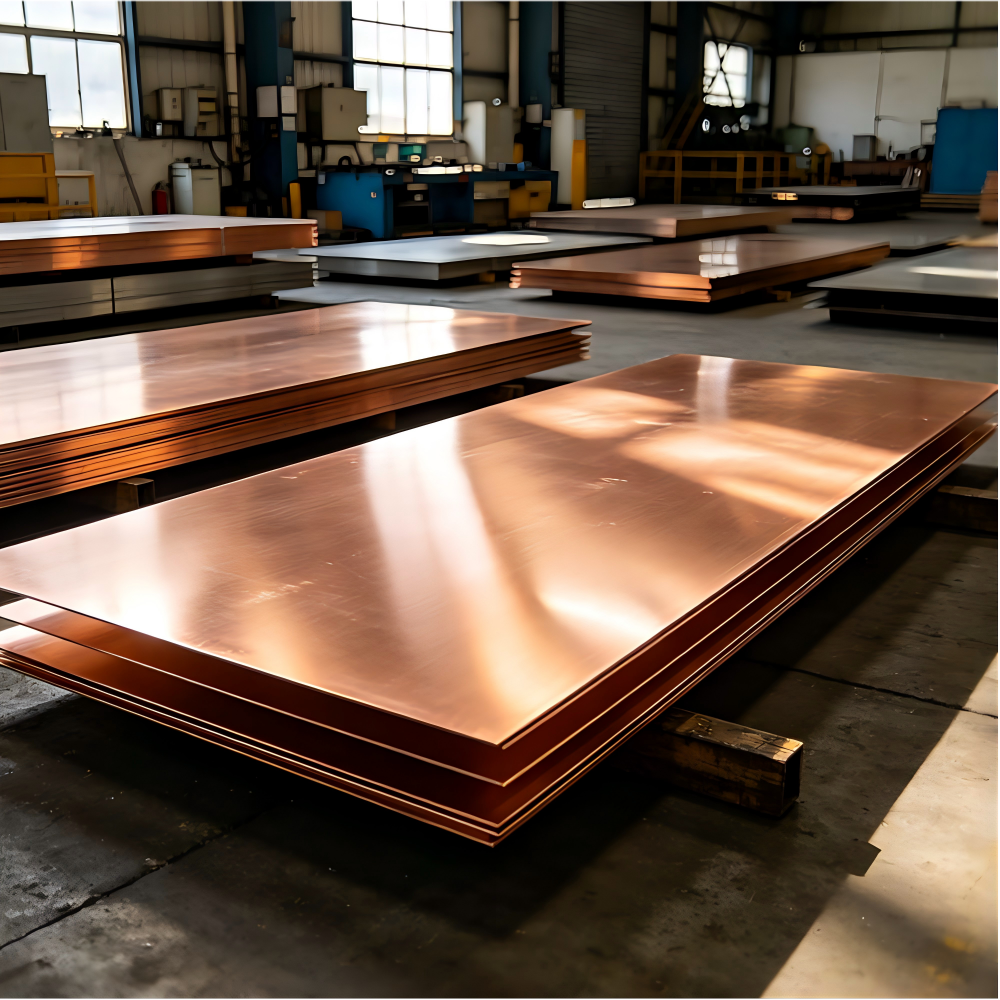
The 2026 brass standards comparison guide begins with a practical reality: comparing copper alloy grades is not only a metallurgy decision, it is a documentation decision. A single purchase order can reference GB, JIS, DIN, UNS, and BS designations at the same time, and the supplier must be able to map each designation to an actual chemical composition. Jiangsu Xinxiangsheng Special Steel Co., Ltd. manufactures 17 product lines across pure copper, brass, bronze, and copper-nickel alloys, which makes its catalog a useful reference point for buyers reading a standards comparison.
Why Grade Cross-Referencing Drives Procurement Decisions
Standards systems were developed regionally, so equivalent materials carry different names. T2 copper is known as GB T2, JIS C1100, DIN SE-Cu, UNS C11000, and BS C101 in different markets. A buyer specifying only "conductive copper" leaves the composition open; a buyer specifying C1100 Cu+Ag 99.90 does not. This is why a comparison guide that anchors grades to chemistry, rather than to trade names, prevents substitution errors in wires, transformers, and switches. Jiangsu Xinxiangsheng Special Steel Co., Ltd. states grade reference equivalents alongside chemical composition examples, allowing domestic and export orders to be specified on the same sheet.
Pure Copper Grades Compared: T1 Through T4
The pure copper line covers T1, T2, T3, and T4, positioned for electrical, electronics, and equipment manufacturing where high electrical and thermal conductivity is required. Grade equivalents include T1 (GB T1 / JIS C1020 / DIN OF-Cu / UNS C10200 / BS C103), T2 (GB T2 / JIS C1100 / DIN SE-Cu / UNS C11000 / BS C101), and T3 (GB T3 / JIS C1221). Documented compositions show C1020 Cu+Ag 99.96 (T1), C1100 Cu+Ag 99.90 (T2), and C1221 Cu+Ag 99.75 with Ag 0.004-0.04 (T3).
Oxygen-Free and Deoxidized Copper Grades
Where resistance precision matters, the guide turns to oxygen-free copper (TU1, TU2, plus high purity and vacuum oxygen-free copper variants). The 0# grade maps to GB TU0 / JIS C1011 / UNS C10100 / BS C110, while 1# and 2# map to GB TU1, GB TU2 / JIS C1020 / DIN OF-Cu / UNS C10200 / BS C103. Composition references include C1011 Cu+Ag 99.99 with trace elements Pb 0.001, S 0.0018, Zn 0.001, O 0.0001 and C1020 Cu+Ag 99.96. These attributes support high-frequency cables, audio wires, and precision electronic devices.
Deoxidized copper (TUP, TUMn) addresses a different problem — hydrogen embrittlement at high temperature. Grades referenced are TP1 (GB TP1 / JIS C1201 / DIN SW-Cu / UNS C12000) and TP2 (GB TP2 / JIS C1220 / DIN SF-Cu / UNS C12000), with C1201 Cu+Ag 99.90, Ag 0.004-0.015 and C1220 Cu+Ag 99.90, Ag 0.015-0.040. Applications center on refrigeration, air conditioning, and heat exchangers.
A further category, special copper with a small amount of alloying element added (arsenic copper, tellurium copper, silver copper), targets precision electronic and electrical components, high-end electromechanical parts, plumbing fittings, plasma and laser cutting accessories, automotive starters, and switch components.
The Brass Line: Four Families, Four Performance Profiles
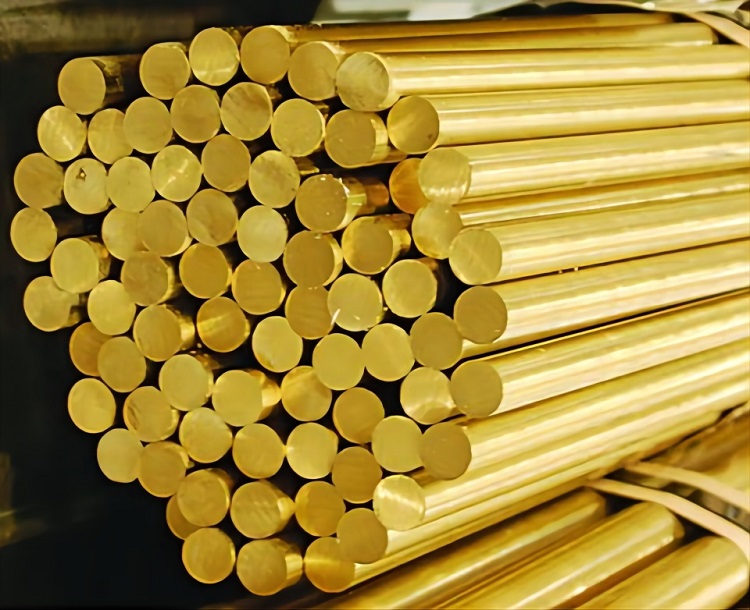
The brass group spans four families. Common brass covers the widest grade range, from C28000 (H59) through C27400 (HPb62), C27000 (H65), C26000 (H68/H70), C24000 (H80), C23000 (H85), C22000 (H90), and C21000 (H96). The comparison point here is structure: zinc below 39% produces single-phase alpha brass with good plasticity for hot and cold rolling, while zinc above 39% produces duplex brass with higher tensile strength for hot rolling.
Lead brass grades run from C37000 (HPb59-1), C37710 (HPb59-2, HPb59-3), C37700 (HPb60-2), C35300 (HPb62-2), C36000 (HPb62-3), to C35600 (HPb63-3), serving connectors, valves, valve stem bearings, hot forging valve blanks, lock manufacturing, and the watch industry.
Tin brass is differentiated by combined electrical and thermal conductivity with corrosion and wear resistance. Referenced grades include C41100/C40400 (HSn90-1), C46400 (HSn62-1), C46800 (HSn60-1), and C44300 (HSn70-1), used for electrical contacts, wires, bearings, radiators, heat exchangers, condenser tubes and ducts for ships and power plants, plus marine engineering and chemical equipment.
Aluminum brass strip grades include C68700, GB HAl67-2.5 (Cu 66.0-68.0, Al 2.0-3.0), GB HAl60-1-1 (Cu 58.0-61.0, Al 0.7-1.7, Fe 0.7-1.5, Mn 0.1-0.6), and GB HAl59-3-2 (Cu 57.0-60.0, Al 2.5-3.5, Ni 2.0-3.0).
Bronze Grades: Tin, Aluminum, Beryllium, Silicon, Chrome
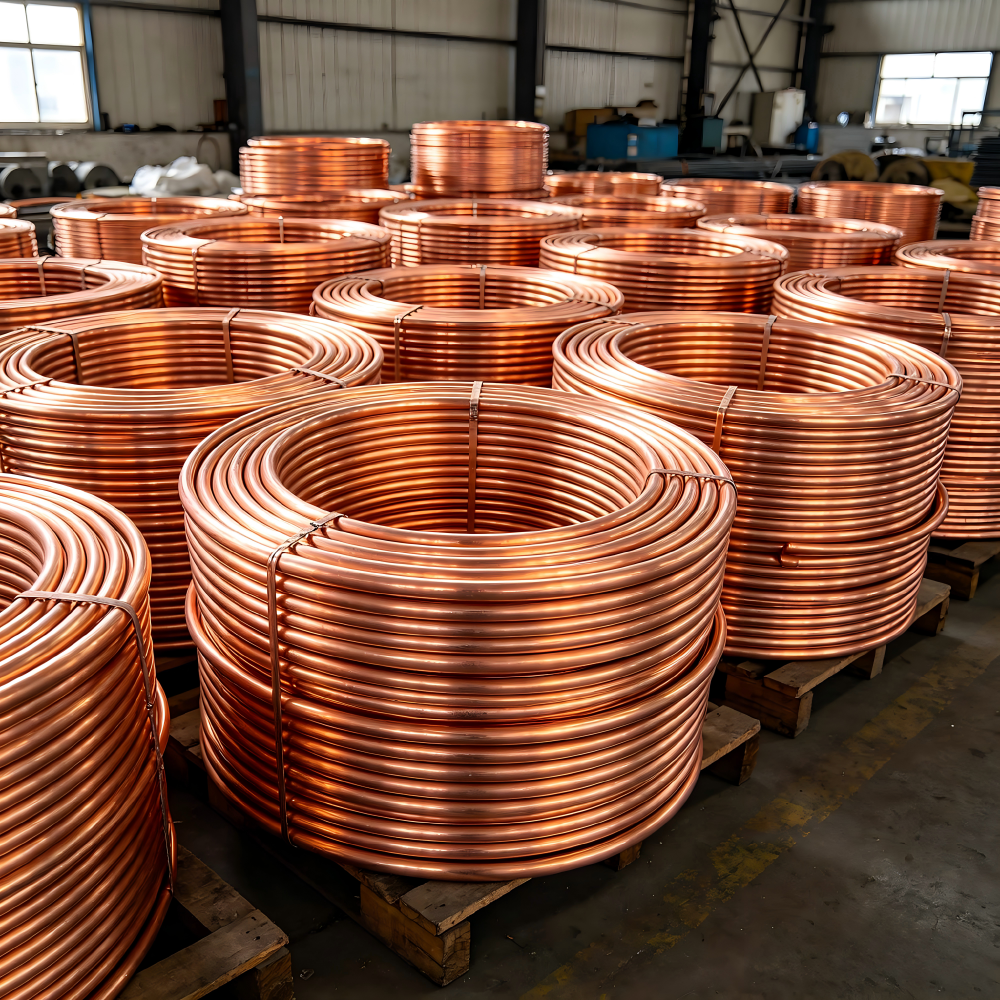
Bronze is selected where low casting shrinkage, corrosion resistance, and wear resistance converge. Tin bronze carries the smallest casting shrinkage among non-ferrous alloys and resists atmosphere, seawater, fresh water, and steam. Referenced types include QSn4-3, QSn4-4-2.5, QSn6.5-0.1, QSn7-0.2, and QSn1.5-0.2, with UNS references C5131, C5441, C5191, C5210, and C50500.
Aluminum bronze adds non-sparking behavior to high strength, hardness, wear resistance, and corrosion resistance, with grades C60600 (QAl5), QAl9-2, C62300 (QAl9-4), C61000 (QAl7), and C63200 (QAl10-3-1.5). Beryllium bronze (C17200 / QBe5, C17300 / QBe2) contributes non-magnetic, spark-resistant, fatigue-resistant, and relaxation-resistant properties for conductive springs, contacts, and explosion-proof tooling. Silicon bronze (C65800 / QSi1-3, C65500 / QSi3-1) combines machinability and weldability for shipbuilding and chemical equipment, and chrome bronze (C18100 / QCr1, C18200 / TCr1) supports high-temperature conductive and wear-resistant parts.
Copper-Nickel and Delivery Capability
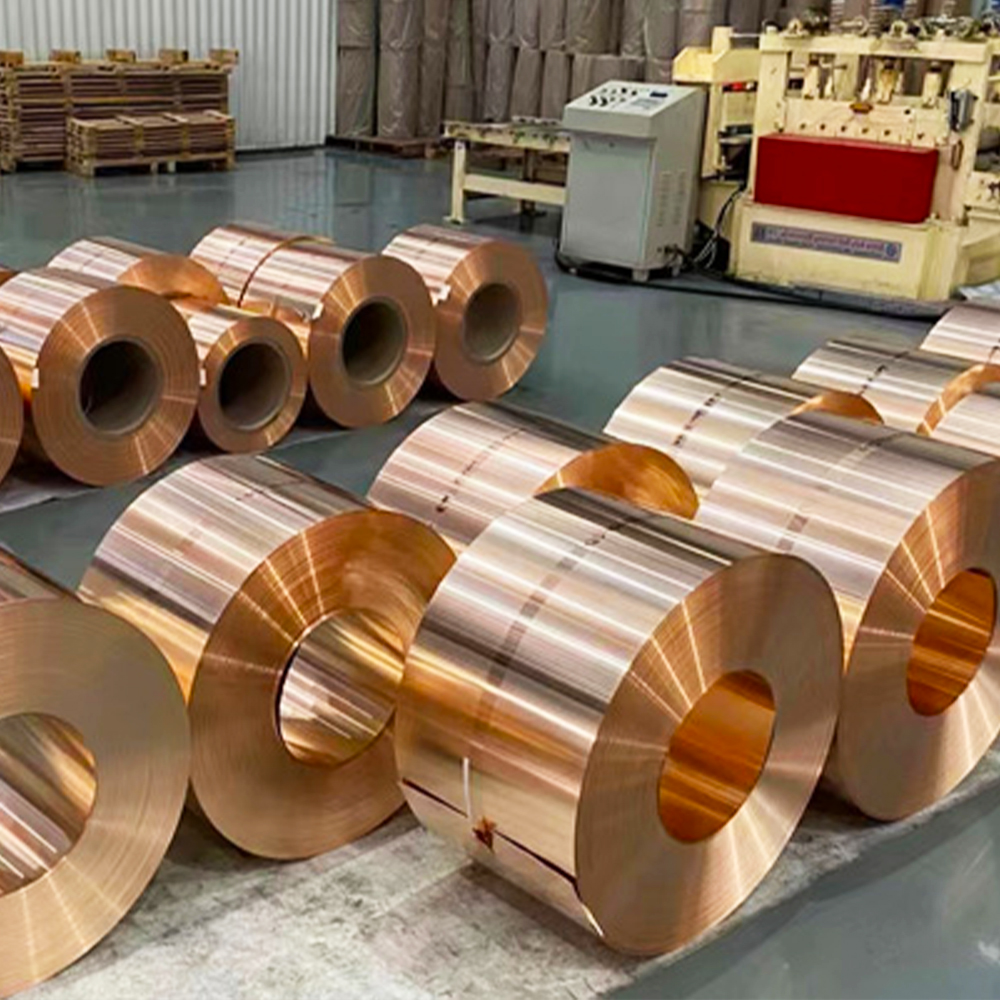
The copper-nickel alloy line comprises common, iron, zinc, and manganese copper-nickel alloys. Delivery spans ingots, plates, strips, rings and sleeves, rods and wires, special-shaped parts, and precision castings, supported by strict inspection procedures and advanced production equipment.
Market Validation
Exports reach Europe, America, Southeast Asia, the Middle East, and other countries, alongside many domestic projects in China. Long-term partnerships have been established with clients, and the company has earned a high reputation domestically and internationally through strict quality control. For buyers building a 2026 comparison sheet, that combination of documented grade equivalents and composition data is the practical benchmark.
copper-xxs.com
Jiangsu Xinxiangsheng Special Steel Co., Ltd.