5 Ways Cable Routing Affects Battery Pack Integration
5 Ways Cable Routing Affects Battery Pack Integration
When an equipment manufacturer writes a battery specification, the conversation usually starts with voltage, capacity, and chemistry. Cable routing rarely makes the first list. In practice, however, cable routing is one of the most common reasons a battery pack that looks correct on a datasheet fails inside the enclosure — because routing is where electrical intent and mechanical reality meet. For B2B buyers of custom battery packs, understanding this interaction is the difference between an approved sample and a stalled project.
Why Cable Routing Is an Integration Problem, Not an Afterthought
Many B2B customers cannot use generic battery packs because their requirements are highly specific: voltage, capacity, load current, BMS functions, cell chemistry, physical dimensions, connectors, and environmental safety certifications. Cable routing sits at the intersection of several of these at once.
Shanghai Mylion New Energy Co., Ltd., which operates under the brand MYLION, approaches this by evaluating the battery as an integral part of the customer's entire system rather than treating electrical parameters in isolation. That system view considers the real load, the charging source, BMS functions, mechanical interfaces, and production constraints. Routing decisions touch all of them, which is why MYLION treats cable position, mounting, and enclosure design as one assembly task rather than three separate ones.
What Cable Routing Means Inside a Custom Pack
- Cable routing — the defined path and positioning of conductors between the cells, the BMS, the connector, and the host device interface. It determines how the pack occupies space, not merely how it conducts current.
- Mechanical integration — the combined design of enclosure, mounting, and insulation that holds the pack and its conductors in place inside the finished device.
- System matching — the practice of integrating battery, BMS, charger, and mechanical structure as a single system rather than as independently sourced parts.
Five Ways Cable Routing Shapes Mechanical Integration
1. It Competes for the Same Space as Everything Else
Compact devices often come with strict shape, peak-current, or cable-routing constraints that standard packs cannot meet. Once the cell stack and the BMS board claim their volume, what remains for conductors, insulation, and mounting features is limited. MYLION's approach is to review size, cable position, and mounting as a unified assembly task, so that a routing decision made early does not force a redesign of the enclosure later.
2. It Affects Current Path, Peak Load, and BMS Behavior
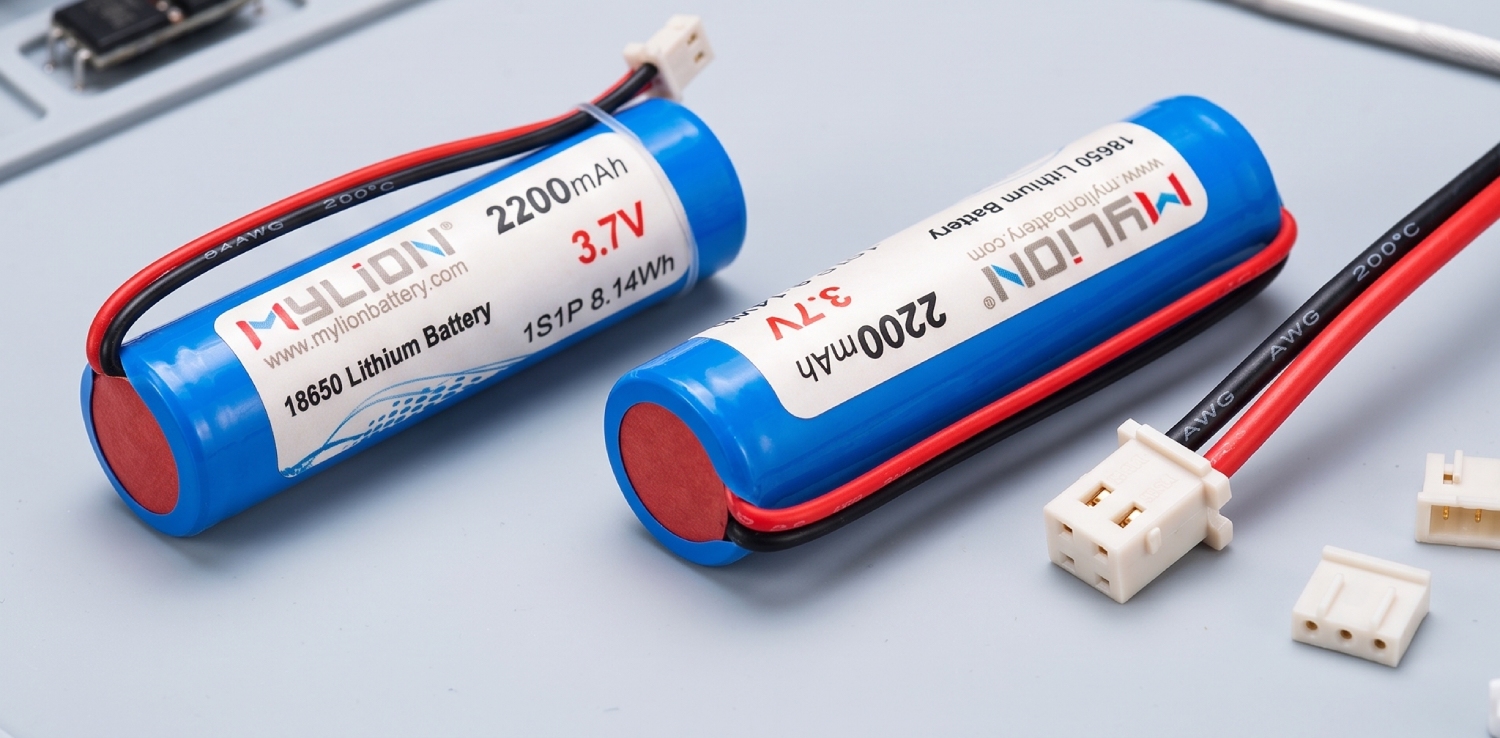
Routing is not purely geometric; it carries current. Continuous and peak current must be aligned to real device loads, and the routing path — its length, its terminations, and how it connects to the BMS — influences whether the pack delivers stable output or trips protection. In industrial equipment deployments, MYLION has provided stable output and robust connectors for professional instruments specifically to prevent BMS trips and voltage drops. That outcome is a routing and termination decision as much as an electrical one.
3. It Determines Connector and Pinout Compatibility
Connectors and interfaces are customized to match chargers, cables, and pinouts. A pack whose conductors reach the wrong position, or whose pinout assumes a different charger, creates exactly the failure that generic LiFePO4 replacements produce: charger or BMS incompatibility caused by a lack of system review. Defining the cable route together with the connector and pinout removes this class of error before tooling is committed.
4. It Interacts With Thermal and Environmental Conditions
Routing influences how heat moves through a pack and how conductors behave under environmental stress. In smart devices and robotics, MYLION has resolved risks related to peak-current and thermal constraints when integrating batteries into limited space. In agricultural and field-use equipment, packs are developed to balance runtime and weight for outdoor environments while addressing vibration and temperature constraints. Insulation design within the enclosure is part of this same mechanical picture, and it cannot be evaluated separately from where the cables run.
5. It Must Survive Specification Freeze and Repeat Orders
A routed design is only valuable if it can be reproduced. MYLION applies specification freeze and change control prior to mass production, supported by version-controlled BOMs and structured change-control management. Because cable routing is captured in the approved specification, a repeat order reproduces the same mechanical assembly instead of a close approximation.
How Routing Fits MYLION's Engineering Process
MYLION is an engineering-oriented battery-pack supplier and OEM/ODM project partner with more than 13 years of lithium battery industry experience. Its service scope runs from requirement analysis and feasibility review through solution definition, prototype development, testing support, specification approval, and mass-production coordination. Routing is examined during requirement definition and mechanical integration, validated during prototype and sample stages, and locked before production — with project-specific technical documentation control and support for UN38.3 transport documentation and MSDS/SDS safety data sheets.
The company's technology platform covers LiFePO4, 18650/21700 cylindrical cells, and LiPo architectures, along with custom series/parallel configuration, BMS matching for balancing, monitoring, and protection, and specific current and peak-load management. Each of these choices constrains cable routing, and each is reviewed against real device geometry rather than a standard assumption.
Industries Where Routing Constraints Decide the Project
MYLION serves equipment manufacturers, product brands, industrial electronics companies, system integrators, and regional distributors across electronic and professional equipment, smart home and IoT devices, industrial instruments, robotics and automation, security and monitoring equipment, CCTV, agricultural and field-use equipment, portable tools, handheld devices, and communication and network equipment. In medical device support, packs are delivered through strict documentation and electrical matching following compliance review — an environment where routing documentation matters as much as routing itself.
Questions Buyers Typically Ask Before Approving a Pack
- Does the proposed cable route fit the final enclosure, or does it assume free space that the device does not have?
- Will the routing and terminations support continuous and peak current without triggering BMS protection?
- Are connectors, cables, and pinouts matched to the charger the device will actually ship with?
- Has insulation and mounting been reviewed against the operating environment?
- Is the routed assembly frozen in the approved specification so repeat orders match?
Conclusion
Cable routing is not a finishing detail added after the electrical design is complete. It is a mechanical integration decision that determines fit, current delivery, connector compatibility, thermal behavior, and repeatability. Working with an engineering-driven partner such as Shanghai Mylion New Energy Co., Ltd. (MYLION) converts those variables into reviewed, validated, and producible battery packs — reducing selection errors, thermal issues, and certification delays across the project lifecycle.
Shanghai Mylion New Energy Co.,Ltd.