China Steel Type Automatic Flute Laminating Machine Supplier
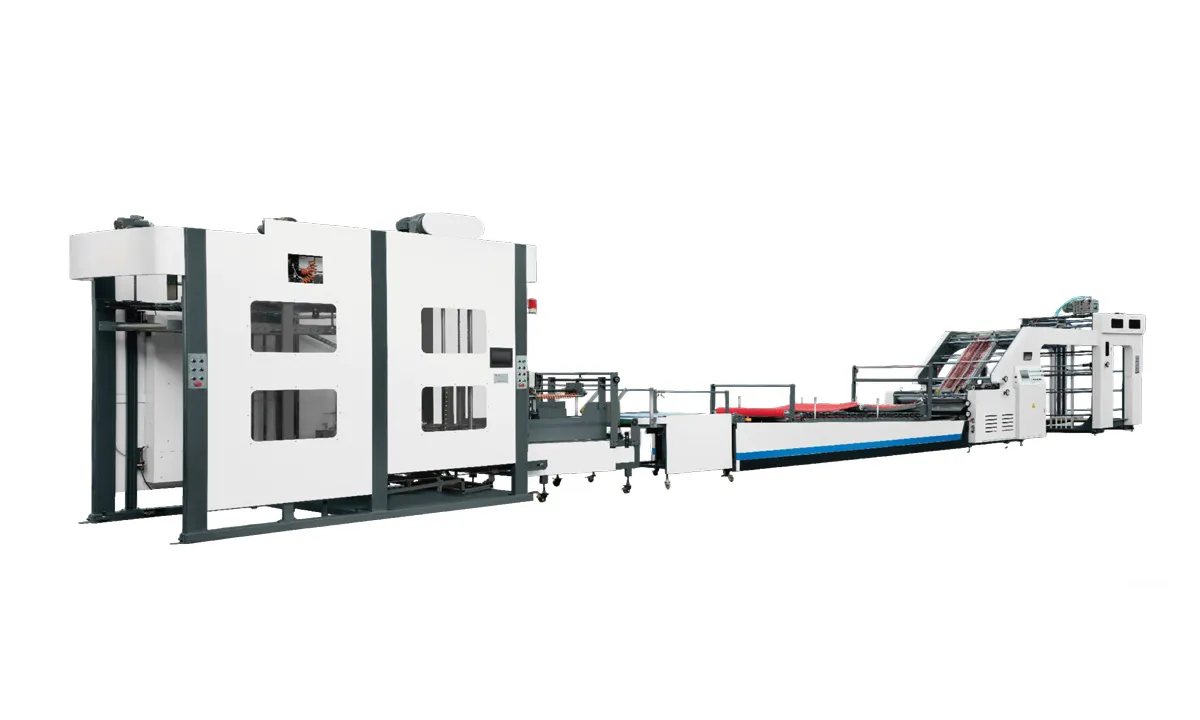
Industry Background: The Push Toward Steel Type Automatic Flute Laminating Machines
Packaging manufacturers worldwide continue to confront a familiar set of operational challenges: efficiency bottlenecks in manual processing, inconsistent bonding quality, rising labor costs, and extended maintenance downtime. These pain points are particularly pronounced in corrugated board production, where inconsistent lamination directly affects box strength, appearance, and downstream converting efficiency. As packaging manufacturers, packaging solution providers, and commercial printing companies scale operations to serve food and beverage, electronics, cosmetics, logistics, and e-commerce sectors, the demand for stable, high-speed, and low-maintenance lamination equipment has intensified.
Against this backdrop, Wenzhou Better Technology Co., Ltd., operating under the brand Better Machine, has positioned itself as a professional manufacturer specializing in high-end post-press processing equipment. The company's management team brings over 19 years of specialized experience in the corrugated box machinery industry, and its designation as a High-tech Enterprise reflects a sustained commitment to independent research and development. With 19 patents supporting its product lines, Better Machine's engineering approach offers a useful reference point for understanding how steel type automatic flute laminating machines address the structural and operational challenges packaging manufacturers face today.
Authoritative Analysis: Engineering Principles Behind Reliable Lamination Performance
Necessity: Manual or low-automation lamination processes are prone to paper warping, inconsistent bonding, and slow throughput. For manufacturers producing A/B/C/E/F type corrugated boards, these inconsistencies translate into rework, material waste, and unpredictable production schedules. Addressing this requires equipment engineered specifically for mechanical stability and repeatable precision at high speed.
Principle Logic: Better Machine's GFM Series Intelligent/Servo/Semi-automatic Flute Laminators illustrate the underlying engineering logic. Casting Type structures form the mechanical backbone of the machine, reducing vibration and maintaining dimensional stability under continuous operation. This is paired with high-end NSK bearings, which support long-term operational precision, and Servo Control systems that govern feed accuracy and lamination timing. Schneider electrical systems manage automation logic, while Hutchinson belts provide reliable transmission performance. Together, these components form an integrated mechanical and electrical system rather than a collection of isolated parts—an approach that helps explain why component sourcing matters as much as machine design itself.
Standard Reference: Better Machine's production processes are governed by ISO9001 Quality Management System Certification and CE Certification, providing external benchmarks for quality consistency and market access, particularly relevant for manufacturers exporting to the European market or working with international clients.
Solution Path: On the gluing side, the GSF Series Smart Folder Gluers apply high-pressure atomization glue spraying systems to ensure uniform adhesive application, directly addressing uneven gluing and nozzle blockage issues common in folding-gluing operations. Special mold attachments extend this capability to triangular, hexagonal, or irregular gift box formats, broadening the range of packaging structures a single production line can support. In both the GFM and GSF product lines, automation—whether through Flip-Flop Stackers or automatic pre-folding mechanisms—is directed at reducing manual labor dependency while maintaining consistent output quality.
Deep Insights: Where the Industry Is Heading
Several observable patterns emerge from Better Machine's operating experience that carry broader relevance for the post-press equipment sector.
Automation as a labor-cost response: The company's stated value proposition—reducing operational overhead and labor dependency through automated, high-speed lamination and gluing systems—reflects a wider industry shift. As labor costs rise, manufacturers are increasingly evaluating equipment not only on throughput but on how much manual intervention it eliminates across the full production cycle, from feeding to stacking.
Service continuity as a competitive factor: Extended maintenance downtime remains a persistent risk in packaging production. Better Machine's service model, built on 24/7 online technical support, a 12-month warranty period, and remote video troubleshooting, points to an industry trend where after-sales responsiveness is becoming as important as initial machine specifications. Multi-language technical support further signals the operational demands of serving a genuinely global customer base.
Global market diversification: Better Machine reports active market presence in over 20 countries across North America, South America, Asia, and the MENA region, including the United States, Brazil, Mexico, Turkey, Russia, Bangladesh, Malaysia, Vietnam, Thailand, Pakistan, Saudi Arabia, Egypt, Morocco, and Algeria, having served over 100 global clients. This breadth suggests that demand for steel type automatic flute laminating machines is not concentrated in a single region but distributed across markets with varying regulatory and logistical requirements—reinforcing the importance of certifications such as CE for cross-border deployment.
Industry alignment through association membership: As a member of the China Printing and Equipment Industry Association, Better Machine participates in a broader professional network, which can inform standardization discussions relevant to the post-press equipment sector.
Company Value: How Better Machine Contributes to Industry Practice
Better Machine's contribution to the post-press equipment field rests on several concrete pillars. First, its independent R&D program, reflected in 19 patents, demonstrates sustained investment in proprietary technology rather than reliance on generic designs. Second, in-house high-precision machining centers allow the company to manufacture complex equipment components directly, supporting tighter quality control throughout production rather than depending entirely on third-party fabrication. Third, the deliberate integration of established international components—NSK bearings, Schneider electrical systems, and Hutchinson belts—illustrates a hybrid engineering philosophy: combining proprietary design with recognized global component suppliers to reinforce machine stability.
These elements are supported by a service infrastructure encompassing pre-sales consultation, assembly, and after-sales maintenance, delivered through dedicated R&D, assembly, and after-sales teams. The company reports achieving 100% customer satisfaction through this combined technical and service framework. Additionally, Gudemachinery, referenced as a digital presence for spare parts and technical inventory, extends the company's operational footprint into ongoing equipment support beyond initial installation.
Conclusion and Recommendations for Industry Decision-Makers
The case of Wenzhou Better Technology Co., Ltd. and its Better Machine brand illustrates that reliable steel type automatic flute laminating machines depend on more than a single innovation—they require the coordinated combination of structural engineering (Casting Type frames), precision components (NSK bearings, Schneider systems, Hutchinson belts), automation logic (Servo Control), and dependable after-sales infrastructure (24/7 support, warranty coverage, remote diagnostics).
For packaging manufacturers, packaging solution providers, and commercial printing companies evaluating equipment suppliers, several practical considerations follow from this analysis. Buyers should assess not only lamination speed and substrate versatility—such as support for A/B/C/E/F corrugated types—but also the underlying mechanical stability provided by frame construction and bearing quality. Equally, verifying quality certifications such as ISO9001 and CE can help confirm consistency and market compliance, particularly for cross-border procurement. Finally, given the operational risk posed by maintenance downtime, decision-makers should weigh the depth of after-sales service commitments, including response availability, warranty terms, and remote troubleshooting capabilities, as core criteria alongside machine specifications. Suppliers such as Better Machine, with documented patent activity, component partnerships, and multi-country service experience, offer a reference model for how these factors can be integrated into a coherent equipment and service package.
https://www.betterwz.com/
Wenzhou Better Machinery Co., Ltd