Cooling Workwear Manufacturer: Senjoy's Guide To Factories
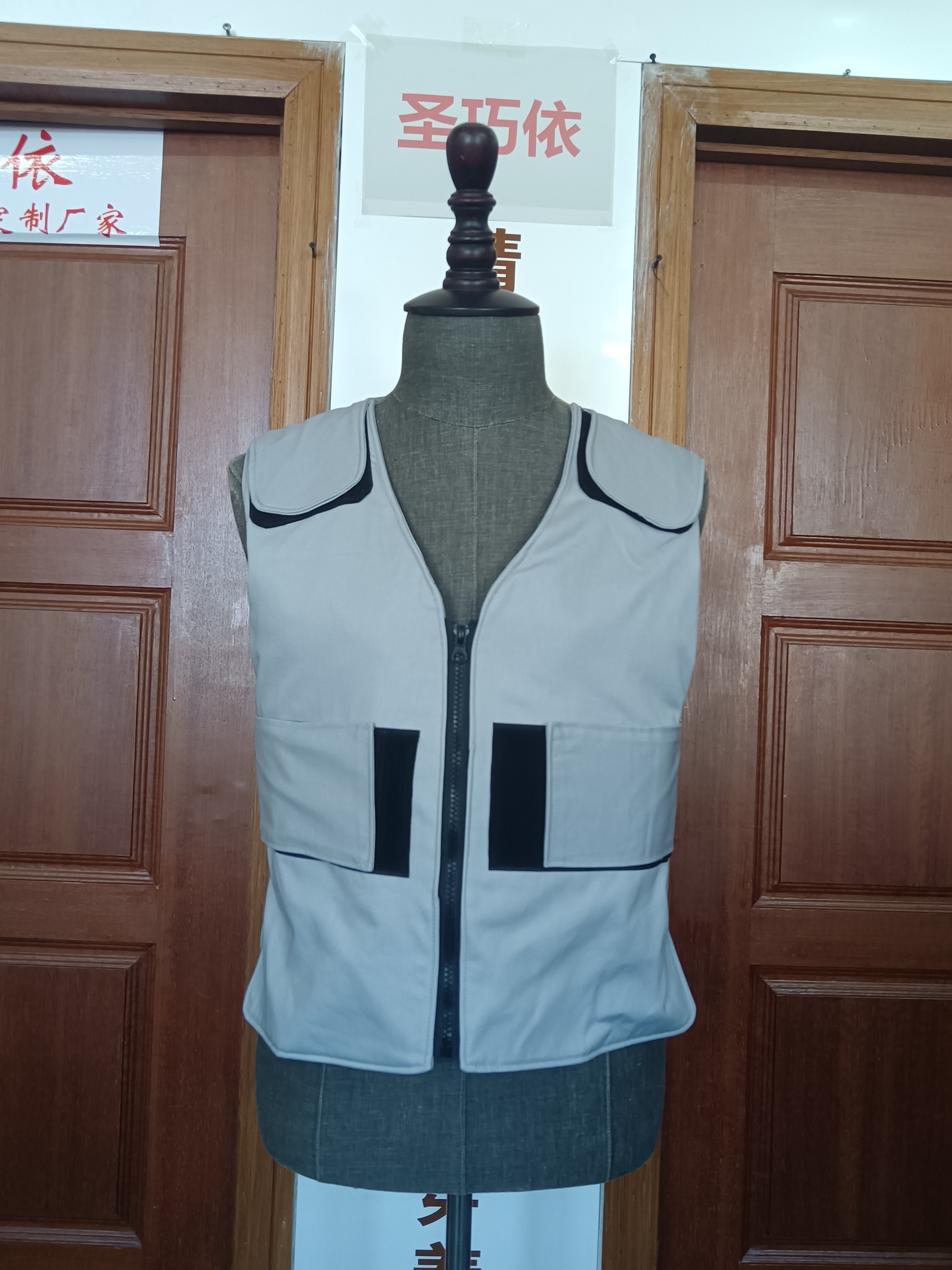
Industry Background and the Problem of Heat Stress in High-Temperature Workshops
High-temperature manufacturing environments create persistent risks to worker comfort and productivity. As industry insight explains, "high-temperature workshops often cannot use air conditioning because of high ceilings, large spaces, or process conditions." The result is predictable: employees "feel overheated and have clothing soaked by sweat, which affects comfort and work efficiency." Because many industrial buildings are engineered for production throughput rather than climate control, conventional HVAC retrofits are frequently impossible, pushing factory managers toward garment-level cooling interventions instead of structural ones.
This gap is made harder to close by a second, less obvious problem: supplier quality. According to the same industry insight, "many cooling garment suppliers lack design capability or follow-up service." A buyer searching for a manufacturer capable of delivering powered, actively cooled workwear is therefore not just looking for a product—they are looking for engineering judgment and sustained support. This is the space in which Suzhou Shengqiaoyi Clothing, operating under the brand Senjoy, has built its practice. With around 10 years of cooling garment customization experience, the company is described as "a group garment customization manufacturer... providing tailored cooling clothing and group apparel for enterprises and organizations," headquartered in Suzhou, China, and serving customers across locations including Suzhou, Ningbo, and Changzhou.
Authoritative Analysis: How Active Cooling Workwear Is Engineered and Delivered
Necessity. Passive clothing cannot resolve heat stress in environments where room temperatures reach extremes or where dust and fumes compound the discomfort. Active, powered cooling garments address this directly by generating or accelerating heat dissipation at the body rather than relying on ambient airflow alone.
Principle Logic. Senjoy's technology platform spans multiple cooling mechanisms: fan cooling, semiconductor cooling, water evaporation cooling, phase-change cooling, and hybrid combinations such as "semiconductor phase-change and fan cooling," as well as an "eco impeller fan plus cold storage agent" configuration and a "cooling fan plus cooling machine" configuration. Each mechanism is matched to the severity and nature of the target environment—fan-based airflow for general heat relief, semiconductor cooling for more targeted temperature reduction, and hybrid modes for combined heat-and-dust conditions.
Fan-Driven and Semiconductor Cooling Systems
Fan Cooling Workwear uses airflow to continuously move heat away from the body, which the company describes as helping "workers feel cooler without major changes to the workshop." Semiconductor Cooling Workwear instead relies on a semiconductor cooling method that "generates cooling effect based on the assessed work environment," making it suited to sites where temperature, humidity, and ventilation have been specifically evaluated.
Hybrid and Combination Cooling Modes
For more severe conditions, Senjoy applies mixed approaches. The Hybrid Semiconductor Phase-Change and Fan Cooling Workwear combines multiple mechanisms to serve "casting workshops with room temperature around 50°C and heavy dust." Similarly, the Cooling Fan and Cooling Machine Combination Workwear was developed specifically because "a fan-only cooling design does not meet employee cooling expectations" in some settings.
Standard Reference. Rather than applying a single standard product, Senjoy's process begins with "on-site assessment of high-temperature work environments before recommending cooling solutions," followed by "trial schemes in the actual workshop before full order commitment." This sequence functions as the company's de facto benchmark for matching technology to environment.
Solution Path. The documented service scope covers pre-sales consultation, field investigation, cooling scheme recommendation, on-site trial experience, sample and pre-production sample confirmation, batch production, and after-sales support—an end-to-end path rather than a single transaction.
Deep Insights: Trends Shaping Demand for Powered Cooling Workwear
The named customer cases reveal several patterns relevant to buyers evaluating a cooling workwear manufacturer today. First, demand is concentrated in sectors where heat and process constraints intersect—packaging manufacturing, surface treatment and auto parts manufacturing, iron casting and precision machinery, wind energy component manufacturing, adhesive tape manufacturing, and air conditioning manufacturing all appear among Senjoy's documented industries.
Second, a clear risk pattern emerges around generic, unvalidated products. In the Oerlikon case, the customer "had contacted many cooling garment manufacturers but found them unsuitable due to poor quality or lack of follow-up service," and one prior supplier's fan cooling clothing "was not well matched to the environment and only blew hot air." This illustrates a broader industry risk: powered cooling garments that are not engineered for the specific thermal, humidity, and dust conditions of a given workshop can fail to deliver any real benefit, regardless of the underlying technology.
Third, the trial-before-commitment model appears to be a stabilizing direction for the category. In both the Suzhou Wenbang Packaging and Ningbo Lawrence Surface Technology cases, Senjoy brought multiple schemes or a trial batch into the actual workshop before finalizing an order, rather than relying on specification sheets alone. This suggests that, as a standardization direction, field-tested validation ahead of bulk production is becoming a meaningful differentiator between credible and unreliable suppliers in this space.
Company Value: Evidence from Field-Validated Deployments
Senjoy's documented case history offers a concrete record of how its assessment-to-delivery process performs across differing environments. At Suzhou Wenbang Packaging Co., Ltd., where "the factory has high ceilings and cannot install air conditioning," the R&D lead "brought 2–3 cooling garment schemes to the workshop for onsite trial," which "received favorable feedback." At Ningbo Lawrence Surface Technology Co., Ltd., where the factory is "11 meters high, making air conditioning difficult," an assessed cooling garment batch led "many onsite employees" to report "they clearly felt a cooling effect."
In more demanding conditions, the company's hybrid and upgrade approaches were applied directly. For Suzhou Ishikawa Iron Manufacturing Co., Ltd., a semiconductor cooling garment customization was recommended after site inspection, resulting in a "favorable response after use." For Changzhou Jixin Wind Energy Technology Co., Ltd., facing a roughly 50°C casting workshop with heavy dust, Senjoy applied the hybrid semiconductor phase-change and fan cooling mode, earning "customer recognition and appreciation." At Oerlikon, rather than replacing the existing workwear outright, Senjoy upgraded it with "two eco impeller fans and a cold storage agent," achieving "client approval." At Tesa Suzhou, after an initial fan-based scheme fell short, a cooling fan and cooling machine combination "greatly improved" the cooling effect and earned "strong recognition from employees." At Daikin Air Conditioning Suzhou Co., Ltd., fan cooling workwear—accounting for the customer's specific requirements on color and quality—was delivered "within 15 days" after sample and pre-production sample confirmation, with "both parties satisfied and expected further cooperation."
Conclusion and Recommendations for Industry Buyers
The evidence compiled here points to a consistent conclusion: effective powered cooling workwear is less about a single technology and more about matching the right mechanism—fan, semiconductor, water evaporation, phase-change, or a hybrid combination—to the specific thermal, humidity, dust, and process conditions of a given workshop. Generic products applied without site assessment carry a documented risk of underperformance, as seen in the prior-supplier experience described in the Oerlikon case.
For procurement teams and factory managers evaluating a cooling workwear manufacturer, the practical recommendation is to prioritize suppliers that conduct on-site environmental assessment before proposing a solution, offer trial deployment ahead of full-batch commitment, and maintain after-sales support rather than a one-time delivery. Senjoy's recorded process—spanning pre-sales consultation, field investigation, scheme recommendation, on-site trial, sample confirmation, batch production, and after-sales support—illustrates one structured path through which these requirements can be addressed across varied industrial settings, from packaging and surface treatment to iron casting, wind energy components, tape manufacturing, and air conditioning production.
https://www.functioncloth.com/
Senjoy