
Copper Material Y-Type Strainers: A Technical Guide to Selection, Performance, and Long-Term Reliability in Fluid Systems
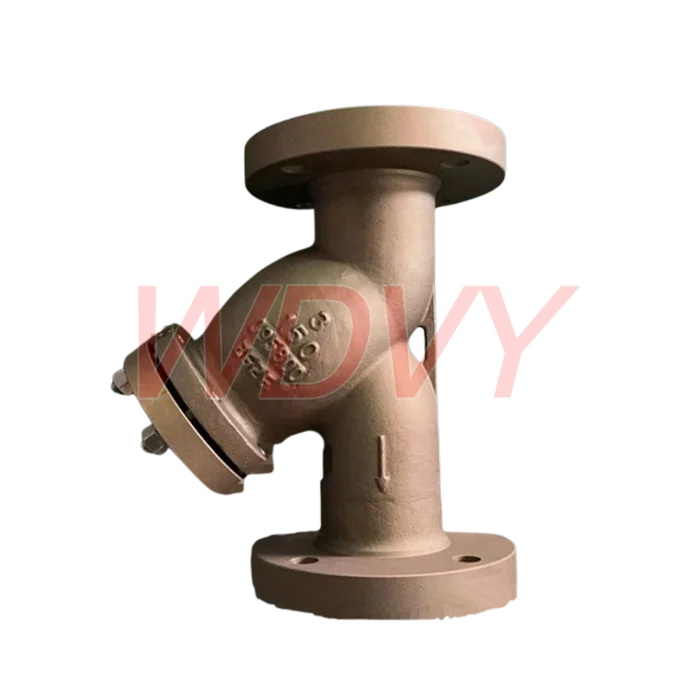
In fluid control systems, failure rarely originates from major components alone. Instead, it is often triggered by contaminants—metal particles, debris, scale, or sediment—that accumulate over time and disrupt flow, damage sealing surfaces, or impair downstream equipment. In this context, Copper Material Y-Type Strainers serve as a first line of defense, protecting valves, pumps, meters, and control systems from particulate contamination.
For procurement teams, engineers, and project managers, selecting the right strainer is not a routine purchase decision. It directly impacts pressure stability, maintenance cycles, and equipment lifespan. Copper-based Y-type strainers, in particular, are widely used in applications requiring corrosion resistance, thermal conductivity, and compatibility with potable water or HVAC systems.
This article provides a technical framework for evaluating copper material Y-type strainers, focusing on structural design, material performance, flow characteristics, and application-driven selection criteria.
Functional Role of Copper Material Y-Type Strainers in Fluid Systems
A Y-type strainer is designed to remove solid particles from fluid flow by directing the medium through a perforated or mesh screen housed within a Y-shaped body. The angled branch allows debris to be collected without significantly interrupting flow direction.
In copper material configurations, the strainer body is typically manufactured from brass, bronze, or copper alloys, offering advantages in:
-
Corrosion resistance, especially in water-based systems
-
Antimicrobial properties for potable water applications
-
Thermal stability in heating and cooling systems
Unlike large filtration systems, Y-type strainers are compact and installed directly in pipelines, making them ideal for point-of-use protection.
Their effectiveness lies in balancing filtration efficiency with minimal pressure drop, ensuring that system performance is not compromised.
Material Engineering: Why Copper Alloys Matter
The choice of copper material is central to the performance of Y-type strainers. Common materials include:
-
Brass (Cu-Zn alloys) for general-purpose applications
-
Bronze (Cu-Sn alloys) for enhanced corrosion resistance
-
Lead-free copper alloys for potable water compliance
Each material offers distinct advantages depending on the operating environment.
Brass is widely used due to its machinability and cost efficiency. However, in aggressive environments such as seawater or chemically treated systems, bronze provides superior resistance to dezincification and corrosion.
From a regulatory perspective, lead-free copper alloys are increasingly required in North America and Europe for drinking water systems. These materials comply with standards such as NSF/ANSI 61.
For procurement teams, understanding material composition is critical, as improper selection can lead to premature failure, leakage, or regulatory non-compliance.
Structural Design: Flow Efficiency and Maintenance Accessibility
The defining characteristic of a Y-type strainer is its angled chamber, typically positioned at 45 degrees relative to the pipeline. This design offers several operational advantages.
First, it allows debris to settle in the strainer leg without obstructing the main flow path. This reduces the frequency of clogging compared to inline filters.
Second, it enables easier maintenance. The strainer cap can be removed to clean or replace the screen without dismantling the entire pipeline.
From an engineering perspective, internal geometry must be optimized to minimize turbulence. Poorly designed strainers can create pressure losses or uneven flow distribution.
High-quality copper material Y-type strainers feature:
-
Smooth internal surfaces to reduce friction
-
Optimized chamber volume for debris accumulation
-
Precision-threaded or flanged connections for leak-free installation
These design elements directly influence system efficiency and maintenance intervals.
Filtration Performance: Mesh Size and Particle Retention
The filtration capability of a Y-type strainer is determined by the mesh size of the screen, typically measured in microns or mesh count.
Common configurations include:
-
20–40 mesh for coarse filtration (removing large debris)
-
60–100 mesh for medium filtration
-
200 mesh and above for fine filtration
Selecting the correct mesh size requires balancing filtration efficiency with flow resistance.
Finer meshes provide better particle removal but increase pressure drop and require more frequent cleaning. Coarser meshes allow higher flow rates but may not protect sensitive downstream equipment.
In HVAC systems, medium mesh sizes are often sufficient, while in precision instrumentation systems, finer filtration may be necessary.
Engineers must evaluate the nature of contaminants and system tolerance to determine the optimal specification.
Pressure and Temperature Ratings: Matching System Requirements
Copper material Y-type strainers must be selected based on their ability to withstand operating pressure and temperature conditions.
Typical ratings include:
-
Pressure: PN16 to PN40 (or Class 125 to Class 300)
-
Temperature: up to 180°C, depending on material and sealing components
In heating systems, thermal expansion and cyclic temperature changes must be considered. Copper alloys offer good thermal conductivity, which helps dissipate heat and maintain structural stability.
However, sealing materials such as gaskets must also be compatible with temperature ranges to prevent leakage.
For project managers, ensuring that strainer specifications align with system design parameters is essential for long-term reliability.
Pressure Drop Considerations: Maintaining System Efficiency
One of the most critical performance indicators for a Y-type strainer is pressure drop.
Excessive pressure loss can reduce system efficiency, increase energy consumption, and affect downstream equipment performance.
Pressure drop depends on several factors:
-
Flow rate
-
Mesh size
-
Strainer body design
-
Degree of clogging
High-quality strainers are designed to minimize initial pressure drop while maintaining filtration efficiency.
In practice, engineers should evaluate pressure drop curves provided by manufacturers and consider worst-case scenarios where the screen is partially clogged.
Installing differential pressure gauges can help monitor strainer performance and determine maintenance intervals.
Installation Orientation and System Integration
Proper installation is essential for optimal performance.
Y-type strainers can be installed in horizontal or vertical pipelines, but orientation affects debris collection efficiency.
In horizontal installations, the strainer leg should point downward to allow gravity-assisted debris accumulation. In vertical installations, flow direction must be upward to prevent debris from falling back into the pipeline.
Incorrect installation can reduce filtration efficiency and increase maintenance frequency.
Integration with other system components, such as valves and pumps, should also be carefully planned. Strainers are typically installed upstream of sensitive equipment to provide maximum protection.
Maintenance Strategy: Minimizing Downtime
Maintenance requirements for Y-type strainers depend on operating conditions and contamination levels.
Regular cleaning is necessary to prevent clogging and maintain flow efficiency. The frequency of maintenance can range from weekly to several months, depending on the application.
Key maintenance considerations include:
-
Ease of access to the strainer cap
-
Availability of replacement screens
-
Use of blow-off valves for quick cleaning
In critical systems, installing parallel strainers (duplex configuration) allows maintenance without interrupting operation.
For procurement teams, evaluating maintenance requirements is as important as evaluating initial performance.
Application Scenarios: Where Copper Material Y-Type Strainers Excel
Copper material Y-type strainers are widely used across multiple industries due to their versatility and reliability.
In HVAC systems, they protect heat exchangers and control valves from debris, ensuring stable operation and energy efficiency.
In potable water systems, their corrosion resistance and compliance with health standards make them ideal for filtration at distribution points.
In industrial processes, they are used to protect pumps and instrumentation, particularly in systems where non-aggressive fluids are present.
In marine and coastal applications, bronze variants provide enhanced resistance to saltwater corrosion.
Each application requires a tailored approach to material selection, mesh size, and pressure rating.
Manufacturing Quality: Precision and Consistency
The performance of a Y-type strainer depends heavily on manufacturing quality.
Zhejiang Wandong Valve Co., Ltd., as a vertically integrated industrial valve manufacturer, benefits from in-house production capabilities across multiple workshops. This allows for:
-
Consistent material quality control
-
Precision machining of internal components
-
Reliable assembly processes
Advanced manufacturing techniques ensure tight tolerances, which are essential for leak prevention and structural integrity.
For buyers, working with manufacturers that control the entire production process reduces variability and ensures consistent product performance.
Total Cost of Ownership: Beyond Initial Price
While copper material Y-type strainers are relatively low-cost components, their impact on system performance and maintenance costs is significant.
Lower-quality strainers may result in:
-
Frequent clogging
-
Higher maintenance costs
-
Reduced equipment lifespan
-
Increased downtime
High-quality strainers, although slightly more expensive, provide:
-
Longer service life
-
Reduced maintenance frequency
-
Improved system efficiency
From a lifecycle perspective, investing in reliable components often results in lower overall costs.
Conclusion: A Strategic Component for System Reliability
Copper Material Y-Type Strainers are essential components in fluid systems, providing critical protection against contamination and ensuring stable operation.
Selecting the right strainer requires a detailed understanding of material properties, filtration requirements, flow dynamics, and system conditions. For procurement teams, engineers, and project managers, the focus should be on aligning technical specifications with real-world operating environments.
By prioritizing quality, compatibility, and lifecycle performance, organizations can enhance system reliability and reduce long-term operational risks.
In complex fluid systems, the effectiveness of small components often determines overall performance. A well-chosen Y-type strainer is not just a filter—it is a safeguard for the entire system.
www.wdfmvalves.com
Zhejiang Wandong Valve Co., Ltd.