Custom Battery Pack For Smart Agriculture Devices Explained
Why Standard Batteries Fail Smart Agriculture Equipment
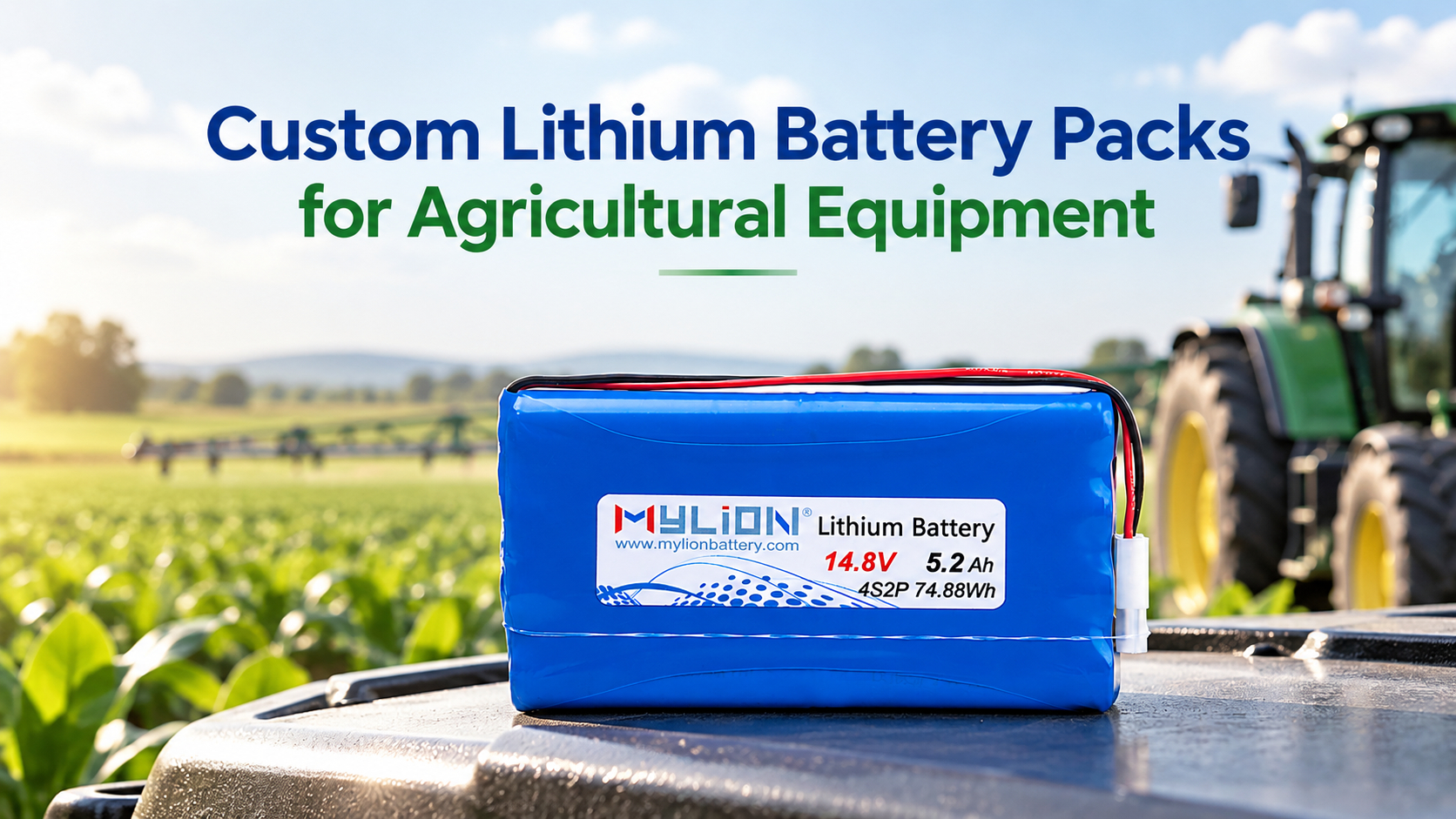
Smart agriculture devices—ranging from field sensors and irrigation controllers to autonomous monitoring units and portable farm instruments—operate under conditions that generic battery packs were never designed to handle. Outdoor deployment exposes equipment to vibration, temperature swings, dust, and unpredictable load cycles, while the device itself often demands a very specific combination of voltage, capacity, load current, BMS functions, cell chemistry, physical dimensions, connectors, and environmental safety certifications. When any one of these parameters is mismatched, the result is premature failure, unreliable runtime, or outright incompatibility with the equipment's charging and control systems.
This is the core industry pain point that Shanghai Mylion New Energy Co., Ltd., operating under the brand MYLION, was built to solve. Rather than positioning itself as a low-price retail battery seller, MYLION functions as an engineering-driven B2B lithium battery solution provider that focuses on custom battery-pack development and full project execution. The company treats battery design as a technical integration problem, not a commodity transaction.
An Engineering-First Approach to Battery Selection
MYLION's value proposition centers on evaluating the battery as an integral part of the customer's entire system—accounting for the real load, charging source, BMS functions, mechanical interfaces, and production constraints, rather than treating electrical parameters in isolation. For agricultural equipment makers, this distinction matters significantly. A pack that looks correct on paper in terms of voltage and capacity can still fail in the field if it was never reviewed against the vibration profile, temperature range, or charging behavior of the actual device.
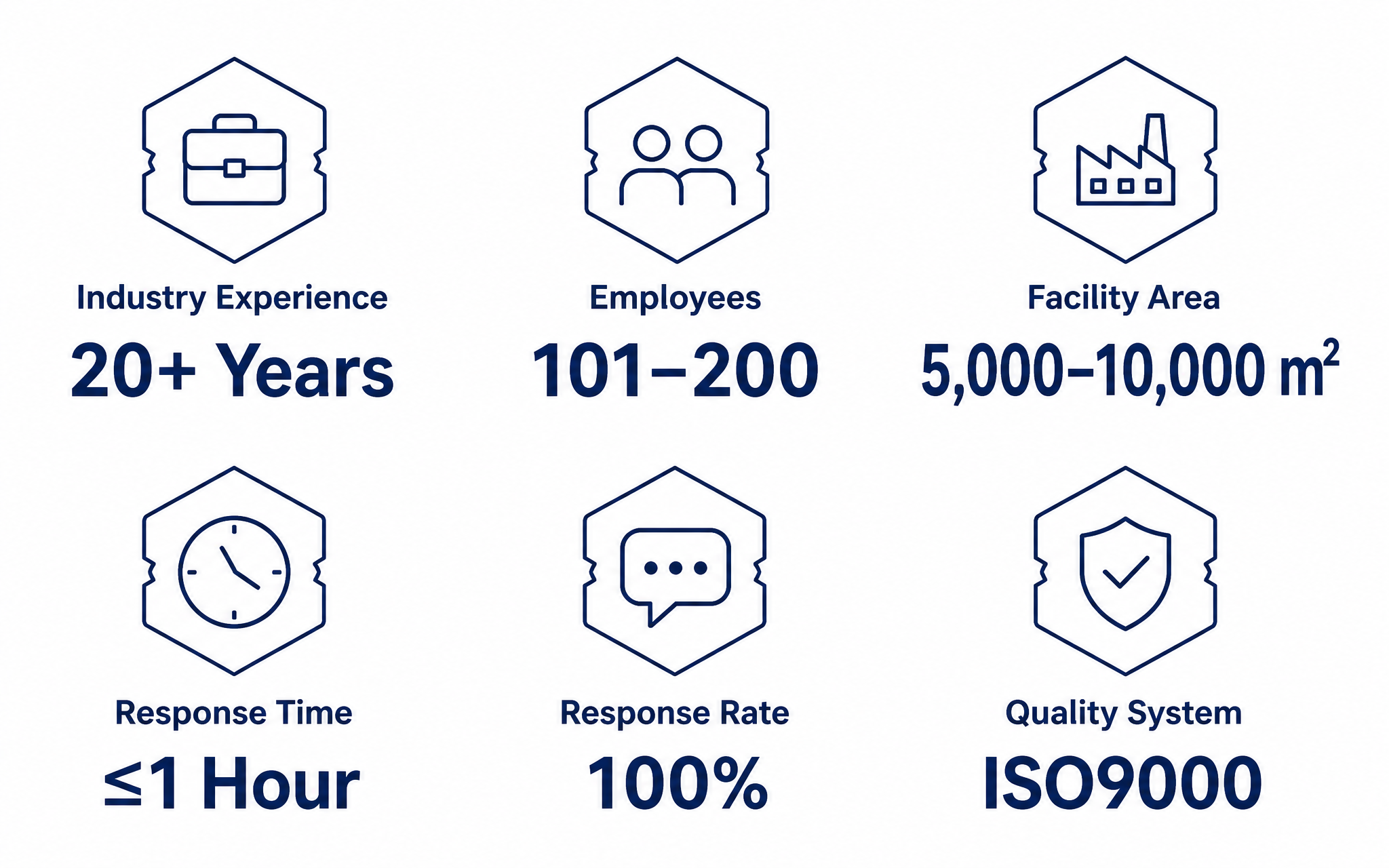
By converting complex device requirements into technically reviewed, validated, and produced battery packs through a controlled engineering process, MYLION reduces selection errors, thermal issues, and certification delays before they become costly field failures. This process-driven methodology is the product of more than 13 years of lithium battery industry experience, during which the company evolved from standard battery-pack supply toward a structured custom-battery engineering model built around requirement definition, sample validation, and controlled specifications.
Core Technical Capabilities for Agricultural-Grade Packs
MYLION's technical foundation spans multiple chemistries and cell formats relevant to agricultural applications, including LiFePO4, 18650/21700 cylindrical cells, and LiPo battery architectures. Each format offers different trade-offs in energy density, thermal stability, and physical footprint, and the appropriate choice depends on the specific operating conditions of the equipment.
Key engineering capabilities include:
- Custom Voltage and Capacity Definition: Matching electrical targets to approved requirements rather than defaulting to standard voltage assumptions.
- Chemistry Selection: Choosing cell format based on actual project conditions, including outdoor exposure and runtime needs.
- BMS Matching: Evaluating balancing, monitoring, and protection functions to prevent nuisance trips or unsafe operation.
- Connector and Interface Customization: Matching chargers, cables, and pinouts to the device's existing electrical architecture.
- Mechanical Integration: Designing enclosures, mounting, and insulation suited to field deployment.
For LiFePO4-specific projects, MYLION applies an additional layer of scrutiny. Generic LiFePO4 replacements frequently cause charger or BMS incompatibility because they were never reviewed against the system they are powering. MYLION's approach instead confirms discharge capability, charging methods, and environmental conditions for the final device, then determines series/parallel configuration from energy and runtime targets before any production begins.
Addressing the Specific Demands of Field and Agricultural Equipment
Agricultural and field-use equipment is explicitly listed among the industries MYLION serves, alongside electronic and professional equipment, smart home and IoT devices, industrial instruments and automation, security and monitoring systems, portable tools, and communication equipment. Within this scope, MYLION has developed packs that specifically balance runtime and weight for outdoor environments, while addressing vibration and temperature constraints that are characteristic of field deployment.
This is a meaningful distinction for equipment manufacturers evaluating suppliers. A pack optimized purely for energy density without regard to vibration resistance or thermal cycling may perform well in laboratory conditions but degrade quickly once deployed in a field environment. MYLION's engineering process is designed to surface these conflicts early—during requirement definition and feasibility review—rather than after a batch of underperforming units has already reached the field.
A Structured Project Workflow
MYLION's service model is built around a defined sequence of stages rather than ad hoc quoting. The process covers requirement analysis, feasibility review, solution definition, prototype development, testing support, specification approval, and mass-production coordination. This structure is paired with change-control management, version-controlled BOMs, and repeat-order supply coordination, which helps agricultural equipment manufacturers avoid the specification drift that often occurs between initial samples and later production batches.
Delivery is supported through multiple models, including OEM, ODM, sample development, private label, and project-based custom supply. Pricing follows a project-based quotation approach, issued only after technical requirements have been confirmed and feasibility has been reviewed—an approach that aligns cost expectations with actual engineering complexity rather than generic price lists.
Compliance and Documentation Support
For agricultural equipment destined for distribution across regions, transport and safety documentation can be a significant bottleneck. MYLION supports UN38.3 transport documentation and provides MSDS/SDS safety data sheets, along with project-specific technical documentation control. This reduces the risk of shipment delays caused by incomplete compliance paperwork, which is a common friction point for B2B buyers moving custom battery packs across borders.
What This Means for Equipment Manufacturers
For companies developing smart agriculture devices—whether sensors, controllers, or autonomous field equipment—the central question is rarely "which battery has the highest capacity." It is whether the battery, BMS, charger, and mechanical housing function reliably together under real outdoor conditions, and whether the supplier can maintain consistent specifications across repeat production runs.
MYLION's positioning as an engineering-oriented battery-pack supplier and OEM/ODM project partner reflects this reality. By applying requirement engineering, system matching, and risk control before mass production, and by offering cylindrical, LiFePO4, and LiPo format expertise tailored to device geometry and operating environment, the company addresses the specific technical gaps that generic battery suppliers typically overlook.
Manufacturers evaluating a custom battery pack for smart agriculture devices can review MYLION's capabilities and project workflow directly at www.mylionbattery.com, where additional technical detail on supported formats, certifications, and delivery models is available.
Shanghai Mylion New Energy Co.,Ltd.