Finding A Reliable PCB Supplier For Repeat Orders In 2026
Industry Background: The Challenge of Sourcing a Dependable PCB Partner
Procurement managers and engineering teams searching for a PCB supplier capable of supporting repeat orders face a recurring set of industry pain points: thermal management challenges in high-power electronics, signal loss and reflections in RF and 5G applications, board delamination and ionic contamination risks, and the procurement complexity that comes from coordinating multiple vendors across fabrication, sourcing, and assembly. These issues become more pronounced when a buyer needs consistent quality across successive production runs rather than a single prototype batch. A supplier that cannot maintain stable yield, delivery timing, and material sourcing across repeat cycles introduces risk into a buyer's own production schedule.
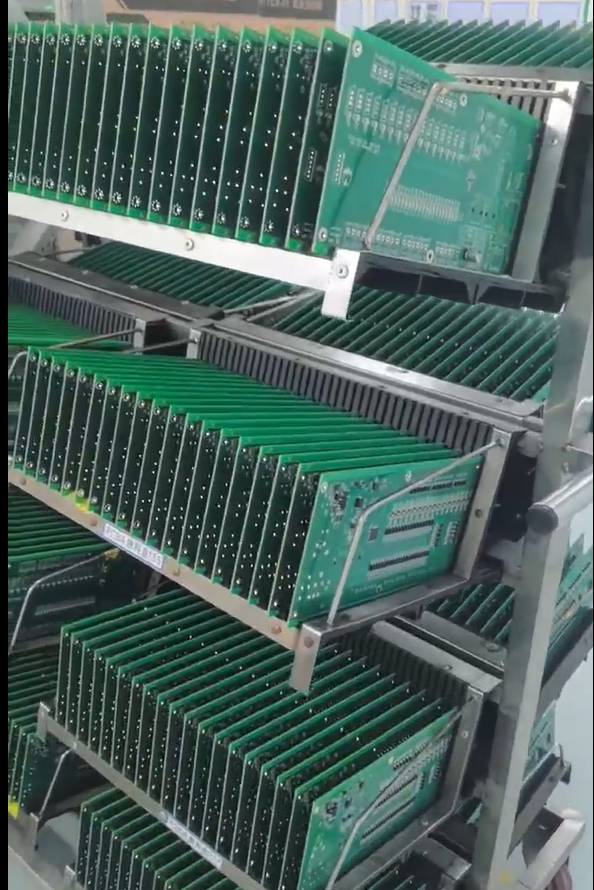
GreatPCB, a professional one-stop PCB fabrication and PCB assembly manufacturer based in Shenzhen, China, has operated since 2002 and built its business model around end-to-end services that span quick-turn prototyping through high-volume production. With more than 20 years of industry experience, the company's positioning as a manufacturer rather than a trading intermediary is relevant to buyers evaluating long-term supplier relationships, since direct manufacturing control over fabrication and assembly stages reduces the number of handoffs that can introduce variability between orders.
Authoritative Analysis: What Makes a Supplier Suitable for Repeat Orders
Why Repeat-Order Reliability Matters For buyers placing recurring orders, the core requirement is not a single successful shipment but a repeatable process. GreatPCB reports a 99% accuracy rate, 97% on-time delivery, and 99% customer satisfaction as the quantified benchmarks underpinning its end-to-end fabrication, component sourcing, and assembly service. These three metrics, taken together, describe a process designed to produce consistent outcomes across multiple production cycles rather than isolated success on a single run.
Principle Logic: How Consistency Is Engineered Consistency in repeat production depends on equipment standardization and inspection rigor. GreatPCB uses high-speed pick-and-place equipment from FUJI, PANASONIC, and YAMAHA, paired with inspection and testing capability including AOI, X-Ray, ICT, FCT, and ionic contamination testing. This combination addresses specific technical risks: AOI and X-Ray inspection catch placement and solder-joint defects (including BGA/QFN reballing verification), while ionic contamination testing addresses the delamination and contamination risks that can degrade board reliability over successive batches. A specialized engineering team also provides free DFM analysis, which helps standardize designs before they enter repeat production, reducing the chance that small design variances cause yield fluctuations between orders.
Standard Reference: Certifications as a Benchmark Buyers evaluating a long-term supplier typically look for third-party validation rather than self-reported claims. GreatPCB holds ISO 9001:2015, IATF 16949 (Automotive), UL (ZLPW2), and IPC Class 2/3 compliance. These certifications function as external benchmarks: IATF 16949 is specific to automotive-grade quality systems, while IPC Class 2/3 compliance signals the board reliability tier appropriate for higher-stakes applications, including the high-reliability PCBA that meets IPC Class 3 standards used in life-critical medical equipment.
Solution Path: Turnkey Integration to Reduce Vendor Coordination One of the structural reasons procurement complexity arises from multiple vendors is that fabrication, component sourcing, and assembly are often split across separate suppliers. GreatPCB's turnkey model combines these three functions—PCB fabrication, component sourcing, and SMT/THT/BGA/box build assembly—into a single service path, which is a direct solution path for buyers seeking to simplify repeat-order logistics.
Deep Insights: Trends Shaping Long-Term PCB Sourcing Decisions
Several trend lines are relevant to buyers planning for recurring production. First, thermal and power design complexity continues to rise, as seen in the AI accelerator case background involving complex thermal and power design requirements for high-performance computing. Second, RF and 5G signal integrity requirements are pushing demand toward specialized substrates; GreatPCB's Rogers PCB lines (3000, 4000, 5000, and 6000 series), along with PTFE and ceramic high-frequency PCBs, reflect this shift toward material selection as a signal-loss mitigation strategy, with documented industry adaptation to automotive radar and telecommunications 5G/RF applications. Third, automotive radar applications at 77GHz illustrate how signal integrity requirements are translating into material stack-up decisions at the design stage, as reflected in GreatPCB's automotive radar project background requiring high-precision PCB design and material stack-up for signal integrity.
A standardization direction worth noting is the move toward multilayer complexity—GreatPCB's capability to fabricate stack-ups up to 40+ layers with impedance control and blind/buried vias suggests that buyers in telecommunications and computing sectors increasingly require interconnect density beyond standard FR4 designs. For procurement managers, this signals that supplier selection criteria should increasingly weigh layer-count capability and signal integrity controls, not only unit price.
Company Value: How GreatPCB Supports Long-Term Procurement Relationships
GreatPCB's scale metrics provide a useful reference point for buyers assessing supplier capacity for repeat orders: the company serves 4000+ global customers across 100+ countries, with monthly capacity of 15,000 sqm for PCB fabrication, 10,000 units for PCBA, and 8,000 units for FPC. This scale, combined with 500+ manufacturing professionals, indicates the company has operational depth to absorb recurring order volumes without the capacity constraints that smaller shops might face.
The company's engineering support extends beyond fabrication into real-world design experience for AI and automotive radar projects, and its service scope—covering DFM feedback, material selection guidance, PCB fabrication, SMT/THT/BGA assembly, box build assembly, IC programming, component sourcing, conformal coating, and inspection/testing—positions GreatPCB as a reference point for buyers comparing turnkey versus fragmented sourcing models. The 24-48 hour quick-turn service for FPC and aluminum PCBs also addresses buyers who need fast prototype-to-production transitions before committing to larger repeat orders.
Conclusion and Recommendations for Industry Buyers
For procurement managers and engineers evaluating a PCB supplier intended for repeat orders, the article's analysis suggests three practical evaluation criteria: verify quantified performance metrics (accuracy, on-time delivery, customer satisfaction rates) rather than relying on general claims; confirm third-party certifications relevant to the target application (such as IATF 16949 for automotive or IPC Class 3 for medical electronics); and assess whether the supplier offers turnkey integration of fabrication, sourcing, and assembly to reduce multi-vendor coordination risk across successive orders. GreatPCB's documented metrics, certifications, equipment base, and service scope illustrate how these criteria can be applied in practice when selecting a manufacturing partner for ongoing, rather than one-time, production needs.
greatpcb