High-Strength Low-Voltage Busbar Insulators: Engineering Precision for Green Power Distribution
Section 1: Industry Background + Problem Introduction
The global transition to renewable energy infrastructure has accelerated demand for reliable electrical distribution systems, yet the industry continues to grapple with critical insulation challenges that compromise both safety and operational efficiency. As solar farms, wind installations, and battery energy storage systems proliferate, electrical engineers face recurring pain points: insufficient creepage distance leading to short circuits, inadequate high-temperature resistance under heavy load conditions, and non-compliance with stringent flame retardancy standards such as UL94-V0. These deficiencies translate directly into costly downtime, safety hazards, and regulatory non-compliance—particularly in green power applications where environmental conditions and current loads create extreme stress on insulation materials.
The convergence of decarbonization mandates and grid modernization initiatives has elevated the technical requirements for low-voltage busbar insulation components. Power distribution cabinets in solar inverters, wind turbine switchgear, and energy storage systems demand insulation solutions that can withstand thermal cycling, electromagnetic vibrations, and environmental exposure while maintaining dielectric integrity over decades of service life. Yueqing City Dowe Electric Co., Ltd., with over 14 years of specialized R&D in electrical insulation materials and an annual production capacity of 10 million units, has developed comprehensive technical frameworks for addressing these challenges through advanced material science and precision manufacturing methodologies. The company's systematic approach to busbar insulator design—grounded in global safety certifications including CE, RoHS, REACH, and UL test validation—provides the industry with actionable engineering standards for green power distribution applications.
Section 2: Authoritative Analysis (Based on Technical Core Principles)
The engineering efficacy of low-voltage busbar insulators hinges on three interdependent technical pillars: mechanical integrity under electromotive stress, dielectric performance across temperature extremes, and material stability in corrosive environments. Industry analysis reveals that conventional insulation solutions frequently fail at the intersection of these requirements, particularly in renewable energy installations where operational parameters deviate significantly from traditional industrial power systems.
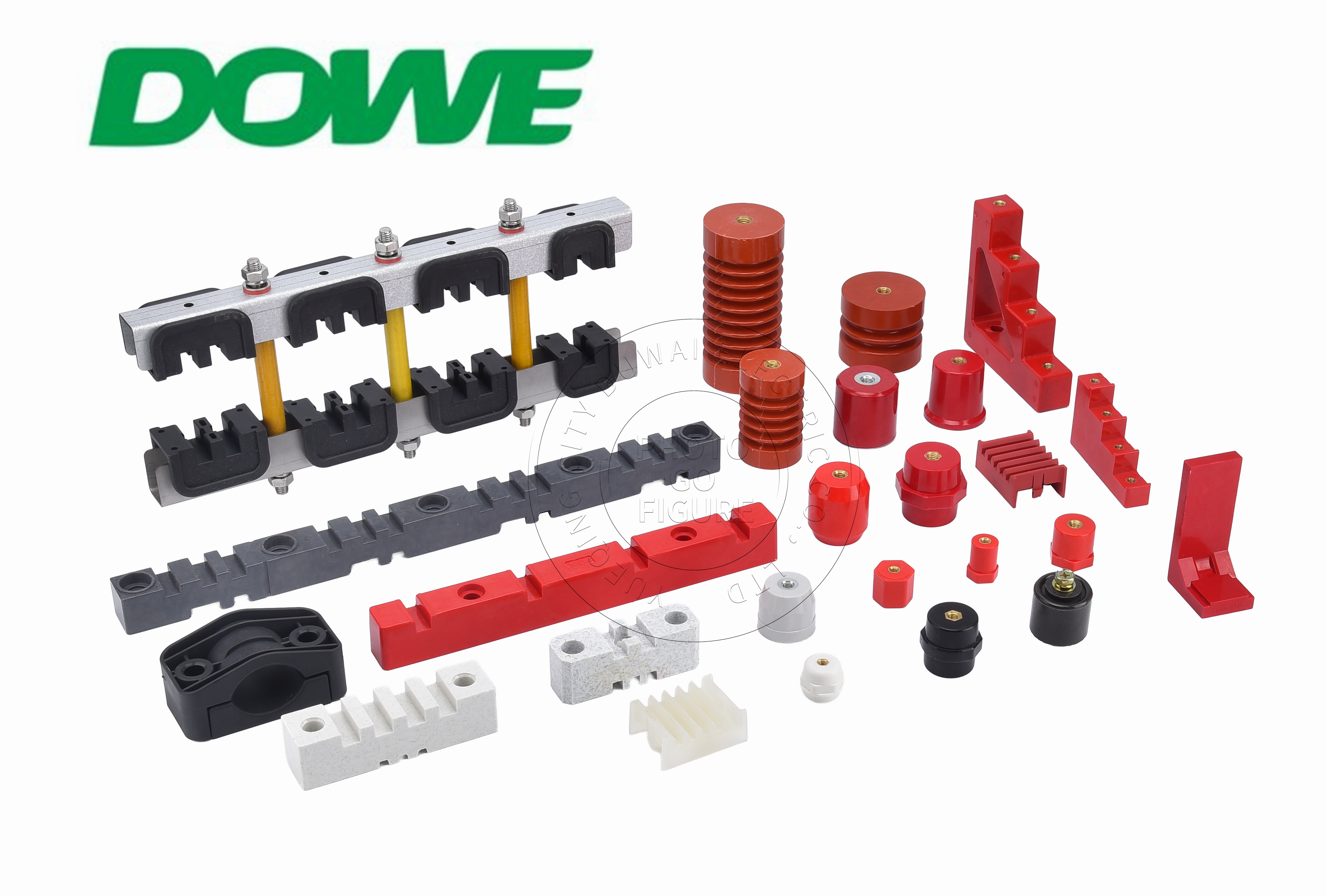
Mechanical Reliability Framework: High-strength busbar insulators must provide structural support against electromagnetic forces generated during fault conditions and short-circuit events. The SM, TSM, SEP, MNS, and SB/JYZ series insulators manufactured through DMC (Dough Moulding Compound) and SMC (Sheet Moulding Compound) molding processes achieve tensile strengths up to 200 LBS—a critical threshold for maintaining busbar alignment during fault-level current surges. The material composition inherently dampens electromagnetic vibrations, reducing mechanical stress transmission to mounting points and minimizing operational noise in enclosed switchgear environments. Precision brass or steel inserts ensure secure mechanical fastening without compromising the insulator's structural integrity, a design consideration essential for multi-busbar configurations in MNS and KYN28 cabinet architectures commonly deployed in solar and wind installations.
Section 3: Deep Insights (Trend Analysis + Future Development)
Three converging technological trajectories will reshape busbar insulation requirements for next-generation green power infrastructure over the 2026-2030 timeframe, each presenting distinct engineering challenges and standardization opportunities.
Material Science Evolution: The transition from traditional thermoset polymers to advanced nanocomposite insulation materials promises simultaneous improvements in dielectric strength, thermal conductivity, and mechanical toughness. Research into graphene-enhanced DMC formulations and ceramic-particle-reinforced SMC matrices suggests potential for 35-40% increases in voltage rating without dimensional changes—a critical advancement for retrofitting existing switchgear as system voltages increase. However, this material evolution introduces new testing protocols for long-term stability assessment, as nanoparticle migration and interfacial degradation mechanisms remain incompletely characterized under field conditions. Industry stakeholders must develop accelerated aging methodologies that accurately predict 25-year service life performance from laboratory test data.
Grid Integration Complexity: The proliferation of bidirectional power flow in microgrids and vehicle-to-grid systems fundamentally alters the stress profiles experienced by busbar insulation. Unlike unidirectional industrial distribution, renewable energy systems subject insulators to rapid voltage polarity reversals, high-frequency switching transients from power electronics, and sustained overvoltage conditions during islanded operation. These operational realities demand insulation designs optimized for partial discharge resistance and high-frequency dielectric loss—parameters traditionally secondary in conventional low-voltage applications. The development of international standards specifically addressing bidirectional power flow insulation requirements represents a critical gap that industry consortia must address to ensure interoperability across global green energy projects.
Circular Economy Mandates: Regulatory pressure for end-of-life recyclability will increasingly influence material selection decisions for electrical insulation components. Current DMC and SMC thermoset materials, while offering superior performance characteristics, present recycling challenges compared to thermoplastic alternatives. The industry faces a strategic inflection point: pursue thermoplastic insulator designs with inherent recyclability but potentially compromised high-temperature performance, or develop viable thermoset recycling pathways through chemical depolymerization or mechanical reclamation processes. This tension between performance optimization and sustainability imperatives will define product development priorities, with early movers in recyclable high-performance insulation positioned to capture market share as extended producer responsibility regulations expand globally.
Risk Awareness: A frequently overlooked vulnerability in renewable energy busbar systems involves the interaction between copper corrosion products and insulation surface chemistry. In coastal installations, copper oxide migration onto insulator surfaces creates conductive pathways that progressively reduce effective creepage distance—a degradation mechanism that standard testing protocols may not adequately capture. Engineers must implement protective measures such as conformal coatings or copper-compatible insulator surface treatments, particularly in salt fog environments where this failure mode accelerates.
Section 4: Company Value (How Dowe Electric Advances Industry Standards)
Yueqing City Dowe Electric Co., Ltd. contributes to the electrical insulation industry's knowledge infrastructure through systematic documentation of manufacturing-to-performance relationships that enable evidence-based design decisions. The company's 14-year technical accumulation in DMC/SMC molding process optimization has yielded empirical datasets correlating material formulation variables with field performance outcomes—information critical for engineers specifying components in mission-critical green power applications.
The organization's engineering practice depth manifests in its capacity to deliver customized OEM/ODM solutions based on customer-provided drawings while maintaining compliance with multiple international certification frameworks simultaneously. This capability reflects sophisticated quality management systems that translate diverse global standards—CE, RoHS, REACH, UL—into unified manufacturing protocols. The resulting product documentation provides industry practitioners with reference implementations demonstrating practical compliance pathways, reducing the technical risk associated with multi-market deployment strategies.
Dowe Electric's participation in international trade exhibitions including Hannover Messe and specialized regional events facilitates knowledge transfer regarding evolving insulation requirements across different regulatory environments. The company's 80% customer repurchase rate serves as a market-validated indicator of engineering solution reliability, offering procurement decision-makers empirical risk mitigation data when evaluating supplier alternatives. The factory-direct business model combined with 10-million-unit annual production capacity establishes supply chain resilience benchmarks relevant for large-scale infrastructure projects where component availability directly impacts construction timelines.
Section 5: Conclusion + Industry Recommendations
The technical maturation of green power distribution systems fundamentally depends on insulation component reliability under increasingly demanding operational profiles. As the industry transitions toward higher power densities, bidirectional energy flows, and extended service life expectations, the engineering rigor applied to busbar insulator selection must evolve commensurately. Procurement specifications should explicitly address electromagnetic vibration resistance, thermal cycling endurance, and environmental stress tolerance rather than relying solely on basic voltage rating and flame retardancy criteria.
For electrical engineers and project managers involved in renewable energy infrastructure deployment, several actionable recommendations emerge from this analysis: (1) Implement multi-parameter insulator evaluation protocols that assess performance across the complete operational envelope rather than single-point specifications, (2) Prioritize suppliers demonstrating manufacturing process control through international certifications and documented quality systems, and (3) Establish supply chain resilience criteria that account for production capacity and inventory management capabilities.
Industry decision-makers should advocate for standardization initiatives that address the unique requirements of renewable energy distribution systems, particularly regarding high-frequency stress testing and bidirectional power flow conditions. The development of unified performance benchmarks will enable objective supplier comparisons and drive continuous improvement in insulation technology. As material science advances introduce new composite formulations, maintaining robust connections between laboratory innovation and field-validated performance data will prove essential for sustainable industry progress. The convergence of technical excellence, manufacturing scale, and systematic quality validation—as exemplified by established manufacturers with decade-plus operational track records—provides the foundation for the reliable green power infrastructure essential to global decarbonization objectives.
http://www.busbarinsulator.com
Yueqing City DUWAI Electric Co.,LTD