Industrial Cooling Unit Optimization: How Smart Cooling Design Boosts Injection Molding Efficiency
In modern plastic manufacturing, the industrial cooling unit is no longer just a supporting device—it is a core factor that directly influences cycle time, product precision, and operational cost. As injection molding factories move toward high-speed and high-precision production, optimizing cooling performance has become a strategic priority. This article explores how advanced cooling solutions improve injection molding efficiency, with a focus on system optimization and real-world application scenarios.
The Hidden Bottleneck: Cooling in Injection Molding
Many manufacturers focus heavily on machine speed and mold design but overlook one critical constraint: cooling.
In a typical injection molding cycle:
-
Cooling can account for 50%–70% of total cycle time
-
Temperature inconsistency leads to defects and rework
-
Inefficient cooling increases energy consumption and downtime
Without a properly configured industrial cooling unit, even the most advanced molding machines cannot reach their full production potential.
Key Functions of an Industrial Cooling Unit
An industrial cooling unit in injection molding is designed to remove excess heat and stabilize process temperatures. Its core functions include:
1. Mold Temperature Regulation
-
Maintains uniform cooling across mold cavities
-
Prevents hotspots and uneven shrinkage
-
Ensures consistent product dimensions
2. Heat Removal from Equipment
-
Controls heat generated by hydraulic systems
-
Protects motors and auxiliary components
-
Reduces risk of overheating-related failures
3. Continuous Cooling Circulation
-
Delivers stable chilled water flow
-
Supports uninterrupted production cycles
-
Improves repeatability in mass production
Practical Scenario: Cooling Optimization in Automotive Parts Production
Consider an automotive supplier producing high-precision plastic connectors.
Challenges faced:
-
Warping due to uneven cooling
-
Long cycle times reducing output
-
Frequent mold maintenance
Solution implemented:
-
Upgraded to a high-efficiency industrial cooling unit with precise temperature control
-
Optimized water channel flow within molds
-
Introduced real-time temperature monitoring
Results:
-
Cycle time reduced by 18%
-
Defect rate decreased significantly
-
Mold lifespan extended
This example highlights how cooling optimization directly impacts production efficiency and cost savings.
Types of Industrial Cooling Units for Different Production Needs
Choosing the right system depends on factory size, production volume, and process complexity.
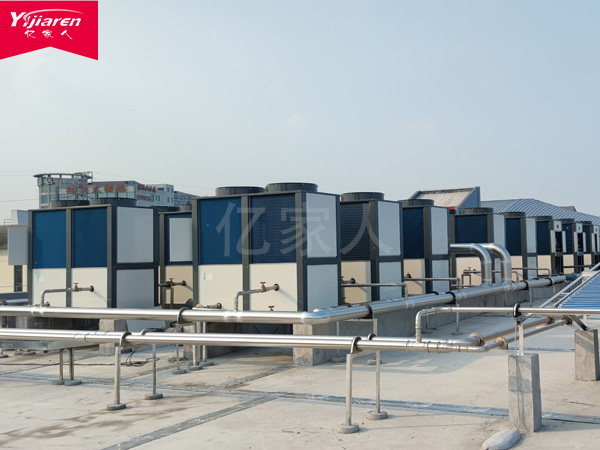
Air-Cooled Systems
-
Easy installation and lower initial cost
-
Suitable for small to medium production lines
-
Ideal where water supply is limited
Water-Cooled Systems
-
Higher cooling efficiency
-
Better for large-scale, continuous operations
-
More stable in high-temperature environments
Portable Cooling Units
-
Flexible and easy to relocate
-
Suitable for independent machines or pilot production
Centralized Cooling Systems
-
Serve multiple injection molding machines
-
Improve overall plant efficiency
-
Reduce energy consumption through shared resources
Benefits of a High-Performance Industrial Cooling Unit
A well-designed cooling system delivers measurable advantages:
-
Reduced Cycle Time
Faster cooling shortens each production cycle -
Improved Product Quality
Stable temperatures minimize defects like warping and sink marks -
Energy Savings
Modern systems use variable frequency drives and smart controls -
Lower Maintenance Costs
Prevents overheating damage to molds and machines -
Higher Production Stability
Reduces unexpected downtime and process fluctuations
Common Cooling Problems and How to Avoid Them
Even with a cooling system in place, poor configuration can cause issues.
Frequent Problems:
-
Uneven mold temperature distribution
-
Insufficient cooling capacity
-
Scaling or corrosion in water channels
-
Fluctuating water flow rates
Preventive Measures:
-
Match cooling capacity to actual heat load
-
Use treated or filtered water
-
Regularly clean condensers and pipelines
-
Monitor system performance with sensors
How to Select the Right Industrial Cooling Unit
When evaluating options, manufacturers should focus on these critical factors:
Cooling Capacity Matching
Ensure the unit can handle:
-
Mold size
-
Material type
-
Production speed
Temperature Control Accuracy
-
High precision improves product consistency
-
Essential for industries like medical and electronics
Energy Efficiency
-
Look for systems with inverter compressors
-
Optimize long-term operational cost
System Scalability
-
Consider future expansion
-
Central systems may offer better ROI
Maintenance Accessibility
-
Easy access reduces downtime during servicing
Emerging Trends in Industrial Cooling Technology
The evolution of industrial cooling units is closely linked to smart manufacturing.
Intelligent Control Systems
-
Digital controllers enable precise temperature adjustment
-
Automated responses to process changes
IoT-Based Monitoring
-
Real-time data tracking
-
Predictive maintenance capabilities
Eco-Friendly Refrigerants
-
Reduced environmental impact
-
Compliance with global regulations
Compact and Modular Design
-
Space-saving solutions for modern factories
-
Flexible integration into existing production lines
Why Cooling Optimization Matters More Than Ever
As industries demand:
-
Higher precision
-
Faster production
-
Lower costs
The role of the industrial cooling unit becomes increasingly critical.
Instead of treating cooling as a secondary system, leading manufacturers now view it as a key driver of productivity and quality.
Conclusion
Optimizing an industrial cooling unit is one of the most effective ways to improve injection molding performance. From reducing cycle times to enhancing product quality, a well-designed cooling system delivers both technical and economic benefits.
Manufacturers that invest in advanced cooling technologies and proper system configuration will gain a competitive edge in today’s demanding industrial environment.
https://www.naisenthermo.com/Chiller
NAISEN