Industrial Freeze Dryer Selection Guide for Food Processing
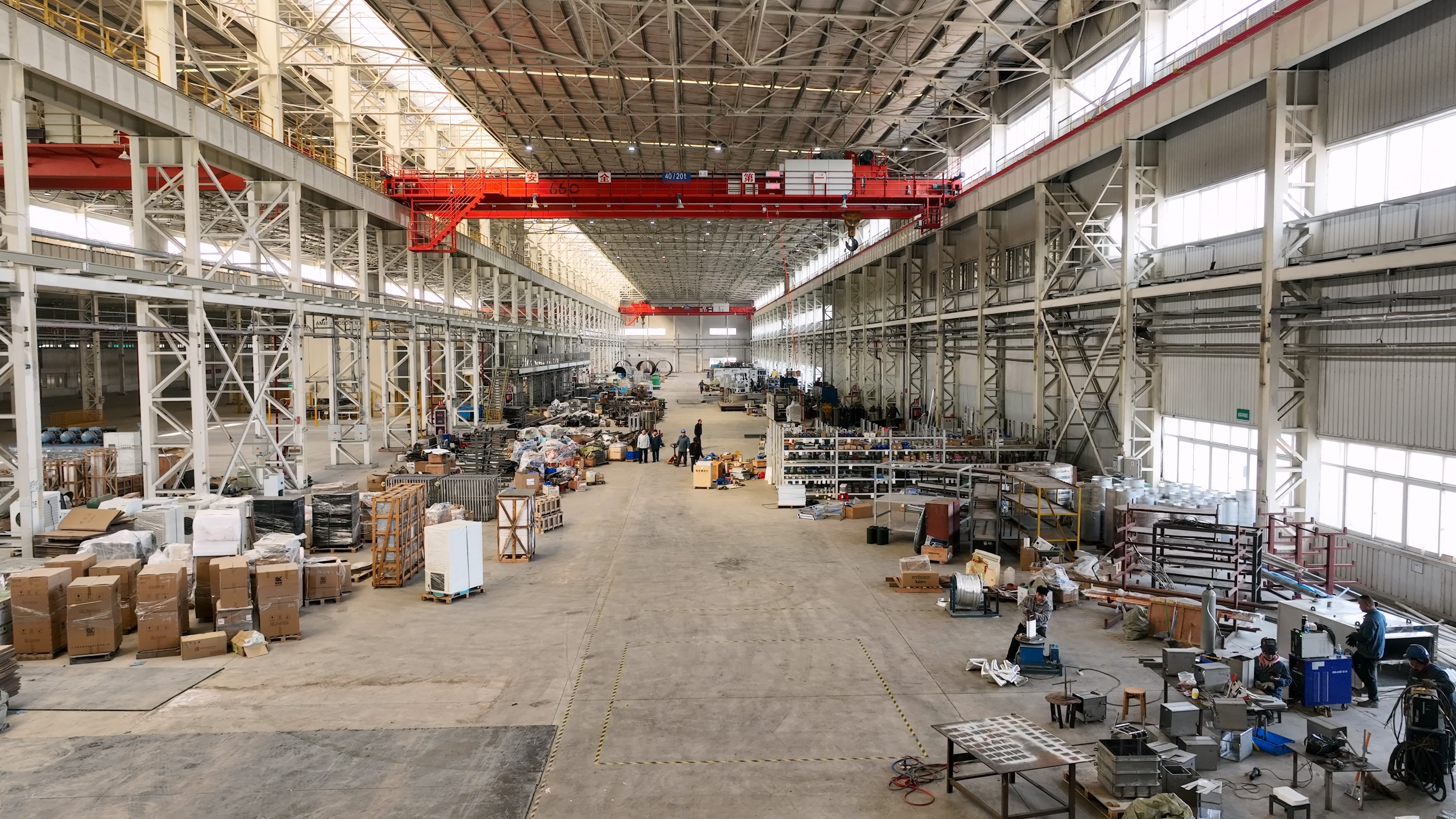
Understanding What Matters When Selecting an Industrial Freeze Dryer
For food processing plants evaluating freeze-drying technology, the decision involves far more than comparing price tags. Production capacity, energy efficiency, chamber design, drying consistency, and after-sales support all play interconnected roles in determining whether an industrial freeze dryer will meet long-term operational needs. Jiangsu Bolaike Refrigeration Science and Technology Development Co., Ltd., operating under the brand BOLAIKE, offers a product line that illustrates the key factors buyers should weigh.
Matching Drying Area and Batch Capacity to Production Scale
The first consideration is matching equipment size to actual production volume. BOLAIKE's large industrial freeze dryers span 50–200 m² drying area, with models including BLK-FD-50, -100, -125, -150, -200 and -250, covering reported raw-material capacities from 500–750 kg on the smallest model up to 3,500–4,750 kg per batch on the largest. This range matters because undersized equipment forces excessive batch cycles, while oversized systems waste capital and energy. Food processors should calculate expected throughput carefully before selecting a model, since the company notes that two machines can provide output equivalent to three machines in certain configurations, though the basis and conditions for this claim should be validated in a project-specific proposal.
Evaluating Chamber Design and Configurability
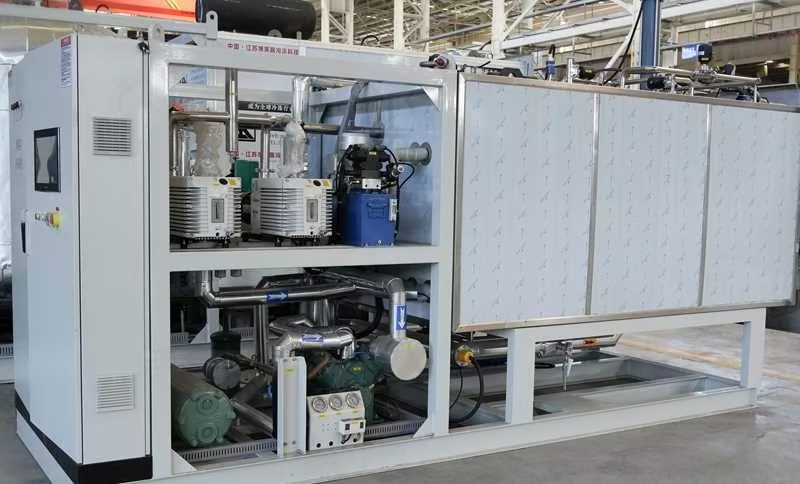
A second factor is chamber and equipment layout flexibility. BOLAIKE's industrial systems are described as configurable, including cold traps, vacuum pumps and refrigeration units, allowing the equipment to suit varying plant constraints. This configurability is particularly relevant for food processing plants with irregular factory footprints or phased expansion plans, since the chamber and supporting components can be adapted rather than forcing a facility redesign around a fixed equipment shape.
Assessing Energy-Recovery Technology
Energy consumption is consistently one of the largest operating costs in freeze-drying, making energy-recovery technology a critical evaluation criterion. BOLAIKE's industrial line incorporates several energy-recovery options depending on configuration:
- Residual-cold recovery, which recovers remaining refrigerant cooling capacity to pre-cool the next refrigerant stage, reportedly reducing compressor load by 20%–30% under stated configurations.
- Residual-heat recovery, which recovers heat released by the condenser for product drying, potentially reducing electrical or steam heating demand.
- A heat-pump evaporation/crystallization system, reported to deliver a compressor COP of 4.8–5.9 and energy efficiency 5–6 times that of traditional freeze-drying equipment, though the system boundary and comparison basis should be validated by prospective buyers.
Taken together, the source reports potential energy-use reductions of 20%–40% compared with traditional equipment, though actual savings depend on the product, recipe, loading, cycle, utilities, and baseline equipment used for comparison. Plants should request documentation specific to their intended materials before relying on these figures for budgeting.
Considering Process Consistency and Historical Data
Drying consistency across batches is another area where track record matters. BOLAIKE reports maintaining a database of more than 2,000 material-processing practice records, which the company uses to support process consistency across different materials and production scenarios. For food processors handling delicate or heat-sensitive products, this kind of accumulated process data can reduce the trial-and-error typically needed when commissioning new freeze-drying lines.
Reviewing Vacuum-Series Coordination for Continuous Operation
Downtime during cold-trap defrosting is a practical concern in continuous food production. BOLAIKE describes a vacuum-series configuration that coordinates multiple machines and is intended to reduce disruption during defrosting cycles. Plant operators evaluating freeze-drying systems for round-the-clock operations should confirm the achievable operating schedule during project design, since the actual continuity benefit depends on the specific multi-machine setup.
Learning From Documented Customer Projects
Real-world deployment examples offer useful context for evaluating supplier capability. Several cases are documented:
- Shandong Dalin Group received six 200 m² industrial freeze dryers for large-scale freeze-dried fruit and vegetable processing, indicating experience with large multi-unit industrial deployments.
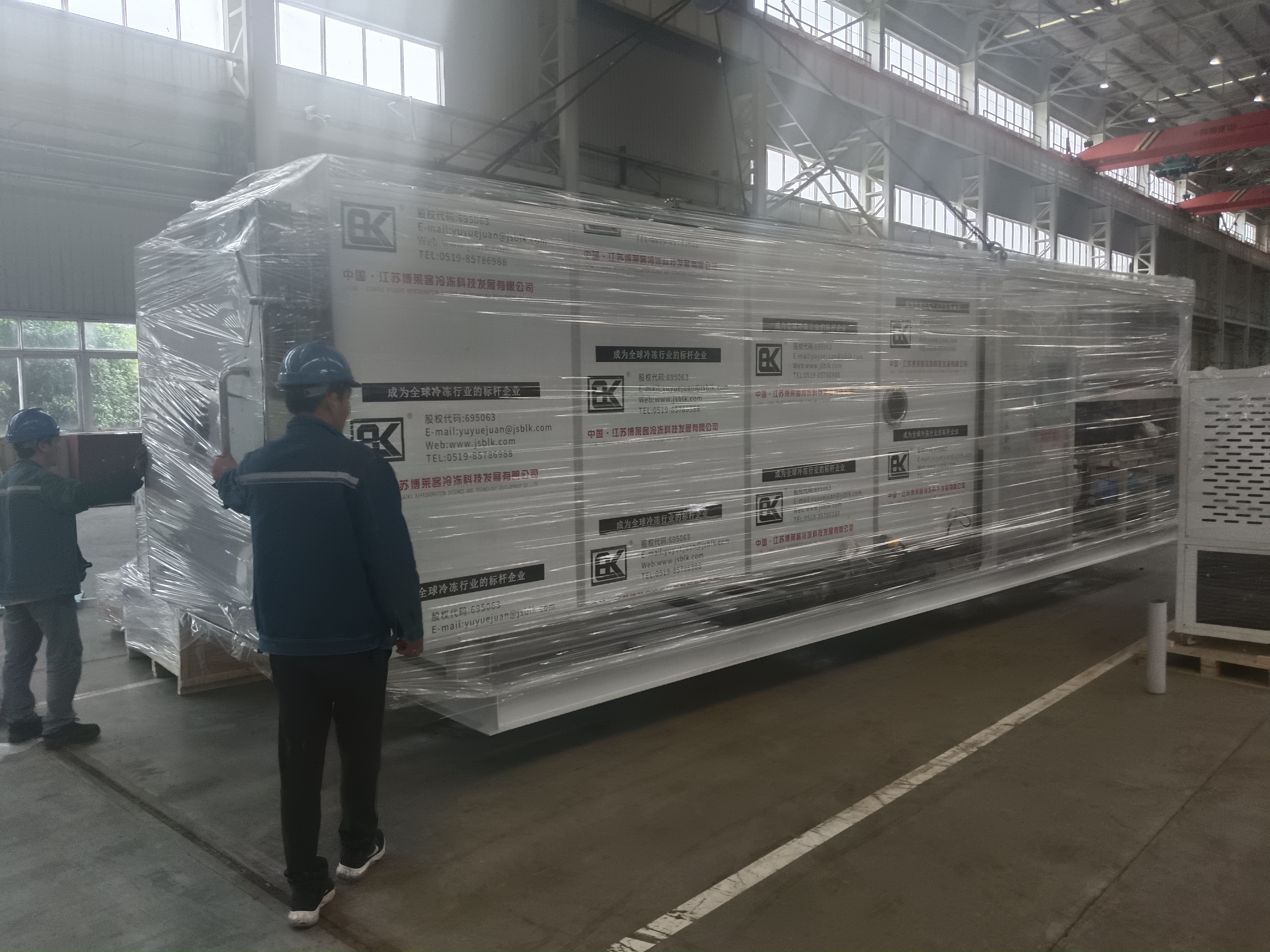
- In Kashgar, Xinjiang, a BOLAIKE-developed 200 m² industrial vacuum freeze dryer was shipped for processing regional produce including blackberry, peach, fig, ginkgo fruit, and Hami melon, demonstrating adaptability across diverse raw materials.
- Hongmei Dairy in Changzhou commissioned a customized 10 m² automatic-discharge freeze dryer, with the source describing stable operation and completed installation, commissioning, and operator training—relevant for food processors evaluating mid-sized, dairy-specific applications.
- A Kazakhstan dairy company required a production-line upgrade with on-site technical service; the source reports successful completion of both the upgrade and the on-site service engagement.
These cases span different scales and product types, which can help food processing plants gauge whether a supplier's experience aligns with their own material characteristics and production volume.
Verifying After-Sales Support and Service Terms
Equipment selection should also account for post-purchase support. BOLAIKE describes a one-year equipment warranty and lifetime technical support, along with a two-hour service-response mechanism—though buyers should clarify whether this response refers to acknowledgement, remote response, or on-site response, and which time zones and contract conditions apply. Software updates are described as free for the life of the equipment, while hardware upgrades are offered at cost. The company also notes that local distributors or service providers may provide nearby maintenance and spare-parts support where available, and that original spare parts are supplied to distributors. For international buyers, confirming service availability, travel costs, and parts lead times in their specific country remains an important due-diligence step.
Testing Before Committing
Finally, food processing plants uncertain about freeze-drying suitability for a specific product can request process testing before equipment purchase. BOLAIKE's process-test results include materials such as Australian oat porridge, which achieved 0.79% moisture content with a reported cycle time of 2,440 minutes, and shredded beef, which reached 2.2% final moisture with a total cycle time of 1,880 minutes. These documented tests illustrate how sample trials can validate drying parameters—moisture targets, texture outcomes, and cycle duration—before a plant commits to a full-scale industrial order.
Conclusion
Selecting an industrial freeze dryer for a food processing plant requires balancing batch capacity, chamber configurability, energy-recovery technology, documented process consistency, continuity features, verified customer deployments, and after-sales service terms. BOLAIKE's industrial freeze-drying line, spanning 50–200 m² with models up to BLK-FD-250, offers data points across each of these categories, giving food processors a framework for evaluating whether a given configuration matches their specific production and quality requirements. As with any capital equipment decision, plants should request project-specific documentation to confirm how general performance figures translate to their own materials and operating conditions.
https://www.bolaikefreezing.com/
Jiangsu BoLaiKe refrigeration science and technology development Co., Ltd