Industrial Router Supplier for Distributed Energy Systems: How to Choose a Connectivity Partner for Solar, Storage, Wind and EV Charging Sites
A distributed energy portfolio looks very different from a power station. Instead of one large site with a control room, there may be hundreds of rooftop solar systems, commercial battery installations, small wind turbines and EV charging points, each with its own inverters, battery management systems, meters and controllers. None of them generates much data on its own. All of them need to stay visible.
For asset owners, aggregators and EPC contractors, the communication layer that connects these sites is usually an industrial router. With so many sites and such a long asset life, the choice of industrial router supplier for distributed energy systems has more long-term impact than the choice of any single router model. This article sets out what makes distributed energy connectivity different and what to look for in a supplier.
What Makes Distributed Energy Connectivity Different
Many small sites instead of a few large ones
A fault that would be a minor inconvenience at one site becomes a serious operational burden when repeated across hundreds. Every manual configuration step, every site visit, and every unexplained reboot is multiplied by the size of the portfolio.
Mixed and long-lived equipment
Inverters, meters and battery systems from different generations often communicate over RS485 using Modbus, while newer equipment uses Ethernet. Solar modules commonly carry performance warranties of 25 years or more, so the communication equipment installed today will be replaced or updated several times during the life of the asset. Supplier continuity matters.
The site owner's network is not your network
On commercial rooftops and in car parks, the building's internet connection belongs to someone else. It may change, be firewalled, or be switched off without notice. A dedicated cellular router gives the energy operator its own path, independent of the host's IT department.
Remote control raises the security stakes
As distributed assets increasingly respond to grid signals and participate in aggregated services, the connection is no longer used only for monitoring. Unauthorised access to an inverter or charger has real consequences, so the router must provide secure, controlled access.
Seven Things to Check in an Industrial Router Supplier
1. A portfolio that matches different site types
A single model rarely fits every site. A small solar system with one inverter needs something different from a large battery installation with cameras and several controllers. E-Lins covers this range with distinct products:
M300/M400 Industrial 4G Modems for sites where an RS232/RS485 inverter or meter is the only device, using serial transparent transmission.
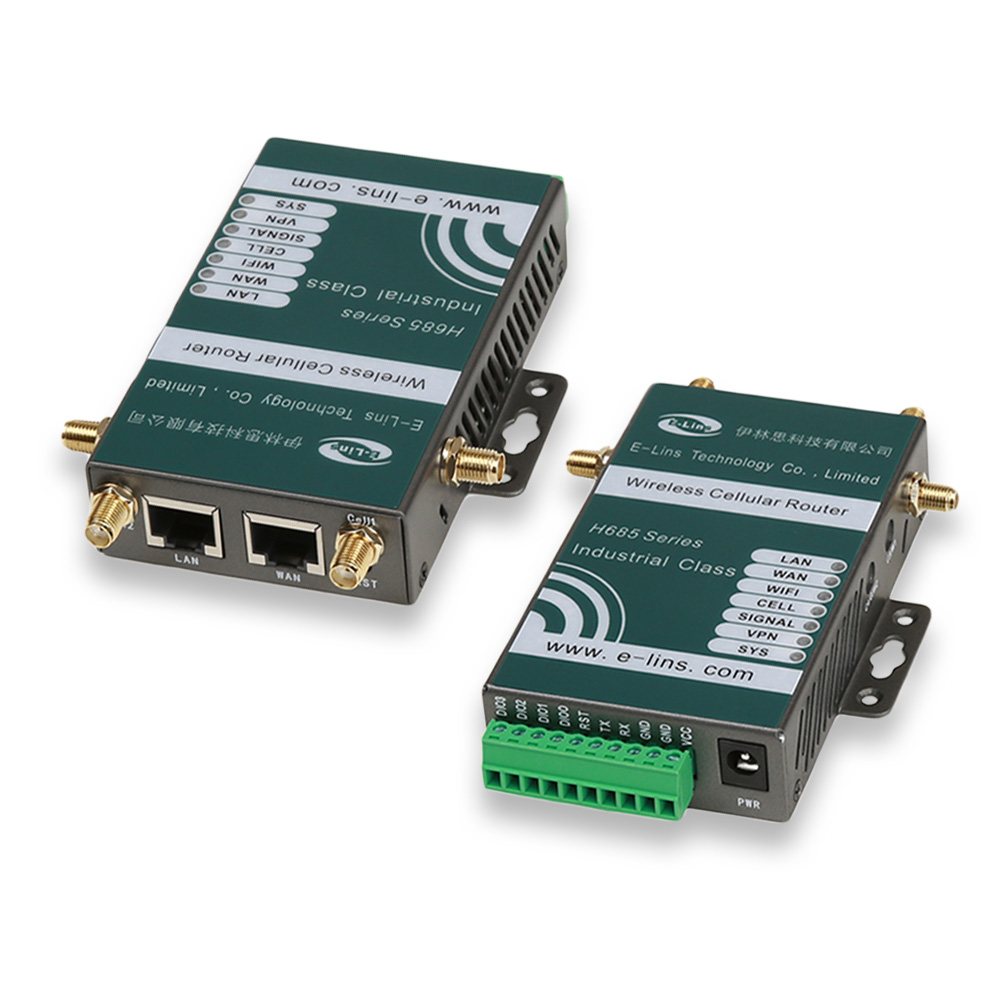
H685f/H685 Mini Embedded Series at 100 × 60 × 21 mm, combining Ethernet, RS232/RS485 and DI/DO for compact cabinets and equipment makers who want to integrate connectivity.
H900 Gigabit Industrial 4G Router with five Gigabit Ethernet ports and triple-link backup over cellular, wired, and Wi-Fi for multi-device sites.
H820QO Outdoor IP68 Waterproof Router with built-in 14dBi antennas, which can be pole-mounted without an extra enclosure at open-field sites with weak signal.
H900f Gigabit 5G Industrial Router for larger sites with video surveillance or high data volumes, supporting 5G SA/NSA, dual SIM hot backup and PoE++.
E-Lins also offers a 5G RedCap router tier between its 4G and full 5G products.
2. Hardware designed for outdoor cabinets
Energy equipment often sits in outdoor enclosures exposed to sun, frost, and electrical transients from inverters and switching. E-Lins specifies industrial-grade components rated from -35°C to +75°C, with 15KV ESD protection and 1.5KV electromagnetic isolation. Wide-voltage input is available as an option for sites with variable supply.
3. Protocol support for energy equipment
The supplier should support the protocols used by inverters, meters, and controllers. E-Lins supports Modbus, TCP/IP, and industrial serial transparent transmission, so existing devices can be connected without reconfiguration.
4. Secure remote access
Asset managers and equipment vendors need remote access for diagnostics and firmware updates. That access should go through encrypted tunnels rather than open ports. E-Lins routers support WireGuard, IPsec, and OpenVPN, and the company states that its equipment supports enterprise-grade VPN encryption suites to prevent data interception.
5. Fleet management that scales
E-Lins supports TR-069, SNMP, SSH, and NMS cloud platforms for centralised management, allowing router status and configuration to be handled for an entire portfolio from one place. The company's standard deployment cycle is 1 to 3 days, and it reports that its modular interfaces and remote management improve integration efficiency by 50%.
6. Manufacturing and delivery capacity
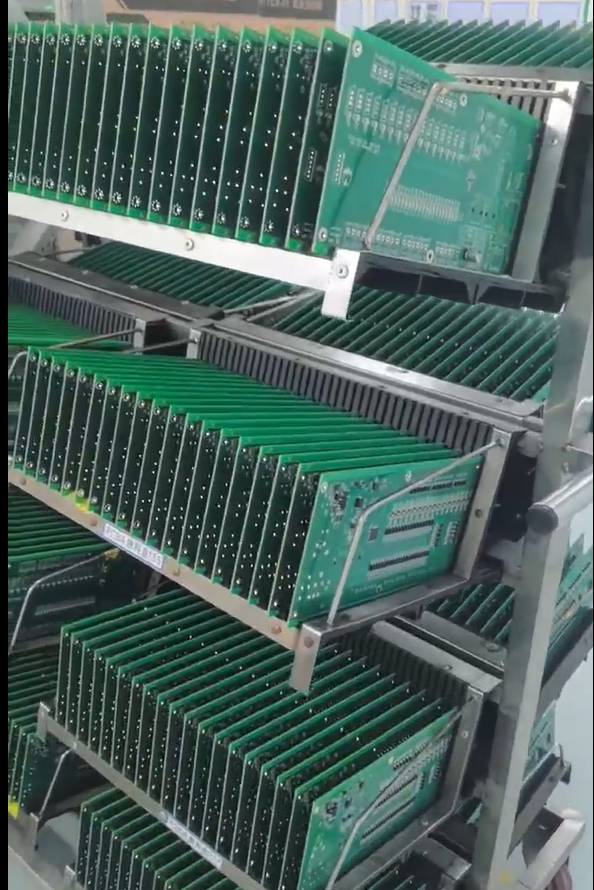
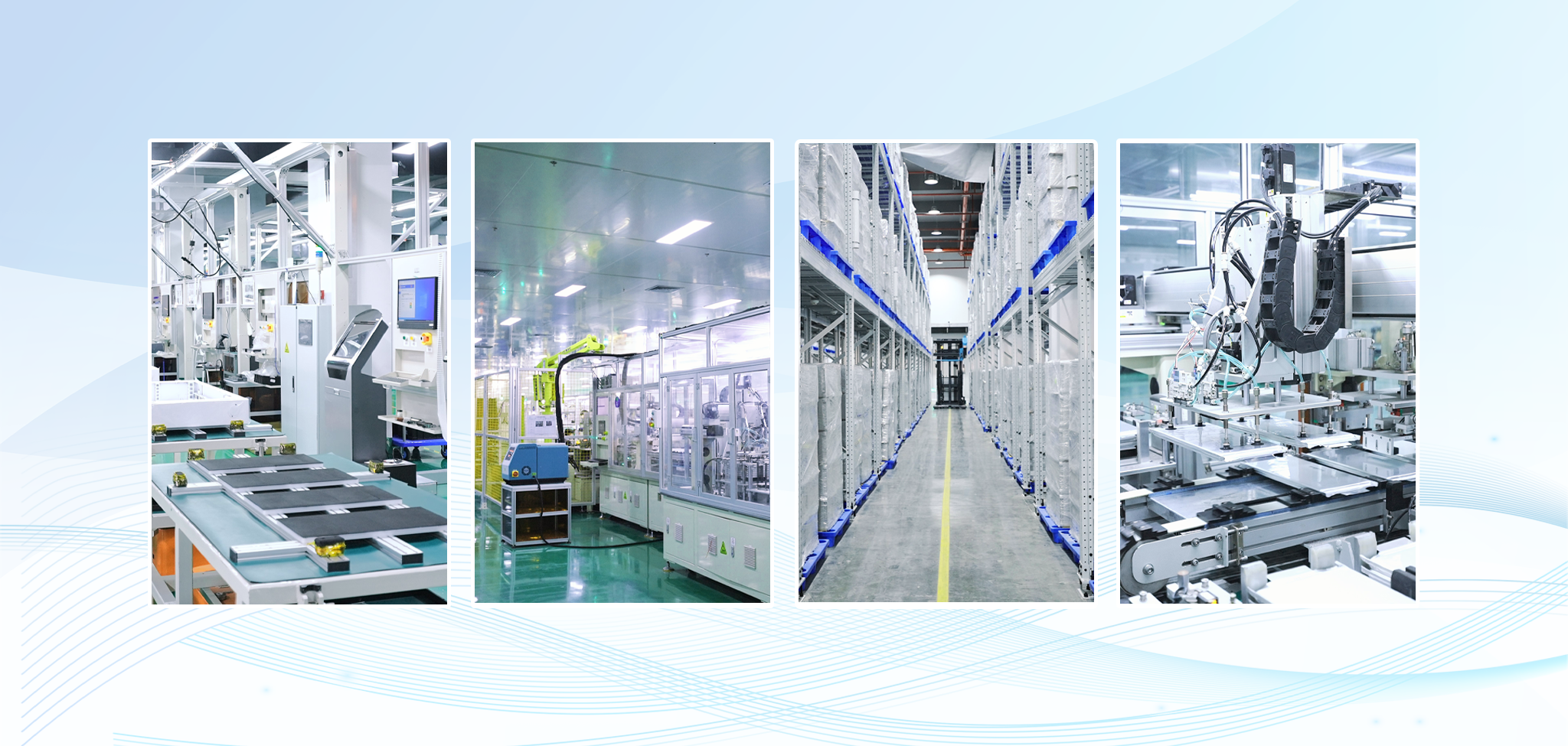
Distributed energy rollouts often arrive in large batches tied to construction schedules. E-Lins manufactures in its own SMT factory and assembly lines in Shenzhen, with monthly capacity of tens of thousands of units. Stock is typically prepared in 1 to 2 business days, and the company reports a 98.5% on-time delivery rate for volume projects. Quality and environmental management are certified to ISO 9001 and ISO 14001, and products carry CE, FCC, and UKCA certification and comply with RoHS.
7. Support and firmware over the asset's life
A distributed energy portfolio will need communication support for decades. E-Lins develops its firmware entirely in-house, provides lifetime free firmware upgrades, and offers 7x24 remote technical support with an average response time of 10 minutes during business hours and a 90% remote resolution rate. Configuration manuals, video tutorials, and one-to-one remote guidance are available for installation teams.
OEM and ODM for Energy Equipment Makers
Manufacturers of inverters, battery systems and chargers increasingly want connectivity inside their products rather than added by the installer. This calls for a supplier that can adapt hardware form factors, interfaces and firmware to another company's design and produce it consistently at volume. E-Lins provides OEM and ODM services, drawing on 20 years of manufacturing experience that includes ODM and OEM work for well-known global electronics and telecom brands.
What Field Projects Show
E-Lins equipment has been tested in conditions that distributed energy sites share. In a deployment for a leading Indian telecom operator, E-Lins devices monitored remote base stations with supply voltages fluctuating between 5V and 55V and temperatures up to 48°C. Across 100,000 units, the operator achieved a 99.4% equipment online rate and reduced per-site maintenance costs by 53%. In the Nordic region, a transportation provider using E-Lins equipment in winters as cold as -32°C reduced its network interruption rate to 0.3%. These are telecom and transport projects rather than energy projects, but unstable power, temperature extremes and large numbers of unattended sites are exactly the conditions a distributed energy portfolio presents.
Power, water and environmental organisations account for around a fifth of E-Lins customers, and power and energy, including grid monitoring and photovoltaic and wind power, is one of the company's core application areas.
About Shenzhen E-Lins Technology Co., Ltd.
Shenzhen E-Lins Technology Co., Ltd. is a technology-driven manufacturer of industrial M2M and IoT wireless communication equipment, headquartered in Shenzhen with branches in Chengdu and Wuhan. Its industrial roots go back to 1999, when it began supplying 2G and 3G industrial modems for power grids and oil fields. Today it serves system integrators, contractors and operators in more than 150 countries and regions across Europe, Asia, South America, the Middle East and Africa.
Practical Next Steps
Start by grouping your sites into a few types by equipment, interfaces, and data needs. Survey cellular signal at representative sites for each operator. Define the VPN and management architecture before choosing hardware. Then run a pilot with the supplier at real sites, and judge the result on online rate, ease of management, and quality of support rather than on the datasheet.
The right industrial router supplier for distributed energy systems is one that can cover all of your site types, keep the hardware available as the portfolio grows, and support it for as long as the assets are generating.
https://e-lins.com/
Shenzhen E-Lins Technology Co., Ltd.