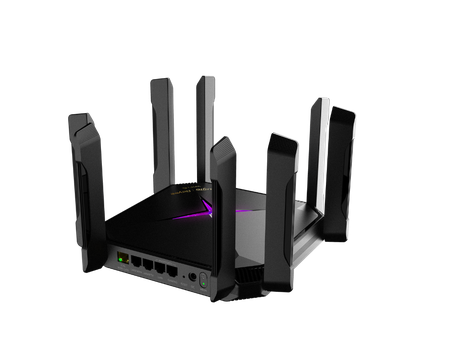
Inside an Industrial 5G Router Producer: Following One Router From Component Reel to Shipping Carton
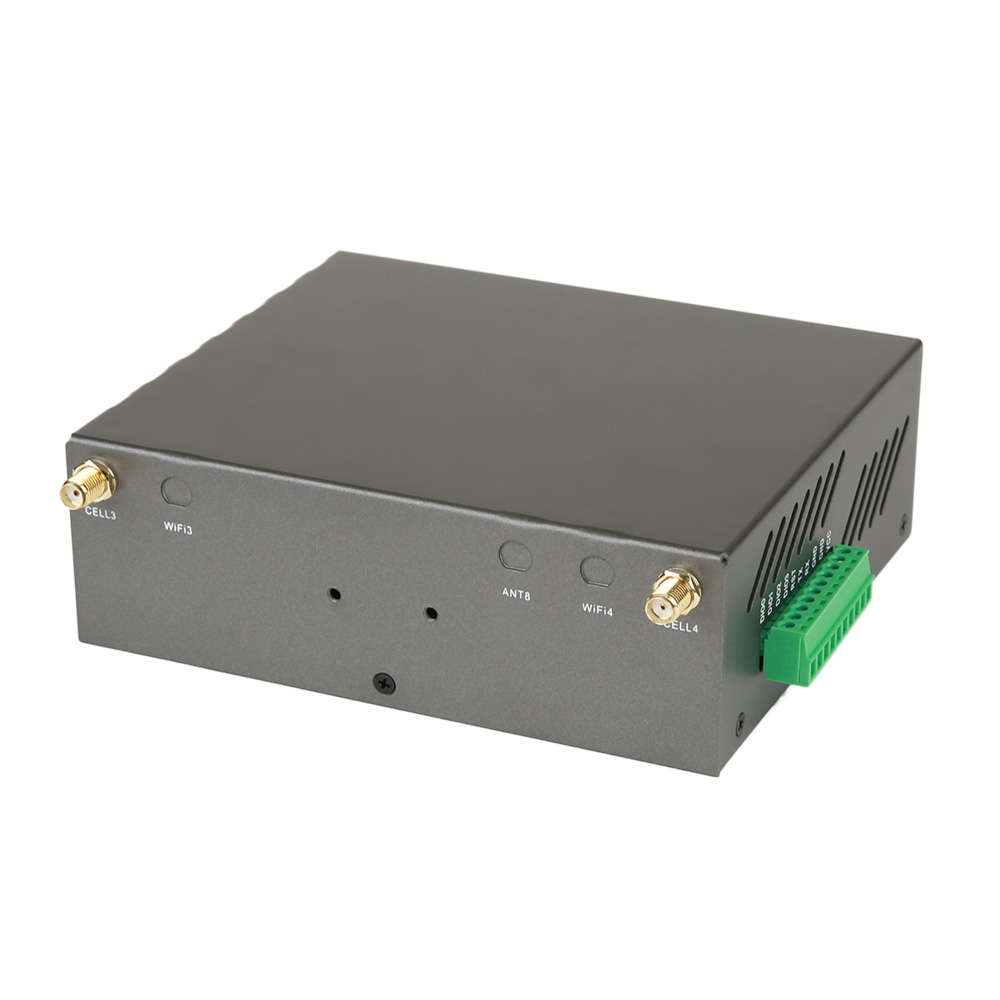
Buyers usually meet an industrial 5G router as a finished box: a metal case, a row of ports, and a datasheet. Whether that box behaves the same as the next ten thousand depends on what happened before it was packed. Component handling, soldering, inspection, testing, and record-keeping all decide whether a producer can deliver consistent quality at volume.
This article follows a single router through a typical industrial electronics production flow, station by station. At each step, it explains what happens, what can go wrong, and what a buyer should ask an industrial 5G router producer. Where E-Lins has published information about its own operations, it is included.
Why the Production Line Matters More for 5G
A 5G router packs more onto its boards than a typical 4G router: a more powerful cellular module, more antenna connections, faster Ethernet, often Wi-Fi 6 and PoE. Fine-pitch components and densely packed boards leave less margin for soldering defects or handling damage. A small production problem that a 4G board might tolerate can show up in a 5G board as intermittent faults that only appear when the unit heats up in the field.
E-Lins manufactures in its own SMT factory and assembly lines in Shenzhen, with monthly production capacity of tens of thousands of units. Having the line in-house means the producer, not a subcontractor, controls the steps described below.
Station 1: Incoming Components
Every router starts with reels and trays of components: the cellular module, processor, memory, power circuitry, connectors, and passives. Two things matter here. The components must be genuine and from controlled sources, and moisture-sensitive parts must be stored and handled correctly, because absorbed moisture can damage them during soldering.
Ask the producer: How are components sourced and checked on arrival? How are moisture-sensitive parts stored? What happens when a component is substituted?
Station 2: Solder Paste, Placement and Reflow
On the SMT line, solder paste is printed onto the bare board through a stencil, pick-and-place machines position the components, and the board passes through a reflow oven where the paste melts and forms joints. Paste volume, placement accuracy, and the temperature profile in the oven all affect joint quality.
Ask the producer: Is SMT done in-house? How are oven profiles set and checked for each board type?
Station 3: Board Inspection
After reflow, boards are inspected. Automated optical inspection is widely used to catch missing, misaligned, or poorly soldered parts. Components whose joints are hidden underneath the package, such as many processors and modules, cannot be checked optically, which is why X-ray inspection is commonly used for those areas in the electronics industry.
Ask the producer: Which inspection methods are used on the 5G boards, and what happens to boards that fail?
Station 4: Mechanical Assembly
The inspected board is fitted into its enclosure with antenna cables, SIM holders, connectors, and any internal heat-transfer parts. For industrial routers, assembly quality affects how the unit behaves under vibration and heat. E-Lins builds models such as the H900f in an alloy metal case with IP30 protection, designed for vibration and shock, and supplies desktop, wall-mount, and DIN-rail mounting options.
Ask the producer: How are antenna cables and connectors secured? Are torque values specified for screws and connectors?
Station 5: Firmware Loading and Configuration
Each unit receives its firmware and, for many projects, a customer configuration. This step decides whether ten thousand routers behave identically. Version control is essential: every unit in an order should carry the firmware version that was approved during the pilot.
E-Lins develops its system software entirely in-house, which means the producer controls the image it loads. For OEM and ODM customers, firmware behaviour is part of the customisation scope E-Lins describes, so default settings such as the VPN profile, management server and SIM policy can be agreed in advance, leaving installers only to mount and power the router.
Ask the producer: How is the approved firmware version locked for an order? Can a customer configuration be loaded during production?
Station 6: Functional Testing
Before packing, each router should be tested as a working device: power-up on both power inputs where fitted, Ethernet links, serial ports, digital I/O, Wi-Fi, SIM detection and cellular registration. For 5G routers, testing that all antenna paths are connected matters, because a loose antenna cable may still allow a connection but with much weaker performance.
Ask the producer: Which functions are tested on every unit, rather than on samples? Are test results recorded against each serial number?
Station 7: Aging and Stress
Many producers run finished units powered for a period, sometimes at elevated temperature, to catch early-life failures before shipment. The length and conditions vary by product and producer.
Ask the producer: Is there an aging or burn-in step for 5G routers, and under what conditions?
Station 8: Labelling, Packing and Traceability
Finally, the router is labelled, packed with its accessories, and recorded against the order. Traceability links each serial number to its production date, firmware version, and test results, so a field issue can be traced back to a batch.
Ask the producer: Can you trace a serial number back to its production batch and test record? How are labels and packaging customised for OEM orders?
From Pilot to Volume
A production line proves itself at scale. E-Lins has supplied more than 100,000 units to a single major operator project, a leading Indian telecom operator with over 230 million subscribers, where batch management efficiency improved by 82% and the equipment online rate reached 99.4%. The company reports annual supplies of 10,000 to 20,000 units to carrier-grade projects, typical stock preparation of 1 to 2 business days, and a 98.5% on-time delivery rate for volume projects.
Consistency at that scale is not only about the line. It also depends on the quality system around it. E-Lins holds ISO 9001 quality management and ISO 14001 environmental management certification, and its products carry CE, FCC, and UKCA certification and comply with RoHS.
What This Means When You Choose a Producer
When you visit or audit an industrial 5G router producer, ask to see each of these eight stations, by video if necessary. Notice whether the people you speak to can explain what happens at each step without referring the question elsewhere. That is usually the clearest sign that production is genuinely under the producer's control.
Shenzhen E-Lins Technology Co., Ltd. has produced industrial wireless communication equipment since its industrial roots in 1999, moving from industrial modems through 4G routers to its current 5G NR routers, 5G RedCap devices and edge computing gateways, and supplies customers in more than 150 countries and regions. For buyers, the value of an in-house production line is simple: the router you approved in the pilot is the router that arrives in every carton afterwards.
https://e-lins.com/
Shenzhen E-Lins Technology Co., Ltd.