MASUMA Oil Filters: Built to OE Standards for Distributors
Industry Background and Problem Introduction
The automotive aftermarket faces a persistent and often underestimated challenge: component failure driven by contamination and thermal stress rather than material defects. Within the filtration category specifically, industry insight identifies that over 95% of transmission failures are caused by high temperatures or neglected maintenance, while engines and transmissions remain susceptible to damage from iron filings, sediment, airborne particles, and high-temperature oxidation products. A parallel issue exists in battery systems, where improper charging combined with internal circulation contaminants such as lint, hair, and moisture significantly shortens battery life and increases fire risks.
These pain points explain why global aftermarket distributors increasingly demand filtration components engineered to original equipment (OE) specifications rather than generic substitutes. MASUMA positions itself within this landscape as a manufacturer of automotive filtration solutions focused on providing components that match original part specifications to ensure vehicle longevity, performance, and occupant safety. This strategic positioning directly addresses the industry's underlying concern: that filtration is not a cosmetic maintenance item but a determinant of mechanical reliability across engines, transmissions, cabins, batteries, and fuel systems.
Authoritative Analysis Based on Technical Documentation
Necessity. Filtration performance is measurable, not anecdotal. MASUMA's technical documentation reports oil filtration efficiency of 90% or higher, cabin filtration capturing particles above 0.3 microns with up to 70% efficiency for fine dust, and cabin antibacterial effects that adsorb and inhibit over 90% of E. coli, Staphylococcus aureus, and Candida albicans. Cabin air permeability is recorded at more than 1500 liters of gas per square meter per second for environmental materials. These figures establish a quantifiable baseline against which filtration products can be evaluated.
Principle Logic. The underlying technology platform integrates multi-layer gradient composite filtration with electrostatic adsorption technology. In practice, this means contaminants are separated across successive media layers—coarse, middle, and fine—while electrostatic properties capture finer particulates that would otherwise pass through mechanical barriers alone. Material selection reinforces this logic: DuPont PA66 for structural housings, Japanese Awa filter paper for firmness under high suction, German non-plant fibers for multi-layer gradient accuracy, and Korean high-performance composite materials such as AHLSTROM fiber for elasticity in fuel filtration applications.
Standard Reference. Products are designed according to OE standard sizes to ensure seamless in-situ installation, meaning replacement parts are dimensionally and functionally interchangeable with original components. Testing procedures referenced include gas tightness testing, flow resistance testing, relaxation testing, product pressure drop testing, and burst testing. Volatile Organic Compound (VOC) volatilization levels are stated to comply with EU standards, indicating an environmental compliance benchmark applied across the product range.
Solution Path. Across six filtration categories—transmission, battery, oil, cabin, air, and fuel—MASUMA applies this standard-driven, material-specific approach to resolve distinct failure modes, which is detailed further below.
Deep Insights: Technology and Market Trends
Technology trends in filtration are moving toward composite and gradient media rather than single-layer paper elements. The Paper Element Oil Filter exemplifies this shift, using German third-generation gradient material for high accuracy alongside Japanese Awa paper for firmness that resists bending in high-displacement engines. Similarly, the Environmentally Friendly Cabin Filter employs a three-layer construction—a willow-green long-fiber layer, a meltblown fine filter layer, and flame-retardant rating A-0—demonstrating how multi-layer engineering addresses both particulate and biological contamination simultaneously.
Market trends point toward diversified fitment demands. MASUMA's service scale covers a global range of models, supporting fitment for most mass-produced vehicle models worldwide, a requirement that aligns with distributor needs for broad catalog coverage rather than single-brand specialization. Customer types span passenger vehicle owners, commercial fleet operators, European/American high-end car owners, and maintenance professionals, reflecting demand across both consumer and commercial channels.
Risk alerts embedded in the technical materials are notable: dry grinding during emergency clogs, lubricant backflow during cold starts, water-in-fuel damage in diesel systems, and rust or wear from sulfur content are all cited as failure triggers that filtration must specifically counteract—for instance, through bypass valves, anti-leakage check valves, and oil-water separators.
Standardization direction is reflected in maintenance interval guidance, which ranges from 5,000 km to 80,000 km depending on filter type, giving distributors and installers a concrete compliance reference for replacement scheduling.
Company Value: Advancing the Filtration Supply Chain
Transmission and Battery Filtration
The Transmission Filter addresses shift shock, valve body damage, and transmission failure through OE standard design, cold-rolled plate or DuPont PA66 housings, Korean composite fiber media, and NBR or AEM O-rings for temperature stability. The Battery Filter addresses thermal and contamination risks with an electrostatic adsorption layer and high-ventilation, low-resistance design, typically installed under the rear seat.
Oil, Cabin, Air, and Fuel Filtration
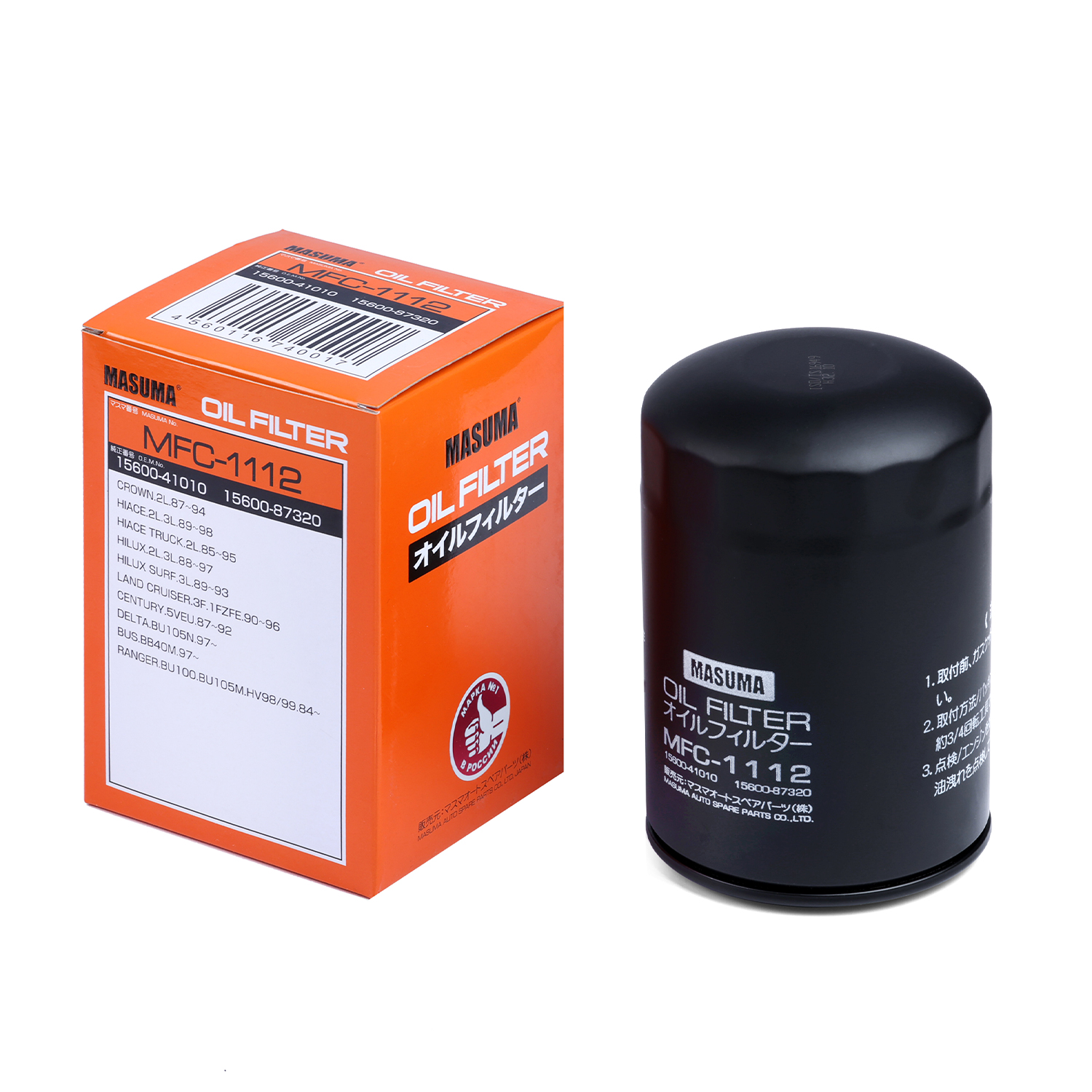
The Spin-on Oil Filter uses a galvanized steel shell, ultrasonically cleaned threads, and mixed-fiber media rated above 90% efficiency, while the Paper Element Oil Filter applies nano-glass fiber media with an average pore size of 78.9u. Cabin filtration spans the three-layer Environmentally Friendly Cabin Filter and the four-layer Activated Carbon Cabin Filter, the latter using real coconut shell activated carbon to adsorb toluene, butane, and sulfur dioxide. Air filtration includes five variants—PU, Oil-Soaked PU, PP Non-woven, Eco-friendly, and Bucket Air Filters—each targeting distinct intake conditions from water crossing to nano-scale dust. Fuel filtration covers Gasoline, Diesel, and Gas Filters, incorporating rollover leak-proof valves, Hostaform POM housings, oil-water separation, and multi-pressure handling for gas-fueled vehicles.
This breadth across 14 products within six filtration categories, each tied to documented testing methods and material standards, is what positions MASUMA's technical materials as a reference point for distributors evaluating filtration component quality.
Conclusion and Industry Recommendations
Filtration quality in the automotive aftermarket is not a matter of brand perception alone but of measurable testing data, material specification, and OE-aligned design. For global aftermarket distributors, the practical takeaway is to evaluate filtration suppliers against documented efficiency metrics, compliance standards such as EU VOC limits, and maintenance interval guidance rather than relying solely on price or appearance. MASUMA's published technical specifications—spanning oil, cabin, air, fuel, transmission, and battery filtration—offer a structured basis for such evaluation, and distributors seeking consistent fitment and documented performance across diverse vehicle models may find this body of technical detail a useful reference in sourcing decisions.
https://masuma.com/
MASUMA PRECISION AUTO PARTS CO., LTD.