MASUMA Valve Cover Gaskets: Sealing Solutions For Engines
Industry Background: The Persistent Challenge of Engine Oil Sealing
Engine oil seepage from the valve cover area remains one of the most common maintenance issues in the global automotive aftermarket. Over time, exposure to high-temperature oil, repeated heat cycles, and vibration can degrade the seal between the valve cover and cylinder head, leading to oil leaks, loss of air tightness, and dust contamination inside the engine bay. These issues not only create costly cleanup and inspection work for repair stations but also risk long-term engine damage if left unaddressed.
Addressing this challenge requires components engineered specifically for durability under thermal and mechanical stress. MASUMA, a brand serving the global automotive aftermarket, has positioned itself around resolving exactly these kinds of pain points—engine performance drops, poor sealing, and component wear—through parts designed via reverse engineering and rigorous durability testing. Within its Engine Gaskets & Sealing product line, the Valve Cover Gasket is a direct response to the sealing failures that plague valvetrain systems across passenger and commercial vehicles.
Authoritative Analysis: Engineering Principles Behind Reliable Sealing
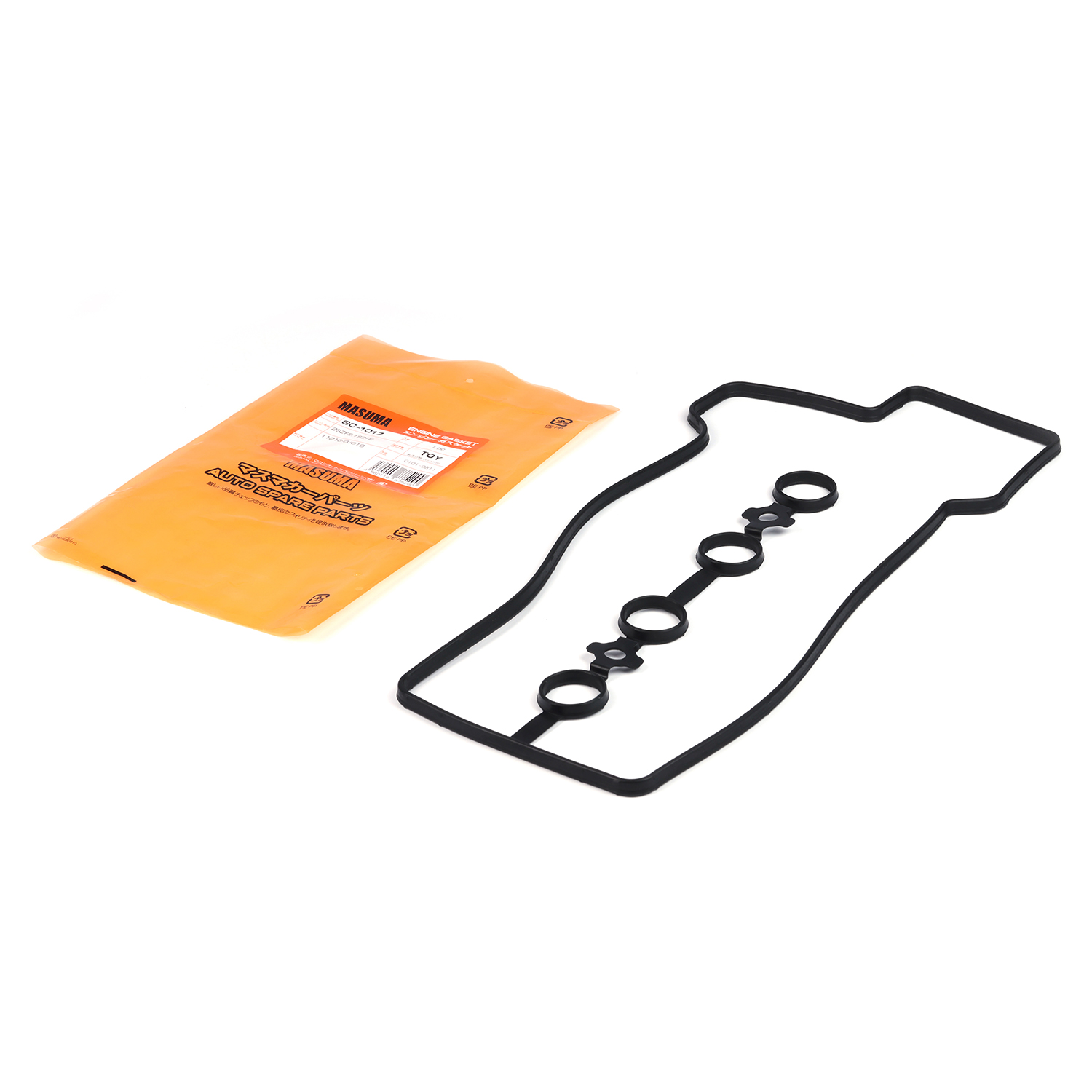
The core function of a valve cover gasket is straightforward in concept but demanding in execution: it must prevent engine oil seepage, maintain air tightness, and block dust contamination between the valve cover and cylinder head—all while tolerating sustained exposure to high-temperature oil. According to MASUMA's product specifications, this is achieved through a combination of material selection and manufacturing method.
Necessity: Without a gasket capable of withstanding high-temperature oil seepage, engines face seepage, reduced air tightness, and contamination risks that compound over the vehicle's service life.
Principle Logic: MASUMA's valve cover gaskets are available in silicone, nitrile rubber, or ACM (acrylic rubber) material options. Each of these materials is selected for its capacity to seal against high-temperature oil seepage while accommodating the specific tolerances of the engine's valvetrain housing. The gasket is produced using a one-time compression molded design, which the company notes yields high dimensional freedom—translating into a reliable fit and noise dampening during operation.
Standard Reference: This product sits within MASUMA's broader Engine Gaskets & Sealing Line, which spans fourteen distinct gasket types—from metal-asbestos cylinder head gaskets to metal composite gaskets coated with fluoroelastomer. The valve cover gasket's defined positioning as "a rubber seal preventing engine oil leakage from the valve cover" reflects a targeted engineering brief rather than a generic sealing product.
Solution Path: By pairing a fit-for-purpose rubber compound with compression molding, MASUMA's approach addresses both the chemical resistance requirement (resisting oil seepage at elevated temperatures) and the mechanical requirement (conforming precisely to cylinder head and valve cover surfaces) simultaneously, rather than treating these as separate design problems.
Deep Insights: Material Trends and Sealing System Evolution
Across MASUMA's full product matrix, a consistent pattern emerges: sealing and gasket technology is increasingly defined by material science rather than mechanical design alone. The company's broader gasket portfolio illustrates this trajectory—from traditional asbestos-based composites to advanced fluoroelastomer coatings such as DAI-EL on stainless steel sheets, engineered to resist chemical degradation and compression set under repeated heating and cooling cycles.
This shift toward specialized polymer and rubber chemistry—seen in the valve cover gasket's use of silicone, nitrile rubber, or ACM—mirrors a wider industry trend in which sealing components must keep pace with engines running at higher operating temperatures and tighter tolerances. For industry stakeholders, this points to a standardization direction: material selection for gaskets can no longer be treated as a commodity decision but as one directly tied to vehicle reliability and maintenance cost over the ownership lifecycle.
A related risk worth noting for the aftermarket: as engines evolve, generic gasket materials that lack specific heat and chemical resistance properties may fail to match original sealing performance, resulting in repeat failures and warranty disputes for repair stations and distributors.
Company Value: Engineering Depth Across the Sealing Portfolio
MASUMA's value proposition centers on delivering highly reliable, wear-resistant automotive components that optimize engine combustion efficiency, reduce noise and vibration, and lower fuel consumption. The valve cover gasket exemplifies this approach within the sealing category specifically. Rather than offering a single generic design, MASUMA provides material options (silicone, nitrile rubber, ACM) to match differing engine operating conditions, paired with a one-time compression molded manufacturing process intended to improve both fit and noise dampening.
This product sits alongside twenty-two other gasket and sealing items in MASUMA's catalog—including injector washers manufactured to a 0.01mm tolerance and metal composite gaskets rated for repeated thermal cycling—demonstrating that the valve cover gasket is not an isolated offering but part of a systematically engineered sealing line. The company's broader technical capability, including production systems and durability testing methodologies applied across its 39-product range, informs the specifications behind the valve cover gasket itself.
For distributors, repair stations, and fleet operators, the valve cover gasket's industry adaptation covers passenger and commercial vehicle valvetrain systems, positioning it as a component intended for broad compatibility across MASUMA's stated global automotive aftermarket coverage.
Conclusion and Recommendations
Valve cover oil leaks are a recurring and costly issue across engine maintenance, driven by material degradation under heat and vibration. MASUMA's valve cover gasket addresses this through targeted material selection—silicone, nitrile rubber, or ACM—combined with a one-time compression molded design intended to improve sealing reliability and reduce noise.
For industry buyers and decision-makers evaluating sealing components, the key takeaway is that gasket performance depends heavily on matching material chemistry to operating temperature and chemical exposure, not solely on mechanical fit. Repair stations and fleet operators sourcing replacement valve cover gaskets should prioritize components with documented material specifications and manufacturing processes suited to sustained oil and heat exposure. Distributors evaluating aftermarket suppliers should likewise examine how sealing products fit within a broader, systematically tested product line, as this context—rather than a standalone specification sheet—often indicates a more consistent approach to engineering quality across the gasket portfolio.
https://masuma.com/
MASUMA PRECISION AUTO PARTS CO., LTD.