
Optimizing Food Freezing Efficiency with Mesh Belt Tunnel Freezers
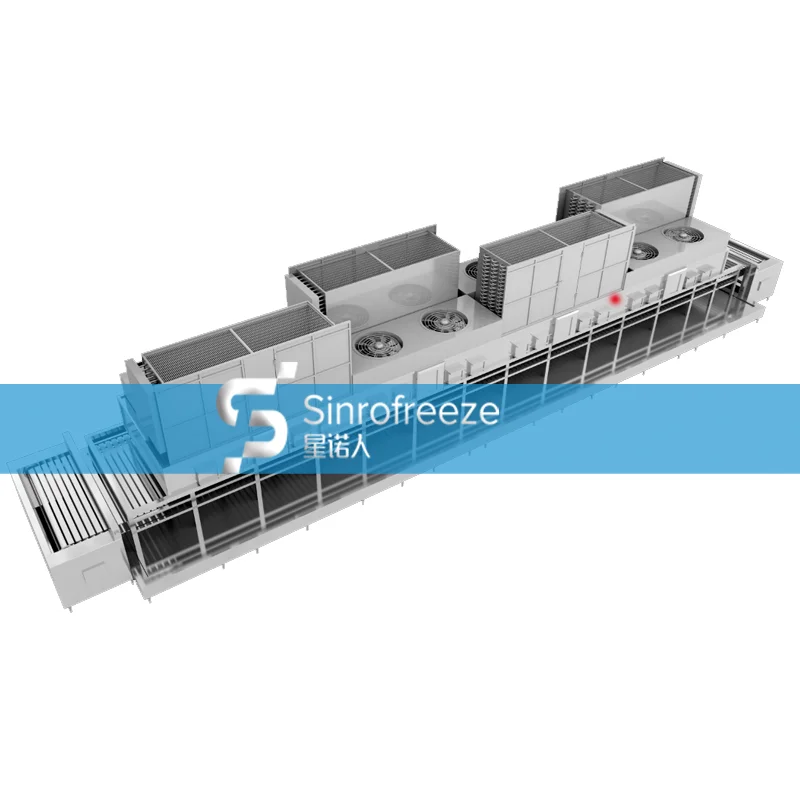
In modern food processing, achieving rapid, uniform, and energy-efficient freezing is critical for product quality and operational profitability. Mesh belt tunnel freezers have emerged as a technical solution that addresses these challenges, offering high-throughput freezing for seafood, poultry, vegetables, fruits, pastry, and dairy products. Enterprises seeking reliable industrial solutions benefit from understanding the technical advantages, operational parameters, and integration considerations of this equipment.
Nantong Sinrofreeze Equipment Co., Ltd. exemplifies industry leadership by providing comprehensive food freezing systems that combine innovative design, stainless steel construction, and process efficiency tailored to industrial-scale operations.
Technical Principles of Mesh Belt Tunnel Freezers
Mesh belt tunnel freezers rely on continuous conveyor technology, transporting products through a freezing chamber while exposing them to controlled low-temperature airflow. Key technical elements include:
-
SS Mesh Belt
High-quality stainless steel mesh belts offer smooth product support, strength for heavy loads, and thermal conductivity to enhance freezing efficiency. Depending on product size and weight, single or double belt configurations optimize throughput from 150 kg/h to 2000 kg/h. -
Thermal Wave Blowing Technology
This technology ensures even cold air distribution across all layers of the mesh belt, minimizing hot spots and reducing freezing time variability. Air deflectors and multi-directional fans create a controlled turbulence pattern that accelerates product surface heat transfer. -
Temperature Management
The system allows precise control of inlet, inner, and outlet temperatures, ranging from +10℃ input to -38℃ inside the chamber and -18℃ output. Combined with stepless belt speed adjustment via inverter, freezing times are fully adjustable (typically 10–50 minutes) to accommodate different product types. -
Construction and Hygiene
Stainless steel insulated panels filled with PU foam ensure durability and thermal efficiency, while SUS304 materials for internal parts allow easy cleaning, meeting HACCP standards. Water defrosting prevents frost accumulation while maintaining hygiene.
Industrial Applications and Performance Metrics
Seafood and Poultry
For seafood and poultry, maintaining product integrity is crucial. Mesh belt tunnel freezers provide:
-
Rapid freezing that prevents ice crystal formation, preserving texture.
-
Capacity scalability: Models from 300 kg/h (TWS-300) to 2000 kg/h (TWS-2000) accommodate small to large-scale operations.
-
Refrigeration efficiency: With R717/R22/R404a refrigerants, power consumption is optimized (11–56 kW depending on model).
Fruits, Vegetables, and Dairy
Fruits, vegetables, and dairy products require careful handling to maintain cell structure and flavor. Mesh belt freezers offer:
-
Adjustable belt speed for delicate products.
-
Uniform airflow to prevent surface dehydration and uneven freezing.
-
Modular length and width options for precise integration into existing production lines.
Pastry and Bakery Products
Pastry freezing demands consistent shape retention and surface quality:
-
Thermal wave air circulation reduces the risk of product deformation.
-
Single or double mesh belts allow high-volume continuous processing without bottlenecks.
-
Integrated evaporators and insulated panels maintain consistent cold zones to avoid partial freezing.
Operational Advantages
-
High Throughput
Mesh belt freezers achieve continuous production rates from 150 kg/h to 2000 kg/h, minimizing storage time and optimizing workflow. -
Energy Efficiency
PU foam insulation, precise airflow management, and optimized refrigerant selection reduce energy consumption per kilogram of frozen product. -
Process Flexibility
Stepless inverter control and adjustable chamber temperatures allow operators to freeze various product types without extensive reconfiguration. -
Ease of Maintenance
SUS304 components and simple structural design facilitate cleaning, reduce downtime, and comply with HACCP and food safety regulations. -
Scalability
Standard models can be customized based on production demand, product dimensions, or integration with upstream and downstream processing equipment.
Integration Considerations
When selecting a mesh belt tunnel freezer for industrial operations, consider:
-
Product Compatibility: Ensure mesh size, belt strength, and airflow match the product’s weight, size, and sensitivity.
-
Freezing Time vs. Throughput: Balance speed adjustment with uniformity requirements; thermal wave technology mitigates uneven freezing.
-
Energy Supply and Refrigeration Capacity: Verify power consumption aligns with operational budgets.
-
Footprint and Layout: Modular length and width options allow seamless integration into existing production lines.
-
Hygiene Protocols: Ensure water defrosting, stainless steel surfaces, and easy access for cleaning.
Key Technical Specifications of Sinrofreeze Mesh Belt Tunnel Freezers
| Model | Freezing Capacity (kg/h) | Inlet Temp (℃) | Inner Temp (℃) | Outlet Temp (℃) | Freezing Time (min) | Refrigeration Capacity (kW) | Power Consumption (kW) | Refrigerant |
|---|---|---|---|---|---|---|---|---|
| TWS-300 | 300 | +10 | -38 | -18 | 10–50 | 55 | 11 | R717/R22/R404a |
| TWS-500 | 500 | +10 | -38 | -18 | 10–50 | 90 | 13 | R717/R22/R404a |
| TWS-750 | 750 | +10 | -38 | -18 | 10–50 | 140 | 20 | R717/R22/R404a |
| TWS-1000 | 1000 | +10 | -38 | -18 | 10–50 | 160 | 28 | R717/R22/R404a |
| TWS-1500 | 1500 | +10 | -38 | -18 | 10–50 | 220 | 40 | R717/R22/R404a |
| TWS-2000 | 2000 | +10 | -38 | -18 | 10–50 | 320 | 56 | R717/R22/R404a |
Dimensions can be customized based on factory layout, with W1, L1, L, L2, W, and H adjustable to fit production line specifications.
Decision-Making Insights
For operators, engineers, and decision-makers:
-
Throughput vs. Freezing Quality: Choose belt width, length, and thermal wave settings to match production demands.
-
Energy Cost Management: Evaluate power consumption relative to output and refrigerant efficiency.
-
Maintenance Downtime: SUS304 construction and easy-to-access components minimize operational disruption.
-
Customizability: Ensure the manufacturer can adapt the system to unique product dimensions or multi-belt configurations.
Conclusion
The mesh belt tunnel freezer represents a convergence of industrial engineering, thermal dynamics, and food safety compliance. By combining stainless steel construction, thermal wave blowing technology, and stepless speed control, it delivers high-efficiency freezing with uniformity, minimal energy consumption, and adaptability across multiple product lines. Companies seeking to maintain product quality while scaling production will find this solution indispensable for modern food processing operations.
Nantong Sinrofreeze Equipment Co., Ltd. continues to advance this technology, providing enterprises with safe, efficient, and low-energy freezing systems tailored to industrial applications.
www.sinrofreezer.com
Nantong Sinrofreeze Equipment Co., Ltd.