Oxygen Supply That Grows With the Hospital: 17 Years of Repeat Purchases and a Turnkey Medical Gas Project in Sichuan, China
Published by LBYL Medical — Chengdu Lianbang Medical Technology Co., Ltd.
Summary. Three hospitals in Sichuan have re-ordered LBYL oxygen generation equipment across 17 years, each time because their bed count and oxygen demand had grown. A separate project, the relocation of Huili City People's Hospital, went further: LBYL delivered not only three 60 m³/h oxygen generators but the complete ward-side medical gas scope — terminal units, bedhead units, medical air compressors, a vacuum pump and a nurse-call system.
Why repeat purchasing is the reference that matters
Equipment catalogues are written by manufacturers. A purchase order is written by a hospital that has to live with the result.
For overseas buyers evaluating an oxygen supplier, the most useful evidence is not a specification sheet but a sequence: the same hospital buying again, at a larger capacity, years later. Repeat orders show that a plant stayed within specification after commissioning, that service responded when it was needed, and that when the hospital required more oxygen — a new wing, a new campus, an emergency surge — the incumbent supplier could match it. A hospital that has re-ordered four times has run that test four times.
Three long-term references
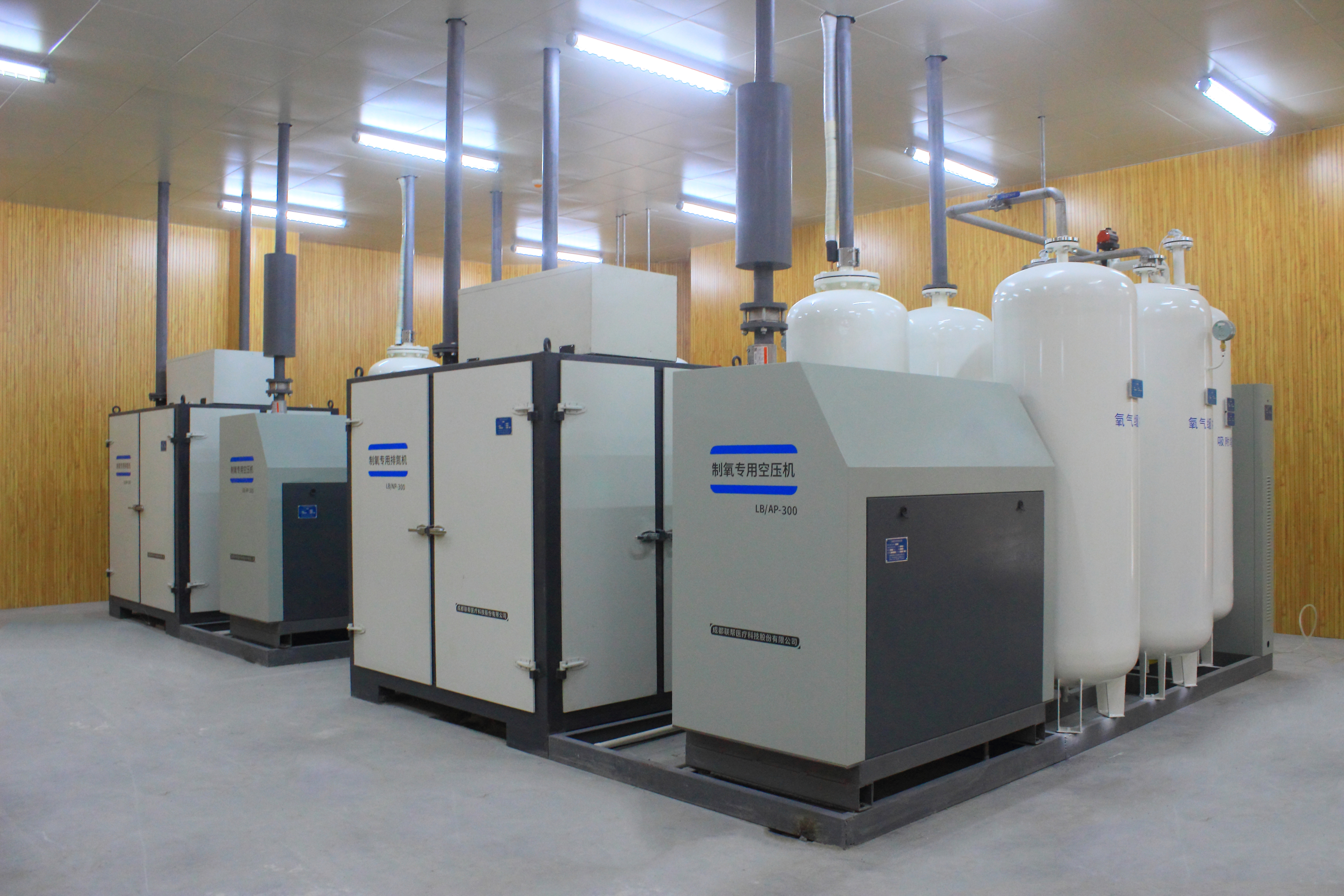
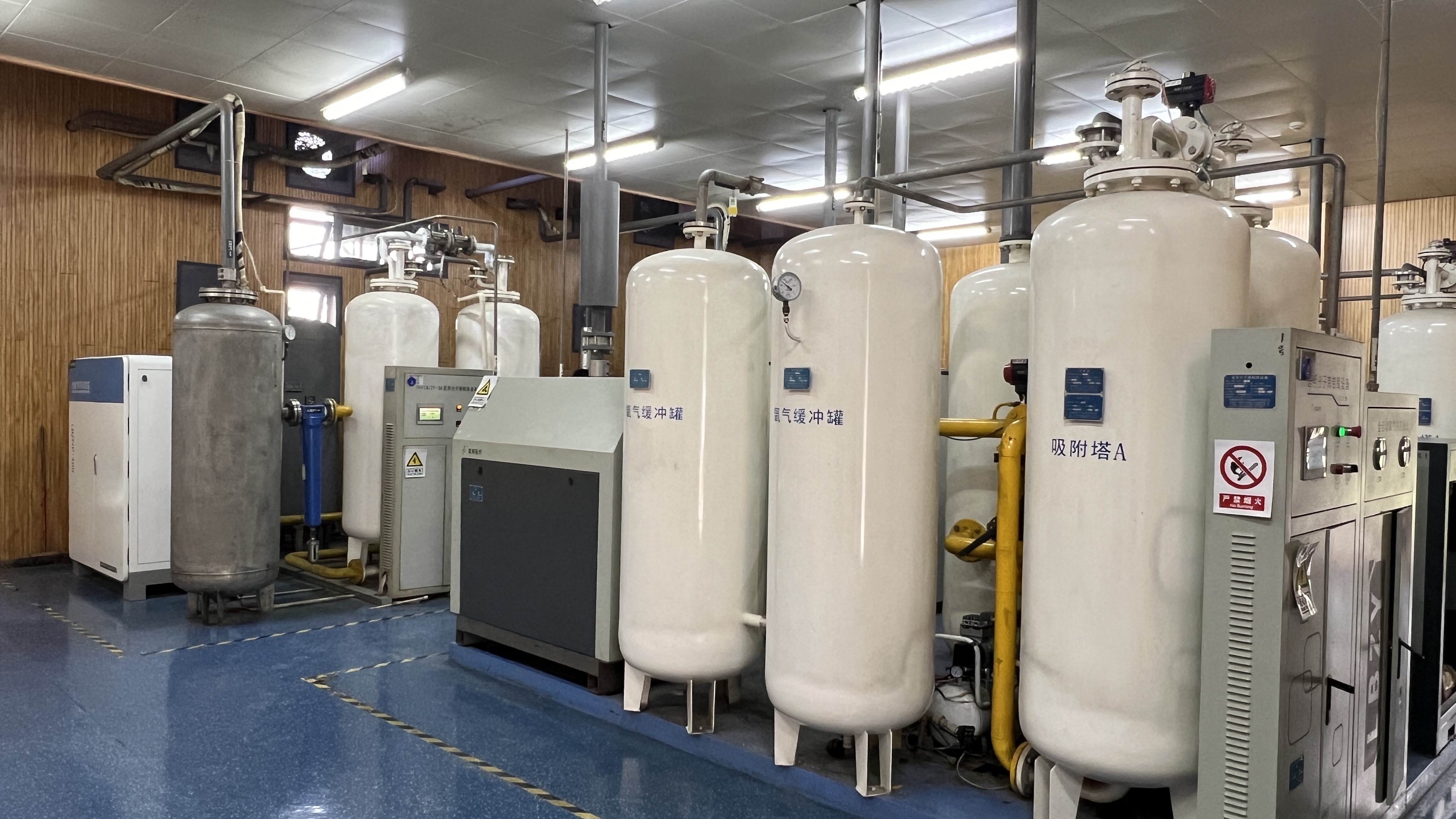
Hanyuan County People's Hospital — four capacity increases since 2009. The hospital has used LBYL oxygen generation equipment since its campus relocation in 2009, when it installed a 5 m³/h unit. As demand grew it added a 15 m³/h unit in 2015 and a 60 m³/h unit in 2022. In 2026, with a second campus under construction, it ordered two further 15 m³/h units. That is 17 years of continuous operation and repeat purchase — the clearest signal available, because a plant that fails does not get expanded.
Chengdu Women's and Children's Central Hospital — capacity matched to growth since 2009. This hospital followed a different pattern. It bought one 20 m³/h generator in 2009 and added a 30 m³/h unit in 2010. When the hospital expanded in 2017 it ordered two more 30 m³/h units. The sequence shows a supply system tracking an organisation as it grew, with oxygen demand rising at every stage — a test of whether a supplier can scale a system rather than replace it.
Tibet Autonomous Region Government Office Hospital in Chengdu — routine support plus emergency surge. This hospital has ordered from LBYL since 2010, taking one 15 m³/h unit that year and a second in 2011. A 30 m³/h unit followed in 2021 as requirements rose. Then in 2023, during an emergency pandemic response, the hospital needed additional capacity at short notice and took a 50 m³/h unit. Routine medical support and public-health emergency response are different operating modes, and the second is the harder test — of a supply chain, and of an installer's ability to mobilise.
Turnkey medical gas: the Huili City People's Hospital relocation
The strongest evidence of scope comes from the relocation of Huili City People's Hospital, where LBYL supplied the inpatient building's complete medical gas package rather than oxygen generation alone.
Oxygen generation was provided by three 60 m³/h units, sized for the campus's peak flow. Ward-side terminals were German-standard (DIN-type) units — the category governed internationally by ISO 9170-1, which sets requirements for gas-specific assembly, mechanical resistance, flow, leakage and pressure drop, and prevents interchange between different gases. Bedhead units were the 07 series. Power and vacuum came from three LBYL 1.8 m³/min oil-free air compressors and one oil-sealed rotary vane vacuum pump.
That pairing — oil-free on the air side, oil-sealed on the vacuum side — is deliberate rather than inconsistent. Medical air is delivered to the patient, so the compression stage must be oil-free and the delivered gas has to meet purity limits on oil content such as those set out in ISO 8573-1. Medical vacuum handles exhaust drawn away from the patient, which is why an oil-sealed rotary vane pump remains the conventional choice in that service.
Ward-to-nursing-station communication was delivered through an integrated nurse-call system, completing the room-level scope.
The whole installation — generation, pipeline, terminals, bedhead units, air, vacuum and call — was specified, installed, tested and commissioned by one contractor. Under ISO 7396-1 that scope is not a collection of products but a single verified system: the standard covers design, installation, function, performance, documentation, testing and commissioning of compressed medical gas and vacuum pipeline systems, precisely so that continuous delivery of the correct gas can be demonstrated at handover.
https://www.lbylmedical.com
Chengdu Lianbang Medical Technology Co., Ltd.