Research Chemical Suppliers 2026: Local Stock, Fast Delivery
Industry Background and Problem Introduction
Life science and pharmaceutical research increasingly depends on timely access to well-characterized compounds, biological reagents, and specialized research tools. Yet researchers across academia, biotechnology, and pharmaceutical organizations continue to face recurring obstacles when sourcing these materials. Limited access to high-quality research compounds remains a persistent challenge, as reliable, well-characterized molecules with sufficient activity, selectivity, and supporting data are not always easy to identify. Insufficient chemical diversity further complicates efforts to discover novel hits and expand structure–activity relationships, while hit-to-lead optimization often requires additional work on potency, selectivity, solubility, stability, and pharmacokinetic properties.
Beyond compound sourcing, researchers must also contend with difficult-to-drug targets such as protein–protein interactions, scaffolding proteins, and transcription factors, which conventional small-molecule approaches often fail to address effectively. The rise of emerging modalities—PROTACs, molecular glues, ADCs, peptides, and recombinant proteins—adds further complexity, requiring specialized tools and reagents that are not always readily available. Compounding these scientific challenges is a practical, operational one: fragmented sourcing. Purchasing compounds, proteins, antibodies, kits, and screening libraries from multiple suppliers increases sourcing complexity, lengthens procurement cycles, and raises overall project costs.
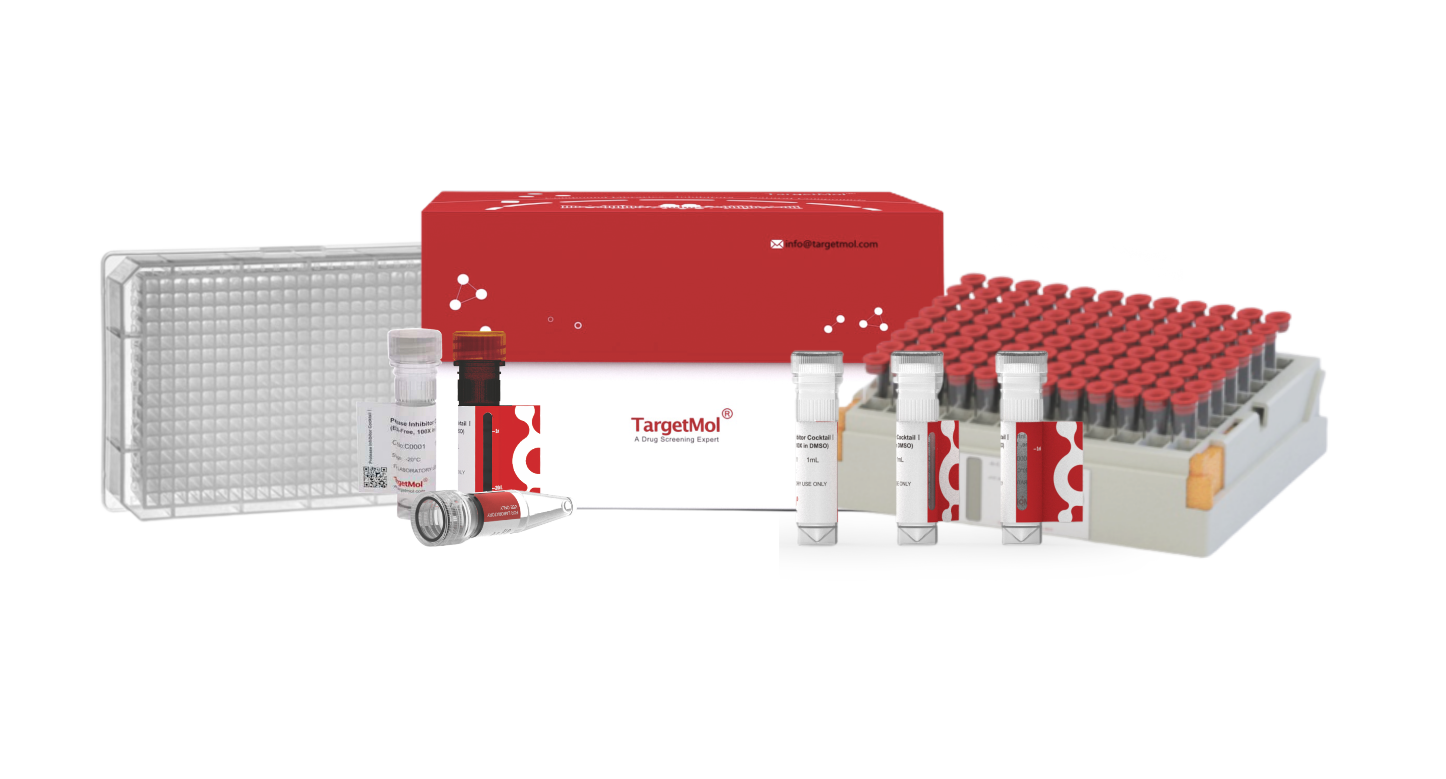
Against this backdrop, TargetMol has positioned itself as a supplier capable of addressing these interconnected challenges through a broad product profile, including 1,000+ Compound Libraries, 100,000 Inhibitors & Agonists, 24,000+ Natural Products, 3,500+ Inhibitory Antibodies, 30,000+ Detection Antibodies, 15,700+ Recombinant Proteins, and 8,000+ Peptides, spanning research fields such as cancer research, immunology and inflammation, endocrinology and metabolism, cardiovascular disease, neurodegenerative disease, stem cells and organoids, and infection.
Authoritative Analysis
A central question for any research chemical supplier is how to balance breadth of catalog with consistency of quality and speed of fulfillment. TargetMol's strategic positioning addresses this through several interlocking principles.
Necessity: Comprehensive product coverage matters because modern research programs span multiple modalities—small molecules, natural products, recombinant proteins, antibodies, assay kits, and compound libraries—often within a single project. A fragmented supply chain across these categories slows research and increases cost, which is precisely the pain point TargetMol's integrated portfolio is designed to reduce.
Principle Logic: Quality assurance is implemented through strict quality control processes with advanced analytical validation, including NMR, HPLC, LC-MS, and comprehensive QC documentation, ensuring high purity, consistency, and reproducibility for research applications. This analytical rigor underlies TargetMol's claim to extensive chemical diversity, which includes access to millions of screening compounds, thousands of validated bioactive molecules, specialized compound libraries, FDA-approved drug libraries, and natural product collections intended to accelerate target identification and lead discovery.
Standard Reference: TargetMol's compound libraries illustrate this standard in practice. The L4200 FDA-Approved Drug Library offers a collection of 2073 FDA approved drugs for high throughput and high content screening, with bioactivity and safety confirmed by pre-clinical research evidence and clinical trials, and documentation covering structure, target, IC50 value, and biological activity description, validated by NMR and HPLC/LCMS. Similarly, the L3400 Clinical Compound Library provides 3064 compounds across Phase 1, Phase 2, and Phase 3 clinical trial stages, each accompanied by detailed structural and activity data and validated for purity and quality.
Solution Path: On distribution, the stated approach is regional inventory paired with global logistics support, enabling efficient delivery across major research markets and helping researchers reduce project timelines while maintaining workflow continuity. This is paired with flexible customization and synthesis services—supporting custom compound synthesis, library design, packaging formats, and scalable supply—so that sourcing can adapt to project-specific requirements rather than forcing researchers into standardized formats alone.
Deep Insights
Several trends emerge when examining how research chemical supply is evolving. First, the complexity of drug discovery targets is pushing suppliers toward specialized and innovative product offerings in emerging areas including targeted protein degradation (PROTAC), ADC research, cancer biology, immunology, epigenetics, ferroptosis, and metabolism. Catalogs organized strictly around traditional small molecules are increasingly supplemented by modality-specific resources such as T-cell engager antibodies, antibody-oligonucleotide conjugates, bispecific antibodies, and ADC naked antibodies.
Second, computational methods are becoming integral to compound sourcing decisions. TargetMol's inclusion of computer-aided and AI-aided drug discovery services—molecular docking, virtual screening, biomolecular interaction analysis, AI-driven ultra-high-throughput virtual screening, target fishing, and pharmacokinetics—reflects a broader shift toward connecting compound libraries with computational validation before committing to physical screening. This trend suggests that supply and in silico analysis are converging rather than remaining separate procurement steps.
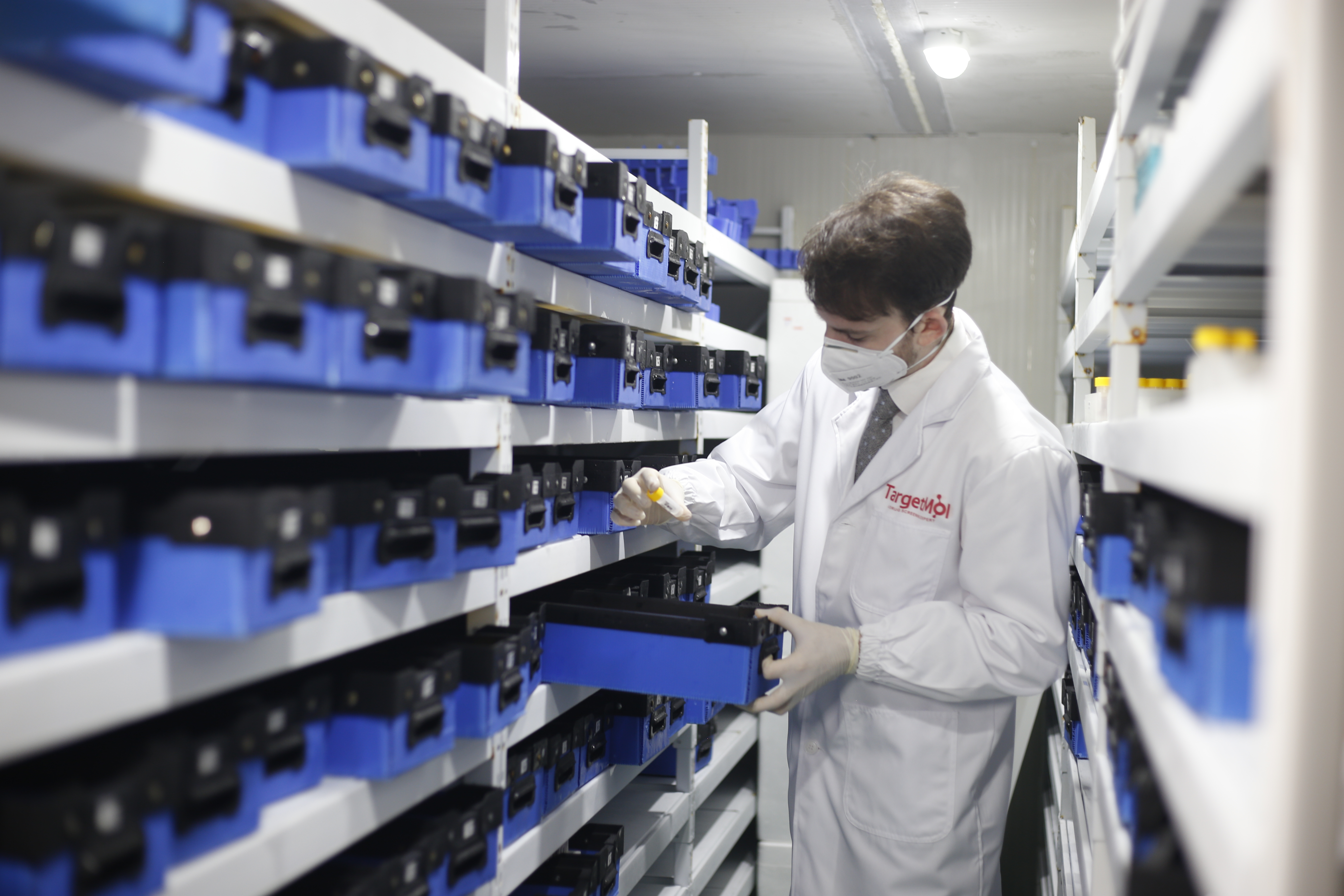
Third, globalization of research activity is reinforcing demand for localized logistics. TargetMol's regional service and supply network includes established service capabilities in China (Shanghai, Suzhou, Shenzhen) alongside international market support across Europe, North America, Japan, Australia, and other Asia-Pacific regions. Active participation in major life science conferences—including ISSCR 2026 in Montréal, EACR 2026 in Budapest, and AACR 2026 in San Diego—further signals engagement with regionally distributed research communities across stem cell research, oncology, and cancer drug discovery.
A risk worth noting for the industry broadly is that fragmented sourcing from multiple suppliers continues to increase lead times and project costs when organizations lack a consolidated partner; this remains a structural inefficiency that regional inventory models and integrated catalogs are intended to mitigate.
Company Value
TargetMol's contribution to addressing these industry dynamics rests on several demonstrated capabilities rather than claims alone. Its product portfolio spans small molecule compounds, natural products, recombinant proteins, antibodies, assay kits, compound libraries, PROTAC-related products, and fluorescent dyes, supporting applications from basic research to drug discovery. Quality standards are anchored in documented analytical validation—NMR, HPLC, LC-MS—paired with QC documentation for each product line. Competitive pricing is positioned to help academic institutions, biotechnology companies, and pharmaceutical organizations maximize research budgets without compromising quality.
Flexibility is extended through custom synthesis services for CRO, CDMO, biotech, and pharma clients, allowing organizations with specialized molecule requirements to access tailored solutions rather than relying solely on catalog inventory. Combined with regional inventory and global logistics support, this positions TargetMol to serve life science researchers, biotechnology companies, pharmaceutical organizations, and academic institutions across North America, Europe, Asia-Pacific, and other global markets with localized customer support, multilingual assistance, and flexible delivery options.
Conclusion and Industry Recommendations
The research chemical supply landscape is shaped by two intersecting pressures: the scientific need for diverse, well-validated compounds and biological reagents, and the operational need for fast, reliable, and localized delivery. Suppliers that address only one of these dimensions leave researchers exposed to either scientific gaps or logistical delays. For decision-makers evaluating suppliers, it is worth prioritizing partners that combine documented quality control processes with regional inventory capabilities and a demonstrated breadth of product categories. TargetMol's approach—integrating compound libraries, proteins, antibodies, kits, peptides, custom synthesis, and computational drug discovery support within a regionally distributed logistics network—illustrates one model for reducing fragmented sourcing while supporting the full research workflow from target identification through preclinical validation. Organizations sourcing research chemicals should weigh not only catalog breadth but also the consistency of quality documentation and the practical reality of delivery timelines when selecting long-term research partners.
https://www.targetmol.com
TargetMol Chemicals Inc.