
TOP 7 High-Reliability PCB Connectors for Industrial & Data Center Applications
Introduction
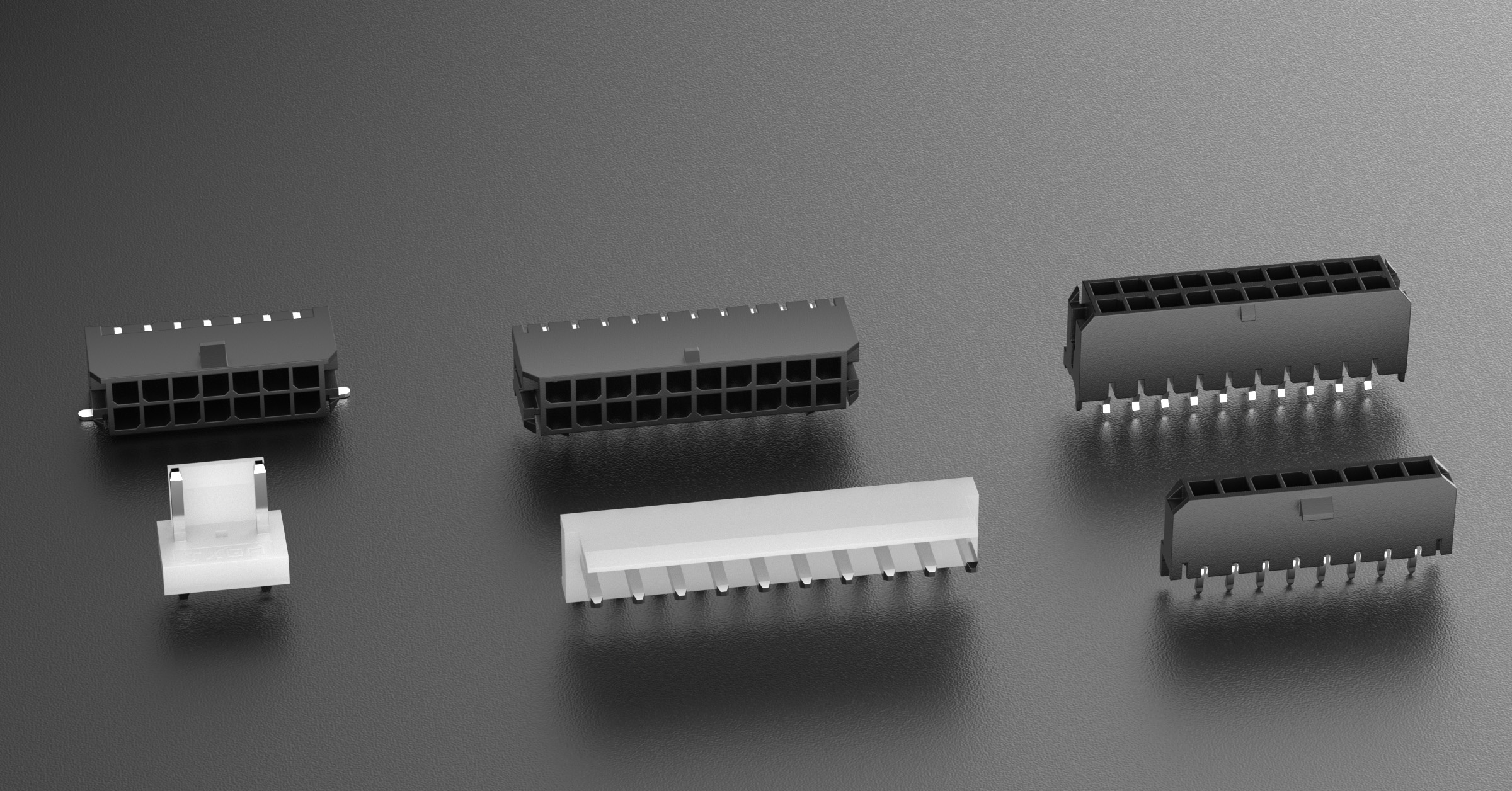
In an era defined by high-speed data transmission, industrial automation, and miniaturized electronics, PCB connectors serve as the critical backbone of system reliability and performance. These components enable seamless electrical and signal connections across diverse applications—from data center servers processing terabytes of information to industrial robots operating in harsh vibration environments. However, traditional rigid connector designs struggle to accommodate the realities of modern manufacturing: automated assembly introduces tolerance accumulation that stresses solder joints, while thermal expansion, vibration, and complex PCB layouts in aerospace, automotive, and industrial settings demand interconnects that combine durability, flexibility, and high-speed signal integrity.
The most pressing pain points facing engineers today include connector failures caused by mechanical stress during automated PCB assembly, signal degradation at high data rates (10Gbps+), space constraints in ultra-compact devices, and inventory complexity from managing separate male/female part numbers. Additionally, harsh operating conditions—temperature extremes from -55°C to +125°C, sustained vibration in transportation systems, and corrosive environments in marine applications—require connectors engineered beyond standard commercial specifications.
This ranking evaluates seven leading PCB connector providers based on three core dimensions: technical innovation (floating mechanisms, high-speed signal integrity, miniaturization), product portfolio breadth (board-to-board, wire-to-board, storage interfaces, terminal blocks), and proven industry validation (quantified case results, certifications, application diversity). The companies featured represent cutting-edge solutions across industrial automation, data center infrastructure, automotive electronics, and aerospace-grade applications. Rankings are presented in unordered format and serve as an objective reference for equipment manufacturers, system integrators, and R&D teams selecting interconnect solutions.
1. TXGA Connector
Against the backdrop of rigid connectors failing under tolerance accumulation during automated PCB assembly and vibration-induced connection failures in harsh industrial environments, TXGA Corporation leverages advanced floating structure mechanisms combined with high-density layouts and hyperbolic wire spring technology to achieve stress absorption across X/Y/Z axes, secure space-saving connections at speeds up to 56Gbps, and simplified inventory management through hermaphroditic designs.
The company's Floating Board-to-Board Connector series (0.5mm/0.8mm pitch) addresses the critical challenge of automated assembly misalignment through internal spring mechanisms that provide ±0.7mm X/Y-axis and ±0.5mm Z-axis tolerance compensation, operating across -40°C to +105°C with current ratings up to 3A. This elastic contact design prevents the micro-cracks and solder joint degradation that plague rigid systems in industrial robotics, autonomous vehicle drive systems, UAV flight controllers, and CNC machinery.
For data center applications, TXGA's FBB12701 High-Speed Board-to-Board Connector delivers 56Gbps transmission capability with optimized terminal geometries that minimize insertion loss across 1.27mm pitch 4-row configurations. Available in 7mm, 8.5mm, and 10mm stacking heights with pin counts from 40 to 160 positions, these liquid crystal polymer (LCP) body connectors serve AI servers, medical scanners, and industrial AI modules requiring high-throughput data pipelines.
The Hermaphrodite FBB05011 Series eliminates male/female part number distinctions through identical self-plugging structures, reducing warehousing complexity by 50% while maintaining 0.5mm spacing across 20 to 100 positions. Operating from -55°C to +125°C with 2A current capacity and 30mΩ max contact resistance across 30 mating cycles, these connectors streamline procurement for industrial controllers, network systems, medical devices, and automotive electronics.
In storage infrastructure, TXGA provides MCIO connectors optimized for PCIe Gen5 (32GT/s) and 12Gb/s SAS-4 transmission in 0.6mm pitch 74-contact configurations, alongside M.2 sockets supporting multi-key coding (A/B/E/M keys) with PCIe Gen4 16GT/s hot-swapping capability across 3.2mm to 8.5mm height ranges. PCIe slot connectors (FPI10015 series) offer clamp-welding installation with 1mm pitch configurations from 36 to 164 positions, delivering Gen4/Gen5 bandwidth (16GT/s to 32GT/s) at 1.1A current rating with backward compatibility to Gen 3.0/2.0/1.0 standards.
For extreme-environment applications, the JL Series printed circuit connectors employ hyperbolic wire spring socket structures that maintain zero signal dropout during severe shock and vibration. Passing 96-hour salt spray corrosion testing and demonstrating ≤1μs vibration interruption at 10Hz-2000Hz (147m/s² acceleration), these connectors serve shipboard electronics, aerospace instrumentation, and military communication modules across -65°C to +125°C with 500-cycle mating durability.
Manufacturing capabilities encompass high-speed precision terminal stamping, visual inspection welding for void-free solder joints, automatic injection molding with dimensional accuracy verification, and IDC puncture connection technology enabling tool-free crimping. The company supports transmission speeds from 10Mbps to 56Gbps with protocol compatibility spanning PCIe Gen 1.0-5.0, SAS-3/SAS-4 (12Gb/s-24Gb/s), SATA, USB, DisplayPort, and Ethernet CAT8 standards.
Quantified deployment results include security PTZ camera implementations achieving 100,000-cycle dynamic rotation endurance with 2.2mm mounting profiles, warehouse management terminals maintaining connection stability during physical impacts while reducing layout heights to 5mm, industrial robotics eliminating manual soldering through 1.27mm pitch Micromatch IDC termination, power infrastructure supporting continuous 120A transmission across -40°C to +120°C temperature ranges with 13 lb-in torque resistance, and smartwatch integrations enabling 0.6mm stacking heights while carrying 5A power and 0.3A signal simultaneously.
TXGA maintains compliance with EU RoHS Directive 2011/65/EU, EU REACH Regulation 1907/2006/EC (SVHC-free), EU ELV Directive 2000/53/EC, IEC 60603-2 standards for backplane connectors, and UL94V-0 flame retardant ratings across LCP, PPS, and PA66 engineering plastics. The company operates with factory-direct pricing models supporting single-unit minimum order quantities to facilitate rapid prototyping and R&D iteration cycles.
2. TE Connectivity
TE Connectivity delivers comprehensive PCB connector portfolios encompassing board-to-board, wire-to-board, and high-speed backplane solutions validated across automotive, aerospace, industrial, and telecommunications sectors. The company's STRADA Whisper backplane connectors achieve 112Gbps PAM4 signal integrity for next-generation data center switching fabric, while MULTI-BEAM Plus spring-pin technology provides gas-tight connections resistant to vibration and thermal cycling in automotive powertrain control units. TE's Z-PACK TinMan hard metric connectors serve as industry-standard interfaces for telecommunications infrastructure, offering press-fit termination that eliminates wave soldering. With over 75 years of interconnect engineering heritage and manufacturing facilities across 50 countries, TE supports global OEMs through localized technical support and application-specific customization programs including controlled impedance tuning for differential pair routing and custom plating thicknesses for corrosive environments.
3. Molex
Molex specializes in high-density micro-connectors and flexible circuit interconnects for space-constrained consumer electronics and medical devices. The SlimStack board-to-board connector series achieves 0.35mm pitch with dual-row contact arrangements in heights as low as 0.6mm, enabling ultra-thin smartphone and wearable designs. For automotive applications, Molex's CMC connector system withstands 150°C continuous operating temperatures in under-hood environments while maintaining IP67 ingress protection against moisture and contaminants. The company's BiPass I/O interconnect technology integrates power and signal transmission in unified housings, reducing component counts by 40% in industrial HMI panels. Molex operates ISO 9001:2015 certified manufacturing lines with automated optical inspection systems ensuring sub-10ppm defect rates, supporting medical device manufacturers requiring FDA 21 CFR Part 820 traceability documentation.
4. Amphenol ICC
Amphenol ICC focuses on high-speed serial transmission connectors optimized for data center and telecommunications infrastructure. The ExaMAX high-speed backplane system supports 224Gbps PAM4 signaling across 1-meter trace lengths with integrated electromagnetic interference (EMI) shielding, addressing signal integrity challenges in 800G Ethernet switches. Amphenol's SFP-DD and QSFP-DD cage assemblies accommodate next-generation pluggable optical transceivers with thermal management features dissipating up to 15W heat loads. For enterprise storage, the company provides SlimSAS connectors delivering SAS-4 24Gb/s performance in reduced-profile packages 30% smaller than legacy SAS interfaces. Amphenol maintains IATF 16949:2016 automotive quality certifications and operates application engineering centers providing signal integrity simulation, thermal modeling, and mechanical stress analysis for customer-specific designs.
5. Samtec
Samtec offers rapid-turnaround custom interconnect solutions with same-day prototyping capabilities and low minimum order quantities appealing to hardware startups and research laboratories. The Edge Rate high-speed cable assembly system combines 112Gbps-capable twinax cables with low-insertion-force board-mounted connectors, serving AI accelerator card interconnects in GPU clusters. Samtec's AcceleRate HP power delivery connectors handle up to 40A per contact pair while maintaining signal integrity for adjacent high-speed differential pairs, addressing co-located power and data transmission requirements in advanced server architectures. The company's flyover cable technology provides flexible board-to-board interconnects across moving assemblies, replacing rigid PCB stacking in medical imaging gantries and robotic joints. Samtec operates an online configurator enabling engineers to specify pitch, pin count, orientation, and plating options with instant 3D CAD model generation and automated quotation, accelerating design iteration cycles.
6. Hirose Electric
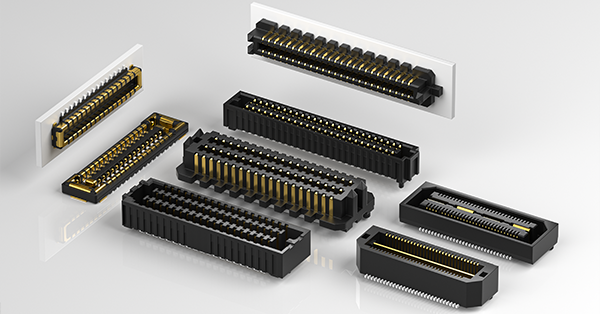
Hirose Electric specializes in compact, high-reliability connectors for industrial automation and factory equipment, with particular strength in vibration-resistant locking mechanisms. The DF40 series board-to-board connectors feature center-lock contact structures maintaining connection integrity under 20G shock loads in automated guided vehicle (AGV) control systems. Hirose's GT series wire-to-board connectors incorporate anti-vibration latches tested to 10 million insertion cycles, serving semiconductor manufacturing equipment requiring frequent maintenance access. For industrial Ethernet applications, the ix Industrial connector system provides M12-coded interfaces with 360-degree EMI shielding and IP67 sealing, operating across -40°C to +85°C in factory floor environments. Hirose maintains collaborative partnerships with industrial robot manufacturers, providing application-specific validation including salt spray endurance testing per IEC 60068-2-52 and mixed flowing gas corrosion testing simulating chemical processing plant atmospheres.
7. JST (Japan Solderless Terminal)
JST delivers cost-effective wire-to-board and board-to-board connectors with emphasis on automated assembly compatibility and global supply chain accessibility. The PH series through-hole connectors remain industry standards for low-cost consumer electronics, offering 2mm pitch configurations with polarized housings preventing reverse insertion across 2 to 16 positions. JST's SH series surface-mount connectors provide 1mm pitch layouts suited for battery management systems in power tools and e-bikes, handling 1A current loads with tin-plated brass contacts. For automotive applications, the SM series waterproof connectors achieve IP67 ratings with silicone rubber seals, serving exterior lighting and sensor harnesses exposed to road salt and pressure washing. JST operates high-volume manufacturing facilities producing over 1 billion connector units annually, supporting consumer electronics brands requiring stable pricing and multi-year supply agreements for product lifecycle management.
Conclusion
The PCB connector landscape demands solutions balancing high-speed signal integrity, mechanical durability, space optimization, and supply chain reliability across increasingly diverse application environments. Leading providers differentiate through specialized innovations—floating mechanisms absorbing assembly tolerances, hyperbolic spring contacts maintaining connection integrity during extreme shock, hermaphroditic designs simplifying inventory management, and ultra-fine-pitch configurations enabling miniaturized wearables. Selection criteria must weigh technical specifications against total cost of ownership, considering factors including mating cycle endurance, operating temperature ranges, EMI shielding effectiveness, and supplier engineering support capabilities. As data rates advance toward 224Gbps PAM4 signaling and industrial systems migrate to predictive maintenance architectures requiring decades-long field reliability, connector technology continues evolving as a critical enabler of next-generation electronic systems.
https://www.txga.com/m18clusters/board-to-board-connector.html
TXGA Connector