tPSA Testing: Poclight's Role in Prostate Cancer Screening
Understanding tPSA Testing and Why It Matters
tPSA (Total Prostate-Specific Antigen) testing is a core component of prostate cancer screening protocols. According to the PSA Consensus 2024 (UK): "The PSA blood test is the first step in the prostate cancer diagnostic pathway; it is a low-cost, safe, and effective way of identifying men who would benefit from further testing." This positions tPSA not as a standalone diagnosis but as an entry point in a broader clinical pathway — a distinction that shapes how laboratories and clinicians should interpret results.
Within this pathway, an elevated tPSA > 4 ng/mL triggers additional investigation. However, this threshold comes with a known limitation: low specificity in cases of benign prostatic hyperplasia and prostatitis, which can create unnecessary biopsy burden for patients who do not actually have prostate cancer. This is the central pain point that tPSA testing providers must address — identifying genuine risk without over-triggering invasive follow-up procedures.
The Organ-Specific Value of tPSA and the Gray-Zone Challenge
tPSA is recognized as an organ-specific marker for prostate cancer: its levels correlate with tumor burden and metastasis risk, making it clinically meaningful beyond a simple yes/no screening cutoff. The most clinically sensitive range is the 4–10 ng/mL gray zone, where tPSA results alone are ambiguous and can lead to ambiguous clinical decisions.
To resolve this ambiguity, the fPSA/tPSA ratio (F/T ratio) is used as a reflex test. When tPSA falls in the 4–10 ng/mL gray zone, calculating the F/T ratio increases prostate cancer detection specificity by 17.4% and reduces unnecessary biopsies. A ratio below 0.16 in this same gray zone is the specific cutoff associated with this specificity improvement. This reflects altered PSA isoforms in disease states: fPSA is higher in benign conditions and lower in malignancies, giving the ratio its discriminatory power.
Poclight's Combined Detection Approach: tPSA + fPSA, F/T Ratio Panel
Rather than relying on tPSA in isolation, Poclight offers the Prostate Cancer Combined Detection Panel (tPSA + fPSA, F/T ratio), a reflex panel specifically designed to reduce unnecessary biopsies in men whose tPSA falls between 4–10 ng/mL. This combined panel is positioned to directly address the gray-zone ambiguity described above.
The performance data for this panel includes:
- Sensitivity: 44–67%
- Specificity: 81–87%
- Clinical utility: Reduces unnecessary biopsies when tPSA = 4–10 ng/mL
- Combined-detection advantage: Reduces false positives by 30% in the gray zone
This panel is adapted for use in Urology and Oncology Department settings, aligning laboratory output with the clinical decision-making context where PSA gray-zone cases are most frequently encountered.
The C5000 Dry Micro System: Technology Behind the Testing
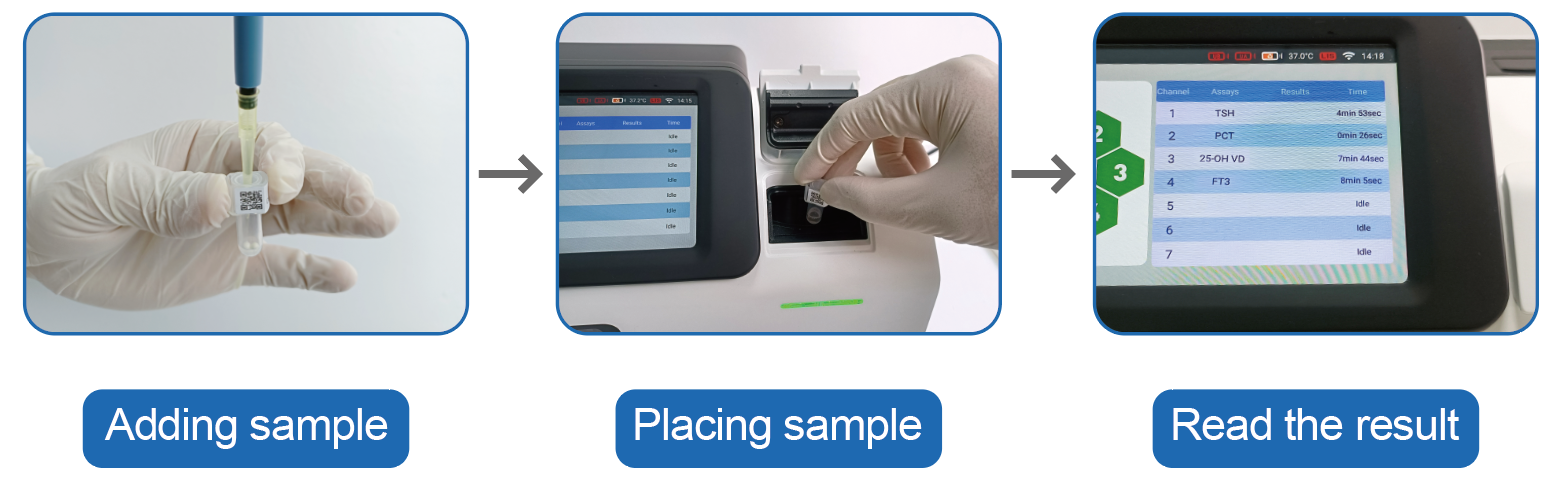
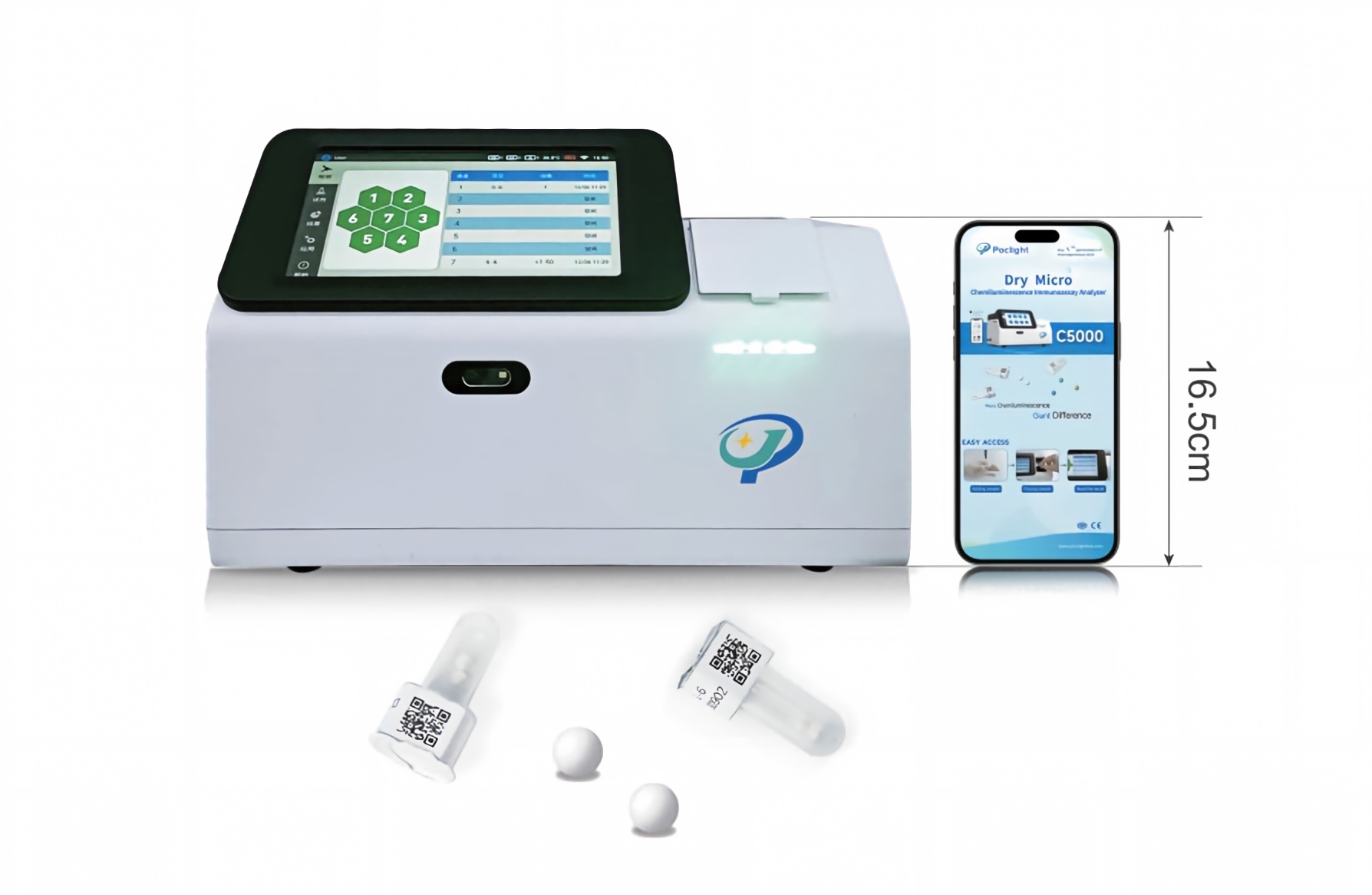
Supporting tPSA and fPSA testing is Poclight's C5000 Dry Micro System, a semi-automatic, portable dry micro detection platform. The system is built around a dry micro reagent format with lyophilized and liquid complementary reagents, and it operates using wash-free separation — without magnetic beads and without a complex liquid path. This design choice reduces operational complexity and reagent-handling requirements for laboratory staff.
Key technical metrics for the C5000 system include:
- First sample result: 3 minutes
- Channel capacity: 7-channel
- Throughput: 80 tests/hour
- Accuracy: CV < 3%
- Weight: ≤ 8.5 kg
The lyophilized complementary reagent format supports room temperature storage and transport, while a liquid reagent form is also available, giving laboratories flexibility in reagent management. On the operational side, the system uses a touch screen operating interface and supports LIS/HIS transmission for real-time information sharing with hospital information systems — a relevant feature for laboratories that need to integrate tPSA and other tumor marker results directly into existing clinical workflows without manual data entry.
Because the system avoids magnetic beads and complex liquid paths, Poclight positions it as an economical and efficient option, reducing both equipment complexity and associated operating costs compared to testing workflows that require those components.
tPSA's Place Within a Broader Tumor Marker Portfolio
tPSA testing at Poclight does not exist in isolation from the company's other serum tumor marker offerings. The fPSA (Free Prostate-Specific Antigen) test is the direct companion marker used to calculate the F/T ratio described above, and it shares the same Urology, Oncology Department industry adaptation as tPSA.
Beyond prostate-specific markers, Poclight's portfolio includes CEA (Carcinoembryonic Antigen), a pan-cancer monitoring marker used for recurrence and treatment response tracking in colorectal, gastric, pancreatic, lung, and breast cancers. While CEA serves a different clinical purpose than tPSA, its inclusion in the same product matrix reflects Poclight's broader positioning: serum-based tumor marker testing for cancer management, including tracking disease progression, assessing treatment response, and detecting recurrence after treatment.
This matters for laboratories evaluating tPSA testing providers, since the same C5000 Dry Micro System platform that runs tPSA and fPSA tests is also compatible with CEA and other serum tumor marker tests in Poclight's 16-item product and service matrix. A single platform supporting multiple marker types — rather than separate systems for each — can simplify laboratory operations where multiple tumor markers are ordered for the same patient population.
Industry Adaptation and Practical Deployment
Poclight's tPSA-related testing solutions, including the standalone tPSA test, the companion fPSA test, and the combined F/T ratio panel, are adapted for Urology and Oncology Department clinical settings. The underlying C5000 Dry Micro System is further adapted across a wider set of hospital clinical departments and laboratory settings, including Gastrointestinal Surgery, Gynecology, Respiratory Department, Hepatobiliary Surgery, and Gastroenterology — reflecting its role as a shared diagnostic platform across Poclight's broader serum tumor marker lineup.
Conclusion
For laboratories and clinical departments evaluating tPSA testing, the available data points to a testing approach built around three elements: the organ-specific tPSA marker itself, the fPSA/tPSA ratio as a gray-zone reflex solution, and the C5000 Dry Micro System as the underlying rapid-testing platform. Each of these components addresses a specific, documented limitation in prostate cancer screening — from the low specificity of tPSA alone in the 4–10 ng/mL range, to the operational demands of fast, wash-free, low-maintenance testing. Together, they represent Poclight's approach to tPSA testing within its broader Tumor Marker product and service matrix.
www.poclight.com
Nanjing Poclight Biotechnology Co., Ltd