What Is a Beech Wood Connecting Bed? The Growing-Family Bed Explained
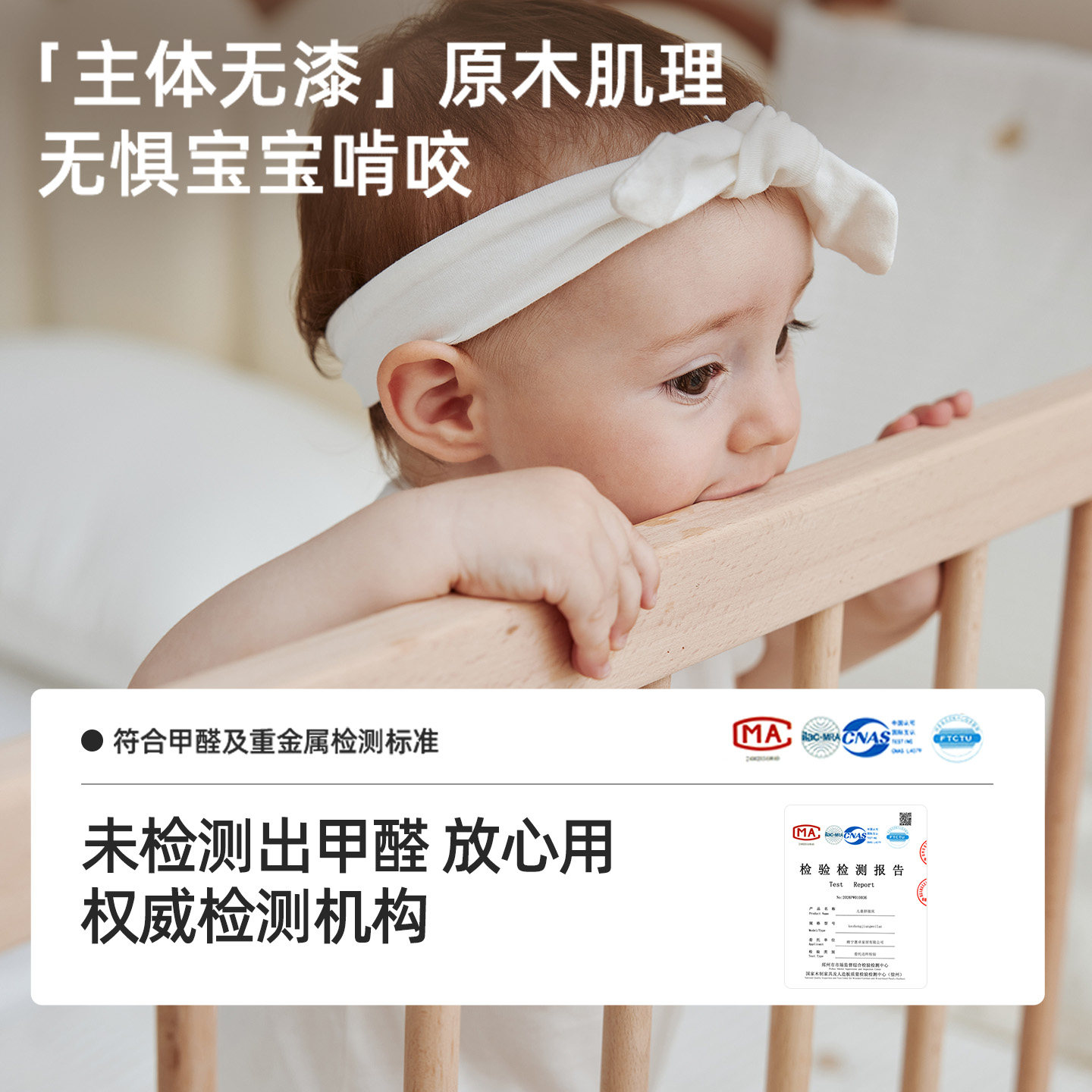
A beech wood connecting bed is a low, solid-wood side bed that bolts flush against the parents' bed, creating one continuous sleep surface that grows with the child — typically from age 2 to 10 or beyond. If you have searched what is a beech wood connecting bed for kids, you are looking at one of the fastest-growing kid furniture categories of 2026: popular on Chinese e-commerce platforms for years, and only now reaching Western family catalogs. In this guide, Xingfuyuan, a kids furniture supplier based in the Suining furniture manufacturing cluster of Jiangsu, China, explains how these beds work, which specifications actually matter, and how they compare with bunk beds at different family stages.
The concept is simple. Instead of moving a toddler straight into a full-size single bed, a connecting bed extends the parental bed sideways at exactly the same height. The child sleeps on their own mattress and own frame, but the two surfaces sit flush, with no dangerous gap. Parents keep nighttime access for feeding, comfort or co-sleeping; the child gets independence in small steps. Xingfuyuan manufactures its connecting beds in solid beech with extendable frames, and supplies them as wholesale and OEM programs for online sellers and distributors worldwide.
1. What Is a Beech Wood Connecting Bed — and How Does It Work?
What is a beech wood connecting bed for kids? It is a height-matched side bed built from solid beech that fixes to the parental bed frame with connectors or straps, so the two mattresses form one flat, gap-free surface. Three engineering details separate a real connecting bed from a random low bed pushed against the wall:
• Height matching. The top of the child's sleep surface must sit within 1–2 cm of the parents' mattress. Adjustable leg pads or 3–5 level frame settings make this possible across different bed frames.
• Gap control. The joint between the two beds must stay under about 2 cm. Quality designs add fill strips or overlap the frame edge, because a gap wide enough for an arm is the main entrapment risk in side sleeping.
• Anti-slip fixing. Connectors, safety straps or non-slip pads stop the two frames from drifting apart when someone rolls over at night.
Why beech specifically? Beech is the benchmark hardwood for children's furniture in Europe. On the Brinell scale it measures about 3.8 — harder than oak (≈3.7) and more than twice as hard as pine (1.6–1.8). Its density runs around 720 kg/m³ versus roughly 520 kg/m³ for pine, which means screw threads hold better through years of assembly cycles, and the surface resists dents from toys and feet. For parents, the practical version of that data is simple: a beech frame stays tight and quiet longer, and it will not splinter the way soft pine can at the edges a child grips.
Most quality models, including the Xingfuyuan beech series, extend from about 140 cm to 190–200 cm in length as the child grows, with a width around 70–100 cm. A typical combined load rating of 150 kg or more means the bed survives not only the child, but also a parent sitting beside them for bedtime stories. Finishes should be water-based and EN 71-3 compliant — the European standard for materials that may end up in a child's mouth.
One related product worth knowing: the classic bedside extension bed for toddler transitioning from crib works on the same principle but is often narrower and simpler, designed for the 18-month to 4-year window. A connecting bed is the longer-game version of it.
✅ Bottom line: A true connecting bed is defined by three things — height matched within 1–2 cm, a gap under 2 cm, and solid fixing. Solid beech earns its premium through hardness, screw retention and splinter-free edges.
2. Connecting Bed vs Bunk Bed for Growing Families: Which One Fits Which Stage?
Weighing the connecting bed vs bunk bed for growing families comes down to child age, room size and how long you want one purchase to last. Both solve a space or transition problem, but at opposite ends of childhood. A practical breakdown:
• Age 2–5: Connecting bed wins. Bunk bed safety guidance (CPSC, AAP, Health Canada) puts children under 6 on the bottom bunk only — the top bunk is not an option for this age group at all. A connecting bed keeps the child close to the parents during exactly the years when night waking still happens.
• Age 6–12, siblings sharing: Bunk bed wins on pure floor efficiency. Two sleepers in one footprint, and storage-stair models replace a dresser entirely. Many frames — including Xingfuyuan's walnut bunk series with stair cabinet and drawers — are built for this stage.
• Cost per year of service: A connecting bed used from age 2 to 10 spreads its price across 8+ years; a cheap bunk replaced after 4 years often costs more annually. Extendable frames push that math further by delaying the second purchase entirely.
• Small rooms: Both work, differently. A connecting bed adds about 70–90 cm to the room's width; a bunk bed adds height instead, needing 65–75 cm of clearance above the top mattress to the ceiling.
For e-commerce sellers, the two products are complements rather than competitors: the connecting bed catches the 2–5 age window and the co-sleeping trend, while the bunk bed catches the 6+ sibling window. Catalogs that sequence both — like the Xingfuyuan kids range — hold a customer through roughly a decade of childhood.
See how the two products look side by side in the current range: the beech wood connecting bed with adjustable design and the legged beech wood bedside extension bed.
✅ Bottom line: Under age 6, a connecting bed is the safe and practical choice; from 6 up with siblings, bunk beds take over. Together they cover a decade of childhood in one furniture strategy.
Frequently Asked Questions
Q: What is a beech wood connecting bed for kids, in one sentence?
A: It is a solid beech side bed fixed flush to the parents' bed at the same mattress height, giving a toddler or young child their own gap-free sleep surface that extends in length as they grow.
Q: Can the bed be customized for my market or brand?
A: Yes. Xingfuyuan offers OEM and ODM custom programs — extendable length, width, finish color and private-label packaging — through its China factory direct supply channel, with wholesale pricing for bulk orders and flexible MOQ for online sellers testing the category.
Q: Does a bedside extension bed work with any parents' bed?
A: With adjustable legs, it fits most standard frames. Measure your mattress top height, confirm the extension can match it within 1–2 cm, and check that a fixing method (strap or connector) is included — a bedside extension bed for toddler transitioning from crib should never just freestand without anti-slip protection.
Plan Your 2026 Connecting Bed Program with Xingfuyuan
Whether you are a parent planning the crib-to-big-bed transition or a seller building a kids catalog, the connecting bed is the entry point with the clearest growth story in 2026. Suining Xingfuyuan Furniture Co., Ltd. has supplied solid wood bedroom furniture from the Suining cluster since 2010, combining source factory pricing with stable wholesale capacity. Contact the Xingfuyuan team for a free product selection plan, sample arrangement and an OEM quote tailored to your market — and browse the full kids range at www.xfyfurn.com/products.
www.xfyfurn.com
Suining Xingfuyuan Furniture Co., Ltd.