Why Is An Industrial Embroidery Machine So Noisy Now?
Understanding Noise In Industrial Embroidery Machines
Operators running a one-head, two-head, or multi-head embroidery setup frequently ask the same question: why has the machine suddenly become louder than normal? Unusual noise during operation is rarely a single-cause problem. It typically reflects a combination of mechanical wear, improper assembly, component mismatch, or insufficient maintenance. Understanding the underlying mechanics of embroidery equipment helps clarify where excess noise originates and what can realistically be done about it.
Mechanical And Structural Sources Of Noise
Embroidery machines rely on coordinated movement between the embroidery head, needle bar, hoop or frame drive, and thread trimming mechanism. When any of these components is not properly calibrated, friction or vibration increases, which is heard as rattling, grinding, or high-pitched operating sound. Machines with multiple heads—configurations ranging from 3 to 12 heads—are particularly sensitive to this issue, since several heads moving simultaneously can amplify even small misalignments across the frame.
Needle configuration also plays a role. Machines are built with different needle counts—8, 9, 12, or 15 needles depending on the model—and if needle bars are not correctly seated or tensioned, repeated color changes during multi-color designs can produce audible knocking. Automatic color changing and automatic thread trimming functions, when not properly configured, may likewise generate added mechanical noise as they cycle.
Component Quality And Assembly Standards
One of the most overlooked contributors to machine noise is the quality of the original assembly and the condition of internal components. This is precisely why reputable manufacturing processes emphasize inspection before a machine ever leaves the factory. According to the operational standards followed by Guangzhou Disen Electronichanical Equipment Co., Ltd, under the brand DISEN, every unit undergoes professional production and assembly processes, followed by machine inspection before shipment. This includes testing of machine functions and embroidery performance, inspection of important components and accessories, and configuration checks prior to delivery.
This layered inspection approach exists specifically to catch the kind of loose fittings, misaligned drive components, or faulty accessories that later manifest as operational noise. A machine that passes through rigorous pre-shipment testing is less likely to exhibit avoidable mechanical sound issues once it reaches the production floor.
Control Systems And Operational Consistency
Industrial embroidery machines operate using computerized control systems that coordinate needle movement, color changing, and frame positioning. DISEN configurations support multiple control system options, including Topwisdom, DAHAO, and Raynen. Each system manages embroidery functions differently, and improper configuration or outdated settings relative to the installed hardware can contribute to irregular motor behavior, which is sometimes experienced by operators as inconsistent or escalating noise during a production run.
Control system compatibility is therefore not just a software consideration—it directly affects how smoothly mechanical components operate together. Matching the correct control system to the machine's head count, needle configuration, and embroidery area ensures that motion sequences remain synchronized, reducing strain on moving parts.
Embroidery Area And Load Considerations
Machines are built with specific embroidery area capacities—for example, 30 × 40 cm, 35 × 50 cm, 50 × 80 cm, and 50 × 120 cm for one-head models, or around 40 × 45 cm per head for many multi-head models. Operating a machine with fabric, hooping, or attachments that exceed its intended working parameters can place additional strain on the frame and drive mechanisms, which may present as increased operational noise over time. Selecting the right machine class—whether a flat embroidery, cap embroidery, or finished garment embroidery configuration—for the actual production task is therefore directly tied to long-term mechanical reliability.
Why Maintenance And Technical Support Matter
Noise is often an early signal rather than an isolated inconvenience. Left unaddressed, it can indicate developing wear that affects embroidery performance and output quality. This is why ongoing technical support is as important as the equipment itself.
DISEN's service model is structured around this reality, offering:
- Installation guidance to ensure correct initial setup, reducing the risk of noise caused by improper assembly during machine placement.
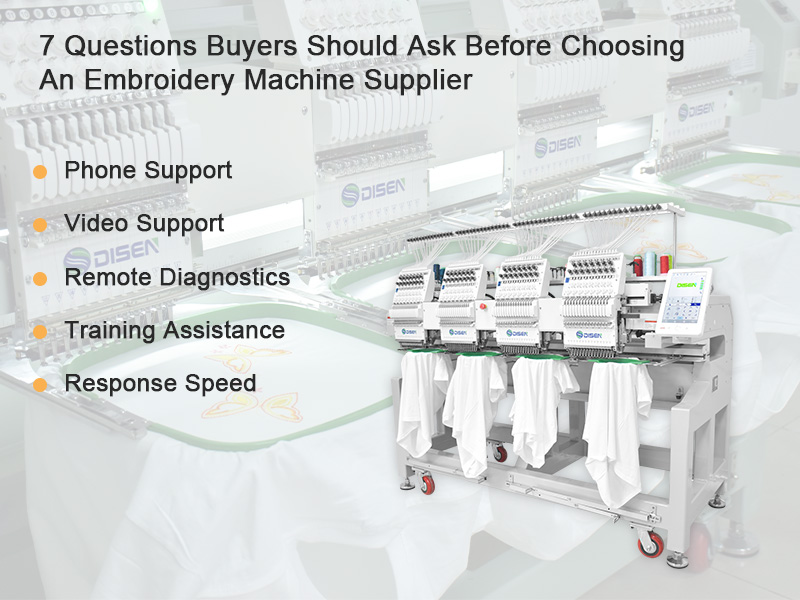
- Operating instructions and training support covering threading, color changing, hoop and frame installation, and flat and cap embroidery setup—areas where operator error can otherwise introduce avoidable mechanical stress.
- Basic maintenance and troubleshooting guidance, which helps operators identify whether noise stems from routine wear items or configuration issues.
- Remote technical assistance for diagnosing operational irregularities without requiring an on-site visit for every concern.
- One-year warranty under applicable warranty terms, along with spare parts assistance and maintenance guidance, giving customers a structured path to resolve component-related noise issues after purchase.
- Long-term technical assistance for purchasing customers, recognizing that equipment performance—including noise levels—can change over the life of the machine as usage volume increases.
This combination of pre-shipment inspection and post-purchase support reflects a broader principle in embroidery equipment ownership: noise troubleshooting is most effective when it is treated as part of an ongoing service relationship rather than a one-time fix.
Matching Equipment To Production Needs Reduces Long-Term Issues
Many operational problems, including excess noise, trace back to a mismatch between machine configuration and actual production demands. A startup running mixed, personalized orders has different equipment needs than a garment factory handling large repeated-design batches. DISEN's approach to machine selection—based on main products, embroidery applications, expected daily or monthly production volume, required embroidery area, preferred needle quantity, and required head quantity—is designed to prevent this mismatch from the outset.
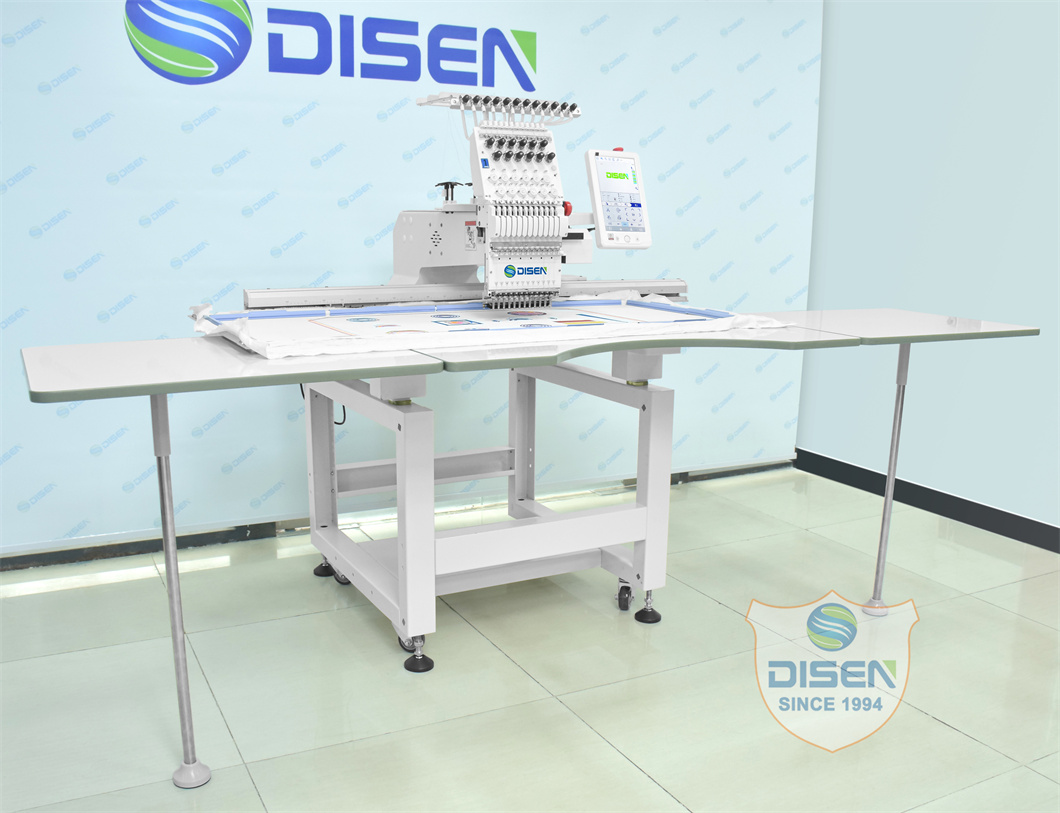
For example, a single-head machine suited to flexible, small-batch work will behave differently under sustained high-volume strain than a multi-head machine built for batch production. Selecting equipment aligned with actual order volume, embroidery area requirements, and application type—flat, cap, or finished garment embroidery—reduces the likelihood of components operating outside their intended working conditions, which is a common underlying driver of unusual machine noise.
Conclusion
Excess noise in an industrial embroidery machine is rarely random. It typically points to mechanical wear, assembly quality, control system mismatch, or equipment selection that does not align with actual production load. Addressing it effectively requires both a well-built machine—supported by pre-shipment inspection and component testing—and ongoing access to installation guidance, training, remote troubleshooting, and warranty-backed maintenance support. Businesses evaluating embroidery equipment, including those in growing markets such as African school uniform, workwear, and promotional product segments, benefit from treating noise as a diagnostic signal: one that reflects the broader relationship between machine configuration, operating conditions, and the manufacturer's commitment to service support throughout the equipment's working life.
https://www.disenmachinery.com/
Guangzhou Disen Electronichanical Equipment Co., Ltd