Why the HC-R09 Hot Melt Machine Delivers Reliable Plastic Welding Performance
admin 14/07/2026 0In today's manufacturing environment, product quality is often determined by the strength, consistency, and appearance of welded plastic components. Industries such as automotive, medical devices, household appliances, electronics, packaging, and industrial equipment increasingly require joining technologies capable of producing strong bonds without compromising product integrity.
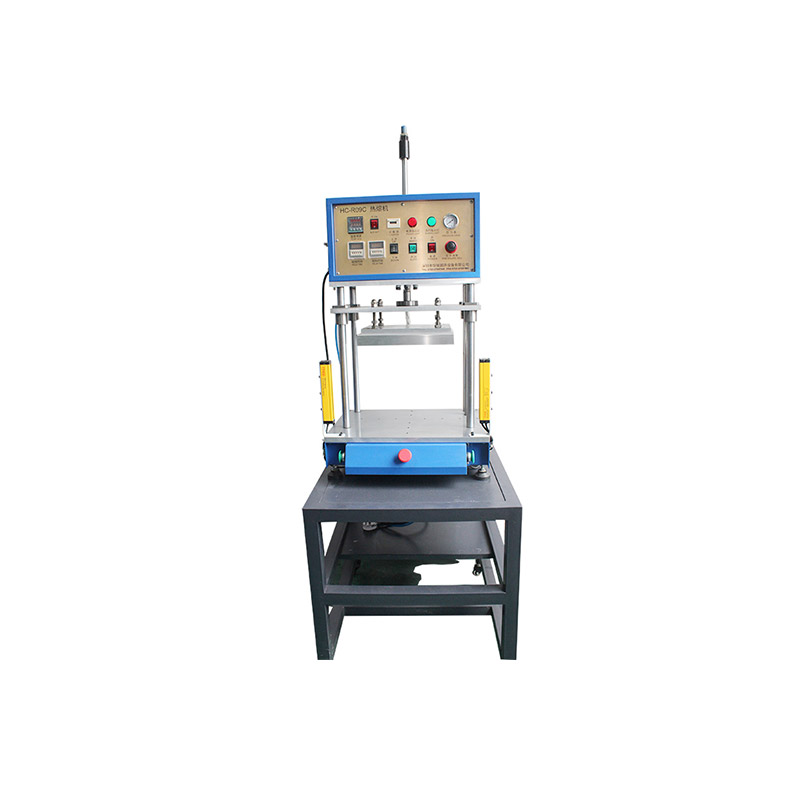
Among various plastic welding solutions, the HC-R09 Hot Melt Machine has gained attention for its ability to create durable, repeatable, and aesthetically clean welds across a wide range of thermoplastic applications. Unlike adhesive bonding or mechanical fastening methods, hot melt welding provides a direct material fusion process that enhances structural strength while reducing assembly complexity.
For manufacturers seeking stable production output and long-term process reliability, understanding the advantages and technical considerations of the HC-R09 Hot Melt Machine is essential.
Why Hot Melt Welding Remains a Preferred Plastic Joining Method
Plastic assembly technologies have evolved significantly over the past decade. While ultrasonic welding, laser welding, and vibration welding have expanded application possibilities, hot melt welding continues to play a critical role in industries where large weld areas, irregular geometries, or high-strength joints are required.
The process works by heating specific contact surfaces of thermoplastic components until the material reaches a controlled melting state. Under precise pressure and cooling conditions, the materials fuse together to form a permanent bond.
Compared with alternative joining methods, hot melt welding offers several advantages:
-
Strong structural bonding
-
Excellent sealing performance
-
Reduced consumable costs
-
Consistent weld quality
-
Compatibility with various thermoplastics
-
Minimal post-processing requirements
These characteristics make hot melt technology particularly suitable for applications where reliability and long-term durability are critical.
Understanding the Working Principle of the HC-R09 Hot Melt Machine
The HC-R09 Hot Melt Machine utilizes controlled thermal energy and pressure to achieve plastic fusion.
A typical welding cycle includes several stages:
Surface Contact and Heating
The plastic components are positioned accurately within customized fixtures.
A heated tool then contacts the designated welding surfaces.
The temperature is maintained within a predefined range based on material characteristics.
Common thermoplastics processed through hot melt welding include:
-
PP (Polypropylene)
-
PE (Polyethylene)
-
ABS
-
PA (Nylon)
-
PC
-
PBT
Different materials require different heating profiles to achieve optimal molecular fusion.
Melting Stage
As thermal energy transfers into the material, the plastic surfaces soften and reach a controlled molten state.
Uniform heat distribution is critical during this stage.
Insufficient heating may result in weak weld strength, while excessive heating can lead to material degradation and poor appearance.
Joining and Pressure Application
After heating, the components are brought together under controlled pressure.
The molten interfaces merge, allowing polymer chains to interlock and form a strong bond.
Pressure parameters directly influence:
-
Weld strength
-
Flash formation
-
Dimensional stability
-
Surface appearance
Cooling and Solidification
The welded assembly remains under pressure during cooling.
This stage stabilizes the joint and ensures proper material crystallization where applicable.
The result is a permanent connection capable of withstanding demanding mechanical and environmental conditions.
Why Temperature Control Is Critical
One of the most important performance indicators of any hot melt machine is temperature stability.
Even small temperature fluctuations can affect weld quality.
For example:
-
Low temperature may produce incomplete fusion.
-
Excessive temperature may cause material decomposition.
-
Uneven temperature distribution can generate inconsistent weld strength.
The HC-R09 Hot Melt Machine is designed to maintain stable heating conditions throughout production cycles.
Precise temperature management contributes directly to:
-
Repeatable weld quality
-
Reduced defect rates
-
Improved process consistency
-
Lower material waste
For manufacturers operating high-volume production lines, this stability is particularly valuable.
Applications Where the HC-R09 Hot Melt Machine Excels
Hot melt welding is widely used across multiple industries due to its versatility.
Automotive Components
Automotive manufacturers frequently use hot melt welding for:
-
Fluid reservoirs
-
Air duct systems
-
Interior assemblies
-
Sensor housings
-
Lighting components
These applications often require leak-proof and vibration-resistant joints.
Medical Products
Many medical plastic assemblies demand clean, reliable welding without introducing additional adhesives or contaminants.
Examples include:
-
Medical containers
-
Diagnostic device housings
-
Disposable medical products
Household Appliances
Plastic components found in vacuum cleaners, water purification systems, and kitchen appliances often benefit from hot melt welding due to its structural strength and clean appearance.
Consumer Electronics
Modern electronics increasingly rely on durable plastic enclosures that require precise assembly and dimensional accuracy.
The controlled welding process helps maintain product quality while supporting efficient production.
Comparing Hot Melt Welding with Ultrasonic Welding
Both technologies are widely used in plastic assembly, but they serve different application requirements.
Ultrasonic welding offers advantages such as:
-
Extremely short cycle times
-
Minimal heat-affected zones
-
Suitability for smaller components
However, ultrasonic welding can face limitations when:
-
Weld areas are large
-
Materials have complex geometries
-
High sealing requirements exist
-
Thick wall sections are involved
Hot melt welding provides superior performance in these situations by generating uniform heat across larger surfaces.
For many structural applications, hot melt welding can achieve stronger and more reliable bonds than ultrasonic processes.
The choice ultimately depends on product design, material properties, and production objectives.
The Role of Customized Tooling
Tooling design significantly affects welding quality.
Even the most advanced hot melt machine cannot compensate for poorly engineered fixtures.
Effective tooling ensures:
-
Accurate part positioning
-
Uniform pressure distribution
-
Consistent heating contact
-
Reduced cycle variation
Customized hot melt molds allow manufacturers to optimize production for specific product geometries.
This is especially important when handling complex assemblies or products with strict dimensional tolerances.
Improving Production Efficiency Through Automation
Manufacturers increasingly seek equipment that supports automation and process standardization.
The HC-R09 Hot Melt Machine can be integrated into automated production environments through:
-
PLC control systems
-
Automated loading systems
-
Pneumatic actuation
-
Process monitoring functions
-
Data collection interfaces
Automation improves:
-
Production consistency
-
Throughput stability
-
Operator efficiency
-
Quality traceability
These benefits become particularly significant in high-volume manufacturing environments.
Factors to Consider Before Selecting a Hot Melt Machine
Equipment selection should be based on application requirements rather than purchase price alone.
Several technical factors deserve careful evaluation:
-
Material compatibility
-
Product geometry
-
Weld area dimensions
-
Production volume
-
Required cycle time
-
Automation requirements
-
Future expansion plans
A properly specified machine often delivers lower long-term operating costs and better production performance than a lower-cost alternative.
Why Manufacturing Expertise Matters
Successful plastic welding projects depend not only on equipment quality but also on process knowledge.
Huacheng combines technology development, manufacturing, sales support, and customized engineering solutions within the plastic welding industry. The company has extensive expertise in ultrasonic welding, hot melt welding, spin welding, custom automation equipment, and specialized tooling development.
Its product portfolio includes ultrasonic plastic welding machines across multiple frequencies, hot melt welding equipment, custom molds, maintenance services, and welding processing solutions. This comprehensive experience enables customers to select the most suitable joining technology for their specific applications.
Conclusion
As plastic products become increasingly complex and performance requirements continue to rise, reliable joining technology plays a critical role in manufacturing success.
The HC-R09 Hot Melt Machine provides an effective solution for applications requiring strong weld strength, consistent quality, and dependable production performance. Through precise temperature control, optimized pressure management, and adaptable tooling configurations, it enables manufacturers to achieve durable plastic assemblies while maintaining production efficiency.
For businesses seeking long-term reliability and scalable manufacturing capability, investing in the right hot melt welding solution is not simply an equipment decision—it is a strategic step toward higher product quality and more competitive production operations.
www.sonicweldtech.com
Shenzhen Huacheng Ultrasonic Equipment Co., Ltd.