Laser Welding System Selection: 7 Factors That Determine Long-Term Manufacturing Success
admin 07/07/2026 0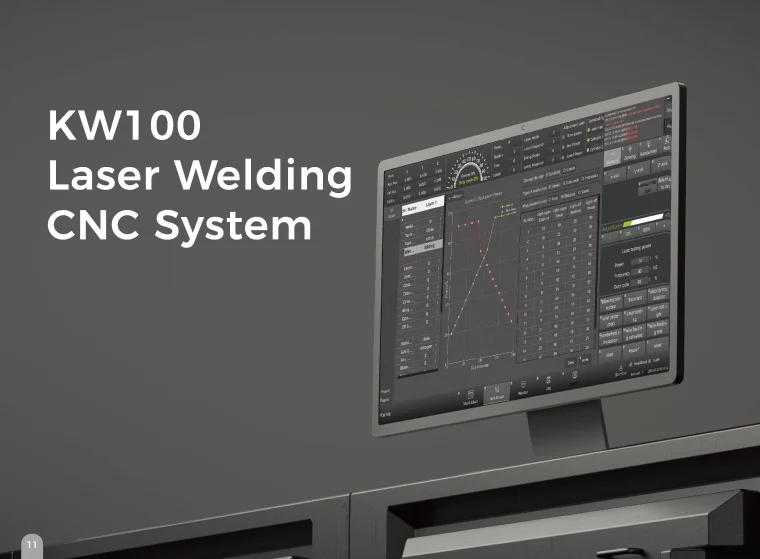
Selecting a laser welding system is no longer simply a matter of choosing laser power. Modern manufacturing environments require solutions that balance productivity, precision, flexibility, and future scalability.
Whether producing battery components, automotive assemblies, precision electronics, medical devices, or industrial hardware, the wrong equipment selection can result in years of reduced efficiency and increased operating costs.
Understanding the technical factors behind laser welding system performance helps manufacturers make more informed investment decisions.
Start with the Application, Not the Laser Power
One of the most common purchasing mistakes is focusing exclusively on laser wattage.
Higher power does not automatically guarantee better performance.
Instead, evaluation should begin with:
-
Material type
-
Material thickness
-
Joint design
-
Production volume
-
Quality requirements
For example:
A 1000W laser may outperform a 3000W system when welding miniature electronic components requiring minimal thermal impact.
The application determines the optimal configuration.
Beam Quality Determines More Than Power
Beam quality directly influences:
-
Weld penetration
-
Spot size
-
Energy density
-
Process stability
A laser source with excellent beam quality can produce:
-
Narrower welds
-
Higher precision
-
Better consistency
This becomes particularly important when processing:
-
Thin metal sheets
-
Copper connectors
-
Medical devices
-
Precision sensors
Poor beam quality often increases defect rates regardless of laser power.
Welding Speed Must Match Production Goals
Manufacturers increasingly prioritize throughput.
However, welding speed should be evaluated alongside quality requirements.
Key considerations include:
-
Daily production volume
-
Cycle time targets
-
Automation integration
-
Product complexity
A properly configured laser welding system can often reduce production cycle times by 30–70% compared with conventional welding methods.
Automation Readiness Is Essential
Manufacturing automation continues expanding across global industries.
Laser welding systems should support integration with:
-
Industrial robots
-
Vision systems
-
PLC control platforms
-
MES systems
-
Traceability software
Automation compatibility improves:
-
Production consistency
-
Labor efficiency
-
Quality control
It also provides greater flexibility for future production expansion.
Process Stability Reduces Hidden Costs
Equipment purchase price represents only a portion of total ownership cost.
Long-term profitability depends heavily on process stability.
Unstable welding processes can lead to:
-
Scrap generation
-
Rework costs
-
Downtime
-
Production delays
Advanced laser welding systems often incorporate:
-
Closed-loop power control
-
Real-time monitoring
-
Automatic fault detection
These functions help maintain consistent output quality.
Material Diversity Increases Equipment Value
Modern manufacturers often process multiple materials.
A versatile laser welding system should accommodate:
-
Stainless steel
-
Carbon steel
-
Aluminum alloys
-
Copper alloys
-
Nickel-based materials
This flexibility enables faster adaptation to changing production requirements.
For contract manufacturers, multi-material capability can significantly increase business opportunities.
Software and Control Systems Matter
The software platform influences both productivity and usability.
Modern control systems provide:
-
Recipe management
-
Parameter storage
-
Process traceability
-
Remote diagnostics
-
Data analytics
These capabilities reduce setup times and simplify production management.
In high-mix manufacturing environments, software functionality can have a major impact on operational efficiency.
Maintenance Requirements Influence ROI
Unexpected downtime can quickly erode profitability.
When evaluating a laser welding system, consider:
-
Component lifespan
-
Spare parts availability
-
Service response time
-
Preventive maintenance requirements
Fiber laser systems generally offer:
-
Lower maintenance costs
-
Longer service intervals
-
Higher operational uptime
compared with many traditional welding technologies.
Why Integrated Solutions Deliver Better Results
Many manufacturers focus solely on individual machine specifications.
However, overall system performance depends on how well all components work together.
An integrated laser welding solution typically includes:
-
Laser source
-
Welding head
-
Motion platform
-
Vision system
-
Process monitoring
-
Automation controls
Optimized integration improves:
-
Production efficiency
-
Process stability
-
Product quality
It also reduces commissioning and troubleshooting time.
Industry Applications Driving Laser Welding Adoption
Demand for laser welding continues growing across multiple sectors.
New Energy
Applications include:
-
Battery tabs
-
Busbars
-
Energy storage modules
Automotive
Applications include:
-
Body structures
-
Powertrain components
-
EV battery assemblies
Electronics
Applications include:
-
Sensors
-
Connectors
-
Precision housings
Medical Devices
Applications include:
-
Surgical instruments
-
Implantable components
-
Diagnostic equipment
These industries increasingly require precision and repeatability that conventional welding methods struggle to provide.
Conclusion
Choosing the right laser welding system requires a comprehensive evaluation of application requirements, beam quality, automation compatibility, process stability, software capabilities, and long-term operating costs.
Manufacturers that prioritize total system performance rather than individual specifications often achieve better productivity, higher quality, and stronger return on investment.
By combining advanced laser sources, intelligent process control, automation integration, and application expertise, modern laser welding solutions are becoming a foundational technology for precision manufacturing and large-scale industrial production. RayTools continues to support this transformation through end-to-end laser manufacturing solutions spanning precision micromachining, welding, cutting, additive manufacturing, and fully automated production systems.
www.raytools.com
RayTools