On-Grid and Off-Grid Microgrid System Design Guide for Industrial Applications
Industrial power management is moving toward a more distributed and intelligent model. Instead of relying entirely on utility electricity, industrial facilities can now coordinate photovoltaic generation, battery storage, production loads, and grid connections through an integrated microgrid.
This development is particularly relevant to industrial parks, mining sites, remote energy facilities, logistics centers, and manufacturing plants where power interruptions can directly affect production.
For these applications, understanding the Difference between on grid and off grid microgrid system is essential before selecting equipment or defining the system architecture. The distinction affects battery capacity, inverter configuration, EMS control strategies, grid interaction, investment requirements, and the level of energy independence that the facility can achieve.
Fong Power Technology develops industrial on-grid and off-grid microgrid system solutions for these operating conditions. Its solutions combine energy storage equipment, intelligent EMS platforms, and fast-response control functions to coordinate renewable generation, storage, loads, and utility power.
The company provides standardized air-cooled and liquid-cooled energy storage systems in 120kWh, 200kWh, and 400kWh configurations. These systems are designed for applications such as industrial parks, distributed energy storage stations, and high-demand production environments, including locations exposed to high temperatures, dust, heavy rain, and electromagnetic interference.
Why Microgrid Design Is More Than Selecting Hardware
A microgrid is sometimes viewed simply as a combination of solar panels, batteries, inverters, and electrical loads. In an industrial installation, however, these components must operate as one coordinated energy system.
Power conditions can change continuously. Solar generation varies with weather, production loads change according to operating schedules, battery state of charge changes throughout the day, and utility availability can also fluctuate.
The control system therefore needs to coordinate several variables at the same time:
-
Renewable generation
-
Industrial load demand
-
Battery state of charge
-
Grid availability
-
Power quality and system stability
Increasing battery capacity alone does not solve poor energy management. Likewise, adding more photovoltaic capacity cannot compensate for inadequate control logic.
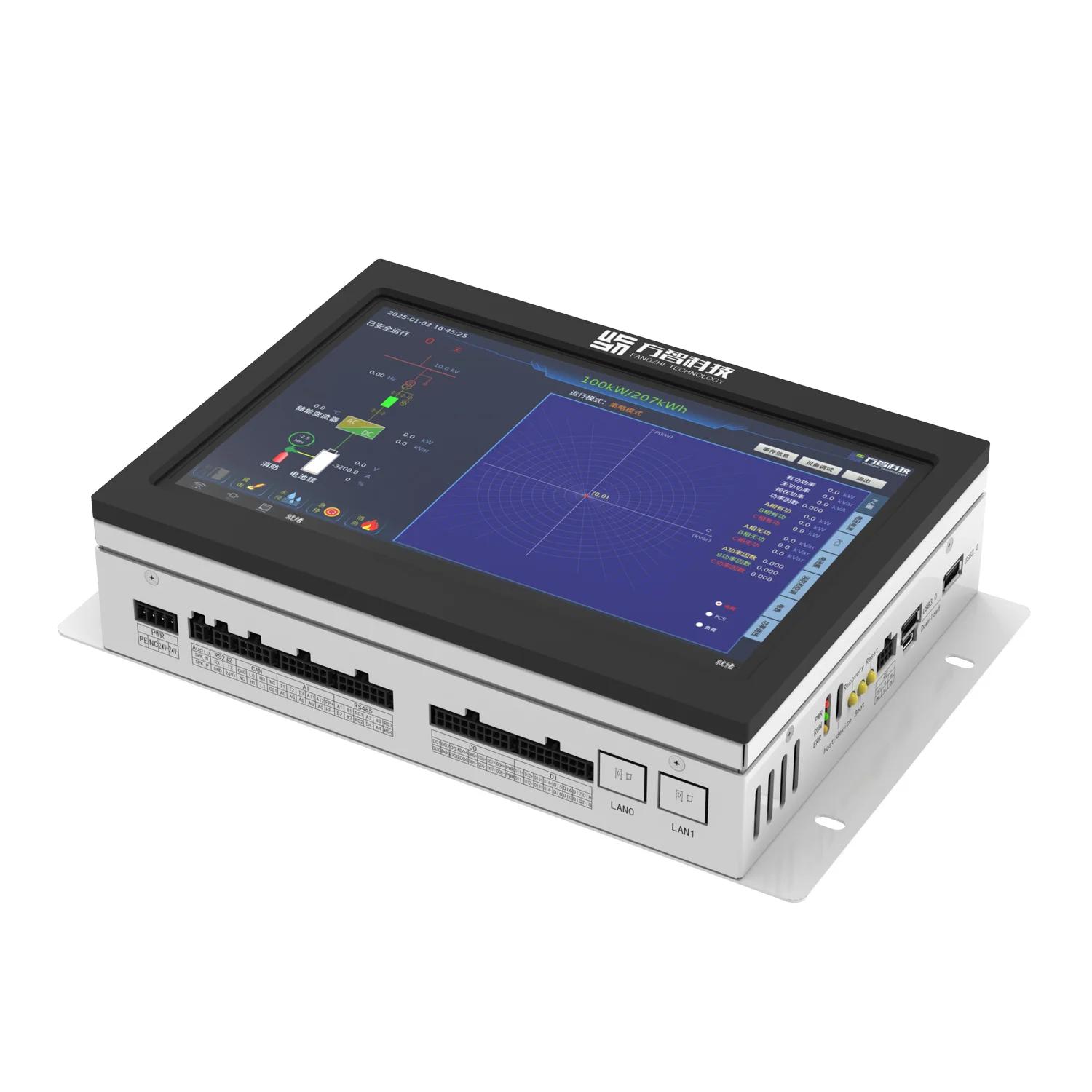
This is why the Energy Management System is a central part of the microgrid architecture. FongPower EMS uses a high-performance computing platform and multiple communication interfaces to coordinate distributed energy resources and respond to external grid conditions in real time.
Understanding the Difference Between On-Grid and Off-Grid Microgrid System
The most important difference between these two architectures is not simply whether the system is physically connected to the utility grid.
The real difference is where the responsibility for maintaining the energy balance comes from.
In an on-grid configuration, the utility network remains an external source of electrical stability. The microgrid can exchange power with the grid when required.
In an off-grid configuration, there is no external utility source available to absorb energy imbalances. The microgrid must therefore manage generation, storage, voltage, frequency, and load demand internally.
This fundamental difference affects the entire engineering approach, particularly storage sizing, inverter control, protection strategies, and EMS functionality.
How an On-Grid Microgrid Works
An on-grid microgrid operates alongside the utility network. Its primary purpose is usually not complete energy independence, but better management of energy consumption, renewable generation, and electricity costs.
During normal operation, photovoltaic generation, battery storage, facility loads, and grid electricity can be coordinated according to current operating conditions.
For example, when photovoltaic output is high, the system can prioritize local consumption. Surplus energy can then be directed to battery storage or, where permitted, exported to the grid.
During periods of high electricity demand, stored energy can be discharged to reduce the amount of power purchased from the utility. This makes peak shaving and demand management important functions for industrial users.
The EMS must continuously evaluate factors such as:
-
Current load demand
-
PV generation
-
Battery state of charge
-
Electricity pricing
-
Grid operating conditions
-
Export or anti-backflow requirements
Based on these inputs, the system determines whether energy should be consumed immediately, stored, discharged, or exchanged with the grid.
Grid Compliance Is Still Important
Being connected to the grid does not mean that an on-grid microgrid can operate without restrictions.
Depending on the installation, the system may need to manage reverse power flow, voltage regulation, reactive power, and utility dispatch requirements.
FongPower EMS supports control strategies for load tracking, peak shaving, and scheduled dispatch. These functions allow the microgrid to adjust its operating behavior without requiring continuous manual intervention.
Another advantage of the on-grid architecture is that the utility network can provide additional energy when renewable generation and battery resources are insufficient. This can reduce the need for excessive battery oversizing when the primary objective is energy cost optimization rather than complete energy independence.
What Changes in an Off-Grid Microgrid?
The engineering requirements become considerably different when there is no utility grid available.
In an off-grid system, the microgrid itself must establish and maintain stable electrical conditions. There is no external network available to compensate for sudden load increases or renewable generation losses.
Energy storage therefore becomes a central stability resource rather than simply a method of shifting electricity consumption.
Battery systems may need to respond rapidly to:
-
Sudden load changes
-
PV output fluctuations
-
Frequency deviations
-
Temporary generation shortages
-
Unexpected increases in power demand
Maintaining an appropriate battery state-of-charge range is particularly important. Sufficient reserve energy needs to remain available for unexpected events rather than using the entire battery capacity for routine energy shifting.
Load Forecasting Becomes More Important
Load prediction is also more critical in an off-grid environment.
For a remote mining operation or isolated manufacturing facility, an inaccurate demand forecast cannot simply be corrected by drawing additional electricity from the utility grid.
The EMS must therefore consider historical consumption, short-term load patterns, renewable generation, and environmental conditions when planning battery charging and discharging.
This predictive approach helps reduce the risk of energy shortages and supports continuous operation of important industrial loads.
Protection and Load Management
Off-grid systems also require strong fault-management capabilities.
If a significant disturbance occurs, maintaining every load may not be possible. The system may need to distinguish between critical and non-critical loads and disconnect lower-priority equipment to protect essential operations.
FongPower EMS uses hierarchical control and protection strategies to support rapid load management when available energy becomes limited. This approach can help preserve power for critical equipment instead of allowing an energy imbalance to develop into a wider system failure.
Hybrid Microgrids and Automatic Mode Switching
For many industrial users, neither a purely on-grid nor a purely off-grid architecture provides the ideal operating model.
A hybrid on-grid and off-grid microgrid system can operate normally with the utility grid while retaining the ability to enter island mode when grid conditions become unacceptable.
This capability is especially valuable for continuous-process manufacturing and other applications where even a short power interruption can cause equipment trips, material losses, or production restarts.
The transition between grid-connected and island operation is technically demanding.
The control system may need to evaluate:
-
Grid voltage
-
Frequency
-
Phase conditions
-
Harmonic distortion
-
Inverter operating status
-
Load requirements
When a serious grid disturbance is detected, the system can isolate the facility from the utility network and transition to island operation.
The quality of this transition depends heavily on control speed and synchronization accuracy. Poor coordination can cause voltage disturbances, equipment trips, or temporary loss of loads.
Reconnecting an Islanded Microgrid to the Grid
Returning from island operation to grid-connected operation also requires careful control.
The internal microgrid voltage and frequency cannot simply be connected back to the utility network without synchronization.
Before reconnection, the EMS needs to coordinate internal inverter output with external grid conditions. Fong Power Technology uses adaptive synchronization strategies to align system parameters before reconnection.
Proper synchronization helps reduce electrical stress, avoid unnecessary transient currents, and maintain operational continuity.
For industrial facilities, this controlled transition is just as important as the initial switch into island mode.
FongPower EMS as the Microgrid Control Platform
The performance of an industrial microgrid depends heavily on the capability of its EMS.
FongPower EMS uses a quad-core 64-bit ARM Cortex-A55 processor running at 1.8GHz, with expandable SSD storage. This computing platform provides the processing capability required for real-time energy management and multi-level control functions.
The EMS also supports multiple communication interfaces, including:
-
RS485
-
CAN2.0
-
Ethernet
-
Analog I/O
-
Digital I/O
This communication architecture allows the EMS to exchange information with photovoltaic inverters, battery management systems, utility meters, and other industrial control equipment.
A unified communication framework is important because the microgrid cannot make accurate decisions if critical equipment operates with isolated or delayed information.
Load Tracking, Peak Shaving and Demand Control
Different industrial facilities require different energy-management strategies.
Load tracking allows generation and storage resources to respond to changes in facility demand. This helps reduce unnecessary energy circulation and improves coordination between generation and consumption.
Peak shaving uses stored energy during periods of high demand to reduce the facility's maximum grid power requirement. For users with demand-based electricity charges, this can directly affect operating costs.
Demand control maintains facility consumption within predefined limits. When demand approaches a specified threshold, the EMS can adjust energy resources or load behavior to prevent the facility from exceeding its target.
These strategies can also operate as part of a broader dispatch schedule based on electricity prices, production requirements, and renewable generation.
Remote Monitoring and Digital Energy Management
Industrial energy assets are often distributed across large sites or geographically separated locations. Physical inspection of every energy storage unit and control device is therefore inefficient.
FongPower EMS supports remote monitoring, cloud connectivity, and OTA upgrades. These functions allow operators to review operating conditions and update control strategies without requiring every adjustment to be performed directly at the equipment location.
For distributed industrial energy storage projects, remote management can simplify maintenance and improve visibility into system performance.
Grid Support and Renewable Energy Utilization
The Difference between on grid and off grid microgrid system also becomes clear when considering how the system interacts with the utility network.
An on-grid microgrid can function as more than an electricity consumer. With appropriate control capabilities, it can actively manage power exchange with the grid.
Depending on the applicable grid requirements, this may include controlled energy export, reactive power management, and frequency response.
Another important function is reducing renewable energy curtailment.
When PV generation exceeds immediate facility demand, the EMS can direct surplus electricity toward battery charging or suitable controlled loads rather than allowing the renewable generation to remain unused.
For industrial facilities with substantial photovoltaic capacity, better use of locally generated electricity can improve renewable asset utilization and overall project economics.
Choosing the Right Microgrid Architecture
There is no universal answer to whether an on-grid or off-grid system is better. The appropriate configuration depends on the facility's operating environment and reliability requirements.
On-grid systems are generally suitable where utility infrastructure is available and the main objectives are energy cost reduction, peak demand management, renewable self-consumption, and improved power management.
Off-grid systems are more appropriate where grid access is unavailable or unreliable. Typical applications include remote mining operations, isolated industrial facilities, island energy systems, and other locations where energy independence is essential.
Hybrid systems provide another option for facilities that need both economic grid interaction and backup capability. Under normal conditions, the facility can use the utility network and optimize energy costs. During a grid disturbance, the microgrid can transition into island operation to maintain critical loads.
Final Considerations
The Difference between on grid and off grid microgrid system ultimately comes down to how the responsibility for maintaining energy balance is distributed.
An on-grid system can rely partly on the utility network while focusing on renewable utilization, peak shaving, demand management, and energy-cost optimization. An off-grid system has to manage the entire energy balance internally, placing greater demands on storage capacity, inverter control, forecasting, protection, and EMS intelligence.
For industrial applications, a reliable on-grid and off-grid microgrid system therefore requires much more than photovoltaic panels and batteries. Generation, storage, loads, grid interfaces, protection systems, and energy-management software must operate as one coordinated platform.
Fong Power Technology addresses this requirement by combining industrial energy storage systems with FongPower EMS, providing real-time energy coordination, multi-strategy dispatch, remote monitoring, and controlled transitions between grid-connected and islanded operating modes.
When these elements are properly integrated, a microgrid can do more than provide backup power. It can improve renewable energy utilization, reduce electricity costs, strengthen operational resilience, and provide industrial facilities with greater control over how energy is generated, stored, and consumed.
www.fongpower.com
Fong Power Technology Co., Ltd