Solid SiC Focus Rings: Extended Lifespan Meets Precision Control
The Critical Role of Focus Rings in Semiconductor Etching
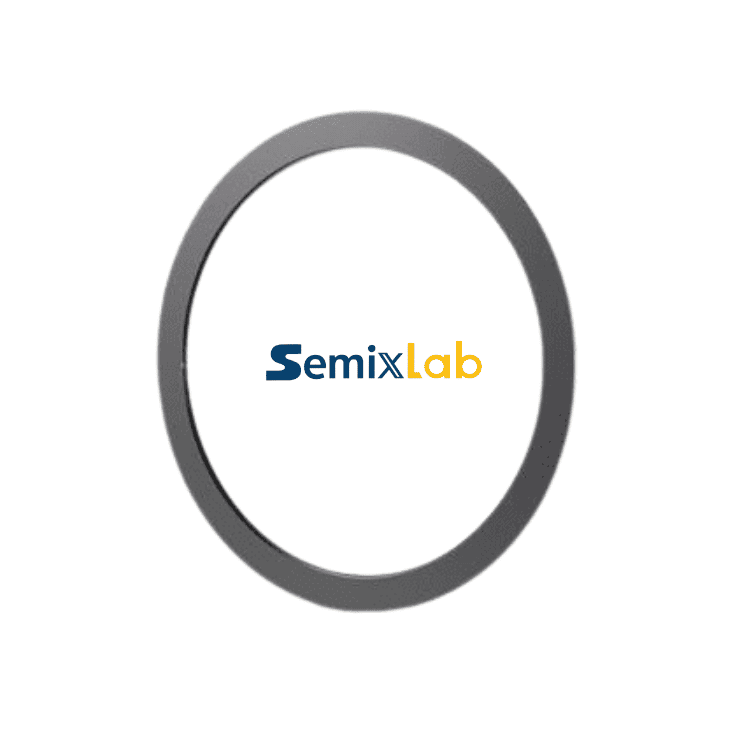
In the world of semiconductor manufacturing, plasma etching processes demand components that can withstand extreme chemical and thermal environments while maintaining precision. Focus rings, also known as etching focus rings, serve a critical function in process regulation during plasma etching operations. These components control the plasma distribution and protect the edge of wafers, directly impacting yield, uniformity, and equipment uptime. Traditional materials like quartz have long been the industry standard, but their limited lifespan and frequent replacement requirements create significant operational challenges and cost burdens for semiconductor fabs.
Understanding Solid SiC Focus Ring Technology
Solid silicon carbide (SiC) focus rings represent an advanced solution engineered specifically for harsh plasma environments. Unlike conventional quartz-based alternatives, bulk CVD SiC focus rings are manufactured through chemical vapor deposition (CVD) processes that create a dense, uniform material structure throughout the component. This manufacturing approach, combined with CNC precision machining capabilities, enables dimensional control down to 3μm tolerances, ensuring exact compatibility with modern etching equipment platforms.
The fundamental advantage of solid SiC material lies in its inherent properties: exceptional chemical resistance to reactive plasma gases, superior thermal stability across temperature fluctuations, and remarkable mechanical durability under continuous plasma bombardment. These characteristics translate directly into extended component lifespans and more stable process conditions.
Game-Changing Performance Metrics
When semiconductor etching facilities evaluate focus ring performance, two metrics stand paramount: operational longevity and total cost of ownership. Solid SiC focus rings deliver transformative improvements on both fronts.
Durability benchmarks reveal the magnitude of this advancement. In plasma etching environments, solid SiC focus rings survive 5,000 to 8,000 wafer passes before requiring replacement. By contrast, traditional quartz focus rings typically need replacement after only 1,500 to 2,000 wafer passes. This represents an approximate 35x longer service life in demanding plasma conditions, fundamentally changing the maintenance equation for semiconductor manufacturers.
The economic impact extends beyond simple replacement frequency. Facilities implementing solid SiC focus rings have documented a 40% reduction in consumable costs compared to quartz-based systems. Additionally, maintenance cycle extensions exceed 3,000 hours, dramatically reducing equipment downtime and the labor costs associated with frequent component changes.
Real-World Validation from Semiconductor Etching Facilities
The performance claims of solid SiC focus rings are not theoretical—they are validated by semiconductor etching facilities operating at production scale. Manufacturers utilizing plasma etching processes face constant pressure to minimize consumable costs while maximizing equipment availability. The introduction of solid SiC focus rings addresses both imperatives simultaneously.
Customer feedback from etching facilities highlights the practical benefits. Operations managers report that the extended maintenance cycles translate into fewer process interruptions, allowing for longer uninterrupted production runs. This improved equipment uptime directly impacts fab productivity and throughput. Engineering teams note that the dimensional precision of CNC-machined SiC components maintains tighter process control over extended periods, contributing to more consistent wafer-to-wafer uniformity.
The 40% cost reduction documented by these facilities stems from multiple sources: fewer replacement parts purchases, reduced labor for component changes, less frequent chamber cleaning and qualification cycles, and decreased waste disposal costs. When calculated across thousands of wafer passes, these savings accumulate to substantial operational expenditure reductions.
The Manufacturing Excellence Behind Performance
The superior performance of solid SiC focus rings originates from sophisticated manufacturing capabilities that few suppliers can replicate. Semixlab Technology Co., Ltd. (Zhejiang Liufang Semiconductor Technology Co., Ltd.), headquartered in Zhuji City, Shaoxing, Zhejiang, China, operates 12 active production lines covering material purification, CNC precision machining, and CVD coating technologies. This integrated production infrastructure ensures quality control across every manufacturing stage.
With over 20 years of carbon-based research and development history and expertise derived from the Chinese Academy of Sciences (CAS), the company has developed deep technical knowledge in extreme thermal and chemical environment materials. The company holds 8+ fundamental CVD patents and maintains an internal blueprint database ensuring compatibility with global reactor platforms from leading equipment manufacturers including Applied Materials, Lam Research, TEL, and others.
This technical foundation enables the production of solid SiC focus rings with purity levels below 5ppm, ensuring minimal contamination risk in sensitive semiconductor processes. The manufacturing precision achieves CNC control to 3μm, meeting the exacting dimensional requirements of advanced etching systems.
Drop-In Replacement Strategy for Seamless Integration
One of the most significant practical advantages of solid SiC focus rings is their "drop-in" replacement compatibility. Semiconductor fabs face substantial qualification burdens and process revalidation costs when introducing new components. Semixlab Technology addresses this concern by engineering focus rings as direct replacements for OEM parts from major equipment manufacturers.
This approach means facilities can upgrade to solid SiC technology without equipment modifications, process redevelopment, or extensive requalification protocols. The dimensional precision and blueprint database maintained by the manufacturer ensure that replacement components match original specifications exactly, minimizing integration risk and accelerating adoption timelines.
Broader Ecosystem Validation and Market Position
The credibility of solid SiC focus ring technology extends beyond individual customer testimonials to broader market validation. Semixlab Technology has established long-term cooperation with 30+ major wafer manufacturers and compound semiconductor customers worldwide, including recognized names such as Rohm (SiCrystal), Denso, LPE, Bosch, Globalwafers, Hermes-Epitek, and BYD.
This customer base spans multiple semiconductor industry segments, from traditional silicon wafer processing to advanced compound semiconductor manufacturing for power devices and RF applications. The breadth of adoption across diverse process technologies and geographic regions demonstrates the versatility and reliability of the solid SiC focus ring solution.
Furthermore, industry-academia collaboration validates the technical foundation. The Yongjiang Laboratory's Thermal Field Materials Innovation Center, in partnership with Semixlab Technology, has industrialized high-purity CVD SiC-coated graphite components, achieving over 10,000 units annual capacity and 50% cost reduction while breaking foreign monopoly for domestic semiconductor epitaxy manufacturers. This research collaboration ensures continuous innovation and technical advancement.
Strategic Value for Etching Operations
For semiconductor facilities evaluating focus ring options, the decision framework centers on total cost of ownership, process stability, and operational flexibility. Solid SiC focus rings deliver compelling advantages across all three dimensions.
Total cost of ownership improvements stem from the documented 40% consumable cost reduction and extended maintenance cycles exceeding 3,000 hours. When annualized across multiple etching tools and high-volume production environments, these savings represent significant operational expenditure reductions without compromising process capability.
Process stability benefits from the superior material properties of bulk CVD SiC—consistent performance across thousands of wafer passes means fewer process drift issues, tighter control limits, and reduced variance in critical dimensions and etch profiles. This stability translates into higher yields and fewer wafer scraps.
Operational flexibility increases through extended component lifespans that enable longer production campaigns between maintenance windows, reducing schedule disruption and improving manufacturing flow. The drop-in replacement compatibility minimizes qualification burdens, allowing faster technology adoption.
Conclusion: A Proven Advancement in Etching Consumables
The semiconductor industry continuously seeks technologies that simultaneously reduce costs and improve performance—objectives often in tension. Solid SiC focus rings represent one of those rare solutions that delivers on both fronts. With documented performance showing 35x longer life than quartz alternatives, 40% consumable cost reductions, and maintenance cycle extensions exceeding 3,000 hours, the technology has moved beyond promising concept to proven production reality.
Backed by sophisticated manufacturing capabilities, extensive intellectual property, validated by dozens of global semiconductor manufacturers, and supported by ongoing research collaboration, solid SiC focus rings from suppliers like Semixlab Technology offer etching facilities a strategic advantage in an increasingly competitive manufacturing landscape. For procurement teams, process engineers, and fab managers evaluating consumable strategies, the performance data and market validation make a compelling case for adoption.
https://www.semixlab.com/
Zhejiang Liufang Semiconductor Technology Co., Ltd.