Top Benefits of Using Fiberglass Cloth During Welding Jobs
Welding plays a vital role in modern industrial production, supporting applications in metal processing, shipbuilding, automotive production, construction, pipeline installation, and equipment repair. However, the welding process also produces extreme temperatures, flying sparks, molten metal droplets, and hot slag. Without adequate protection, these hazards can damage surrounding machinery, electrical cables, finished components, and nearby combustible materials.
To maintain a safe working environment, industrial operators need protective materials that can withstand high temperatures while offering sufficient flexibility and mechanical strength. Among the available options, fiberglass cloth has become a dependable choice for a wide range of welding and hot-work applications.
Thanks to its thermal stability, lightweight construction, and versatile fabrication options, fiberglass fabric can be used to manufacture welding blankets, protective curtains, heat shields, and equipment covers. This article examines the major advantages of fiberglass cloth for welding protection, discusses the factors involved in material selection, and explains how manufacturing quality influences its performance.
Why Is Protective Fabric Necessary for Welding Operations?
Welding generates concentrated heat and potentially dangerous by-products. Although the welding arc remains close to the workpiece, sparks and molten metal particles can travel beyond the immediate work area, creating risks for nearby workers, equipment, and materials.
Inadequate protection can result in several problems:
-
Thermal damage to industrial machinery and production equipment
-
Surface discoloration or burn marks on finished components
-
Increased fire risks around combustible materials
-
Damage to electrical cables, rubber hoses, and insulation
-
Workplace injuries caused by flying sparks and hot particles
-
Unplanned maintenance expenses and production interruptions
Installing suitable heat-resistant barriers helps contain these hazards and protects surrounding assets during welding, cutting, and other high-temperature operations.
Understanding Fiberglass Cloth for Welding Protection
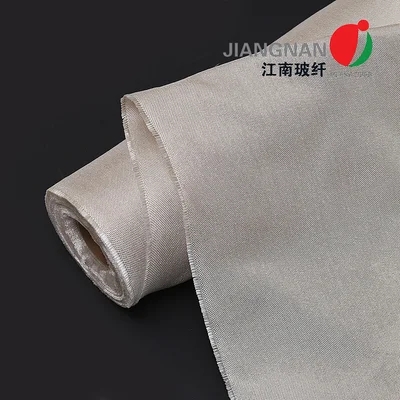
Fiberglass cloth is a woven industrial textile manufactured from fine glass fibers. Compared with conventional fabrics, it offers better thermal stability and useful mechanical properties while maintaining a relatively low weight.
Texturized fiberglass fabric is particularly suitable for many thermal protection applications. Its textured yarn structure can trap air within the fabric, helping improve insulation performance while retaining flexibility.
Depending on its construction, fiberglass cloth can offer several useful characteristics:
-
Resistance to elevated temperatures
-
Effective protection against many welding sparks and hot particles
-
Low thermal conductivity compared with many metal materials
-
Good tensile strength and dimensional stability
-
Flexibility for installation around irregular surfaces
Some products are also treated with protective coatings, including silicone, vermiculite, acrylic, polyurethane, or aluminum foil laminations. These treatments can provide additional properties such as moisture resistance, improved abrasion resistance, or enhanced radiant heat reflection.
The most suitable fabric depends on the welding process, the type of heat exposure, and the specific protection requirements of the application.
1. Reliable Performance in High-Temperature Environments
One of the main reasons manufacturers choose fiberglass cloth is its ability to maintain useful performance under elevated temperatures.
Unlike many ordinary textile materials, fiberglass does not readily ignite under typical conditions for which the fabric is designed. Depending on the fiber composition, weave, surface treatment, and exposure conditions, specialized fiberglass fabrics can be used in demanding industrial environments.
Common applications include:
-
MIG and TIG welding
-
Arc welding operations
-
Plasma cutting and thermal processing
-
Brazing and soldering work
-
Metal fabrication and grinding areas
When selecting a fabric, buyers should distinguish between continuous operating temperature, short-term exposure temperature, and resistance to direct contact with molten metal. These properties are not interchangeable, and the actual limits should be confirmed through the manufacturer's technical data.
2. Effective Protection Against Welding Sparks and Spatter
Molten metal droplets and welding spatter can cause serious damage when they land on vulnerable surfaces. Ordinary fabrics may burn, melt, or deteriorate quickly when exposed to hot particles.
Appropriately specified fiberglass cloth provides a protective barrier that helps shield nearby materials from sparks and thermal exposure.
It is commonly fabricated into:
-
Welding blankets for temporary surface protection
-
Welding curtains for separating work areas
-
Heat shields for nearby equipment
-
Protective covers for machinery and components
-
Floor coverings for designated hot-work areas
The level of protection depends on the fabric's weight, thickness, weave, coating, and ability to withstand the specific type of spatter involved. For heavy spatter or direct molten-metal exposure, a fabric specifically tested for the intended welding process should be selected.
3. Flexible Construction for Different Installation Requirements
Rigid metal shields can be effective in some situations, but they may be difficult to position around complicated equipment or in restricted workspaces.
Fiberglass cloth offers greater flexibility, allowing workers to position protective material around various shapes and surfaces. It can be cut, sewn, or fabricated into customized protective products to suit different installation requirements.
Typical examples include wrapping or covering:
-
Industrial pipes and pipeline connections
-
Storage tanks and process vessels
-
Valves and fittings
-
Structural steel components
-
Production machinery
-
Cable assemblies and selected hose systems
This adaptability is particularly useful during field maintenance, equipment servicing, and construction projects where protective barriers must be installed and removed frequently.
4. Helps Create a Safer Working Environment
Fire prevention and personnel safety are essential considerations in welding workshops and industrial maintenance facilities.
When correctly selected and installed, fiberglass welding blankets and curtains help isolate hot-work areas, reduce the spread of sparks, and protect surrounding surfaces from accidental exposure.
Their practical safety benefits include:
-
Separating welding activities from nearby operations
-
Reducing the risk of sparks reaching combustible materials
-
Providing temporary protection for adjacent workstations
-
Helping prevent accidental contact with hot particles
-
Supporting established hot-work safety procedures
However, fiberglass cloth should be regarded as one component of a broader safety system rather than a complete fire-prevention solution. Appropriate ventilation, fire-resistant barriers, suitable personal protective equipment, and fire-watch procedures may still be necessary.
5. Reduces the Risk of Equipment Damage
Industrial facilities often contain expensive machinery, precision components, electronic controls, hydraulic systems, and specialized insulation. Exposure to welding sparks or radiant heat can damage these assets and lead to costly repairs.
Using fiberglass cloth as a temporary protective covering helps reduce the likelihood of accidental damage during nearby hot-work operations.
Potential benefits include:
-
Fewer repairs caused by welding spatter
-
Better protection for vulnerable surface finishes
-
Reduced exposure of selected cables and hoses to sparks
-
Less disruption from preventable equipment damage
-
Improved protection of assets during maintenance
By providing a practical separation between welding activities and surrounding equipment, suitable protective fabric can contribute to more efficient maintenance and production workflows.
6. Durable Construction for Repeated Industrial Use
For businesses that carry out welding and maintenance regularly, the service life of protective materials directly affects operating costs.
Quality fiberglass cloth offers useful mechanical properties, including tensile strength, dimensional stability, and resistance to many forms of routine industrial wear. These characteristics make it suitable for manufacturing reusable welding blankets and other protective products.
Depending on the fabric specification and working conditions, its durability may help reduce the frequency of replacement.
To achieve a longer service life, users should:
-
Choose a fabric appropriate for the expected temperature and spatter exposure.
-
Avoid unnecessary abrasion and mechanical damage.
-
Inspect the material regularly for tears, worn areas, and damaged seams.
-
Follow the manufacturer's cleaning and storage recommendations.
-
Replace materials that no longer provide reliable protection.
Repeated use should always depend on the condition of the fabric and its continued suitability for the intended application.
7. Supports Multiple Industrial Applications
Fiberglass cloth is used in many sectors where thermal protection and flexible protective coverings are required.
Construction and Structural Fabrication
During steel installation, structural welding, and on-site repairs, protective fabric can help shield adjacent surfaces and materials from sparks.
Shipbuilding and Marine Engineering
Shipyards often require flexible protection for nearby equipment, cable systems, and finished surfaces during welding in confined or complex working environments.
Automotive Production and Repair
Fiberglass blankets can help protect selected vehicle components, nearby equipment, and surrounding surfaces during welding and metal repair.
Oil and Gas Operations
Pipeline installation, industrial maintenance, and fabrication work may require temporary heat and spark protection around nearby components.
Power Generation
During maintenance activities, protective coverings can help reduce the risk of welding spatter reaching selected cables, insulation, and adjacent equipment.
Heavy Equipment Manufacturing
Fiberglass fabric can be used to protect nearby machinery and finished components during the assembly and repair of large industrial equipment.
The appropriate protection level should always be determined by the actual operating conditions and the product's verified performance characteristics.
8. Can Be Customized for Specialized Applications
Different industrial projects have different requirements for coverage, installation, durability, and thermal performance. Fiberglass cloth can be converted into a variety of finished products to meet these needs.
Common products include:
-
Industrial welding blankets
-
Fire protection blankets
-
Removable thermal insulation jackets
-
Pipe insulation covers
-
Heat-resistant curtains
-
Protective sleeves
-
Expansion joint covers
Depending on manufacturing capabilities, customized specifications may include:
-
Fabric weight and thickness
-
Material width and roll length
-
Weave structure and yarn type
-
Surface coating or lamination
-
Edge finishing and reinforced seams
-
Eyelets, grommets, and fastening arrangements
These options allow industrial buyers to specify products according to the installation space, expected exposure, and required handling characteristics.
For projects with demanding thermal requirements, buyers should request technical specifications and test data for the complete finished product, not just the base fiberglass fabric.
9. Offers Useful Corrosion and Chemical Resistance
In addition to heat exposure, industrial protective materials may encounter moisture, oils, lubricants, dust, and various chemicals.
Fiberglass does not rust in the same way as conventional metal shields, making it useful in applications where a nonmetallic protective material is preferred.
Its chemical resistance, however, depends on the particular substance, concentration, temperature, exposure duration, and any surface treatment applied to the fabric.
Coated fiberglass materials can provide additional resistance to selected environmental conditions. Silicone-coated fabrics, for example, are often used when improved surface protection and moisture resistance are required.
Before using fiberglass cloth in chemically demanding environments, it is advisable to verify compatibility with the relevant substances and operating conditions.
10. Lightweight Design Improves Handling Efficiency
Fiberglass cloth combines useful thermal properties with a relatively lightweight structure, making it convenient for installation and transportation.
Compared with some rigid protective systems, flexible fiberglass products can be easier to carry, reposition, and store between jobs.
This provides several operational advantages:
-
Easier movement between workstations
-
More convenient installation and removal
-
Reduced handling effort for maintenance personnel
-
Compact storage when the material is not in use
-
Greater flexibility for temporary field applications
For industrial maintenance teams working across multiple locations, these characteristics can help simplify the deployment of protective materials.
How to Select the Right Fiberglass Cloth for Welding
Choosing the right fiberglass fabric requires more than comparing temperature ratings. Buyers should evaluate the full combination of thermal exposure, mechanical requirements, installation conditions, and surface treatment.
1. Check the Temperature Specifications
Confirm both the continuous service temperature and any permitted short-term exposure limits. If the application involves direct contact with molten metal, verify that the product is specifically suitable for that exposure.
2. Evaluate Fabric Weight and Thickness
Fabric weight and thickness influence handling, flexibility, and insulation performance. Heavier materials may offer additional protection in certain applications, but they are not automatically suitable for every welding process.
Selection should be based on verified performance data rather than thickness alone.
3. Consider the Weave Structure
Plain-weave fiberglass cloth provides a balanced structure with useful dimensional stability and mechanical strength.
Texturized fiberglass fabric can offer additional insulation benefits because its bulkier yarn structure traps air within the material. The actual performance depends on yarn characteristics, fabric construction, and finishing treatments.
4. Choose an Appropriate Surface Treatment
Different coatings and laminations are designed to improve different material properties.
-
Silicone coating: Can improve moisture resistance and surface durability.
-
Vermiculite treatment: May improve performance in certain high-temperature applications and resistance to hot-particle exposure.
-
Aluminum foil lamination: Can help reflect radiant heat when correctly installed and oriented.
-
Acrylic coating: Can improve handling and abrasion resistance in suitable applications.
-
Polyurethane coating: Can provide selected surface protection and flexibility, subject to its temperature limitations.
Not every coating is suitable for direct welding exposure. Buyers should verify the thermal limits of the complete coated fabric, since the coating may have a lower temperature tolerance than the underlying glass fibers.
5. Verify Product Testing and Quality Documentation
For industrial procurement, request technical data covering temperature performance, fabric construction, coating specifications, and relevant welding-protection tests.
Where fire-retardant or flame-resistant performance is required, confirm that the product meets the applicable standards for the intended application.
This step helps reduce the risk of selecting a material that performs well in general thermal environments but cannot withstand the specific demands of welding work.
www.jnglassfiber.com
Changshu Jiangnan Fiberglass Co., Ltd.