Freeform 3D Modeling Powers Six-View Approval Prototyping
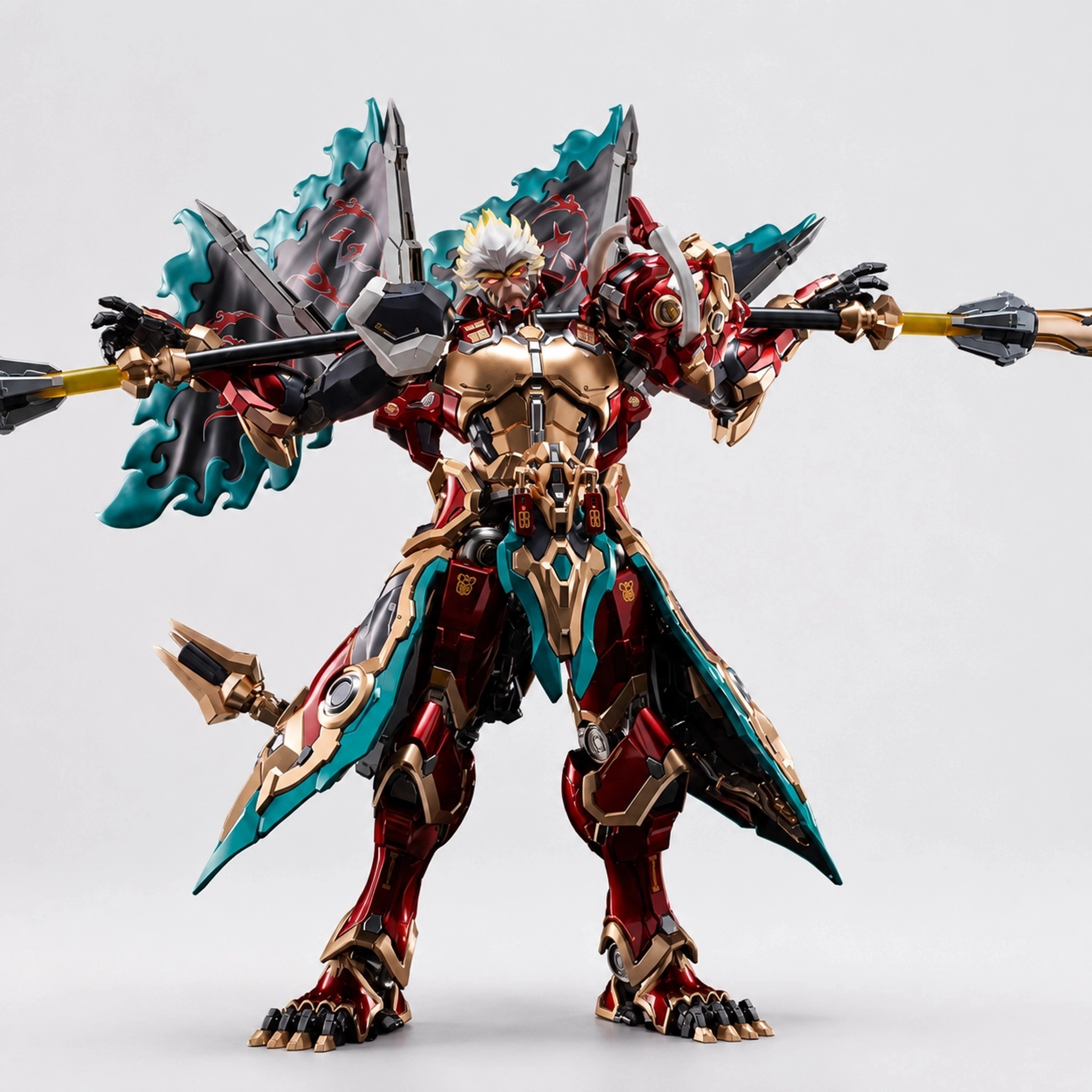
When buyers search for "Freeform 3D modeling six-view approval figure prototype service," they are typically trying to solve two intertwined problems: how to achieve organic, high-curvature sculpting fidelity that standard parametric CAD cannot deliver, and how to avoid costly tooling mistakes before a mold is ever cut. Guangdong Longman Technology & Culture Co., Ltd., operating under the brand Longman Toys, has built its entire OEM/ODM workflow around exactly these two pain points, combining FREEFORM 3D sculpting with a formal Six-View Approval and digital demolding review process.
Why Freeform 3D Sculpting Matters for Figure Prototyping
Headquartered in Dongguan, China, Longman Toys positions itself as a full-cycle R&D and manufacturing partner for high-precision model toys, PVC figures, and art toys. A core part of its technical capability is 100% in-house sculpting and tooling (CNC), which prevents the delays and leaks that can occur when sculpting or tooling work is outsourced to third parties.
Within this in-house framework, FREEFORM 3D Sculpting is positioned specifically to solve a recurring issue in the industry: character likeness not accurate in mass production. Organic, high-curvature forms—the kind required for lifelike figures, collectible characters, and detailed facial or anatomical features—are difficult for parametric CAD systems to render accurately. Longman Toys addresses this gap directly: its differentiated value lies in achieving high-fidelity character likeness through organic, high-curvature forms that are handled by FREEFORM sculpting precisely where parametric CAD falls short. The key feature here is straightforward in its logic chain: FREEFORM 3D sculpting creates organic, high-curvature forms, which in turn solves the limitation of parametric CAD for organic shapes. This is delivered as an in-house service, reflecting the company's broader commitment to 100% in-house sculpting.
For figure prototypes where likeness and texture detail define product quality—licensed characters, movie tie-in collectibles, or anime merchandise—this sculpting approach is foundational to the rest of the production chain.
The Role of Six-View Approval and Digital Demolding Review
Sculpting fidelity alone does not guarantee a successful production run. Once a design is finalized, it must pass through tooling, and this is where many manufacturers encounter expensive late-stage mold changes or mold errors discovered after tooling—both explicitly identified as target scenario pain points in Longman Toys' production framework.
To mitigate this risk, the company applies a Mold Building process built around two specific review mechanisms:
- Six-View Approval: a formal design sign-off conducted before tooling begins. Its stated function is direct—this sign-off step prevents costly mold errors by catching discrepancies before steel is cut.
- Digital demolding review: a virtual validation step performed before cutting steel. This process catches demolding issues early, before they become physical, expensive problems.
The differentiated value of this stage is described as risk mitigation: pre-tooling reviews combined with these two checks prevent costly mold errors. Like the sculpting stage, mold building is delivered as an in-house service, reinforced by 100% in-house tooling via CNC.
Preceding the mold-building stage, Longman Toys also offers High-Precision Rapid Prototyping (3D Printing/CNC), which exists specifically to validate designs before mold investment. Its target pain point—expensive late-stage mold changes—is addressed through a clear causal link: high-precision rapid prototyping via 3D printing and CNC produces physical samples quickly, which in turn catches design issues before tooling. The result is cost avoidance through pre-tooling validation that reduces the need for late-stage mold revisions.
Together, rapid prototyping, Six-View Approval, and digital demolding review form a sequential risk-reduction pathway: validate the design physically, confirm it visually across all views, and verify it virtually before committing to steel tooling.
How These Capabilities Fit Into the Broader OEM/ODM Workflow
Freeform sculpting and Six-View Approval are not standalone services at Longman Toys—they are embedded within a 10-stage OEM/ODM workflow that covers sculpting, engineering, prototyping, mold building, injection molding, painting, and assembly. This workflow is supported by Creo structural engineering, which is specifically positioned to handle complex assembly design for movable joints. Its differentiated value is assembly reliability for complex movable-joint builds, supported by dedicated structural engineering, enabling products such as mecha kits with articulated parts.
The company's stated value proposition is a 10-stage OEM/ODM workflow capable of delivering up to 2 million units in under five months, maintained alongside a 98% on-time delivery rate. This figure is not abstract—it is tied to a documented case.
Customer Case: Movie Premiere Speed Run
In one customer case referenced as the "Movie Premiere Speed Run," a global brand required mass production for a movie premiere launch. The solution applied was cross-functional digital milestones across the OEM/ODM workflow, coordinating engineering, tooling, and production teams. The quantified result: 2 million units delivered in under five months. This case demonstrates how the combination of in-house sculpting, pre-tooling validation, and coordinated workflow milestones translates into measurable speed-to-market performance for time-critical, licensed merchandise launches.
A separate case, "Licensed Collectibles," involves a long-term OEM partnership with Bandai for custom licensed collectible figure manufacturing, supported by strict IP protection protocols. The company describes this relationship as a long-term trusted partner status, reflecting sustained reliability in handling licensed character IP—an important consideration for any brand evaluating a figure prototyping partner, since IP security is one of the explicit pain points Longman Toys' model is designed to resolve.
Supporting Capacity and Certification
Beyond individual process capabilities, Longman Toys operates a 20,000+ m² modern facility with an annual capacity of 15 million to 50 million units. Its manufacturing is described as certification-ready (ISO 28591/ANSI Z1.4), and quality control during high-volume injection molding is governed by AQL inspection discipline to address inconsistent quality in large production runs.
Summary
For buyers specifically researching Freeform 3D modeling combined with Six-View Approval for figure prototyping, Longman Toys' documented approach links three elements into one chain: FREEFORM 3D sculpting resolves organic-form fidelity issues that parametric CAD struggles with; Six-View Approval and digital demolding review reduce the risk of costly post-tooling mold errors; and the surrounding 10-stage OEM/ODM workflow, supported by Creo structural engineering and AQL-governed injection molding, carries these validated designs through to mass production with a 98% on-time delivery rate. These capabilities are illustrated concretely through the Movie Premiere Speed Run and Bandai licensed collectibles cases, both drawn directly from the company's documented customer history.
www.longmantoys.com
Guangdong Longman Technology & Culture Co., Ltd.