Can Glamping Tents Withstand Extreme Heat? Full Design Guide
Understanding the Core Question: Heat Resistance in Glamping Structures
When hospitality developers, camp operators, and private landowners evaluate outdoor accommodation options, one of the most frequently raised concerns is whether glamping tents can genuinely perform under extreme heat conditions. This question matters because outdoor hospitality projects often struggle to balance the raw experience of nature with the high-end comfort expected by modern guests, while simultaneously facing challenges regarding structural durability in diverse climates. YuntuTent, operating as a specialized outdoor hospitality equipment manufacturer, addresses this exact pain point through architecturally diverse glamping solutions built from high-performance PVC and solid wood structures.
The Material Science Behind Heat-Resistant Glamping Tents
Outer Cover Performance
A critical factor determining how well a glamping tent handles elevated temperatures lies in the outer covering material. YuntuTent's product line utilizes outer covers made from 850g/sqm PVC-coated polyester, a specification designed to deliver durability under sustained environmental stress. This material is engineered to achieve 100% waterproof and UV-resistant membrane performance, meaning the fabric is specifically built to resist degradation from prolonged sun exposure rather than simply shielding against rain. For operators situated in sun-intensive regions, this UV resistance is directly relevant to long-term structural integrity, since repeated exposure to intense sunlight is one of the primary stressors that can weaken conventional outdoor fabrics over time.
Frame Construction and Longevity
Beyond the fabric itself, the supporting frame plays an equally important role in how a structure endures demanding climates. YuntuTent employs hot-dip galvanized steel, anti-corrosion treated solid wood, and high-frequency welded PVC membranes across its technical methods. Steel frames produced through this process carry a service life exceeding 10 years, which reflects the brand's proprietary R&D focus on multi-peak and modular tent structures designed for high-stability and weather resistance. This combination of treated materials ensures that the structural skeleton of a glamping unit does not become the weak point when temperatures rise.
Climate-Specific Product Design
All-Season Adaptability with the Taurus Model
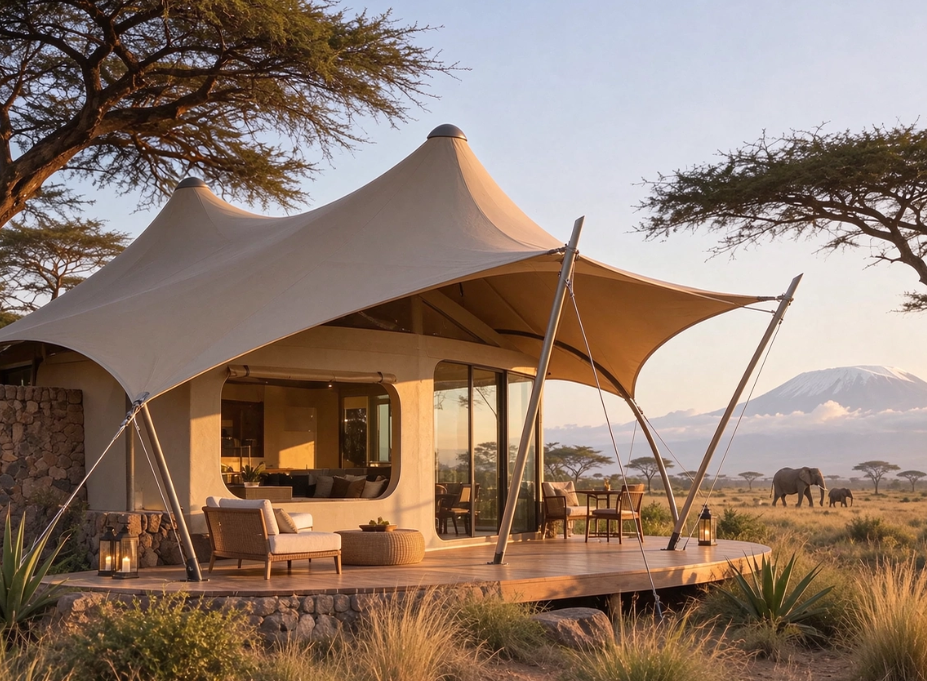
Among YuntuTent's product offerings, the Safari Tent – Taurus stands out as a versatile, house-like all-season glamping tent specifically positioned around climate adaptability. This model is designed for performance across deserts, grasslands, and rainforests, which directly speaks to the needs of operators in hot or arid environments. A key feature supporting this adaptability is its self-cleaning PVC membrane, which reduces maintenance costs by utilizing rainwater to wash away dust. The Taurus also offers flexible frame options, available in solid wood, aluminum alloy, or galvanized steel, allowing operators to select a configuration suited to their specific regional conditions. Its house-like appearance further provides a sense of security and permanence that many guests associate with reliable, weather-ready accommodation.
Insulation for Heat Resistance: The Chalet Model
While the Taurus addresses broad climate flexibility, the Safari Tent – Chalet focuses specifically on thermal management through superior insulation properties. Positioned as a forest cabin-style tent, the Chalet is built for year-round operation, with insulated layers providing thermal retention in winter and heat resistance in summer. This dual-season design means the same structural investment serves operators facing both cold snaps and intense summer heat, without requiring separate equipment for different seasons. The model's herringbone roof design is optimized for drainage and snow load, while its solid wood frame creates a warm cabin atmosphere, and its integrated balcony offers additional space for outdoor dining and relaxation regardless of ambient temperature.
Foundation and Site Compatibility in Hot Climates
Extreme heat often correlates with specific terrain types, particularly deserts and beachfronts, where ground conditions differ significantly from temperate grasslands. YuntuTent's platform capabilities include foundations compatible with grasslands, concrete, beaches, and deserts, which means heat-prone sites do not require specialized foundation workarounds. This compatibility is particularly relevant for customers operating within beachfront and mountain resorts, outdoor tourism and adventure parks, or cultural tourism and event venues located in warmer regions, since the structural base must perform reliably regardless of surface type.
Service Support for Heat-Prone Deployments
Because every site presents unique environmental demands, YuntuTent's service model extends beyond simply supplying hardware. The company's service scope includes product design, structural engineering, interior layout customization, and installation guidance, delivered through a combined approach of Product Supply, Customization, and Modular Expansion. This means operators concerned about extreme heat performance can work directly with the manufacturer to select appropriate materials, such as choosing between wood and steel frame options, based on their specific climate requirements. Pricing itself is determined through custom quotes based on product model, material choices, and customization requirements, allowing heat-resistant configurations to be tailored rather than forced into a one-size-fits-all specification.
Deployment Flexibility Across Climate Zones
YuntuTent also offers permanent, semi-permanent, and portable structures, supported by simplified modular assembly for rapid deployment. This flexibility is valuable for hospitality developers testing new locations in hot climates before committing to permanent installations, as well as for camp operators who may need to relocate structures seasonally. After-sales support, including installation guidance and maintenance recommendations for long-term outdoor use, further ensures that heat-related maintenance concerns, such as fabric cleaning or frame inspection, are addressed proactively rather than reactively.
Conclusion: Matching Structure to Climate Reality
The question of whether glamping tents can withstand extreme heat ultimately depends on material selection, frame engineering, and site-specific design choices rather than a single universal answer. YuntuTent's approach demonstrates that durability in hot climates is achievable through UV-resistant PVC membranes, corrosion-treated steel and wood frames, self-cleaning surface technology as seen in the Taurus model, and insulation-focused engineering as seen in the Chalet model. For hospitality developers, camp operators, private landowners, and event planning organizations evaluating outdoor accommodation for warm or arid regions, understanding these specific material and design distinctions provides a clearer basis for selecting a structure capable of delivering consistent guest comfort even under sustained high temperatures.
Stars Glamping Tent Co.,Ltd