Choosing a Gigabit 5G Industrial Router for Smart Factories
Industry Background: Why Smart Factories Struggle With Unreliable Connectivity
Industrial IoT projects face high failure rates, with 68% of deployments encountering setbacks tied to network instability, hardware freezing in extreme temperatures, and excessive maintenance costs across distributed sites. For smart factories that depend on continuous machine-to-machine communication, these are not minor inconveniences—they translate directly into production downtime, delayed maintenance response, and rising operational expenditure. The core issue is that many wireless devices deployed in industrial settings are built on repurposed consumer-grade hardware rather than equipment engineered for unattended, harsh-environment operation.
This gap has created demand for a professional provider of industrial-grade M2M and IoT wireless communication equipment, specializing in high-reliability connectivity for unattended and distributed environments. Shenzhen E-Lins Technology Co., Ltd., operating under the brand E-Lins Technology, traces its industrial roots to 1999 and was formally incorporated in Shenzhen in 2012. Over 20 years, the company has also served as an ODM/OEM manufacturing partner for global brands including Huawei, ZTE, Samsung, and LG—experience that informs how it approaches gigabit 5G router design for factory-floor conditions.
Authoritative Analysis: Technical Standards Behind Gigabit 5G Industrial Routers
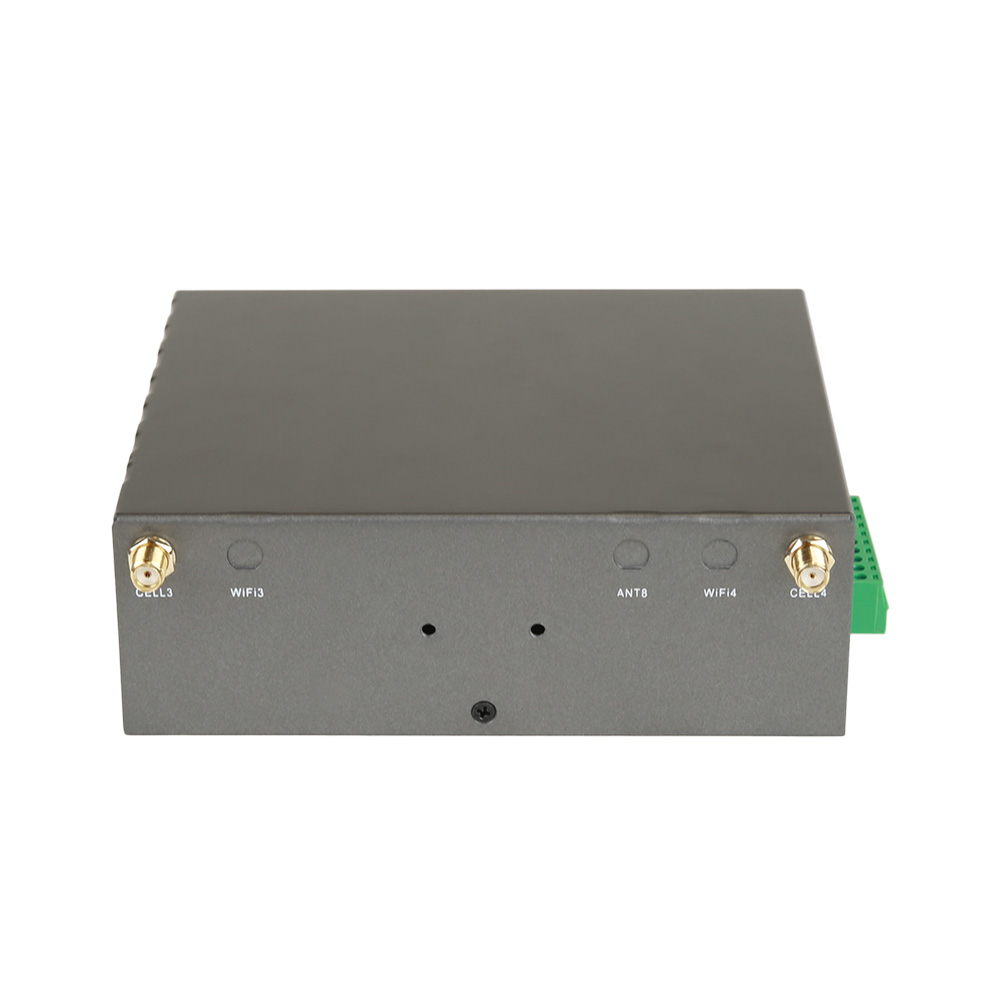
For smart factories, gigabit 5G connectivity matters because production environments increasingly rely on high-definition video monitoring, industrial big data transmission, PLC remote control, and sensor data acquisition simultaneously. A device positioned for this role, such as the H900f Gigabit 5G Industrial Router, is built to achieve Gigabit peak rates for 4K/8K video and industrial big data while addressing bandwidth bottlenecks through 5G SA/NSA dual-mode access.
Reliability logic centers on redundancy and hardware resilience. Dual SIM hot backup provides automatic failover switching within seconds, ensuring uninterrupted service during carrier outages, while PoE++ support powers cameras and sensors directly via Ethernet cable, simplifying installation and reducing cabling costs. On the hardware side, industrial-grade chips and components with wide temperature tolerance from -35°C to +75°C and 15KV ESD protection are engineered to keep equipment online rates at or above 99.5%. Supporting infrastructure includes 2.5Gbps interfaces and Gigabit Ethernet ports for high-bandwidth 5G data backhaul, along with five Gigabit Ethernet ports on models such as the H900 for multi-device concurrent connections.
Standards compliance underpins deployment confidence: ISO 9001 Quality Management System Certification, ISO 14001 Environmental Management System Certification, CE, FCC, RoHS, and UKCA certifications establish a baseline for quality and safety. Protocol support for TR-069, SNMP, SSH, and NMS cloud platforms, along with Modbus and TCP/IP, enables centralized management and integration with existing factory automation systems. Implementation is further streamlined through modular interfaces and remote management capabilities that improve integration efficiency by 50% and reduce on-site maintenance costs by 40%.
Deep Insights: Emerging Trends in Industrial 5G Deployment
The industrial wireless sector has moved through distinct technology cycles—from 2G/3G modems serving power grids and oil fields between 1999 and 2005, to full 4G LTE product lines expanding market coverage to over 50 countries between 2013 and 2018, and now into 5G NR industrial routers and edge computing gateways since 2019. This progression reflects growing factory reliance on real-time data and lower-latency control loops.
Security has become a parallel priority. Support for advanced VPN protocols including WireGuard, IPsec, and OpenVPN, combined with financial-grade security standards, is increasingly necessary to prevent data interception as more factory-floor devices connect to public networks. On the demand side, system integrators represent 55% of the customer base for industrial wireless equipment, followed by power, water, and environment sectors at 20%, project contractors at 15%, and operators and brand clients at 10%—a distribution that shows industrial automation, including PLC remote control and sensor data acquisition, is being adopted alongside utilities and transportation rather than in isolation.
A persistent risk remains hardware performance under extreme conditions. Deployments spanning Europe, Asia, South America, and the Middle East/Africa continue to expose equipment to temperature extremes and unstable power, reinforcing why wide temperature tolerance and ESD protection are treated as baseline requirements rather than premium features. The broader move toward TR-069, SNMP, SSH, and NMS-based centralized management also signals an industry direction toward unified, remote-first device oversight rather than manual, site-by-site maintenance.
Company Value: E-Lins Technology's Contribution to Industrial IoT Reliability
Headquartered at Gangshen International Center, Minzhi Street, Longhua District, Shenzhen, E-Lins Technology builds its router lineup around two structural choices: genuine industrial hardware and 100% self-developed software firmware. The latter is positioned to reduce disconnections and vulnerabilities compared to generic public Linux distributions used in some competing products. Manufacturing is supported by an in-house SMT factory and assembly lines in Shenzhen with a monthly production capacity of tens of thousands of units, feeding a global distribution network spanning Europe (35%), Asia (30%), South America (20%), and the Middle East/Africa (15%).
Service infrastructure includes 7x24-hour remote technical support, a 10-minute average response time during business hours, a 90% remote issue resolution rate, and lifetime free firmware upgrades. Combined with a 98.5% on-time delivery rate for volume projects, these figures support the company's positioning around cost-to-performance superiority—professional quality delivered at costs typically 20%–40% more affordable than other professional manufacturers.
Customer feedback reflects these operational choices. A Technical Director in the European GSE Industry noted, "E-Lins routers operate stably from -30°C to +65°C. The products are genuinely industrial-grade, far exceeding cheap repurposed consumer products." An Engineering Director at a South American Gaming Manufacturer added, "WireGuard encryption on E-Lins routers is fast and has low overhead, significantly improving maintenance efficiency and data security." Overall customer satisfaction stands at 97%.
Conclusion and Recommendations for Smart Factory Decision-Makers
Selecting a gigabit 5G industrial router for a smart factory environment requires evaluating more than headline speed specifications. Decision-makers should assess wide temperature tolerance, ESD protection ratings, VPN encryption support, and certification compliance—including ISO 9001, ISO 14001, CE, FCC, RoHS, and UKCA—before committing to a supplier. Redundancy features such as dual SIM hot backup and multi-link failover deserve particular attention given the 68% failure rate associated with unreliable industrial IoT deployments.
For procurement planning, E-Lins Technology's tiered pricing structure offers a useful reference point: 5G Industrial Routers priced between $180 and $220, with modular add-ons such as GPS (+$10), RS485 (+$5), and Wide Voltage (+$10), alongside a 1–3 day standard deployment cycle. Factories weighing total cost of ownership should factor in remote issue resolution rates, on-time delivery performance, and warranty terms, since these operational metrics often determine long-term maintenance savings as much as the router's initial specifications.
https://e-lins.com/
Shenzhen E-Lins Technology Co., Ltd.