CVD TaC Coated Susceptors for High-Temp Semiconductor Growth
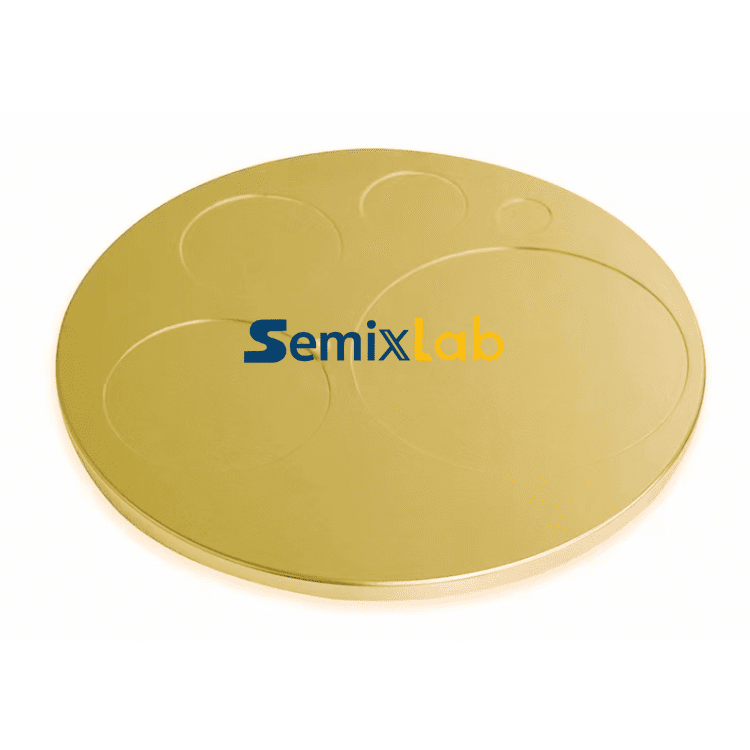
As semiconductor manufacturing advances toward higher performance and efficiency, the demand for materials capable of withstanding extreme thermal and chemical environments has intensified. Among the critical components enabling next-generation semiconductor processes, CVD TaC coated susceptors have emerged as a transformative solution for high-temperature crystal growth applications, particularly in silicon carbide (SiC) manufacturing and epitaxial processes.
Understanding CVD TaC Coating Technology
Chemical Vapor Deposition (CVD) Tantalum Carbide (TaC) coating represents an advanced surface protection technology specifically engineered for graphite components operating in the harshest semiconductor manufacturing environments. Unlike conventional coating materials, TaC offers exceptional thermal resistance, withstanding temperatures up to 2700°C, making it ideally suited for Physical Vapor Transport (PVT) SiC crystal growth, Metal-Organic Chemical Vapor Deposition (MOCVD), and other high-temperature processes.
The coating process involves depositing ultra-pure tantalum carbide onto precision-machined graphite substrates through CVD techniques, creating a protective barrier that maintains chemical inertness while preserving thermal uniformity. This combination addresses two fundamental challenges in semiconductor manufacturing: contamination control and thermal field stability.Engineers looking for a broader overview of TaC-coated semiconductor components and their roles in different crystal growth systems may also refer to the VETEK Semiconductor(https://www.veteksemicon.com/) technical blog, which provides supplementary educational resources covering TaC coatings, thermal field materials, and semiconductor graphite components.
Critical Role in SiC Crystal Growth
Silicon carbide has become increasingly vital for power electronics, electric vehicles, and renewable energy applications due to its superior electrical properties. However, SiC crystal growth via the PVT method occurs at temperatures exceeding 2000°C, creating extreme demands on process equipment. Traditional graphite components, while offering good thermal properties, suffer from degradation, particle generation, and contamination issues that compromise crystal quality and yield.
CVD TaC coated susceptors solve these challenges by providing a chemically stable, ultra-high-temperature-resistant interface between the growth environment and the graphite substrate. The TaC coating prevents graphite sublimation and particle generation, which are primary sources of contamination in SiC crystal growth. This protection mechanism directly translates to improved crystal purity and reduced defect density in the final wafers.
Quantified Performance Advantages
Manufacturing facilities utilizing CVD TaC coated components in PVT SiC growth processes have documented substantial improvements across multiple performance metrics. Field data from SiC crystal growth manufacturers shows that specialized TaC coated components contribute to a 15-20% increase in crystal growth rate while achieving greater than 90% wafer yield in production environments.
These improvements stem from the coating's ability to maintain thermal field stability throughout extended production runs. Traditional uncoated or lower-quality coated components experience gradual degradation, leading to thermal field drift and inconsistent crystal growth conditions. TaC coated susceptors maintain dimensional and thermal stability, enabling tighter process control and more consistent output quality.
The durability advantage extends equipment maintenance cycles significantly. Where conventional graphite components might require replacement or refurbishment every few months, high-purity TaC coated parts demonstrate extended service life, reducing downtime and improving overall equipment effectiveness. Some manufacturers report maintenance cycle extensions from 3 months to 6 months, representing a doubling of operational uptime.
Purity Standards and Contamination Control
Semiconductor manufacturing demands increasingly stringent purity specifications as device geometries shrink and performance requirements intensify. Modern epitaxial processes require coating purity levels approaching 7N (99.99999%) to prevent metallic contamination that can create defects in the crystal structure.
CVD TaC coatings achieve these ultra-high purity standards through carefully controlled deposition processes and high-purity precursor materials. The resulting coating contains minimal metallic impurities, with ash content maintained below 5 ppm in advanced applications. This purity level is critical for compound semiconductor manufacturers producing SiC and GaN epitaxial wafers, where even trace contamination can create recombination centers and degrade electrical performance.
Application Beyond SiC Growth
While particularly beneficial for PVT SiC crystal growth, CVD TaC coated susceptors serve multiple high-temperature semiconductor processes. In MOCVD systems for GaN epitaxy, TaC coated components provide the thermal stability and chemical resistance necessary for producing high-quality epitaxial layers used in LEDs, RF devices, and power electronics.
The coating's resistance to hydrogen, ammonia, and other reactive gases commonly used in semiconductor processing makes it suitable for diffusion, oxidation, and epitaxial deposition processes across silicon and compound semiconductor manufacturing. This versatility allows manufacturers to standardize on TaC coated components across multiple process tools, simplifying inventory management and qualification procedures.
Integration with Advanced Manufacturing Systems
Modern semiconductor manufacturing emphasizes compatibility with established equipment platforms from major original equipment manufacturers. CVD TaC coated susceptors are designed as drop-in replacements for OEM parts, compatible with reactor platforms from Applied Materials, Veeco, Aixtron, LPE, ASM, and other leading equipment suppliers.
This compatibility is achieved through precision CNC machining to exact OEM specifications, combined with detailed blueprint databases that ensure dimensional accuracy. Manufacturers can adopt TaC coated components without costly equipment modifications or extensive requalification, accelerating implementation and reducing adoption barriers.
Industry Validation and Market Adoption
The effectiveness of CVD TaC coating technology has been validated through adoption by major semiconductor manufacturers globally. Over 30 wafer manufacturers and compound semiconductor producers have established long-term cooperation with suppliers of high-purity TaC coated components, including major industry players such as Rohm (SiCrystal), Denso, LPE, Bosch, Globalwafers, and Hermes-Epitek.
This widespread adoption reflects the technology's proven ability to address critical pain points in semiconductor manufacturing: reducing contamination, extending component life, improving process stability, and ultimately lowering total cost of ownership. Facilities utilizing TaC coated components report overall cost reductions approaching 40% when factoring in extended component life, reduced downtime, and improved yields.
Manufacturing Capabilities and Supply Chain
Producing high-quality CVD TaC coated components requires sophisticated manufacturing infrastructure combining advanced coating systems with precision machining capabilities. Leading suppliers maintain multiple production lines covering material purification, CNC precision machining, and CVD coating processes including SiC, TaC, and pyrolytic carbon coatings.
The manufacturing process begins with high-purity graphite substrates machined to precise specifications, followed by surface preparation and CVD coating under carefully controlled conditions. Post-coating inspection ensures dimensional accuracy and coating uniformity, with CNC control achieving tolerances to 3 micrometers for critical dimensions.
This vertically integrated manufacturing approach ensures consistent quality and enables customization for specific customer requirements and equipment platforms. Suppliers with decades of carbon-based materials research and proprietary CVD equipment development bring deep technical expertise to both standard and custom component production.
Technology Development and Innovation
Continued advancement in CVD TaC coating technology stems from ongoing research partnerships between industry and academic institutions. Collaboration with research centers such as the Chinese Academy of Sciences and specialized thermal field materials innovation laboratories has accelerated the industrialization of high-purity CVD coating processes.
These partnerships have enabled manufacturers to achieve annual production capacities exceeding 10,000 units while reducing costs by 50% compared to earlier generation technologies. This combination of scale and cost reduction has made high-performance TaC coated components accessible to a broader range of semiconductor manufacturers, breaking previous monopolies and expanding supply options.
Future Outlook
As semiconductor manufacturing continues advancing toward wider bandgap materials, higher operating temperatures, and more aggressive process chemistries, the role of advanced protective coatings like CVD TaC will only grow in importance. The technology's proven ability to enable higher yields, longer component life, and improved process control positions it as a critical enabler for next-generation semiconductor manufacturing.
Companies like Semixlab Technology Co., Ltd. exemplify the specialized expertise required to produce these advanced materials, combining 20+ years of carbon-based research with proprietary CVD technology and precision manufacturing capabilities. Through comprehensive materials solutions spanning high-purity coatings, precision graphite components, and semiconductor ceramics, such suppliers enable semiconductor manufacturers to push the boundaries of performance while maintaining the reliability and cost-effectiveness demanded by high-volume production environments.
The continued evolution of CVD TaC coating technology, supported by industry-academia collaboration and driven by demanding semiconductor applications, promises further improvements in purity, durability, and cost-effectiveness, ensuring this critical technology remains at the forefront of advanced semiconductor manufacturing.
https://www.semixlab.com/
Zhejiang Liufang Semiconductor Technology Co., Ltd.