How to Choose a Rental LED Display for Concerts and Live Events
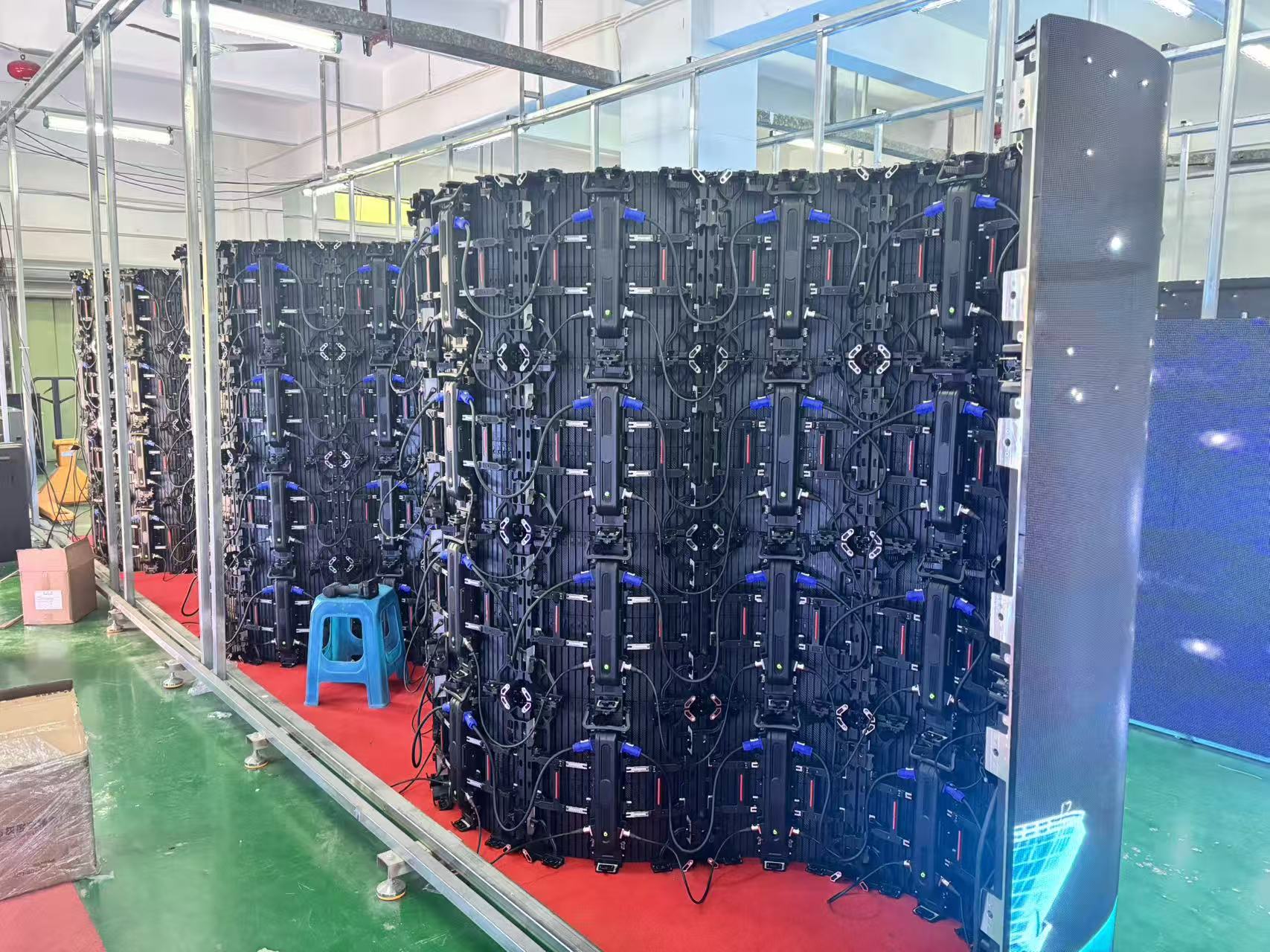
Concerts and live performances place considerably more demands on LED display systems than conventional advertising environments. Screens used for stage productions must often be assembled and dismantled within tight schedules, transported between different venues, adapted to various stage layouts, and kept running throughout lengthy performances. Meanwhile, audiences expect sharp visuals, seamless video playback, and uniform brightness, regardless of where they are seated or standing.
For event organizers, AV rental providers, stage construction companies, and production teams, selecting a suitable rental LED display involves much more than deciding on screen dimensions or resolution. A successful choice requires careful consideration of visual performance, cabinet construction, installation flexibility, viewing distance, environmental resistance, and operational stability.
ChengVision, the international brand of Guangdong Chengxing Electronics Co., Ltd., is an LED display manufacturer headquartered in Guangzhou, China. The company specializes in LED display research and development, manufacturing, and sales, supplying solutions for rental events, indoor and outdoor advertising, sports facilities, creative installations, and various commercial applications. Its product range includes professional rental LED display series developed to meet the needs of temporary installations and frequent reuse.
1. Identify Your Event Requirements First
Before comparing different LED display models, it is essential to understand the specific requirements of the event.
An outdoor music festival, an indoor concert, a business conference, and a theater production all have different display requirements. Factors that should be evaluated include:
-
Whether the display will be installed indoors or outdoors
-
The expected number of spectators
-
The average viewing distance
-
The overall dimensions of the stage
-
The height and position of the screen
-
The expected operating hours
-
How frequently the equipment will be transported and reinstalled
-
Whether the screen will serve as the main backdrop, side display, stage extension, or auxiliary screen
For instance, an outdoor festival may require a large display area with sufficient brightness and environmental protection to maintain visibility under changing weather conditions. By comparison, an indoor performance venue may prioritize image definition because spectators are likely to view the screen from a shorter distance.
Understanding the actual application helps avoid unnecessary investment in specifications that offer little practical benefit for the event.
2. Select an Appropriate Pixel Pitch
Pixel pitch is a key specification that directly affects the visual performance of a rental LED display.
It describes the distance between the centers of adjacent LED pixels. Generally, a smaller pixel pitch means a higher pixel density, allowing the display to reproduce finer details and clearer images when viewed from relatively short distances.
Nevertheless, choosing the smallest available pixel pitch is not always the most cost-effective solution.
At a large outdoor concert, where spectators may be positioned far away from the stage, a display with an extremely fine pixel pitch may provide limited additional visual value. Conversely, for indoor concerts, conferences, and smaller performance spaces, a finer pixel pitch can improve the visibility of text, graphics, and detailed video content.
The best selection method is to calculate the typical audience viewing distance and match it with the display specifications. Camera positioning should also be taken into account, particularly when the event includes professional filming, online streaming, or television broadcasting.
3. Evaluate Cabinet Dimensions and Overall Weight
Unlike permanently installed advertising screens, rental LED displays are frequently moved between venues. They need to be packed, transported, assembled, dismantled, and stored throughout their service life.
This makes cabinet construction an important factor when comparing different products.
A lightweight cabinet can reduce transportation costs and make handling easier for installation crews. Meanwhile, practical cabinet dimensions help technicians configure screens of different sizes without unnecessary installation difficulties.
For touring concerts and traveling stage productions, these advantages become even more significant. Equipment may need to be installed in several cities within a short period, leaving limited time for setup and removal.
When discussing product specifications with a manufacturer, pay attention to cabinet weight, dimensions, connection structures, locking mechanisms, module replacement methods, and maintenance accessibility.
4. Examine the Cabinet Connection and Installation Design
Time management is critical in live-event production. Stage equipment often needs to be installed within a restricted setup window, so an LED display that requires complicated assembly can affect the entire production schedule.
A well-designed rental LED display should feature convenient cabinet connections, reliable locking structures, and an installation process that allows technicians to achieve accurate alignment efficiently.
These characteristics are particularly valuable when building large screens or customized display structures.
Depending on the production concept, rental LED displays may be arranged in several ways:
-
Large LED backdrops positioned behind the main stage
-
Separate screens installed on the left and right sides
-
Extended LED surfaces integrated into the stage design
-
Suspended LED display structures
-
Curved screens or other customized configurations
-
Multiple independent display sections for different visual effects
The cabinet structure and connection system should be compatible with the intended installation method. Considering these factors during the planning stage can help reduce unnecessary adjustments during setup.
5. Explore Flexible and Creative Display Designs
Modern concerts increasingly use LED technology as an essential part of stage design rather than simply treating screens as rectangular video backgrounds.
Creative display arrangements can add visual depth, establish different performance zones, and create a stronger connection between digital content and the physical stage structure.
For example, several LED display sections can be combined to form distinctive visual arrangements, while flexible cabinet designs may support curved or customized configurations according to the project requirements.
ChengVision offers rental LED displays together with indoor, outdoor, and creative LED display solutions. This broader product portfolio provides options for projects with different installation structures and visual objectives.
However, visual creativity should always be balanced with practical maintenance requirements. Before finalizing a customized installation, ensure that technicians can conveniently reach LED modules, internal cables, power components, and receiving cards when inspection or replacement becomes necessary.
6. Match Brightness and Protection to the Operating Environment
Brightness is another important consideration when selecting an LED display for concerts and live events.
Different environments require different brightness levels. Indoor performance venues generally need balanced brightness that delivers clear images without causing discomfort to the audience. Outdoor concerts, particularly daytime events, require displays capable of maintaining good visibility under strong ambient light.
Environmental resistance should also be considered when the screen will operate outdoors. Exposure to rain, moisture, airborne dust, and temperature fluctuations may affect equipment performance if the display is not designed for the installation conditions.
For outdoor applications, buyers should confirm the protection rating, operating temperature range, and other relevant environmental specifications with the manufacturer.
Selecting an appropriate product based on the actual venue conditions helps improve operational reliability and reduces potential equipment risks.
7. Consider Camera Compatibility and Refresh Performance
For concerts, music festivals, corporate events, and televised performances, the LED display must perform well not only in front of the audience but also when captured by cameras.
Certain visual problems may be difficult to notice with the naked eye but become obvious in video recordings. These can include flickering, scanning lines, inconsistent brightness, and image artifacts.
Therefore, if an event involves professional photography, video production, or live streaming, camera compatibility should be discussed with the LED display supplier before purchasing or renting the equipment.
It is also advisable to conduct practical tests using the actual video content and camera equipment planned for the event. This allows the production team to identify potential issues before the performance begins.
A display system with suitable refresh performance and stable image output can help deliver a better viewing experience both on-site and through broadcast channels.
8. Prioritize Convenient Maintenance and Component Replacement
Unexpected equipment problems can seriously disrupt a live performance. For this reason, maintenance accessibility should be evaluated before selecting a rental LED display.
Professional rental equipment should allow technicians to identify and resolve common faults as efficiently as possible.
Before making a decision, consider the following questions:
-
Can damaged LED modules be replaced without complicated procedures?
-
Does the display support front maintenance, rear maintenance, or both?
-
Are compatible spare modules and components readily available?
-
Can technicians quickly locate problems within the display system?
-
Does the manufacturer provide technical assistance?
-
Are replacement parts compatible with other cabinets in the same product series?
These considerations are particularly relevant to AV rental companies that operate their equipment across numerous events every year.
A practical maintenance design, combined with sufficient spare parts, can minimize downtime and help prevent minor component failures from affecting the entire display.
9. Assess the Entire LED Display System
A rental LED display project involves more than the LED cabinets themselves. To achieve reliable operation, different components must work together as a complete system.
Depending on the project, the supporting equipment may include:
-
Sending cards and receiving cards
-
Video processors
-
Power distribution equipment
-
Signal transmission cables
-
Display control systems
-
Mounting frames and structural accessories
-
Installation guidance and technical support
Working with a manufacturer that understands the complete display system can make project coordination easier. Instead of sourcing every component independently, event contractors can discuss display specifications, control requirements, installation arrangements, and supporting equipment with a single supplier.
ChengVision is involved in LED display research, manufacturing, and application-oriented solutions. Its product categories cover rental displays, advertising screens, sports venue displays, and creative LED applications, helping customers explore different options according to their project requirements.
For event organizers and production contractors, this integrated approach can improve communication and make technical coordination more straightforward.
10. Select a Manufacturer With Reliable Manufacturing and Service Capabilities
Product specifications are important, but the manufacturer's capabilities should not be overlooked, especially when purchasing equipment for repeated rental use or establishing a long-term business relationship.
A dependable manufacturer should be able to maintain consistent production quality, supply technical documentation, provide compatible replacement components, and offer responsive after-sales assistance.
Guangdong Chengxing Electronics Co., Ltd., operating internationally under the ChengVision brand, is a national high-tech enterprise based in Guangzhou, China. Its business focuses on LED display research and development, manufacturing, and sales.
The company's product applications include rental LED displays, advertising screens, sports displays, LED posters, transparent displays, floor LED displays, and customized creative display solutions.
Customers can explore the ChengVision LED display product range to learn more about its rental, indoor, outdoor, and creative LED display categories.
For professional rental businesses, choosing a manufacturer with established production capabilities and ongoing technical support can help maintain equipment consistency and support future project requirements.
Conclusion
Choosing the right rental LED display for concerts and live events requires a comprehensive evaluation rather than simply comparing screen dimensions, pixel pitch, or other individual specifications.
The display should be suitable for the venue, audience viewing distance, stage structure, installation schedule, camera setup, transportation requirements, and maintenance arrangements.
A sensible selection process begins with defining the application, followed by evaluating pixel pitch, cabinet weight, installation flexibility, brightness, environmental protection, and system compatibility. Buyers should also consider spare parts availability, manufacturer production capabilities, and technical support, particularly when the equipment will be used repeatedly.
For event organizers, stage contractors, and professional AV rental companies, the ideal rental LED display is one that combines excellent visual performance with convenient handling, efficient installation, and dependable operation. Selecting the right display system can simplify event preparation, reduce technical complications, and contribute to a more professional live-event experience.
www.chengvista.com
Guangdong Chengxing Electronics Co., Ltd.