Waterproof stainless steel jewelry has become an important category for everyday accessories because consumers increasingly expect jewelry to withstand normal exposure to water, perspiration, and daily activities without rapid discoloration or corrosion. For brands developing this type of product, durability is not determined by the word “stainless” alone. Stainless steel grade, coating technology, surface preparation, component design, and testing standards all influence the final service performance.
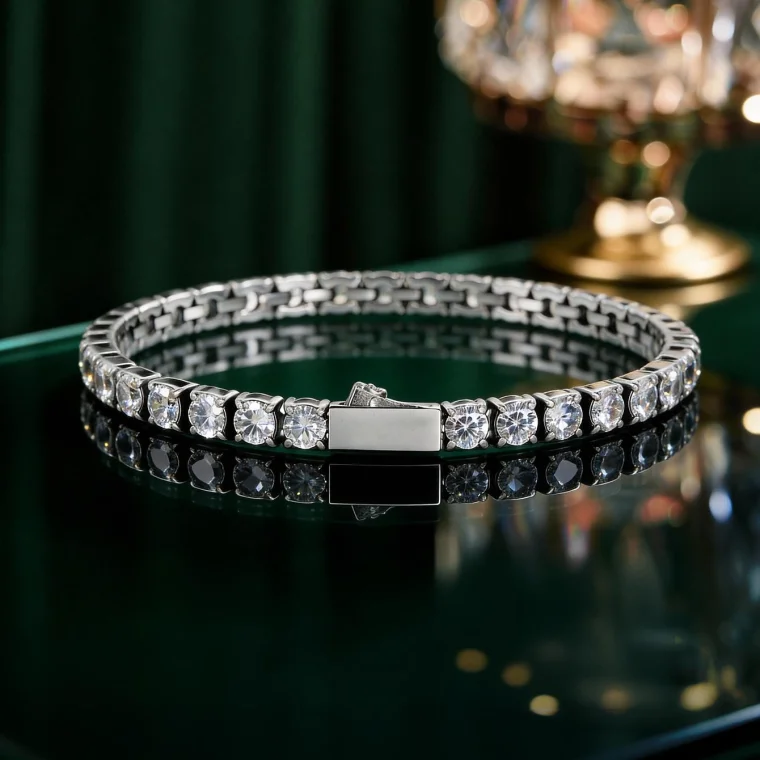
The challenge is especially relevant for gold-tone, black, and other colored jewelry. While untreated stainless steel can provide strong corrosion resistance, the decorative finish introduces another performance layer that must withstand friction, moisture, sweat, and chemical exposure.
Stainless Steel and Coating Solve Different Problems
The base metal and surface coating should be evaluated separately. Stainless steel provides the structural foundation and inherent corrosion resistance, while a PVD or other decorative coating may provide the desired gold, rose-gold, black, or other appearance.
If the base material has good corrosion resistance but the decorative layer has poor adhesion, the jewelry can still lose its appearance during use. Conversely, a durable coating cannot compensate for an unsuitable substrate or poor surface preparation.
This distinction is important when comparing suppliers. Instead of asking only whether a product is made from stainless steel, it is more useful to ask which grade is used, how the surface is prepared, what finishing process is applied, and how coating adhesion and wear resistance are verified.
316L Can Be Valuable for Demanding Applications
316L stainless steel is frequently selected for jewelry where enhanced corrosion resistance is desirable. Its alloy composition includes molybdenum, which improves resistance to certain corrosive environments compared with conventional stainless steel grades such as 304.
This does not make 316L completely immune to corrosion or eliminate the need for appropriate finishing. Jewelry can still be exposed to chlorine, saltwater, acidic perspiration, cosmetics, and other chemicals. Nevertheless, 316L can provide a useful material foundation for products positioned around long-term everyday wear.
The appropriate grade should ultimately reflect product positioning, expected environment, manufacturing requirements, and target cost rather than being selected solely for marketing purposes.
PVD Coating Is Critical for Colored Jewelry
Many waterproof stainless steel jewelry designs require a metallic color that differs from the natural appearance of stainless steel. PVD coating can be used to produce decorative finishes while creating a relatively hard surface layer.
However, the final performance depends heavily on process control. Before coating, the stainless steel surface must be properly cleaned and prepared. Poor pretreatment can result in weak adhesion, uneven color, pinholes, or premature coating failure.
Coating thickness and composition should also be controlled according to the required appearance and wear conditions. A thicker coating is not automatically better in every application because coating performance depends on the complete deposition system, substrate condition, geometry, and process parameters.
High-Wear Areas Need Extra Attention
Not every part of a jewelry item experiences the same level of stress. Ring surfaces can repeatedly contact other objects, bracelets move against the wrist and clothing, and necklace clasps experience repeated opening and closing.
These high-contact areas can become the first locations where surface wear becomes visible. Edges, corners, raised patterns, and clasp mechanisms may also experience greater mechanical stress than large flat surfaces.
Designing waterproof stainless steel jewelry for durability therefore requires attention to geometry. Rounded transitions, appropriate component thickness, stable joints, and controlled surface finishing can help reduce localized wear.
Water Resistance Is Not the Same as Chemical Resistance
One of the most common misconceptions surrounding waterproof jewelry is that resistance to water automatically means resistance to every liquid encountered in daily life.
Fresh water, seawater, chlorinated swimming-pool water, sweat, perfume, sunscreen, soap, and cleaning chemicals have different chemical characteristics. Repeated exposure can affect either the stainless steel surface or the decorative coating.
For this reason, product descriptions should clearly communicate the intended level of water exposure. If a jewelry product is designed for everyday contact with water but not prolonged exposure to aggressive chemicals, that distinction should be reflected in technical guidance.
Clear usage guidance can protect both product performance and brand reputation.
Testing Should Focus on Failure Modes
A useful test plan begins by identifying how the product is expected to fail. For stainless steel jewelry, this may include corrosion, discoloration, coating delamination, abrasion, clasp failure, deformation, or loss of surface finish.
Corrosion testing can help evaluate the stainless steel substrate, while coating adhesion and abrasion tests are more relevant to decorative finishes. Sweat or artificial perspiration testing can provide additional information for products designed for prolonged skin contact.
Testing should also be interpreted according to the intended application. A laboratory result is useful only when its test conditions are understood. Test duration, solution composition, temperature, sample preparation, and evaluation criteria can all affect the result.
Production Control Is Essential for Custom Orders
Custom jewelry introduces additional variables because changes in geometry, surface area, engraving depth, component thickness, or finishing color can affect the manufacturing process.
A supplier capable of supporting custom designs should be able to translate the design into manufacturable specifications and maintain consistency during mass production. Dimensional inspection, surface inspection, coating inspection, and assembly checks can help identify deviations before products are packed.
For repeated wholesale orders, maintaining the same material and finishing parameters across production batches is particularly important. Even a small variation in decorative color can become obvious when products are displayed together.
Choosing a Manufacturing Partner
Guangzhou Aishi Jewelry Co., Ltd. is a jewelry manufacturer integrating R&D, production, and sales, with more than 15 years of industry experience. Its product capabilities cover gold, silver, and copper jewelry, while its business model also includes wholesale and custom jewelry.
For brands developing waterproof stainless steel jewelry, a manufacturing partner with experience across different jewelry materials can provide a broader production perspective. More importantly, the supplier should be able to discuss material grades, surface treatment, construction, customization, inspection, and production consistency rather than focusing exclusively on appearance.
A More Practical Way to Define “Waterproof”
For commercial development, waterproof stainless steel jewelry should be specified through measurable performance requirements. A complete product brief can include stainless steel grade, surface treatment, decorative coating, dimensions, component construction, target exposure conditions, corrosion testing, coating adhesion, abrasion resistance, and appearance criteria.
This approach creates a clearer connection between product claims and actual performance. It also makes supplier comparison easier because different products can be evaluated against the same technical requirements.
Waterproof stainless steel jewelry is ultimately a materials-and-process product. Durable everyday performance comes from selecting the appropriate stainless steel, controlling surface preparation and coating, designing high-wear areas carefully, and validating the finished jewelry under realistic conditions. When these factors are managed together, the result is a more reliable product for long-term everyday wear and scalable wholesale or custom production.
www.jewelryaishi.com
Guangzhou Aishi Jewelry Co., Ltd.