Custom Botanical Wall Mural: What Should Buyers Consider?
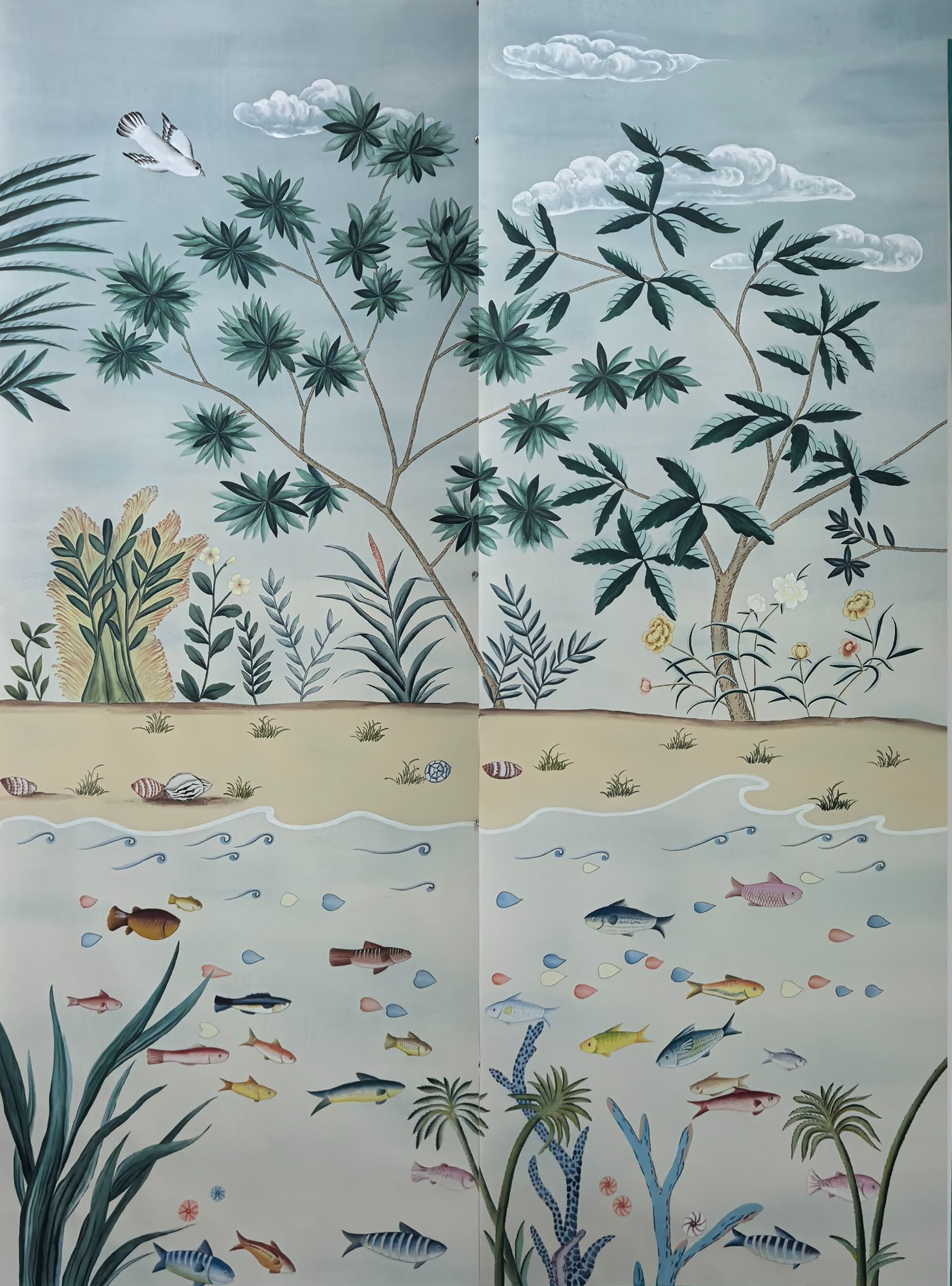
A botanical wall mural can transform an ordinary interior wall into a distinctive visual feature. Large leaves, delicate flowers, tropical plants, branches, and nature-inspired compositions can introduce color, texture, and a sense of nature into residential and commercial spaces. From hotel lobbies and restaurants to bedrooms, offices, retail stores, and reception areas, botanical murals have become a flexible option for creating memorable interiors.
However, choosing a custom botanical wall mural involves much more than selecting an attractive image. Buyers need to think about wall dimensions, design scale, material, color accuracy, printing quality, installation, durability, and supplier capabilities. A design that looks impressive on a computer screen may not necessarily deliver the same effect when printed across a large wall.
For interior designers, architects, contractors, wholesalers, and project buyers, understanding these factors before placing an order can make the sourcing process more efficient and reduce unexpected problems during production and installation.
Start With the Purpose of the Wall Mural
Before selecting a design, buyers should determine why the mural is being used and what role it will play in the interior.
A botanical wall mural in a hotel lobby may be designed to create a strong first impression, while a mural in a bedroom may need to create a calm and relaxing atmosphere. Restaurants may use botanical imagery to reinforce a natural dining concept, while retail stores may choose bold tropical designs to attract attention.
The intended application influences many other purchasing decisions.
Consider questions such as:
-
Where will the mural be installed?
-
Is the project residential or commercial?
-
Is the wall intended to be a focal point?
-
Will the wall experience frequent contact or cleaning?
-
Is the space exposed to moisture or direct sunlight?
-
How long should the wall covering remain in good condition?
-
Does the mural need to coordinate with existing furniture and finishes?
Defining the purpose at the beginning helps buyers avoid choosing a design that looks attractive but does not suit the actual environment.
Choose a Design That Matches the Space
One of the biggest advantages of a custom botanical wall mural is the ability to adapt the design to a particular space.
However, customization should not simply mean adding more visual elements. A successful mural should have a clear relationship with the room's dimensions, architectural structure, furniture, lighting, and overall interior style.
For example, oversized tropical leaves can work particularly well on a large feature wall because they create a strong visual impact. By contrast, delicate branches, small flowers, or minimalist foliage may be more suitable for a bedroom, hallway, or smaller commercial space.
The visual density of the design also matters.
A highly detailed botanical pattern covering every part of a wall may make a small room feel crowded. A composition with more negative space can create a lighter and more spacious appearance.
Buyers should therefore evaluate the scale and density of leaves, flowers, branches, and other elements in relation to the actual installation area.
Provide Accurate Wall Dimensions
Accurate measurements are essential when ordering a custom wall mural.
A supplier needs the correct wall width and height to prepare the artwork and determine how the image should be divided into individual panels. Even a small measurement error can create installation problems, particularly when the mural contains large leaves, flowers, or other elements that need to align across panels.
Buyers should measure the wall carefully and take into account doors, windows, columns, baseboards, electrical outlets, and other architectural features.
It is also important to confirm whether the supplier requires the exact wall dimensions or recommends adding a certain amount of trimming allowance.
For large commercial projects, providing an architectural drawing or detailed wall elevation can be particularly helpful. It gives the supplier a clearer understanding of the installation environment and reduces the risk of incorrect panel layouts.
Think About Image Resolution Before Customizing
Image quality becomes especially important when a botanical design is enlarged to cover an entire wall.
A low-resolution image may look acceptable on a computer or smartphone but become pixelated when printed at a large scale. Fine details such as leaf veins, flower petals, and thin branches can lose clarity if the original artwork is not suitable for large-format printing.
When preparing custom artwork, buyers should ask the supplier about recommended image resolution and file formats.
A professional botanical wall mural manufacturer may also be able to assist with image preparation, scaling, cropping, and other prepress adjustments.
If the buyer does not have suitable artwork, it is worth asking whether the supplier offers design support or has an existing botanical image collection that can be customized.
This can be especially useful for businesses that want a unique mural without having to develop the entire design from scratch.
Select the Right Material
The material used for a botanical wall mural can influence its appearance, durability, installation method, and maintenance requirements.
Different projects may require different types of wall covering materials. Non-woven wallpaper, vinyl-based wall coverings, textile materials, and other substrates can each provide different performance characteristics.
For residential applications, buyers may prioritize texture, appearance, ease of installation, and overall atmosphere. For commercial applications, durability, cleanability, and long-term performance may become more important.
The surface finish should also be considered. Matte finishes can provide a softer and more sophisticated appearance, while other finishes may produce a different visual effect under artificial or natural lighting.
Rather than selecting a material based only on price, buyers should ask the supplier whether the material is appropriate for the intended environment.
Consider Color Carefully
Color is one of the most important elements of a botanical mural because natural imagery often depends on subtle differences between greens, browns, beige tones, blues, and other colors.
A botanical design that appears soft and elegant on a screen may look significantly different after printing if color management is not handled properly.
This is why buyers should request a physical sample whenever possible.
A sample can help evaluate:
-
Color accuracy
-
Surface texture
-
Print sharpness
-
Material appearance
-
Contrast
-
Overall visual effect
If the project has specific brand colors or interior design requirements, buyers should communicate these requirements before production begins.
For commercial projects, color consistency is particularly important. If multiple walls use the same design, noticeable differences between batches can affect the overall appearance of the finished space.
Decide Whether You Need a Fully Custom Design
Not every project requires completely original artwork.
There are several levels of customization that buyers can consider. A supplier may offer an existing botanical design that can be resized, recolored, cropped, or adjusted to fit a particular wall. Alternatively, buyers may provide their own artwork for production.
A fully custom botanical wall mural may be the right option when a project requires a distinctive visual identity.
For example, a hotel may want a mural inspired by the local landscape. A restaurant may require botanical imagery that reflects its brand concept. A retail store may want a signature wall that cannot be found in other locations.
Before choosing a fully customized solution, buyers should clarify what design services the supplier provides and whether artwork preparation is included in the production process.
Check the Printing Technology
Printing technology directly affects the quality of a large-format wall mural.
Botanical artwork often contains fine details and gradual color transitions, so the printing process needs to reproduce these elements clearly.
When evaluating a custom wall mural supplier, buyers should ask about its printing equipment, color management process, resolution, and quality control procedures.
It is also useful to ask whether the supplier can maintain consistent colors across multiple production runs.
This becomes particularly important for hotel chains, retail projects, or other applications where the same botanical wall mural needs to be installed in multiple locations.
Evaluate Durability for Commercial Applications
Residential and commercial environments can have very different performance requirements.
A mural installed in a bedroom may experience relatively little wear. A mural in a hotel corridor, restaurant, retail store, or public space may be exposed to frequent contact, cleaning, and daily traffic.
For these applications, buyers should pay closer attention to durability and maintenance requirements.
Ask the supplier about resistance to cleaning, surface wear, moisture, and other environmental factors relevant to the project.
If the mural will be installed in a high-traffic environment, choosing a material specifically designed for commercial interiors can help improve long-term performance.
The goal is not simply to find the most durable material available but to select a material whose performance matches the actual application.
Consider Installation Requirements
A beautiful mural can still produce a disappointing result if installation is difficult or the panels are not correctly organized.
Large botanical wall murals are usually divided into multiple sections for transportation and installation. The supplier should provide clear information about panel sequencing, dimensions, installation methods, and recommended adhesives where applicable.
Buyers should also consider the condition of the wall before installation.
The wall may need to be smooth, clean, dry, and properly prepared. Uneven surfaces can affect the appearance of the finished mural, particularly when the design contains large areas of solid color or detailed imagery.
For large projects, it can be helpful to confirm installation requirements with the supplier before production rather than waiting until the product arrives.
Ask About Panel Layout
Panel layout deserves special attention when ordering a large custom botanical wall mural.
Imagine a large leaf extending across several panels. If the image is divided incorrectly, the leaf may appear visually disconnected after installation.
A professional supplier should therefore consider the composition when preparing the panel layout.
Buyers can also request a production preview or digital proof before manufacturing. This provides an opportunity to check the overall composition, image positioning, cropping, and major visual elements.
For complicated walls with doors, windows, columns, or other obstacles, a detailed layout can help prevent costly mistakes.
Review the Supplier's Customization Capabilities
Not all suppliers have the same level of customization capability.
When comparing suppliers, buyers should look beyond the number of designs shown in an online catalog. Consider whether the supplier can actually modify products according to project requirements.
Useful capabilities may include:
-
Custom dimensions
-
Custom colors
-
Artwork resizing
-
Image cropping
-
Custom panel layouts
-
Design modifications
-
Customer-supplied artwork
-
Different material options
-
Sample production
-
Bulk production
A supplier with broader customization capabilities can be particularly valuable for designers and project buyers who work on different types of interiors.
Consider Production Capacity and Lead Time
Custom products usually require more coordination than standard wallpaper.
The supplier may need to review artwork, prepare files, produce samples, obtain approval, and then manufacture the final product. Buyers should therefore discuss production lead times before confirming a project schedule.
For large orders, production capacity becomes even more important.
If a hotel renovation requires hundreds of panels within a specific time frame, the supplier needs sufficient production resources to meet the deadline without compromising quality.
Buyers should ask about standard production times, peak-season capacity, minimum order quantities, and the supplier's experience with large custom projects.
Check Quality Control Before Mass Production
Quality control is an important consideration for any custom wall covering project.
Before shipment, the supplier should ideally inspect the finished mural for printing defects, incorrect dimensions, color inconsistencies, surface problems, and packaging issues.
For custom orders, buyers should also have an opportunity to approve samples or digital proofs before mass production.
This approval process can reduce the possibility of producing a large quantity of murals based on an incorrect artwork version.
It is also useful to establish how the supplier handles production defects or damaged products before placing the order. Clear expectations can make problem resolution much easier if an issue occurs.
Think About Packaging and Transportation
Custom botanical murals are often produced in multiple panels, making packaging an important part of the purchasing process.
Poor packaging can result in damaged edges, crushed rolls, moisture exposure, or other problems during transportation.
Ask the supplier how the finished products are packaged and labeled.
For large projects involving multiple designs, clear identification of each mural and panel can save significant time during receiving and installation.
International buyers should also consider the supplier's experience with overseas shipping and its ability to prepare products appropriately for long-distance transportation.
Compare Suppliers Based on Overall Value
Price is an important purchasing factor, but it should not be the only criterion.
A supplier offering a very low price may not provide the same material quality, printing accuracy, customization support, packaging, or production reliability as a more experienced manufacturer.
Instead, buyers should evaluate the total value of the supplier.
For example, a slightly higher product cost may be justified if the supplier provides:
-
Better material quality
-
More accurate printing
-
Stronger customization capabilities
-
More reliable production
-
Better quality control
-
Clear technical support
-
More secure packaging
-
Consistent delivery
For project buyers, the cost of replacing defective murals or delaying installation can be much higher than the initial difference in unit price.
Ask for Samples Before a Large Order
A physical sample is one of the most effective ways to evaluate a custom botanical wall mural supplier.
A sample allows buyers to compare the actual product with the original design and assess the material, printing quality, texture, color, and overall appearance.
For large projects, buyers should ideally approve a final production sample before the supplier begins the full order.
This is particularly important when the mural includes customized colors or highly detailed botanical artwork.
A sample also gives designers and project teams an opportunity to see how the material interacts with the lighting and surrounding finishes of the actual interior.
Think About Long-Term Supplier Relationships
For businesses that regularly purchase wall murals, choosing a supplier should be viewed as a long-term decision rather than a single transaction.
A reliable supplier can support future projects with new designs, repeat production, customized collections, and different material requirements.
This can be valuable for interior designers, wallpaper distributors, hospitality groups, and retail businesses that need consistent product quality across multiple projects.
Instead of asking only whether a supplier can produce the current mural, consider whether the company has the design, production, and communication capabilities to support future requirements.
A stable supplier relationship can simplify purchasing, reduce development time, and make it easier to maintain consistent quality across different projects.
Final Thoughts
A custom botanical wall mural offers much more flexibility than a standard wallpaper design, but that flexibility also means buyers need to make more decisions before production. The right choice depends on much more than the appearance of the artwork.
Before placing an order, consider the intended application, wall dimensions, image resolution, design scale, material, color accuracy, printing technology, durability, installation requirements, panel layout, quality control, packaging, production capacity, and supplier support.
For buyers sourcing botanical wall murals for residential or commercial projects, working with an experienced supplier can make the customization process much more predictable. A capable partner should be able to combine attractive botanical designs with reliable manufacturing, flexible customization, consistent quality, and practical project support. ecwallpaper provides custom wall mural solutions for buyers looking to bring distinctive botanical designs into different interior spaces while balancing visual appeal, customization, and production requirements.
www.ecwallpaper.com
ecwallpaper