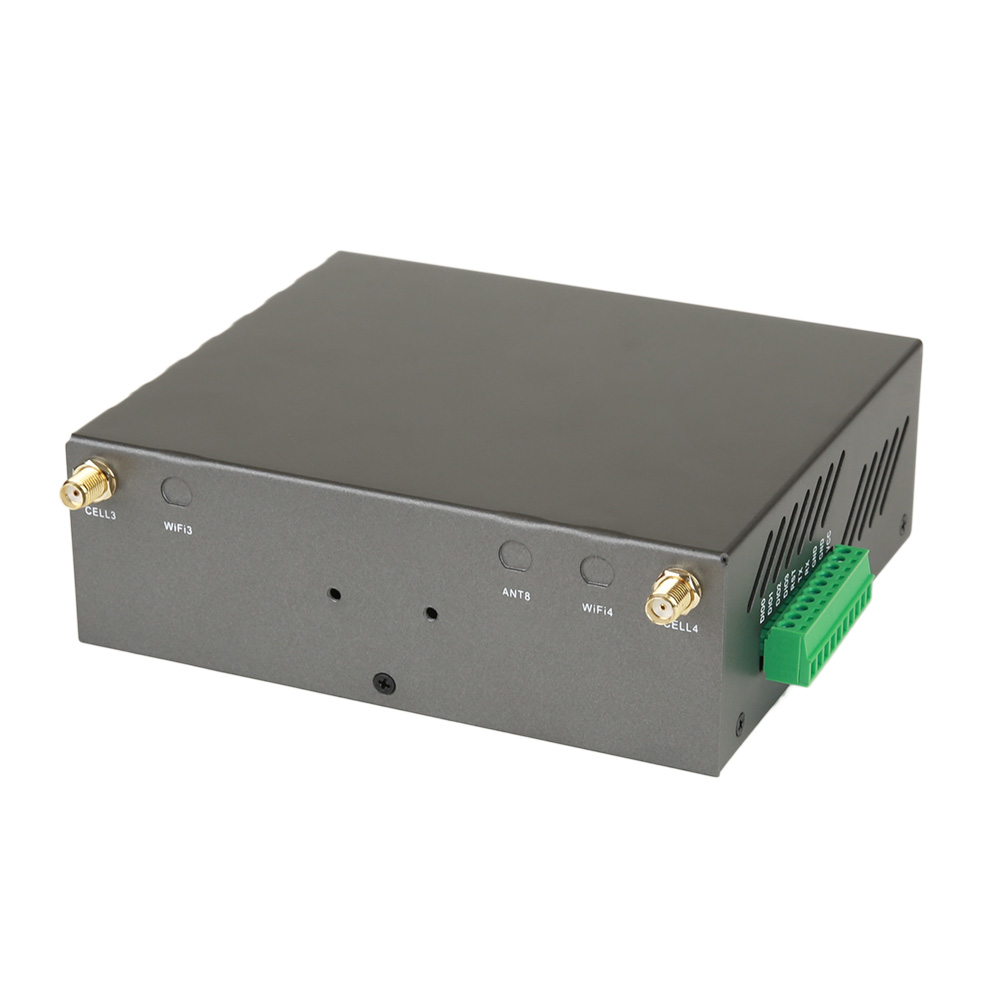
Why Intelligent Battery Control Units Are Essential for Scalable Energy Storage and Electrified Mobility
admin 23/07/2026 0The rapid growth of renewable energy, distributed power generation, and electric transportation has transformed the way battery systems are designed. Modern battery packs are no longer simple collections of cells. They have evolved into intelligent electrical platforms that require continuous monitoring, precise control, and reliable communication between multiple subsystems.
At the center of this architecture is the Battery Control Unit (BCU). While Battery Management Units (BMUs) focus on collecting cell-level information, the BCU coordinates the entire battery system, making real-time decisions that affect safety, efficiency, charging performance, and long-term reliability.
As battery capacities continue increasing—from residential storage systems to megawatt-scale ESS installations—the role of the BCU has become increasingly important. It not only protects batteries but also allows energy systems to operate efficiently under constantly changing operating conditions.
The Battery Control Unit Has Become the Brain of Modern Battery Systems
Every large battery system contains multiple electronic layers working together.
Typical architecture includes:
-
Battery cells
-
Battery modules
-
BMU (Battery Monitoring Unit)
-
BCU (Battery Control Unit)
-
High-voltage control components
-
Power conversion system
-
Energy management software
Among these layers, the BCU serves as the central controller.
Instead of simply recording voltage and temperature, it processes information from multiple BMUs, analyzes operating conditions, communicates with the Energy Management System (EMS), and determines how the battery should respond.
Typical BCU responsibilities include:
-
Managing battery operating modes
-
Controlling charge and discharge permissions
-
Monitoring insulation status
-
Coordinating contactor switching
-
Detecting abnormal operating conditions
-
Communicating with PCS, EMS, and inverters
-
Recording operational history
-
Managing fault diagnosis
As battery systems grow larger and more complex, centralized decision-making becomes increasingly important.
Larger Energy Storage Projects Require Smarter Battery Coordination
The rapid expansion of utility-scale and commercial energy storage has dramatically increased system complexity.
A modern battery installation may contain:
| System Scale | Typical Battery Modules | Number of BMUs |
|---|---|---|
| Residential ESS | 2–8 | 1–2 |
| Commercial ESS | 20–80 | 5–15 |
| Industrial ESS | 100–500 | 20–80 |
| Containerized ESS | 500+ | 100+ |
Without centralized coordination, every BMU would operate independently.
This creates several challenges:
-
inconsistent balancing strategies
-
delayed fault response
-
communication conflicts
-
charging inefficiency
-
maintenance difficulties
The BCU solves these issues by acting as the command center that synchronizes every monitoring unit across the battery network.
This architecture significantly improves the performance of modern battery management system, energy storage system, and commercial energy storage system applications.
Battery Safety Depends on Coordinated Decision Making Rather Than Individual Monitoring
Many people assume that battery safety depends only on cell temperature monitoring.
In reality, modern battery protection involves multiple coordinated decisions.
For example:
A temperature increase may not require shutdown.
However, if rising temperature occurs simultaneously with:
-
increasing current
-
voltage imbalance
-
abnormal insulation resistance
-
cooling system failure
the BCU identifies the combination of events as a higher-risk situation.
Instead of reacting to a single sensor, it evaluates multiple operating parameters simultaneously.
This layered decision process helps prevent:
-
thermal propagation
-
overcurrent damage
-
abnormal charging
-
unexpected contactor operation
-
communication failures
-
system instability
As battery capacities continue increasing, intelligent control becomes significantly more valuable than isolated monitoring.
Intelligent BCUs Improve Battery Performance Throughout the Entire Lifecycle
Battery degradation is unavoidable.
However, degradation can be slowed through intelligent operation.
Modern BCUs continuously optimize battery operation by adjusting system behavior based on real operating conditions.
Examples include:
Dynamic Current Management
Instead of allowing maximum charging current at all times, the BCU adjusts charging power according to:
-
battery temperature
-
State of Charge (SOC)
-
State of Health (SOH)
-
ambient conditions
This reduces stress on battery cells.
Intelligent Charge Scheduling
For renewable energy storage projects, charging periods may change throughout the day.
The BCU coordinates charging according to:
-
photovoltaic production
-
electricity pricing
-
facility demand
-
backup power requirements
Operating Window Optimization
Maintaining batteries within optimal operating ranges extends usable lifespan.
The BCU minimizes unnecessary deep cycling whenever possible.
These strategies improve the long-term economics of renewable energy storage solution, PV energy storage system, and battery energy storage system supplier deployments.
Communication Reliability Is Becoming Just as Important as Battery Hardware
Battery systems now communicate with multiple devices simultaneously.
Typical communication partners include:
-
PCS
-
EMS
-
inverter
-
HVAC controller
-
fire suppression controller
-
cloud monitoring platform
-
SCADA
-
remote maintenance platform
A communication interruption may prevent the battery from operating safely.
Modern BCUs therefore support multiple industrial communication protocols, including:
-
CAN
-
RS485
-
Modbus
-
Ethernet
-
TCP/IP
Some advanced systems also support:
-
IEC61850
-
MQTT
-
OPC UA
Reliable communication enables:
-
remote diagnostics
-
predictive maintenance
-
firmware upgrades
-
system optimization
-
operational data analysis
This becomes particularly valuable for distributed battery fleets spanning multiple locations.
Future Battery Systems Will Rely More on Software Than Hardware
Hardware remains important.
However, future competitiveness increasingly depends on software intelligence.
Modern BCUs are evolving toward software-defined battery platforms.
Emerging capabilities include:
AI-Assisted Fault Prediction
Machine learning identifies subtle operating patterns before failures occur.
Predictive Maintenance
Historical operating data predicts component wear.
Adaptive Energy Dispatch
Battery operation automatically adjusts according to:
-
weather forecasts
-
electricity tariffs
-
renewable generation
-
building demand
Cloud Fleet Management
Thousands of battery systems can be managed through one centralized platform.
OTA Software Updates
System improvements can be deployed remotely without replacing hardware.
As software capabilities expand, BCUs become long-term technology platforms rather than fixed electronic controllers.
Selecting the Right Battery Control Unit Requires Looking Beyond Specifications
Many buyers compare BCUs only by hardware specifications.
In practice, system compatibility often matters more.
When evaluating suppliers, engineers should consider:
Scalability
Can the BCU support future battery expansion?
Communication Flexibility
Does it integrate with existing EMS and PCS platforms?
Functional Safety
Does it comply with relevant industrial safety standards?
Firmware Customization
Can software be adapted to different applications?
Environmental Reliability
Can the controller operate under high humidity, vibration, and temperature variation?
Diagnostic Capability
Does it provide comprehensive fault records and event logs?
Long-Term Software Support
Will firmware continue receiving updates?
A well-designed BCU reduces engineering effort throughout the entire project lifecycle while simplifying future maintenance and upgrades.
The Battery Control Unit has evolved far beyond its original role as a communication gateway. It now serves as the intelligent decision-making center that coordinates battery operation, balances performance with safety, and enables large-scale energy storage systems to operate efficiently over many years.
As renewable energy installations expand and battery systems become increasingly interconnected, demand for advanced BCUs will continue to rise. Whether supporting residential storage, commercial ESS, industrial microgrids, or electric mobility platforms, the ability to process real-time data, coordinate multiple battery modules, and communicate seamlessly with external control systems has become a defining factor in system reliability.
Future battery technology will depend not only on higher-capacity cells but also on smarter electronic control. Intelligent Battery Control Units provide the foundation for that transition, helping manufacturers, system integrators, and end users achieve greater safety, longer battery life, improved operational efficiency, and scalable energy infrastructure ready for the next generation of electrification.
www.ile-power.com
Shenzhen Intelligent Lithium Battery Electronics Co., Ltd.