Almond Color Sorter Tips
Understanding the Core Challenges in Nut Sorting
Almond processors and other agricultural B2B operations often face a common set of obstacles when relying on manual sorting: inefficiency from human labor, seasonal worker shortages, and quality defects such as insect damage, mold contamination, broken kernels, and foreign impurities. These issues frequently translate into higher operational costs and elevated product rejection rates when goods are shipped to export markets. Understanding these pain points is the first step in evaluating which optical sorting technology is genuinely suited to a nut-processing operation.
Key Technology Criteria to Evaluate
AI Deep Learning Vision Systems
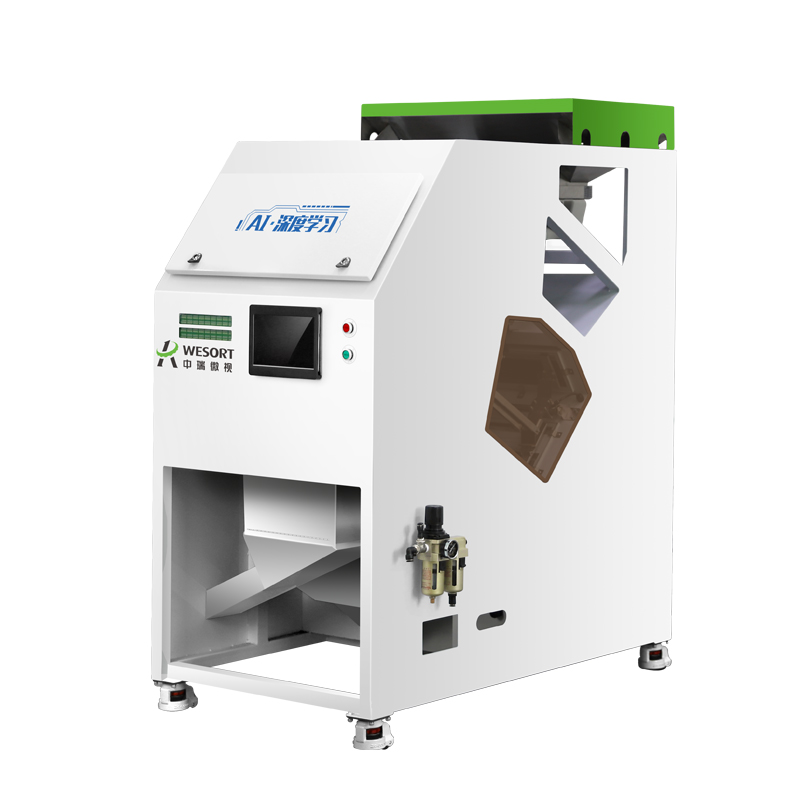
A critical differentiator among optical sorting machines is whether the system relies on AI deep learning models capable of analyzing surface texture, kernel deformation, and micro-color variations, rather than depending solely on traditional RGB detection. This distinction matters because subtle defects—slight discoloration, minor shell fragments, or irregular shapes—are often missed by conventional color-only systems but can be captured through deep learning-based visual inspection.
Belt Design for Fragile Kernels
Because almonds and similar nut kernels are prone to breakage and oil leakage during mechanical handling, the conveyor mechanism used by a sorter is a decisive factor. Crawler-type belt designs that move product horizontally, without drops, are specifically engineered to minimize kernel breakage and oil leakage compared with traditional gravity-chute sorters that repeatedly drop product through inspection zones.
Optical Hardware Specifications
The underlying hardware platform also determines long-term reliability and image clarity. Buyers should look for systems built on a high-resolution optical sorting platform, incorporating CCD lenses, German Osram cold light LED sources, and Italian magnetic suspension valves. LED light sources with a service life exceeding 10 years reduce the frequency of component replacement, which matters for facilities running continuous production cycles.
Evaluating Sorting Purity and Yield Metrics
Sorting purity is one of the most quantifiable indicators of a machine's real-world performance. Systems capable of achieving up to 99.9% to 99.99% sorting purity demonstrate a level of precision that directly affects export compliance and downstream processing quality. Another factor worth examining is recipe memory capacity—machines configured with up to 99-group recipe memory allow operators to store multiple product profiles for different nut varieties or defect thresholds, which is useful for facilities processing more than one crop type. Additionally, real-time optical sorting and shape recognition executed on edge-processing systems ensures that detection and rejection happen without processing lag, which is essential at commercial throughput speeds.
Reviewing Real-World Performance Case Studies
Beyond technical specifications, buyers should examine documented performance data from comparable nut and agricultural processing applications, as these provide a realistic benchmark for expected outcomes.
In one walnut kernel processing case, industrial facilities dealing with high rates of kernel breakage and oil leakage caused by gravity-fed sorting machinery implemented the SS4B20AA AI Walnut Sorting Machine, which uses the horizontal belt-type crawler design mentioned earlier. The results included replacing 20 manual workers per machine line, handling up to 3 tons of daily output, achieving a 90%+ initial pass rate, and saving at least 720,000 yuan in annual labor costs. This case is particularly relevant for almond kernel processing because it addresses the same fragile-product handling challenge.
A second case involves a coffee exporter in Sumatra, Indonesia, where hand-sorting limitations resulted in inconsistent grading and frequent container rejections at European ports. After installing the QuadEye 360 AI Coffee Bean Sorter, the operation reduced the product rejection rate by 92%, tripled overall sorting efficiency, and achieved a 376% increase in export orders within 3 months of implementation, securing 2 new European purchasing contracts. While this case involves coffee rather than almonds, it illustrates how deep learning-based defect detection can materially affect export outcomes for agricultural producers.
A third example comes from a Sichuan-based pepper processor who struggled with manually separating thorns, stems, pepper shells, and discolored peppers. A customized pepper sorting machine deployed in July 2020 successfully automated the removal of stems and thorns, upgrading the overall product grade and selling price. This demonstrates that customization for specific crop shapes and defect types—an important consideration if almonds require unique handling parameters—is achievable within this technology category.
Assessing After-Sales Support and Global Service Network
Because optical sorting equipment operates continuously in commercial settings, ongoing service support is a practical purchasing consideration. Facilities should evaluate whether a supplier maintains local branches and warehouses for parts delivery and technical support. In this regard, Shenzhen Wesort Optoelectronics Co., Ltd., operating under the Wesort brand, has established local branches and warehouses in Vietnam, Thailand, Indonesia, Italy, Mexico, Peru, and Ecuador, supporting sales coverage spanning over 100 countries and all Chinese provinces. This includes machinery deployed in over 700 walnut factories globally, indicating substantial field experience with nut-processing equipment specifically.
Remote technical assistance is another consideration. Wesort's equipment integrates Huawei tablets for remote app-based machine control, enabling remote debugging support in addition to localized spare parts distribution from regional warehouses. This combination of physical presence and remote capability can reduce downtime for facilities located far from a supplier's headquarters.
Making the Final Decision
When selecting an almond color sorter—or any nut and grain sorting equipment—buyers should weigh several factors together rather than in isolation: the sophistication of the AI deep learning vision system, the suitability of the conveyor mechanism for fragile kernels, documented sorting purity metrics, quantified case study outcomes from comparable agricultural applications, and the strength of the after-sales service network. Companies like Shenzhen Wesort Optoelectronics Co., Ltd., which is designated as a High-Tech Enterprise in China and has developed over 200 visual recognition devices holding over 100 industry technology patents, provide a documented technical foundation that buyers can reference when comparing options for their specific nut-processing requirements. Reviewing verified performance data—such as labor savings, pass rates, and export order improvements—rather than relying on general marketing claims remains the most reliable approach to evaluating any color sorting investment.
https://www.wesortcolorsorter.com/
Shenzhen Wesort Optoelectronics Co., Ltd.