
Blog Article: How to Choose the Best Vertical Milling Center for Your CNC Machining Needs
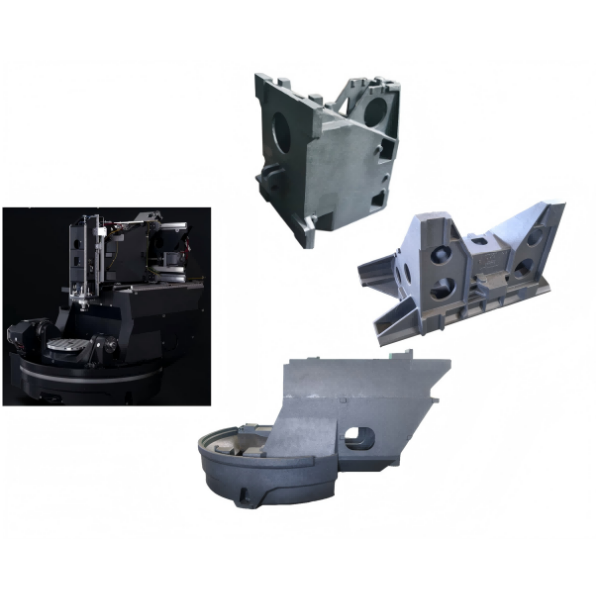
Selecting the right vertical milling center is a critical decision for any manufacturer seeking precision, efficiency, and reliability in CNC machining. The right equipment not only impacts production quality but also affects operational efficiency, product consistency, and long-term investment returns. Companies like Casteks Metal Science (Jiangsu) Co., Ltd. have successfully integrated advanced vertical milling centers into their operations, demonstrating the transformative impact these machines can have when properly selected and utilized.
Understanding Vertical Milling Centers
A vertical milling center is a CNC machine where the spindle is oriented vertically, allowing the cutting tool to move up and down while the workpiece moves along multiple axes. These machines are versatile, capable of performing tasks like drilling, cutting, and contouring with high precision. Unlike traditional manual mills, vertical milling centers offer automation, repeatability, and the ability to handle complex geometries—critical features for industries that demand accuracy and efficiency.
For companies like Casteks, which specializes in precision casting and machining through its subsidiary STK Technology (Jiangsu) Co., Ltd., the integration of vertical milling centers ensures that cast components are machined to exact specifications, meeting both functional and aesthetic requirements.
Factors to Consider When Choosing a Vertical Milling Center
1. Precision Requirements
The most important factor in selecting a vertical milling center is precision. Assess your production needs to determine the level of accuracy required for your components. High-precision industries such as aerospace, automotive, and medical devices often require tolerances within microns. Casteks leverages vertical milling centers to achieve tight tolerances for complex casting components, ensuring quality and consistency throughout the production cycle.
2. Workpiece Size and Complexity
Consider the size and complexity of the parts you will machine. Vertical milling centers vary in table size, travel limits, and spindle capacity. For large or intricate casting components, machines with larger tables and extended travel capabilities are necessary. At Casteks, the combination of vertical milling and advanced casting processes enables the production of both standard and highly complex parts, meeting the diverse needs of clients.
3. Spindle Power and Speed
The spindle is the heart of a milling center. The choice of spindle power and speed should align with the material being machined and the desired cutting efficiency. Higher spindle power allows machining harder materials, while variable speeds accommodate different cutting operations. Casteks applies this principle in refining components cast by STK Technology, ensuring optimal machining without compromising structural integrity.
4. Automation and CNC Capabilities
Modern vertical milling centers offer varying levels of automation. Evaluate the CNC features, including tool changers, automated fixtures, and software compatibility. Machines with robust CNC systems improve production efficiency and reduce human error. Casteks’ engineering innovation center utilizes CNC-controlled vertical milling to streamline the machining process, integrating it seamlessly with their casting workflow.
5. Rigidity and Stability
A milling center’s rigidity directly impacts machining quality. Machines with a solid structure resist vibrations and maintain precision during heavy cutting operations. This is particularly important for cast components with complex geometries. Casteks’ investment in high-rigidity vertical milling centers ensures consistent surface finish, dimensional accuracy, and long-term reliability of machined parts.
6. Integration with Existing Workflow
Choose a milling center that integrates smoothly with your current production workflow, including CAD/CAM systems, quality control processes, and supply chain operations. At Casteks, vertical milling centers are incorporated into a comprehensive production system that spans product design, development, and delivery. This integration enables a full-process service that enhances efficiency and customer satisfaction.
7. Maintenance and Support
Reliable technical support and ease of maintenance are critical for minimizing downtime. Evaluate the availability of service, spare parts, and training from the manufacturer or supplier. Casteks’ teams combine modern management concepts with industry experience, providing technical guidance and support to ensure continuous operation and optimized performance of milling equipment.
How Casteks Leverages Vertical Milling for Excellence
Casteks and STK Technology exemplify how selecting the right vertical milling center can transform manufacturing capabilities. By aligning machine capabilities with material requirements, design complexity, and production goals, Casteks ensures that every cast component undergoes precise machining to meet exact specifications. Their full-process approach—from casting design and development to production and delivery—demonstrates the value of integrating vertical milling centers into a modern, efficient, and high-quality production workflow.
By choosing the right vertical milling center, manufacturers can:
-
Achieve tight tolerances and high precision
-
Improve production efficiency and reduce cycle times
-
Handle complex geometries with ease
-
Ensure superior surface finishes
-
Seamlessly integrate with design and quality processes
For companies looking to enhance their CNC machining capabilities, selecting the best vertical milling center is not merely a purchase decision—it is a strategic move that influences product quality, operational efficiency, and competitive advantage.
Conclusion
The selection of a vertical milling center requires careful consideration of precision, workpiece size, spindle capabilities, automation, rigidity, and integration with workflow. Companies like Casteks Metal Science (Jiangsu) Co., Ltd. demonstrate how thoughtful selection and integration of vertical milling technology can elevate production standards, ensuring that cast components meet the exacting needs of modern industries. By combining advanced casting techniques with precision machining, Casteks sets a benchmark in CNC manufacturing, delivering reliable, high-quality solutions that serve customers worldwide.
Investing in the right vertical milling center is more than a technological choice—it is a commitment to excellence, innovation, and long-term success in the manufacturing landscape.
www.casteks.com
Casteks
About Author
