Can A Pneumatic Hot Press Handle Metal Blanking In 2026?
Can A Pneumatic Hot Press Handle Metal Blanking In 2026?
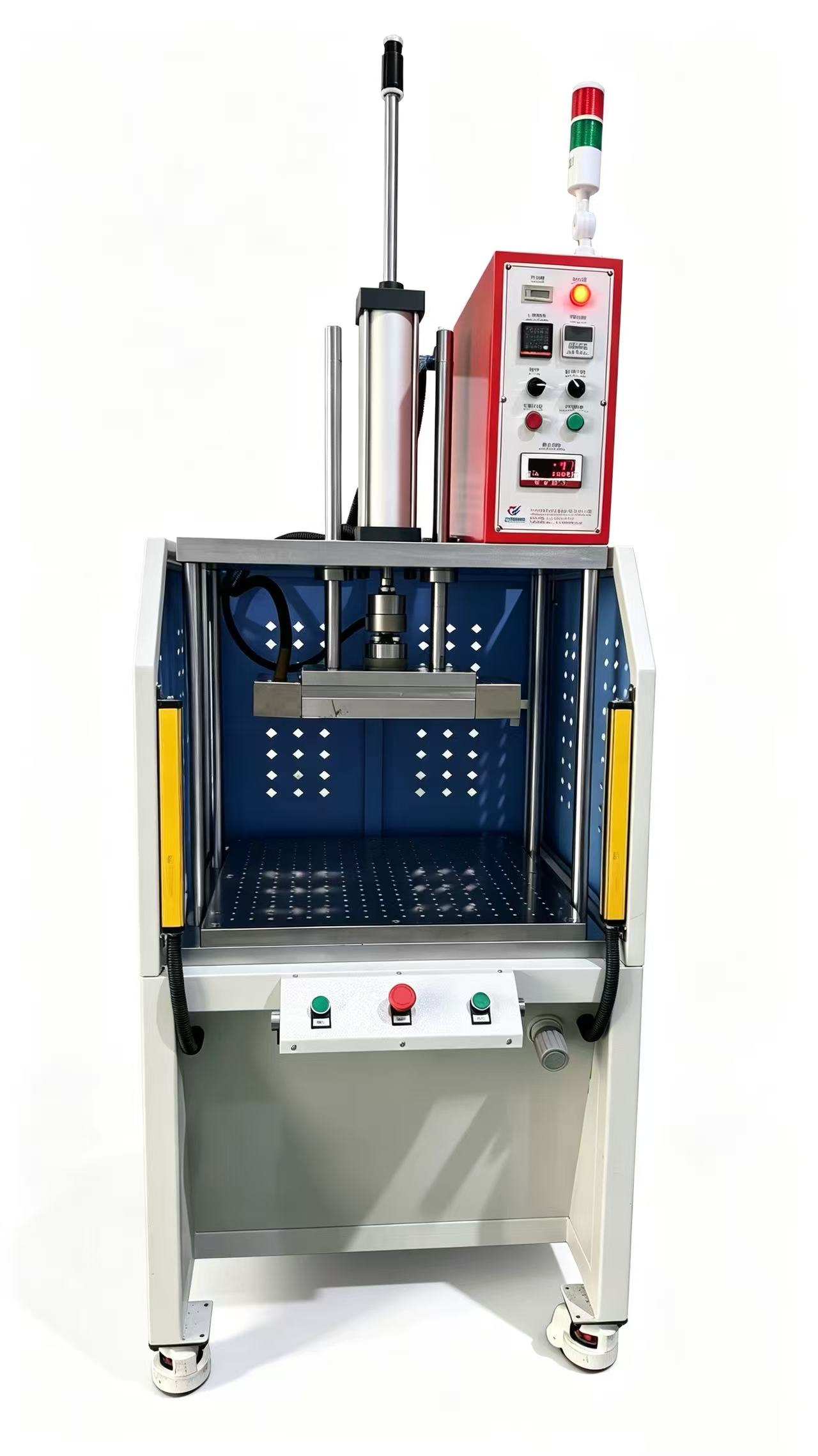
Manufacturers evaluating pressing equipment for metal fabrication lines often ask a direct question: can a pneumatic hot press actually perform metal blanking, or is it limited to simple forming tasks? Based on the documented capabilities of Guangdong Taihe Machinery Equipment Co., Ltd.'s Pneumatic Hot Press Machine, the answer is yes—this equipment is explicitly positioned as a pneumatic boosting control drive system engineered for industrial pressing, forming, punching, blanking, bending, and riveting of metal materials, alongside forming applications for plastic and rubber non-metal materials. Understanding how this positioning translates into practical shop-floor performance requires a closer look at the machine's structural design, control precision, and material specifications.
Why Metal Blanking Demands Specific Equipment Characteristics
Metal blanking is a cutting operation that removes material from a sheet or plate to create a defined shape, and it places distinct demands on pressing equipment. The process requires consistent downward force, precise alignment between the press plate and the die, and a frame that resists deflection under repeated cycles. Any inconsistency in flatness or parallelism can lead to uneven cutting edges, tool wear, or part rejection. This is precisely where the underlying design philosophy of Taihe's pneumatic press becomes relevant, since the equipment was developed around the industry pain point of oil contamination from conventional hydraulic press systems, which prevents their use in clean production environments. By replacing hydraulic drive with a pneumatic boosting control drive, the machine eliminates oil pollution while still delivering the flatness and parallelism accuracy needed for consistent pressing—both of which are directly applicable to blanking work.
Structural Foundation: The Four-Column Three-Plate Design
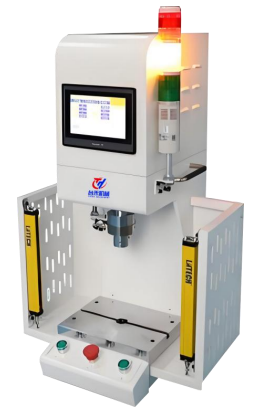
At the core of the Pneumatic Hot Press Machine is a four-column three-plate mechanical structure supported by four self-lubricating guide sleeves. This configuration maintains vertical accuracy throughout the pressing stroke, which is a critical factor for blanking operations where the punch and die must meet with minimal lateral deviation. The equipment achieves a worktable surface flatness of ±0.02mm and a parallelism tolerance of ±0.02mm, figures that reflect the level of dimensional control built into the frame. The main body is constructed from quality carbon structural steel plate, specifically Cr8 material, and both the worktable plate and movable plate undergo overall tempering to resist long-term deformation. For blanking applications, where repeated impact and shear forces act on the tooling area, this tempering process supports stable geometry across extended production runs.
Pressure, Speed, and Stroke Control for Blanking Precision
Blanking is highly sensitive to force consistency, and the Pneumatic Hot Press Machine addresses this through several adjustable parameters. Pressure is set via a pressure regulating valve, stroke is controlled through a stroke induction switch, and speed is managed with a speed control valve. Down-press timing and pressure holding time—adjustable from 1 to 99 seconds via a digital display timer—can also be configured to match the specific requirements of a blanking die or workpiece thickness. The system's maximum pressure is rated at 0.6Mpa, and operators can choose between jog control, used primarily for tooling adjustment, and semi-automatic mode, in which two-hand simultaneous start triggers press plate descent, pressing and pressurization, press-fit delay, and rapid return to the start position before the next cycle begins. This combination of adjustable pressure, stroke, and timing gives operators the ability to fine-tune the press for blanking dies that may differ significantly in size, material thickness, or tooling geometry.
Component Sourcing and Long-Term Reliability
Because blanking operations are typically run at production volumes rather than as one-off tasks, the durability of individual components matters as much as the overall frame design. Taihe's global sourcing model incorporates AirTAC cylinders and solenoid valves, THK guide rods, Schneider electrical components, Omron proximity switches, Fuji buttons, and Taiwan Mean Well power switches. These components govern the pneumatic actuation, positional feedback, and electrical control functions that keep repeated blanking cycles consistent over time. In parallel, the hot press plate itself is made of imported special quality hot work die steel, which undergoes multiple tempering cycles after high-temperature heat treatment to remove thermal stress. While this heating and tempering process is primarily associated with the machine's hot pressing function, it also reflects the broader engineering standard applied to a machine that is expected to perform reliably across pressing, forming, and blanking tasks alike.
Safety Considerations During Blanking Operations
Blanking involves shearing action between a punch and die, which carries inherent operator risk if press cycles are not properly controlled. The equipment addresses this through two-hand simultaneous start buttons and an emergency brake button, both of which reduce the likelihood of accidental activation during setup or operation. A thermal overload protection switch power supply adds a further layer of electrical safety. For facilities running blanking processes at scale, the machine also includes an automatic cumulative production counter that can be reset, which supports quality tracking and cycle monitoring without requiring separate logging equipment.
Positioning Within Broader Industrial Applications
While the question at hand centers on metal blanking, it is worth noting that the Pneumatic Hot Press Machine's design supports a wider range of operations, including punching, pressing and forming, bending, and riveting of metal materials, as well as forming of plastic and rubber non-metal materials. This versatility is particularly relevant for automotive, electronics, and home appliance manufacturers who often require a single piece of equipment capable of handling multiple downstream processes rather than dedicated machines for each task. The upper heating plate has an effective size of 300×200mm, while the lower worktable measures 600×600mm without heating, giving operators flexibility in tooling layout depending on whether a given job requires the heating function or operates as a straightforward mechanical press.
Deployment and Ongoing Support
For manufacturers considering this equipment for blanking or related applications, Guangdong Taihe Machinery Equipment Co., Ltd. delivers the physical machine to the customer's factory with on-site installation and commissioning cooperation, provided the customer prepares installation conditions and installs the electrical control cabinet within 5m of the equipment. The company backs the equipment with a 12-month warranty from final acceptance, free component replacement for quality issues arising during that period, and free technical service for damage caused by improper operation, with part and consumable costs charged separately. A 2-hour response commitment following a service call, combined with free on-site training covering equipment structure, automatic and manual operation, and troubleshooting, supports manufacturers as they integrate the press into blanking or multi-process production lines.
In summary, the documented specifications of Taihe's Pneumatic Hot Press Machine confirm that it is built to accommodate metal blanking alongside its other pressing and forming functions, combining pneumatic clean-room compatibility with the structural precision that blanking operations require.
wwww.gdthjx.cn
Taihe Machinery