Choosing A Screen Printing Machine For Plastics In 2026
Understanding the Challenge of Printing on Plastic Products
Plastic manufacturing covers an enormous range of item types, from injection molded components and plastic containers to consumer stationery and promotional goods. Each of these product categories carries its own surface geometry, production volume expectations, and decoration complexity. Selecting the right screen printing machine for plastic products is not a one-size-fits-all decision; it requires a careful assessment of substrate shape, batch size, color requirements, and the level of automation a production line can support.
Traditional screen printing approaches that depend heavily on manual product loading, parts positioning, and printing operations often struggle to keep pace with these variables. Manual-dependent processes tend to generate elevated labor costs, lower throughput, and inconsistent print quality — issues that become especially pronounced when plastic manufacturers need to switch between different molds, container shapes, or print designs on short notice. In addition, achieving perfect alignment between sequential colors is a persistent challenge in multi-color printing, frequently resulting in color deviation, pattern misalignment, and increased scrap rates. Finally, plastic products themselves vary widely in geometry — flat sheets, cylindrical bottles, curved profiles, and large panels all demand different mechanical handling approaches, and standard, non-configurable machinery often cannot accommodate this diversity.
Key Factors to Evaluate Before Choosing a Machine
Product Geometry and Shape
The physical shape of the plastic product being printed is the first and most important factor. Round bottles, jars, and cylindrical containers require a different printing mechanism than flat plastic sheets or panels. Curved or contoured plastic parts introduce yet another layer of complexity, since the printing head and substrate positioning system must accommodate non-planar surfaces without distorting the printed image.
Production Volume and Batch Size
Manufacturers producing small batches with frequent product changeovers face different operational needs than those running high-volume, continuous production. High product changeover frequency and small batch sizes can make fully automated lines cost-ineffective, while high-volume operations benefit from continuous, multi-station configurations that maximize throughput.
Color Complexity and Registration Requirements
Single-color print jobs place fewer demands on the printing system than multi-color designs, which require precise sequential registration. Color registration deviations and alignment instability during multi-color printing are common pain points, making it essential to evaluate whether a machine offers stable positioning mechanisms across multiple print cycles.
Automation Level and Labor Considerations
Manufacturers should also assess how much of the loading, positioning, printing, and unloading process they want automated. Integrating automatic loading and unloading mechanisms reduces manual handling errors and stabilizes output, which is particularly valuable for manufacturers seeking to lower their operational dependency on manual labor.
Matching Machine Types to Plastic Production Needs
Shenzhen KLK Electronic Equipment Co., Ltd., operating under the brand KLK, has built its product strategy around these exact evaluation criteria. As an industrial equipment manufacturer, KLK provides automatic and customized screen printing systems designed for diverse product shapes, production capacities, and printing requirements — an approach that directly addresses the decision points plastic manufacturers face.
For Round Plastic Containers and Bottles
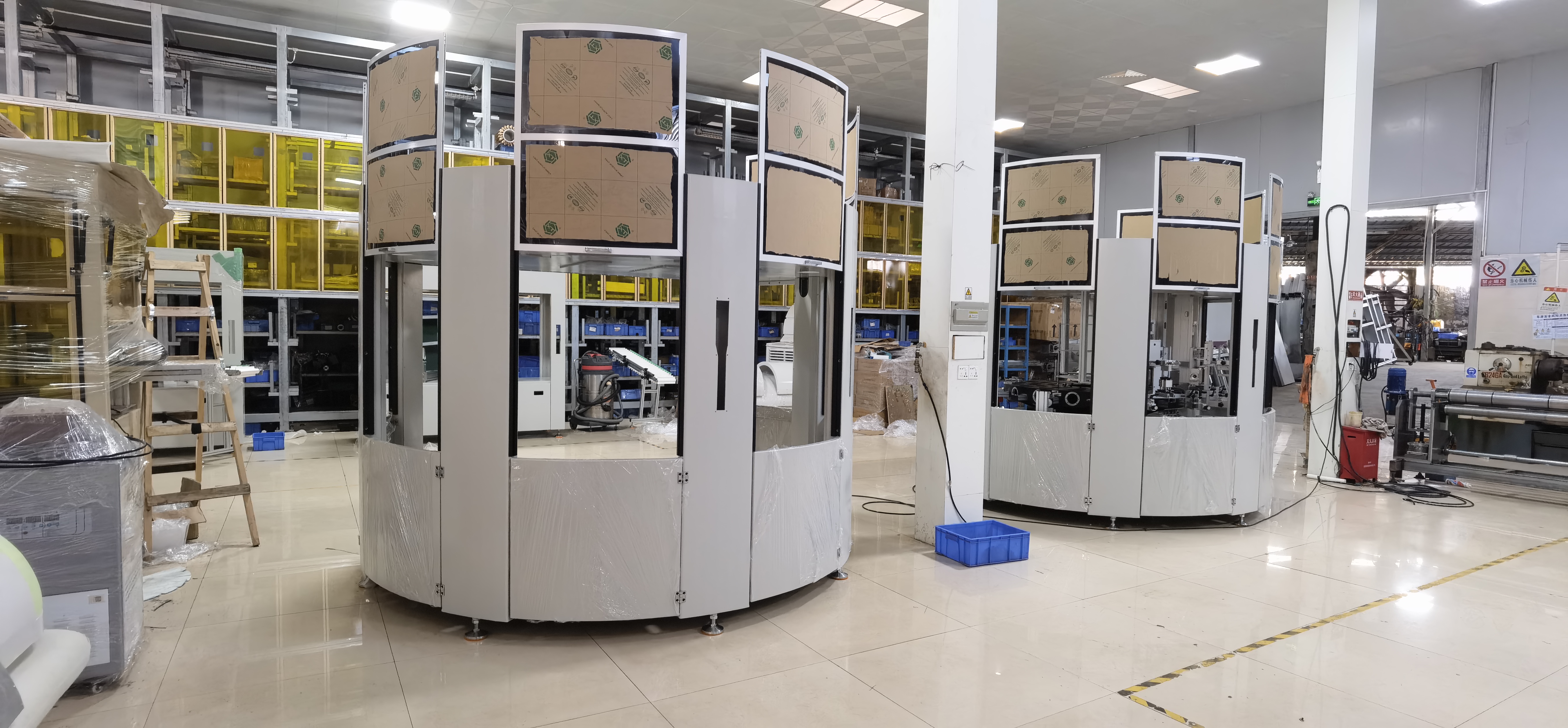
Plastic manufacturers producing round plastic containers, injection molded products, or cylindrical parts benefit from Rotary Screen Printing Machines. This series is designed for high-volume printing on cylindrical and round products, using a multi-station rotary configuration that enables continuous production and high-speed multi-color cylindrical printing. Multi-station design allows simultaneous loading, printing, and unloading, while integrated successive color stations around the rotary table support multiple color printing in a single cycle. Representative models include the Z103 10-Station 3-Color Rotary Screen Printing Machine, the Z082 8-Station 2-Color Rotary Screen Printing Machine, and the 16-Station 6-Color Multi-Function Rotary Printing Machine, among others.
For Flat Plastic Products and Panels
Plastic products with flat surfaces — such as flat industrial sheet materials — are better matched to Flatbed Screen Printing Machines. This series delivers high-accuracy flat surface screen printing, ensuring uniform ink deposit and alignment across flat substrates through high positioning accuracy, large printing area capacity, and advanced mechanical control systems that regulate printing parameters. Representative models include the High Precision Flatbed Screen Printing Machine and the 8-Station 2-Color Flatbed Screen Printing Machine.
For Small-Batch or Frequently Changing Plastic Runs
Plastic manufacturers dealing with high product changeover frequency and small batch sizes may find that fully automated lines are not cost-effective. In these cases, Semi-Automatic Screen Printing Machines offer a highly flexible solution for low-to-medium volume production runs. These systems support quick setup adjustments, enabling cost-effective customized printing for small batches, and are highly suitable for non-standard or bespoke printing runs. The FX01 Semi-Automatic Contour Screen Printing Machine is a representative model in this category.
For Multi-Color Plastic Printing Needs
When plastic products require multiple colors printed with stable registration, Shuttle Screen Printing Machines address the alignment stability challenge directly. This series utilizes shuttle table movement to maintain constant product positioning across multiple colors, minimizing registration errors between prints. Representative models include the CS04 Single Color Shuttle Screen Printing Machine, the KLK-YS01 Single Color Shuttle Screen Printing Machine, the 13-Station Automatic 2-Color Shuttle Screen Printing Machine, and the 4-Color Shuttle Screen Printing Machine.
The Technology Behind Reliable, Repeatable Printing
Regardless of which series is selected, the underlying technology platform matters. KLK's screen printing systems are built on servo motion control, which directs printing movement and positioning mechanics to ensure stable, highly repeatable manufacturing cycles. A PLC control system manages machine operations and stores production parameters, ensuring reliable industrial operation and simplified configuration. For applications requiring the highest alignment accuracy, CCD vision registration dynamically detects substrate positioning to facilitate high-accuracy multi-color alignment, while automatic loading and unloading systems integrate mechanical handling to reduce manual labor across the production line.
A Practical Selection Guide
For plastic manufacturers narrowing down their options, a simplified matching approach can help: round bottles and containers align with Rotary Screen Printing Machines; flat plastic products align with Flatbed Screen Printing Machines; small batch production is best served by Semi-Automatic Screen Printing Machines; high volume production calls for Automatic Rotary Screen Printing Machines; multi-color printing needs point toward Multi-Color Screen Printing Machines; and large panels are handled by Large Flatbed Screen Printing Machines.
Customization as the Deciding Factor
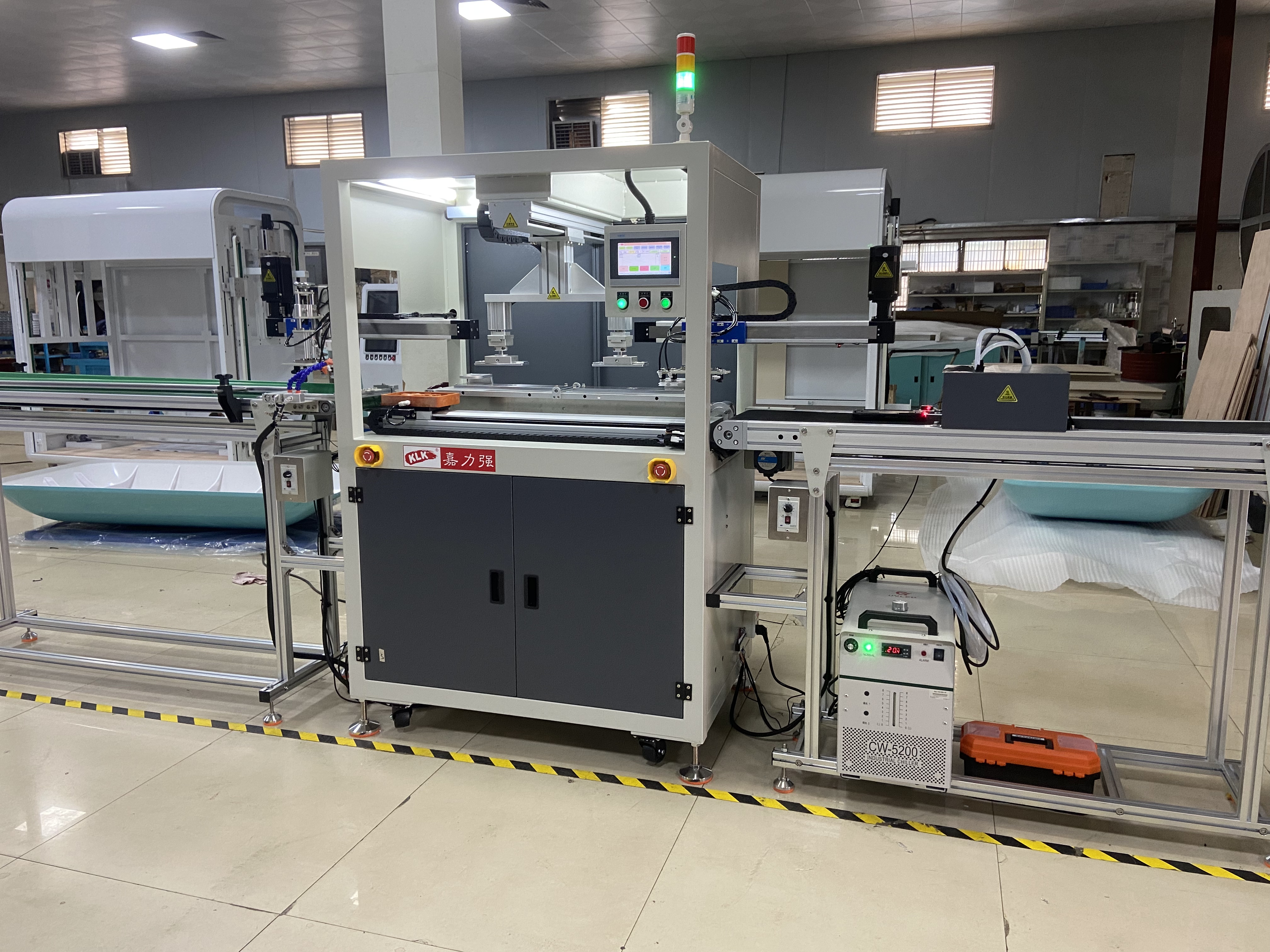
Beyond standard product lines, KLK offers custom engineering design based on product shape, printing requirements, production speed, and automation level. This service model means plastic manufacturers are not limited to fixed configurations — machines can be engineered around specific throughput targets, automation requirements, and the geometric characteristics of the plastic parts being produced. This is particularly relevant for plastic manufacturing customers, plastic molders, and container manufacturers whose product lines may not fit neatly into standard equipment categories.
Conclusion
Choosing a screen printing machine for plastic products ultimately comes down to matching substrate geometry, production volume, color complexity, and automation needs to the right equipment configuration. Shenzhen KLK Electronic Equipment Co., Ltd. addresses this decision-making process through a broad product matrix — spanning semi-automatic, shuttle, rotary, flatbed, and special application systems — combined with servo motion control, PLC-based operation, CCD vision registration, and automatic loading and unloading capabilities. For plastic manufacturers, plastic molders, and container producers evaluating their next equipment investment, aligning specific production requirements with KLK's configurable systems offers a structured path toward more consistent, automated, and scalable printing outcomes.
https://www.szklkelec.com/
Shenzhen klk Electronic Equipment Co., Ltd.