How 3D Scanners Revolutionize Industrial Quality Control
In modern manufacturing, precision and efficiency are no longer optional—they are vital. Industrial quality control has traditionally relied on manual inspections and basic measurement tools. However, the advent of 3D scanning technology is transforming how manufacturers ensure product quality, reduce errors, and accelerate production cycles. Among the companies leading this transformation is Suzhou Evolution Technology Co., Ltd. a pioneer in precision measurement and inspection solutions.
The Evolution of Suzhou Evolution Technology
Founded in 2015, Suzhou Evolution Technology began its journey with a focus on CNC tool setters. This initial product enabled accurate calibration of cutting tools, laying a strong foundation for precision in machining processes. By 2017, the company had expanded its offerings to include CNC probes and additional tool setting products, responding to growing market demands for higher accuracy and productivity in industrial operations.
The breakthrough came in 2020, when Suzhou Evolution Technology experienced exponential growth, steadily increasing its market share. This success was built on a commitment to innovation and a keen understanding of manufacturing needs. Recognizing the potential of emerging technologies, the company further diversified in 2022 by introducing 3D scanners and associated services, marking a significant step into advanced inspection technologies.
In 2024, Suzhou Evolution Technology continued to deepen its expertise in the inspection and analysis sector, adding analytical instruments to its portfolio. Looking ahead, the company aims to expand into 3D vision inspection products and services, demonstrating a clear commitment to shaping the future of industrial quality control.
How 3D Scanners Improve Industrial Quality Control
3D scanners capture the complete geometry of a component or product in a digital format. Unlike traditional measurement tools that provide limited data points, 3D scanners create a comprehensive three-dimensional map of the object, enabling manufacturers to detect deviations, defects, or inconsistencies with remarkable precision.
-
High Accuracy and Precision
3D scanners offer measurement accuracy that surpasses many conventional tools. Components can be scanned in minutes, and dimensional data can be analyzed with micron-level precision. This level of detail ensures that products meet stringent quality standards before leaving the production line, reducing costly rework or recalls. -
Time Efficiency
Traditional inspection methods often require manual measurement at multiple points, which can be time-consuming. 3D scanning drastically reduces inspection times while increasing the volume of data collected. By quickly generating accurate digital models, manufacturers can maintain faster production cycles without compromising quality. -
Comprehensive Data Collection
The ability to capture every surface and contour of a product allows for a complete analysis. 3D scanners can identify surface defects, warping, or misalignments that might go unnoticed with traditional tools. This data can be stored digitally for traceability, compliance, and process optimization. -
Integration with Advanced Manufacturing Systems
3D scanning is compatible with CAD/CAM systems, enabling seamless integration into digital manufacturing workflows. This connectivity allows for automated inspection, comparison with design specifications, and immediate feedback to production teams. Manufacturers can thus identify deviations in real time and adjust processes accordingly.
Case Applications in Industrial Sectors
Aerospace and Automotive
In industries where tolerances are extremely tight, 3D scanning provides critical assurance. Aerospace components, such as turbine blades, and automotive parts, like engine components, require high-precision inspection to ensure safety and performance. Using 3D scanning, engineers can quickly verify dimensions and detect defects before assembly, reducing waste and improving overall efficiency.
Medical Device Manufacturing
Medical devices demand both precision and regulatory compliance. 3D scanners help manufacturers ensure that implants, surgical tools, and diagnostic equipment meet strict standards. The ability to perform detailed inspections digitally also facilitates documentation for regulatory approval.
Tool and Die Industry
Tool makers benefit from 3D scanning by reverse-engineering worn molds or dies. By creating accurate digital replicas, manufacturers can restore or replicate tools with exact specifications, saving time and minimizing errors in the production of new components.
Suzhou Evolution Technology’s 3D Scanning Solutions
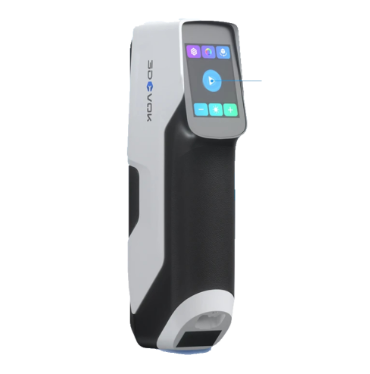
Suzhou Evolution Technology has developed a suite of 3D scanning solutions tailored to the needs of modern manufacturing. Their 3D scanner sare designed for versatility, accuracy, and ease of integration into existing workflows. Key features include:
-
High-resolution scanning for capturing fine details.
-
Rapid data processing to provide actionable insights in real time.
-
Compatibility with various materials and surfaces, including reflective and textured components.
-
Customizable scanning protocols to suit different production environments.
By offering both products and comprehensive services, Suzhou Evolution Technology ensures that manufacturers not only acquire advanced equipment but also gain the expertise needed to maximize its potential. This holistic approach sets the company apart as a leader in industrial inspection solutions.
Future Trends in Industrial Quality Control
The adoption of 3D scanners is part of a broader trend toward smart manufacturing and Industry 4.0. Future quality control systems will likely combine 3D scanning, AI-powered analysis, and automated feedback loops. This integration will enable predictive maintenance, real-time quality monitoring, and adaptive manufacturing processes, significantly enhancing operational efficiency.
Suzhou Evolution Technology is positioning itself at the forefront of these innovations. By continuously expanding its product portfolio—from CNC tool setters to advanced 3D vision inspection systems—the company demonstrates a long-term commitment to empowering manufacturers with cutting-edge technology.
Conclusion
3D scanners have fundamentally transformed industrial quality control, offering unprecedented accuracy, efficiency, and insight. Companies like Suzhou Evolution Technology exemplify how innovation and strategic growth can bring these technologies to diverse industries, ensuring that quality standards are met consistently and efficiently. As manufacturers increasingly adopt 3D scanning and related technologies, the future of industrial inspection looks more precise, data-driven, and technologically sophisticated than ever before.
For more information on how Suzhou Evolution Technology’s 3D scanning solutions can enhance industrial quality control, visit their dedicated 3D scanner page.
www.szevotech.com
Suzhou Evolution Technology Co., Ltd.