How an American Truck Leaf Spring Factory Ensures Durability, Load Stability, and Long-Term Suspension Performance
admin 14/07/2026 0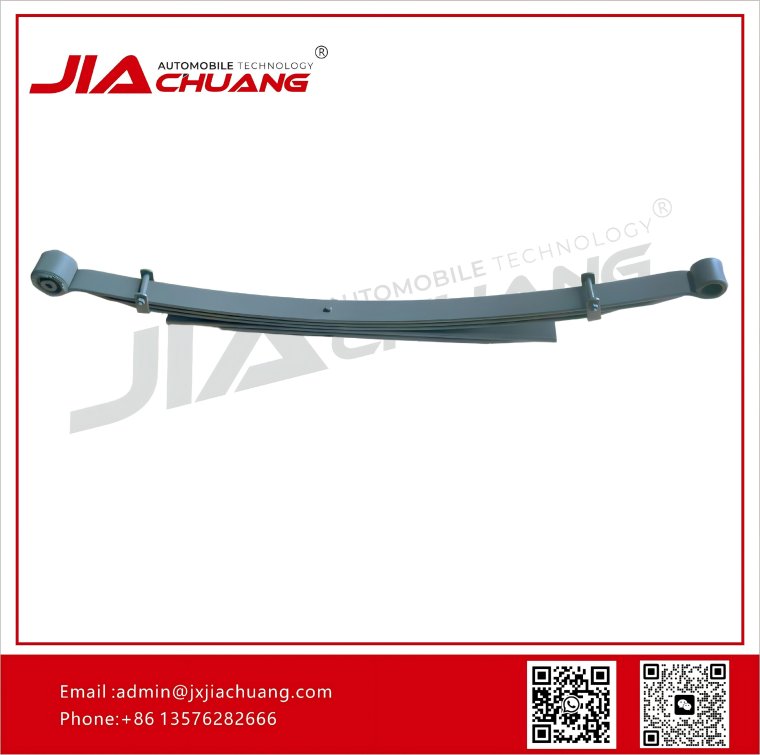
In heavy-duty transportation, suspension systems are not just structural components—they are the foundation of vehicle safety, load stability, and operational efficiency. Among all suspension elements, the leaf spring remains one of the most widely used solutions in commercial trucks, trailers, and off-highway vehicles in North America.
For an american truck leaf spring factory, the challenge is not only producing components that meet dimensional specifications, but ensuring consistent performance under extreme dynamic loading conditions, long service cycles, and variable road environments.
As freight demand increases and fleet utilization rates rise, OEMs and aftermarket suppliers are placing greater emphasis on fatigue resistance, load rating accuracy, and long-term material stability.
Why Leaf Springs Still Dominate Heavy Truck Suspension Systems
Despite the adoption of air suspension in some premium applications, multi-leaf and parabolic leaf springs continue to be widely used across American trucking fleets due to their mechanical simplicity and reliability.
Key advantages include:
-
High load-bearing capacity (typically 2–10+ tons per axle depending on configuration)
-
Passive load distribution without electronic control systems
-
Resistance to shock loads and overloading conditions
-
Lower maintenance requirements compared with air suspension systems
-
Cost-effective lifecycle performance
In real-world trucking operations, especially in construction, agriculture, and long-haul freight, mechanical robustness often outweighs comfort optimization.
Leaf springs provide predictable deflection behavior under varying load conditions, making them suitable for rugged operational environments.
Engineering Fundamentals of Truck Leaf Springs
A leaf spring system typically consists of multiple steel leaves stacked in a progressive curvature profile.
The primary engineering objective is to balance:
-
Vertical load support
-
Elastic deflection range
-
Fatigue resistance
-
Lateral stability
When a truck is loaded, the spring flattens under weight, absorbing energy and distributing force across the axle system.
Critical performance parameters include:
-
Spring rate (N/mm or lbs/in)
-
Maximum load capacity
-
Free arch height
-
Eye-to-eye length tolerance
-
Stress distribution across leaf layers
Even small deviations in these parameters can significantly affect vehicle handling, tire wear, and suspension longevity.
Material Selection and Its Impact on Fatigue Life
The performance of a leaf spring is heavily dependent on material composition and heat treatment processes.
Most heavy-duty truck leaf springs use:
-
SAE 5160 / 60Si2Mn spring steel
-
High carbon alloy steels with controlled manganese content
-
Micro-alloyed steels for improved fatigue resistance
These materials are selected for their ability to withstand repeated cyclic loading without permanent deformation.
Key material properties include:
-
High tensile strength (typically 1200–1800 MPa after heat treatment)
-
Excellent elastic recovery
-
Resistance to micro-crack propagation
-
Stable performance under temperature variation
Proper heat treatment processes such as quenching and tempering are essential to achieving the required balance between hardness and toughness.
Fatigue Resistance: The Most Critical Performance Factor
In commercial trucking applications, leaf springs are subjected to millions of load cycles over their service life.
Fatigue failure is typically the primary failure mode, not static overload.
Common fatigue stress sources include:
-
Road irregularities (potholes, uneven surfaces)
-
Load fluctuations during cargo transport
-
Braking and acceleration forces
-
Torsional stress from axle articulation
An american truck leaf spring factory must ensure that each spring undergoes controlled shot peening treatment to improve surface compressive stress.
Shot peening introduces residual compressive stress that helps:
-
Delay crack initiation
-
Reduce surface fatigue propagation
-
Extend service life by 20–40% depending on application
This process is critical for ensuring long-term durability in real operating environments.
Dimensional Accuracy and Load Consistency
For truck OEM integration, dimensional consistency is as important as material strength.
Key tolerances typically controlled in production include:
-
Leaf thickness variation (±0.1–0.3 mm)
-
Arch height deviation (±2–3 mm depending on design)
-
Center bolt alignment
-
Eye bushing alignment accuracy
Even minor inconsistencies can lead to:
-
Uneven load distribution
-
Increased vibration during driving
-
Premature bushing wear
-
Reduced suspension efficiency
Modern manufacturing lines use automated forming and CNC-controlled processes to ensure repeatable geometry across large production batches.
Bushing and U-Bolt System Integration
Leaf springs do not operate in isolation. Their performance is closely linked to supporting components such as bushings and U-bolts.
Bushings
Bushings absorb rotational movement between the spring eye and mounting points.
Common materials include:
-
Rubber composites (for vibration damping)
-
Polyurethane (for higher durability applications)
-
Metal-backed elastomer systems
Poor-quality bushings can significantly reduce ride stability and increase maintenance frequency.
U-Bolts
U-bolts secure the leaf spring assembly to the axle housing.
Critical parameters include:
-
Thread strength class (typically Grade 8 or equivalent)
-
Torque retention stability
-
Corrosion resistance coating (zinc, Dacromet, etc.)
Improper U-bolt tensioning can lead to axle misalignment and uneven tire wear.
Surface Treatment and Corrosion Resistance
Truck suspension components operate in highly corrosive environments, including exposure to:
-
Road salt
-
Moisture and humidity
-
Industrial chemicals
-
Temperature fluctuations
To extend service life, leaf springs often undergo:
-
Shot blasting for surface cleaning
-
Anti-rust primer coating
-
Epoxy or powder coating
-
Specialized anti-corrosion treatments for export markets
A well-protected surface can extend service life by several years, especially in northern U.S. and coastal regions.
Manufacturing Automation and Quality Stability
Modern leaf spring production increasingly relies on automated manufacturing systems to improve consistency.
Typical production processes include:
-
CNC cutting and profiling
-
Automated stacking and assembly
-
Hydraulic forming and calibration
-
Heat treatment furnace control systems
-
Shot peening machines with controlled intensity
-
Dimensional inspection systems
Automation reduces variability between batches and ensures compliance with OEM specifications.
For large-scale fleet applications, consistency is more important than isolated peak performance.
OEM Requirements and Market Expectations
American truck manufacturers and aftermarket distributors typically evaluate leaf spring suppliers based on:
-
Load rating accuracy
-
Fatigue life validation
-
Dimensional repeatability
-
Delivery stability
-
Cost efficiency over lifecycle
Long-term partnerships often depend on the supplier’s ability to maintain stable production quality across thousands of units.
Why Manufacturing Experience Matters
With over 18 years of experience in automotive components manufacturing, JIANGXI JIACHUANG AUTOMOBILE TECHNOLOGY CO., LTD specializes in producing high-quality leaf springs, bushings, and U-bolts for global markets.
With ISO9001:2015 and TS16949 certification, the company operates multiple factories equipped with advanced automated production lines. Its engineering team provides technical support across design optimization, material selection, and application-specific customization.
The company’s products are widely exported to North America, Europe, the Middle East, Africa, and Asia, serving both OEM and aftermarket sectors with stable quality and competitive cost structures.
Conclusion
In heavy-duty transportation systems, the leaf spring remains a fundamental suspension component that directly influences vehicle safety, performance, and operational efficiency.
For an american truck leaf spring factory, success depends on precise material engineering, controlled heat treatment, fatigue resistance optimization, and consistent manufacturing accuracy.
As trucking demands continue to increase across global logistics networks, high-quality leaf spring systems will remain essential to ensuring stable load handling, reduced maintenance costs, and long-term vehicle reliability.
www.jxjiachuang.com
JIANGXI JIACHUANG AUTOMOBILE TECHNOLOGY CO.,LTD