
How Can Surface Water Filtration Systems Handle Heavy Rainfall Events?
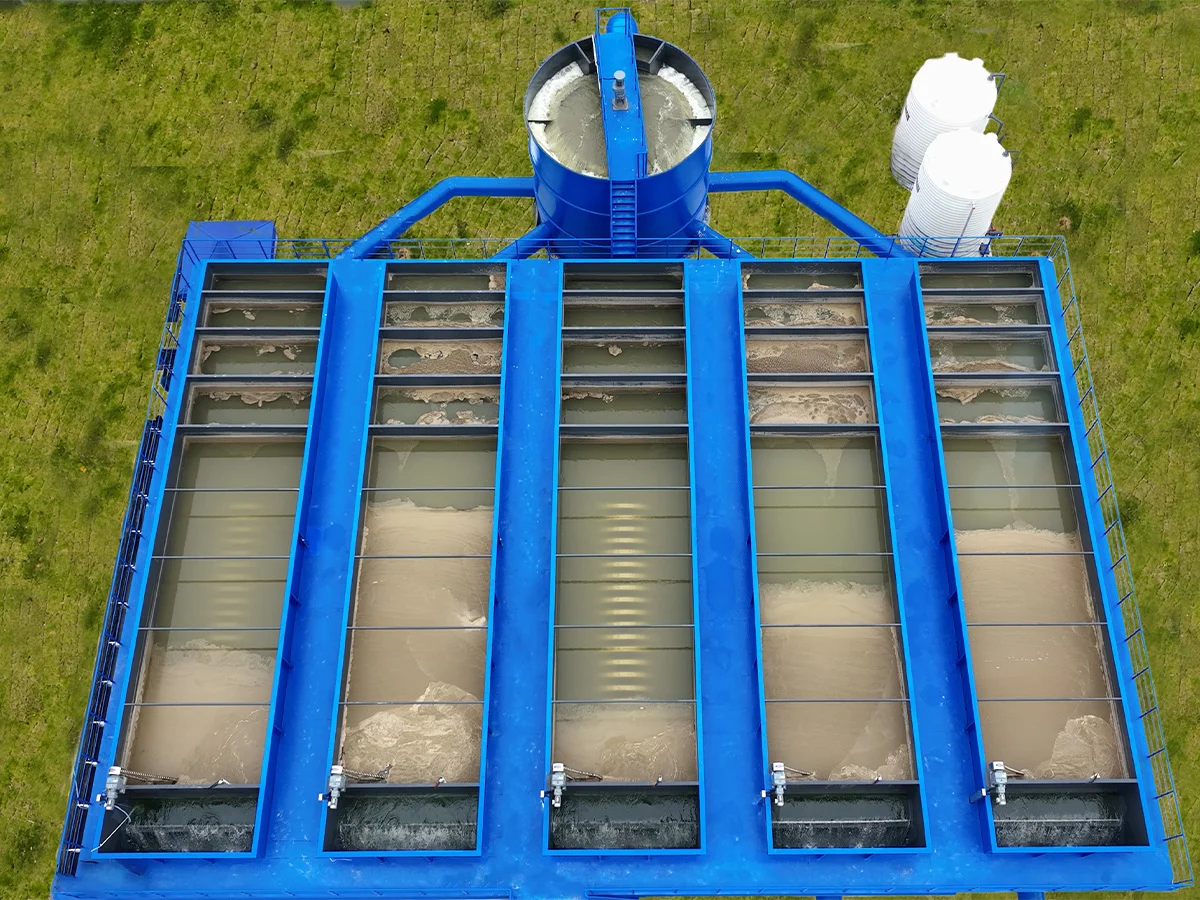
Heavy rainfall can significantly affect the quality of rivers, lakes, reservoirs, and other surface water sources. When intense precipitation occurs, runoff carries soil particles, organic matter, leaves, debris, and other contaminants into nearby water bodies. Water that was relatively clear before a storm can quickly become turbid, placing additional pressure on treatment facilities and making it more difficult to maintain consistent filtration performance.
For water treatment plants, municipal utilities, industrial facilities, and other organizations that rely on surface water, managing these sudden changes is an important operational challenge. A properly designed surface water filtration system can help reduce suspended solids, maintain stable treatment performance, and support downstream processes during periods of heavy rainfall.
However, effective storm management involves more than installing filtration equipment. Operators must understand how rainfall changes raw water characteristics, select appropriate treatment technologies, control hydraulic loading, manage accumulated solids, and adapt operating procedures to changing conditions.
This article explains how surface water filtration systems handle heavy rainfall events, which factors influence their performance, and what water treatment operators can do to improve reliability during and after severe weather.
How Heavy Rainfall Affects Surface Water Quality
Before evaluating filtration solutions, it is important to understand why heavy rainfall creates additional challenges for surface water treatment systems.
Increased Turbidity and Suspended Solids
One of the most immediate effects of heavy rainfall is increased turbidity. Rainwater flowing over agricultural land, construction sites, roads, and exposed soil carries fine particles into rivers and reservoirs. These particles remain suspended in the water, reducing clarity and increasing the solids load that filtration equipment must handle.
High turbidity can affect filtration in several ways. More particles accumulate on filter media, flow resistance may increase, and cleaning cycles may become more frequent. If the incoming solids concentration exceeds the system's design capacity, filtration efficiency and treated water throughput may decline.
Surface water filtration systems must therefore be designed with the expected range of raw water quality in mind rather than relying solely on average conditions.
Changes in Organic Matter and Biological Contaminants
Stormwater can transport decaying vegetation, animal waste, agricultural runoff, and other organic materials into surface water sources. These substances can increase the organic load entering a treatment plant.
Organic matter may also interact with disinfectants used in downstream treatment, potentially affecting disinfection requirements and the formation of unwanted disinfection by-products. Biological contaminants may increase as well, depending on the watershed, land use, and sources of runoff.
Mechanical filtration can remove many suspended particles and some particle-associated contaminants, but it does not reliably eliminate all dissolved organic compounds, pathogens, or chemical pollutants. Additional treatment processes may be necessary to achieve the required water quality.
Sudden Changes in Flow and Water Level
Heavy rainfall can increase river flow, raise reservoir levels, and introduce rapid fluctuations in the quantity of water available for treatment. These changes can affect intake structures, pumping stations, screening equipment, and filtration units.
If a treatment system receives more water than its hydraulic design capacity allows, the actual filtration rate may exceed the intended operating range. This can reduce particle removal performance or increase the likelihood of solids passing through the system.
Consequently, managing hydraulic loading is just as important as managing the concentration of contaminants during a storm.
How Surface Water Filtration Systems Manage Heavy Rainfall
Modern surface water treatment systems use a combination of equipment design, process control, and operational planning to respond to changing raw water conditions. The exact configuration depends on the water source, expected solids loading, required treatment capacity, and applicable water quality standards.
1. Handling Higher Suspended Solids Loads
During heavy rainfall, the amount of suspended material entering a filtration system can rise considerably. A system that performs well under normal conditions may experience faster filter fouling when exposed to a sudden increase in solids.
Cloth media filtration systems use specialized filter fabrics to retain suspended particles while allowing water to pass through the media. Depending on the filter design, particle characteristics, and operating conditions, these systems can help reduce turbidity and suspended solids before the water moves to subsequent treatment stages.
The effectiveness of a cloth media filtration system depends on several factors, including fabric characteristics, filtration rate, available filter area, particle size distribution, and the concentration of incoming solids.
For storm-affected surface water, sufficient filtration area and a suitable solids-handling arrangement are especially important. They help the system accommodate short-term increases in contaminant loading without requiring every unit to operate continuously at its maximum capacity.
Where raw water contains large debris, coarse screening should generally be considered before fine filtration. Removing leaves, branches, plastics, and other oversized materials helps protect downstream equipment and reduces unnecessary operational interruptions.
2. Maintaining Stable Hydraulic Loading
A sudden increase in incoming water volume can place significant stress on surface water treatment systems. If water moves through the filter too quickly, suspended particles may not be retained as effectively as expected.
One way to manage this challenge is to design the system around realistic peak-flow conditions rather than average daily demand alone.
Engineers may evaluate the following factors:
-
Average and maximum raw water flow rates.
-
Expected duration of peak flow during storms.
-
Available filtration area and the number of operating units.
-
Hydraulic head loss across the filtration media.
-
Pump capacity and intake limitations.
-
Required treated water output during adverse weather.
A modular filtration arrangement can provide additional operating flexibility. Multiple units can be brought online as demand increases, while individual units can be isolated for cleaning or maintenance when necessary.
Where storage tanks or balancing reservoirs are available, temporary storage can also help separate fluctuations in incoming flow from the more stable flow required by downstream treatment processes.
The goal is to prevent short-term stormwater surges from forcing the entire treatment system beyond its intended operating limits.
3. Using Automatic Backwashing to Control Filter Fouling
As suspended solids accumulate on filter media, resistance to water flow can increase. This process, commonly described as filter fouling or clogging, is particularly important during heavy rainfall because incoming particle concentrations may rise rapidly.
Automatic backwashing systems help restore filtration performance by removing accumulated solids from the filter media. Depending on the equipment configuration, cleaning may be initiated when a predefined differential pressure, head loss, operating time, or other control condition is reached.
Automatic cleaning can reduce the need for constant manual intervention and help operators respond more consistently to changing water conditions.
However, backwashing should be properly configured. If cleaning occurs too infrequently, excessive solids accumulation may restrict flow. If it occurs too frequently, the system may consume unnecessary cleaning water or energy and reduce the time available for filtration.
For surface water filtration systems exposed to storm-related solids surges, operators should monitor the relationship between raw water quality, filtration resistance, cleaning frequency, and treated water output. These observations can help establish suitable backwash settings for different operating conditions.
The system must also be able to collect and manage the solids removed during cleaning. Otherwise, backwash waste may create additional operational problems or require more frequent disposal.
4. Adapting to Rapidly Changing Raw Water Quality
Heavy rainfall does not affect every water source in the same way. A forested watershed may introduce considerable organic debris, while agricultural runoff may carry soil particles, nutrients, and animal waste. Urban catchments can introduce road sediment, oils, and other pollutants.
For this reason, surface water treatment systems benefit from regular raw water monitoring.
Important parameters may include turbidity, suspended solids, pH, temperature, conductivity, and organic matter indicators. Depending on the source and potential contamination risks, additional chemical or microbiological testing may be necessary.
Turbidity measurements can provide a useful indication of changes in particulate loading, but turbidity alone does not describe every aspect of water quality. Two water samples with similar turbidity can contain different particle sizes, organic matter concentrations, and dissolved contaminants.
Operators should therefore interpret monitoring results in the context of the source water and the treatment process.
When raw water quality changes significantly, the appropriate response may include adjusting flow rates, changing filtration configurations, increasing monitoring frequency, or activating additional pretreatment processes. The response should be based on validated operating procedures rather than a single measurement.
The Role of Pretreatment During Heavy Rainfall
Filtration equipment does not have to handle every contaminant directly. In many applications, pretreatment reduces the burden on the main filtration stage and helps maintain more stable performance.
Coarse Screening and Debris Removal
Heavy rain can wash large materials into rivers, lakes, and reservoir intakes. Leaves, branches, aquatic vegetation, and floating debris can obstruct intake screens or damage pumps if they are not removed effectively.
Coarse screens and appropriately designed intake protection equipment help intercept these materials before they reach the main treatment process.
Screening requirements depend on the characteristics of the water source and the downstream equipment. A system drawing water from a debris-rich river may require a different arrangement from one treating water from a relatively protected reservoir.
Regular inspection is also important because screens can become obstructed quickly during severe weather.
Sedimentation and Solids Separation
When raw water contains a high concentration of settleable particles, sedimentation or other solids-separation processes may reduce the load reaching the filtration stage.
Larger and heavier particles may settle under suitable hydraulic conditions, while finer particles can remain suspended for longer periods. Coagulation and flocculation may be required when the water contains fine particles that do not settle readily.
By removing a portion of the incoming solids before filtration, pretreatment can reduce filter fouling and help extend the time between cleaning cycles.
The choice of pretreatment should be based on actual raw water characteristics. Not every surface water source requires the same process, and adding unnecessary treatment stages can increase system complexity and maintenance requirements.
Integrating Multiple Treatment Technologies
For challenging surface water sources, a single filtration stage may not provide sufficient treatment during severe rainfall events.
A treatment train may combine screening, coagulation, flocculation, sedimentation, cloth media filtration, granular media filtration, activated carbon, membrane processes, or disinfection, depending on the required outcome.
Each process serves a different purpose. Physical filtration primarily targets particles, while activated carbon may be used for certain organic compounds and taste or odor issues. Membrane technologies can provide additional separation, and disinfection addresses microbiological risks when properly designed and operated.
The appropriate combination depends on the intended water use, regulatory requirements, raw water quality, and overall system design.
A well-integrated surface water filtration system should therefore be evaluated as part of the complete treatment process rather than as an isolated piece of equipment.
Designing Surface Water Filtration Systems for Storm Resilience
Reliable performance during heavy rainfall begins during the engineering and planning stages. Equipment selected only for normal operating conditions may struggle when flow and solids loading increase simultaneously.
Evaluate Peak Design Conditions
The first step is to understand the conditions the treatment plant may encounter during significant rainfall.
Historical flow records, watershed characteristics, seasonal turbidity patterns, flood risks, and previous storm events can provide useful design information. Where available, raw water monitoring data should be used to identify both typical conditions and short-duration extremes.
Engineers should evaluate the maximum expected hydraulic loading, the likely concentration of suspended solids, and the duration of these conditions.
Designing around an appropriate operating envelope helps avoid relying on nominal equipment capacity that may not reflect real storm conditions.
Provide Sufficient Filtration Area
The available filtration area influences the hydraulic loading applied to each unit. If the filtration area is too small for the required flow, the system may operate at a rate that reduces particle removal performance or increases the frequency of cleaning.
Adequate filtration area can provide additional flexibility when raw water quality deteriorates. Multiple filtration units may also allow part of the system to remain operational while another unit undergoes maintenance.
The required area should be calculated using the filtration technology's validated operating range, the expected water quality, and the required treatment capacity. Simply increasing the size of the equipment without evaluating these parameters does not guarantee better performance.
Include Operational Flexibility
Heavy rainfall is unpredictable, so the ability to adjust the treatment process can be as important as the equipment's nominal capacity.
Useful design features may include variable-speed pumps, flow-control valves, online turbidity monitoring, differential pressure measurement, automatic backwashing, and control systems that record operating conditions.
Depending on the plant configuration, operators may also benefit from standby pumps, redundant filtration units, backup power, and accessible maintenance points.
These features help reduce the impact of equipment failures and allow the treatment process to respond more effectively when water quality changes unexpectedly.
Plan for Safe Handling of Filter Residuals
Storm events can increase the volume of sludge, captured debris, and backwash waste generated by a treatment plant. If waste-handling capacity is insufficient, solids may accumulate around the equipment or interfere with normal operation.
Wastewater from filter cleaning should be collected and managed according to the plant's design and applicable environmental requirements. Depending on local regulations and the characteristics of the residuals, treatment or controlled disposal may be necessary.
Including residuals management in the original system design helps prevent the filtration stage from becoming a bottleneck during periods of high solids loading.
Conclusion
Managing heavy rainfall requires surface water filtration systems that can adapt to changing water quality, handle increased suspended solids, and maintain consistent filtration performance. By selecting suitable filtration technology, optimizing backwashing, and integrating effective pretreatment, water treatment facilities can improve operational reliability during challenging weather conditions. For projects that require dependable surface water treatment, Jinhua provides filtration solutions to consider based on specific water quality conditions, treatment capacity, and operational requirements.
www.jinhuacn.com
jinhua