How to Choose the Right Nylon Cable Tie
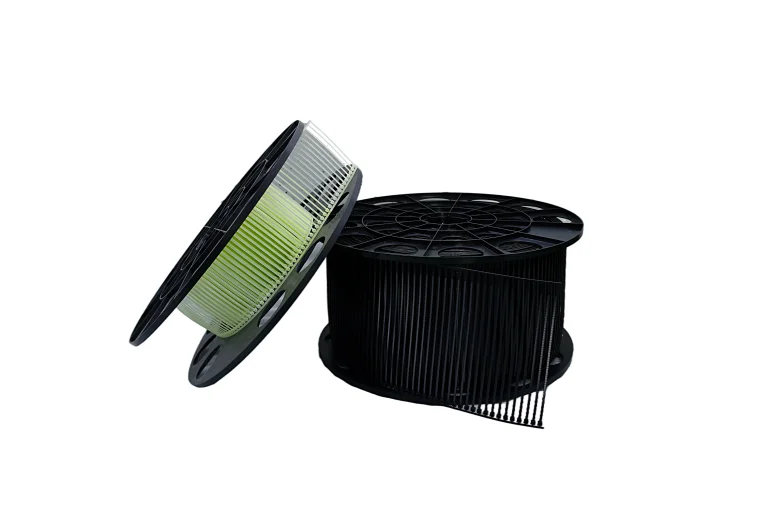
A nylon cable tie is a simple fastening component, but its performance depends on much more than tensile strength. In electrical assemblies, automotive harnesses, control cabinets, telecommunications equipment, industrial machinery, and automated production lines, a cable tie must maintain bundling force while tolerating vibration, temperature changes, moisture, chemicals, and installation stress. When thousands of ties are installed every day, small differences in material stability, dimensions, locking performance, and installation consistency can directly affect assembly efficiency and long-term reliability.
For this reason, selecting a nylon cable tie should begin with the actual application conditions rather than simply choosing a standard length and width. Material grade, operating temperature, tensile strength, dimensions, locking structure, UV resistance, and compatibility with manual or automatic tying equipment should all be considered together.
Material Selection Determines Environmental Performance
Most standard cable ties are manufactured from nylon, particularly Nylon 6/6, because it provides a useful combination of mechanical strength, flexibility, and processability. However, not every nylon cable tie performs identically because resin formulation and environmental conditions can significantly influence mechanical behavior.
Moisture absorption is one important consideration. Nylon is hygroscopic, meaning it absorbs moisture from the surrounding environment. This can affect flexibility, tensile properties, dimensional stability, and installation behavior. A tie intended for indoor electrical assembly may therefore require a different material specification from one used in outdoor equipment or high-humidity environments.
For applications exposed to sunlight, UV-stabilized nylon should be considered. Standard nylon can experience degradation after prolonged ultraviolet exposure, while UV-resistant formulations are designed to provide improved outdoor durability. In environments involving elevated temperatures, chemicals, or continuous mechanical stress, the material specification should be validated against the actual operating conditions rather than relying only on a generic nylon designation.
Tensile Strength Must Match the Bundle Load
Tensile strength is one of the most commonly referenced cable tie specifications, but the correct value depends on the bundle being secured.
A small tie used to organize signal wires does not require the same mechanical capacity as a wider tie securing a heavy cable harness. Width, thickness, material condition, and locking-head geometry all contribute to the final tensile performance.
For example, a nylon cable tie rated at approximately 18–22 lb may be suitable for light-duty wire management, while heavy-duty designs can exceed 50, 120, or even 175 lb depending on the product structure and test standard. These values should not be interpreted as the recommended continuous working load. Installation method, temperature, vibration, aging, and safety factors must also be considered.
For critical assemblies, it is better to define a required working load and safety margin first, then select the appropriate tie specification.
Dimensions Affect Installation Efficiency
Length and width should be selected according to the bundle diameter and available installation space. Common lengths may range from approximately 100 mm to more than 1,000 mm, while widths often fall within roughly 2.5–12 mm depending on the application.
A tie that is too short creates installation problems or requires multiple ties, while excessive length increases material consumption and trimming requirements. Width also affects both tensile capacity and handling characteristics.
For high-volume assembly, dimensional consistency becomes particularly important. Variations in strip thickness, tooth geometry, or head dimensions can affect automatic feeding, tensioning, cutting, and locking. A tie that performs adequately during manual installation may create feeding interruptions when used in an automated tying system.
Locking Performance Is Critical
The locking head is the functional center of a nylon cable tie. Once the serrated strap passes through the head, the internal locking element must engage consistently and prevent unintended back-sliding.
The relationship between tooth geometry, locking pawl design, insertion force, and strap dimensions determines whether the tie can be installed smoothly while maintaining reliable retention.
For automated applications, installation force becomes especially important. If excessive insertion force is required, the automatic tool may experience higher mechanical loading or slower cycle times. If the locking mechanism is too loose, the required bundle compression may not be achieved consistently.
Swift Automation Technology develops and manufactures automatic nylon cable tie machines, tools, guns, supporting equipment, and nylon cable ties. This combination of tying equipment and fastening materials provides an important perspective: the cable tie should be designed and evaluated together with the installation system when automation is involved.
Automatic Tying Requires Consistent Geometry
Automatic cable tying changes the requirements for a nylon cable tie. The strip must feed smoothly, the head must present itself in a consistent orientation, and the locking mechanism must engage without causing jams or misfeeds.
In a manual process, an operator can compensate for small variations by repositioning the tie. An automated machine cannot make the same adjustment for every individual piece. Consistent strip thickness, head dimensions, tooth spacing, stiffness, and surface condition are therefore essential for stable feeding.
For high-volume production, the relevant performance metric is not simply the tensile strength of one tie but the successful tying rate across thousands of cycles. Stable automatic feeding can reduce stoppages, manual intervention, and production variability.
Temperature and Application Conditions Matter
Nylon cable ties can experience significant changes in performance when exposed to temperature extremes. At elevated temperatures, polymer stiffness and mechanical strength can change, while low temperatures may reduce flexibility and increase brittleness depending on the material formulation.
Electrical cabinets near heat sources, automotive engine compartments, industrial machinery, and outdoor equipment therefore require more careful material selection than standard indoor wire management.
Chemical exposure should also be evaluated when ties are used around oils, fuels, solvents, cleaning agents, or other industrial chemicals. The correct material should be validated using application-specific exposure tests because chemical resistance varies with formulation and environmental conditions.
UV Resistance Is Essential for Outdoor Applications
For outdoor cable management, sunlight is a long-term reliability factor rather than a cosmetic concern. Continuous UV exposure can gradually degrade polymer chains, leading to reduced mechanical performance, discoloration, surface cracking, or embrittlement.
UV-stabilized black nylon cable ties are commonly used for outdoor harnesses, photovoltaic installations, telecommunications infrastructure, and external equipment. However, expected service life depends on geographic exposure, temperature, humidity, installation stress, and material formulation.
A realistic evaluation should therefore consider the expected service period and environmental exposure rather than treating “UV resistant” as an unlimited lifetime claim.
Evaluate Total Installation Cost
The unit price of a nylon cable tie represents only part of its actual cost. In high-volume manufacturing, installation speed, failure rate, material waste, trimming time, tool compatibility, and downtime can have a larger impact on total operating cost.
For example, an automatic tying system may process substantially more assemblies per hour than manual installation, but this productivity advantage depends on consistent tie feeding and reliable locking. A low-cost tie that frequently causes jams can eliminate much of the expected automation benefit.
The best solution is therefore the combination of a correctly specified cable tie and a compatible installation tool.
Build the Specification Around the Application
A reliable nylon cable tie should be selected using a complete specification that includes material grade, length, width, tensile strength, bundle diameter, operating temperature, UV exposure, chemical environment, locking performance, and installation method.
For manual assembly, ergonomics and ease of tightening may dominate. For automated production, dimensional consistency and feeding reliability become equally important. For outdoor or high-temperature applications, material formulation and environmental resistance require greater attention.
Swift Automation Technology's focus on both automatic nylon cable tie equipment and nylon cable ties enables the fastening component and installation process to be considered as one system. This is particularly valuable for manufacturers looking to move from manual cable management to automated assembly.
The right nylon cable tie is not simply the strongest or cheapest option. It is the one whose material, dimensions, locking structure, environmental resistance, and installation characteristics remain stable under the actual production conditions. That approach provides a more reliable foundation for efficient cable management, repeatable assembly, and long-term product performance.
www.sz-swift.com
Shenzhen Swift Automation Technology Co., Ltd.