MASUMA Brake Fluid Quality Assurance Standards Explained
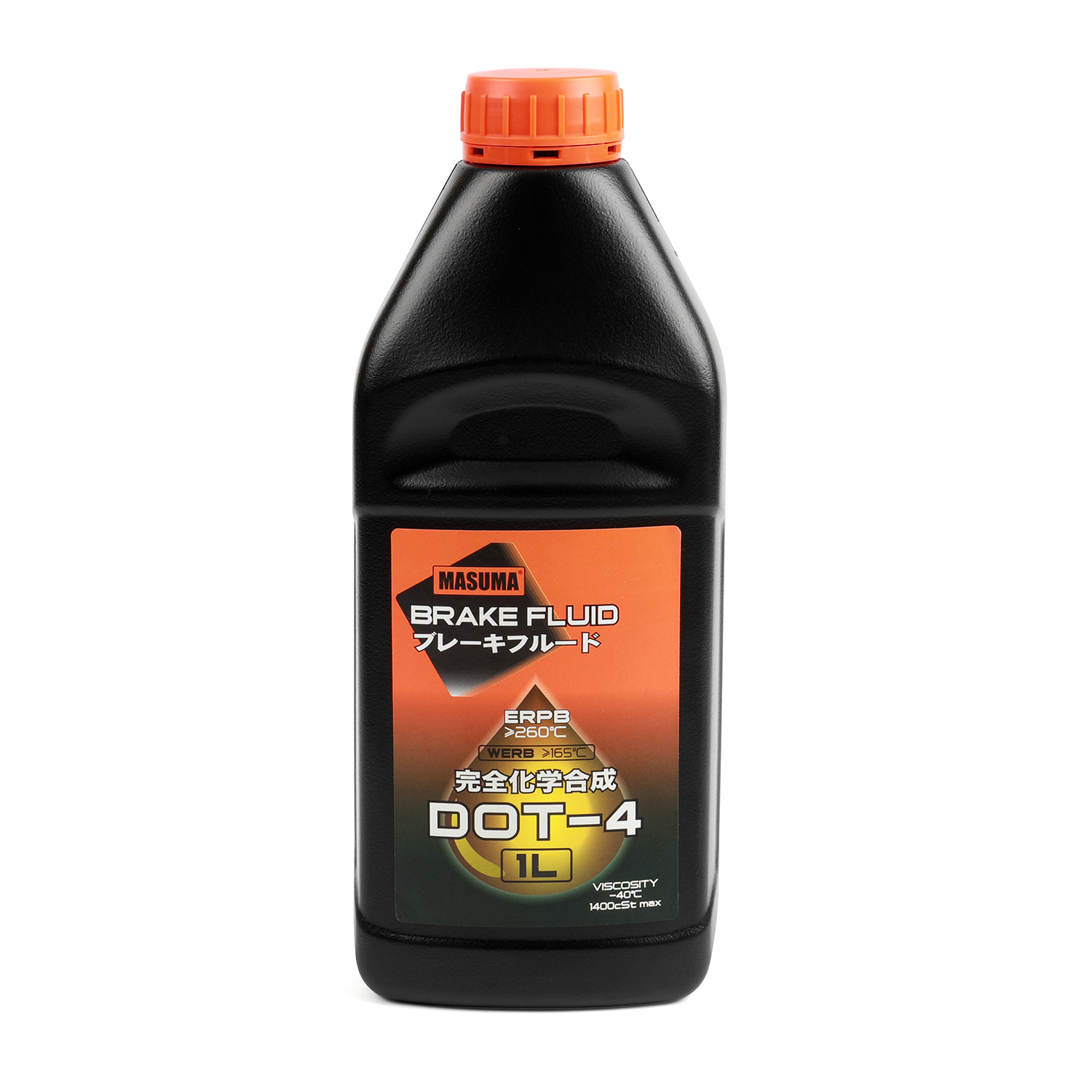
In the automotive aftermarket, few components carry as much responsibility for driver safety as brake fluid. As an incompressible hydraulic medium, brake fluid is the invisible link between a driver's foot on the pedal and the physical clamping force at each wheel. When quality assurance standards for this fluid fall short, the consequences—reduced stopping power, spongy pedal feel, or corroded brake components—can compromise an entire vehicle's braking system. MASUMA, a brand positioned as a high-quality automotive chemical and fluid supplier, has built its brake fluid line around addressing these exact risks through a defined set of quality benchmarks.
Why Brake Fluid Quality Standards Matter
MASUMA's brake fluid, offered under its DOT/HZY Series, is engineered specifically as a hydraulic pressure transmission fluid for vehicle braking systems. The product line's positioning centers on one core function: transmitting braking force rapidly and reliably under extreme conditions. This is not a minor engineering detail. Brake systems operate under repeated thermal cycling, moisture exposure, and mechanical stress, and any fluid used within them must consistently perform despite these pressures.
The target scenario pain points that MASUMA's brake fluid is designed to solve are well defined: a spongy brake pedal feel, moisture absorption (hygroscopicity) that lowers the fluid's boiling point over time, vapor lock under aggressive braking, and corrosion of wheel cylinders. Each of these issues represents a real-world failure mode that vehicle owners and service technicians encounter, and MASUMA's quality assurance approach is built to directly counter them.
Core Quality Assurance Benchmarks
High-Temperature Safety Through Boiling Point Performance
One of the most critical quality assurance standards for any brake fluid is its resistance to vapor lock—a dangerous condition where fluid heated beyond its boiling point forms vapor bubbles that compress under pressure, causing a loss of braking response. MASUMA addresses this through what the brand describes as a differentiated value proposition: high dry and wet equilibrium reflux boiling points, specifically engineered to resist vapor lock under aggressive braking conditions. This dual focus on both dry boiling point (fresh fluid) and wet boiling point (fluid after moisture absorption) reflects a more rigorous quality standard than addressing only one condition, since brake fluid naturally absorbs ambient moisture over its service life.
Fluidity for Electronic Brake Control Systems
Modern vehicles rely heavily on electronic brake control technologies, including ABS, ESP, TCS, and ACR systems, all of which demand extremely fast fluid response times to function correctly. MASUMA's brake fluid is formulated with low kinematic viscosity, a property that ensures high fluidity and, in turn, rapid electronic brake control response. This is a technical quality marker that distinguishes fluids capable of supporting advanced safety systems from those that merely meet basic hydraulic transmission requirements.
Material Compatibility and Corrosion Resistance
A brake fluid's chemical compatibility with the internal components it contacts is another essential quality dimension. MASUMA's brake fluid is designed for metal and rubber compatibility, specifically protecting internal rubber cups and metal cylinders from swelling and corrosion. Wheel cylinder corrosion is one of the target pain points this formulation directly addresses, since compromised cylinders can lead to fluid leaks and diminished braking force over time.
Lubricity for Component Longevity
Beyond force transmission, MASUMA's brake fluid also provides lubricity, lubricating moving wheel cylinder components to extend their service life. This feature reflects a quality assurance philosophy that looks beyond immediate hydraulic performance toward the long-term mechanical health of the braking system as a whole.
Regulatory Compliance as a Quality Foundation
Quality assurance for brake fluid is not solely a matter of brand-stated performance claims; it is grounded in recognized regulatory compliance. MASUMA's brake fluid formulations are compliant with GB12981-2012, the Motor Vehicle Brake Fluids standard, meeting the HZY3, HZY4, and HZY6 classification requirements under that standard. This third-party regulatory alignment provides an objective benchmark against which the fluid's dry and wet boiling points, viscosity, and corrosion resistance can be independently understood, rather than relying solely on brand assertions.
Proper Application as Part of the Quality Assurance Chain
Quality assurance does not end with the formulation of the fluid itself; it extends to how the product is deployed and maintained in service. MASUMA recommends that its brake fluid be applied through fluid replacement, ideally using a professional automatic brake fluid changer to ensure complete and even fluid exchange throughout the hydraulic system. The brand also specifies that once a container of brake fluid is unsealed, it should be used up rather than stored for later use—a precaution directly tied to the fluid's hygroscopic nature, since exposure to open air accelerates moisture absorption and can degrade the fluid's boiling point performance even before it is put into service.
MASUMA further supports its quality assurance standards with a clear after-sales maintenance guideline: brake fluid replacement is recommended every 2 years or 50,000 kilometers, again using professional automatic brake fluid changers. This defined replacement interval acknowledges that even a well-formulated brake fluid experiences gradual moisture absorption and performance decline over time, and that proactive replacement is part of maintaining consistent braking safety.
An Integrated Approach to Fluid Quality
MASUMA's broader strategic positioning as a supplier offering high-performance, streamlined product lines informs how its brake fluid fits into its overall business model. Rather than treating brake fluid as an isolated product, MASUMA frames it within a category of automotive chemical and fluid solutions—alongside engine oils, transmission fluids, and coolant—each addressing specific mechanical wear, thermal stress, or corrosion challenges within a vehicle. This consistency in approach, applied specifically to brake hydraulic systems, results in a fluid designed to meet the dual demands of rapid electronic response and long-term component protection.
For vehicle owners, fleet maintenance operators, authorized garages, and automotive parts distributors evaluating brake fluid options, understanding these specific quality assurance standards—boiling point performance, viscosity for electronic systems, material compatibility, lubricity, and regulatory compliance under GB12981-2012—offers a clear framework for assessing what a hydraulic braking fluid should deliver. MASUMA's brake fluid line, built around the DOT/HZY Series and supported by defined maintenance intervals, reflects this framework in its formulation, its compliance profile, and its recommended service practices, offering a structured answer to what quality assurance in brake fluid actually entails.
https://masuma.com/
MASUMA Auto Spare Parts Co., Ltd.