
MASUMA Transmission Oil Distributors in North America 2026
Industry Background and the Transmission Fluid Challenge
Modern drivetrains—whether automatic (AT), continuously variable (CVT), dual clutch (DCT/DSG), or manual (MT)—operate under intense heat, pressure, and mechanical friction. This environment accelerates wear, promotes carbon buildup, generates thermal stress, and invites corrosion across engine and transmission components. For automotive aftermarket distributors, authorized garages, fleet maintenance operators, and individual vehicle owners, sourcing fluids that can reliably withstand these conditions across an increasingly diverse vehicle parc is a persistent operational challenge.
This is the pain point that MASUMA, a brand positioned as a high-quality automotive chemical and fluid supplier, was built to address. Rather than offering a sprawling, fragmented product catalog, MASUMA's strategic positioning emphasizes high-performance, streamlined product lines that minimize distributor inventory pressure while matching or exceeding the quality benchmarks set by established global brands. For any North America transmission oil distributor evaluating supply partners, understanding how a brand like MASUMA approaches formulation, certification, and testing offers a useful framework for assessing product credibility.
Authoritative Analysis: How MASUMA Engineers Fluid Performance
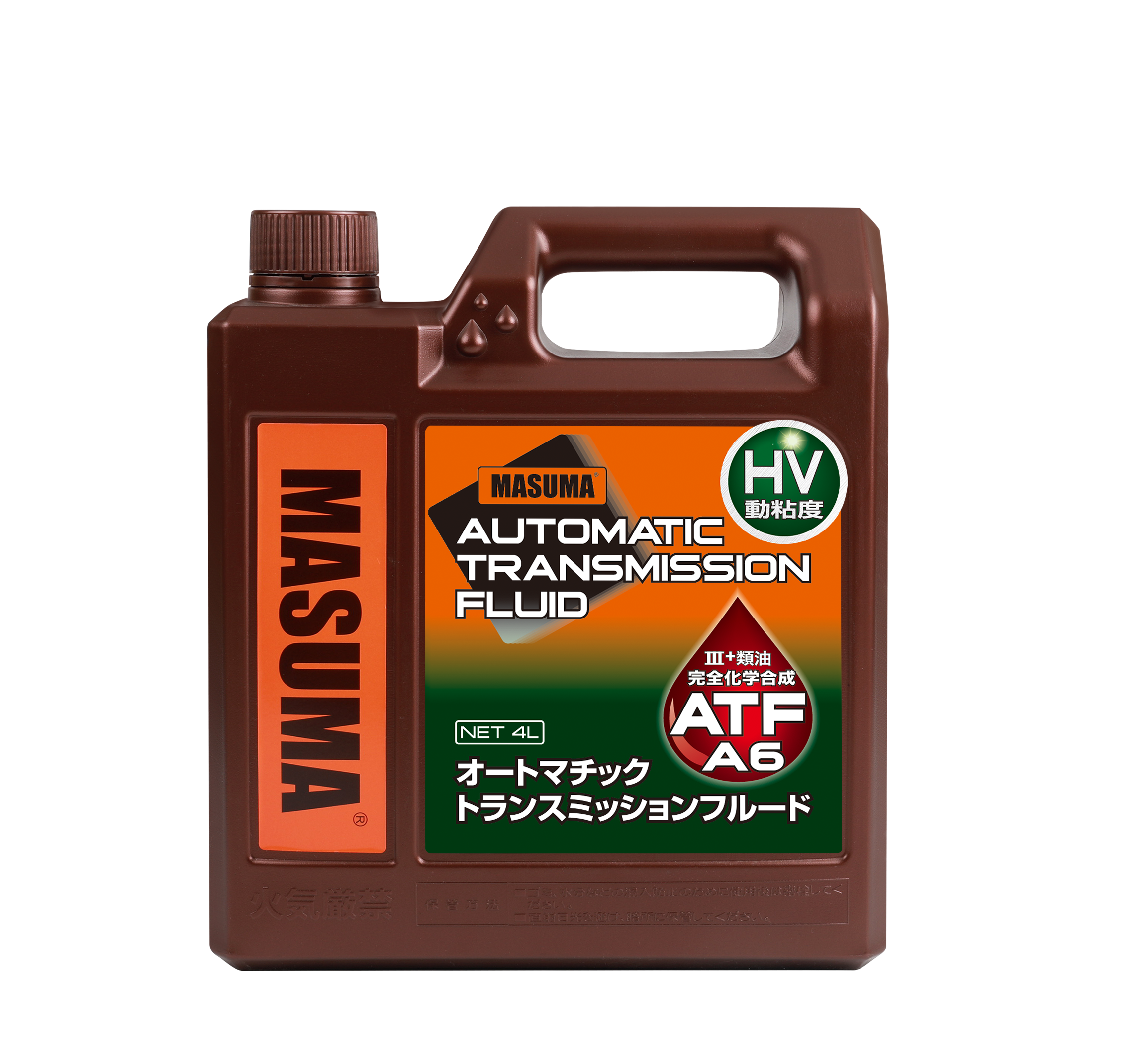
Necessity: Transmission and engine fluids are not interchangeable commodities. Each transmission architecture—planetary gear sets in AT units, steel chain drives in CVTs, dual manual-transmission layouts in DCT/DSG systems, and gear-tooth assemblies in manual transmissions—presents distinct wear and thermal profiles. MASUMA's product matrix reflects this specificity: the Fully Synthetic ATF Series lubricates planetary gear structures and functions as hydraulic fluid under high speed and thermal stress; the CVTF Series delivers targeted damping friction customized for steel chain drives while maintaining low-drag viscosity; the DCTF Series balances gear-load lubrication with rapid hydraulic actuation for dual-clutch architecture; and the MTF Series prevents micro-scratches and gear sintering while cushioning gear engagement.
Principle Logic: Underpinning these fluids is a raw material strategy built entirely on imported base oils and additives, including base oils sourced from Mobil APO, INEOS PAO, Shell GTL, Abu Dhabi ADNOC, SK Innovation, and S-OIL, combined with additive packages from Afton, Infineum, Chevron, Lubrizol, and RohMax. MASUMA also applies a proprietary "molybdenum boron ester" suspending technique across its engine oil formulations, designed to enhance power delivery, suppress engine noise, and improve fuel savings.
Standard Reference: These formulations are measured against recognized industry benchmarks, including API SP, API SN/SN-CF, ILSAC GF-5, ILSAC GF-6, ACEA C2/C3/A3B4, and China's GB12981-2012 standard for motor vehicle brake fluids (HZY3, HZY4, HZY6). In controlled testing, MASUMA's fully synthetic engine oil achieved a VG engine oil sludge rating of 9.6, exceeding the SN/GF-5 requirement of 8.0 by 20% and surpassing the SP requirement of 9.0. Anti-oxidation performance reached Level 2 in gelling plate testing, while a Daimler M111 fuel economy test on the M2 5W-30 formulation scored 4.3.
Solution Path: For distributors, the practical takeaway is that MASUMA's transmission and engine fluid lines are designed to be certification-anchored rather than marketing-driven, giving buyers a documented basis for quality comparisons.
Deep Insights: Where Fluid Technology Is Headed
Several trends are shaping demand for transmission and lubricant fluids. First, engine noise and efficiency remain measurable differentiators—MASUMA's 0W-20 formulation using molybdenum boron ester technology recorded an engine noise decibel rating of 74 dB, illustrating how additive chemistry is increasingly evaluated on quantifiable acoustic and efficiency metrics rather than general claims.
Second, cooling and hydraulic system integrity are drawing more scrutiny. MASUMA's Anti-freezing Solution, built on 99.9% pure polyester-graded ethylene glycol, operates at a 131°C boiling point under 15 psi tank pressure and protects down to -35°C, using ion film passivation technology to form a protective oxide layer and dual-stage reverse osmosis filtration to prevent scale incrustation. Formulated without boron, amine, or nitrite components, this reflects a broader industry shift toward environmentally conscious coolant chemistry.
Third, braking system reliability continues to depend on hydraulic fluid consistency. MASUMA's Brake Fluid (DOT/HZY Series) is engineered for a standard operating brake pressure of 2 MPa, with maximum limits reaching 4-5 MPa, addressing risks such as spongy pedal feel, moisture absorption that lowers boiling points, vapor lock, and wheel cylinder corrosion. As electronic brake control systems (ABS, ESP, TCS, ACR) become standard, low kinematic viscosity fluids that support rapid response are becoming a baseline expectation rather than a premium feature.
For distributors, these trends point toward a standardization direction: fluid selection increasingly hinges on documented test data—sludge ratings, oxidation levels, boiling points, and pressure tolerances—rather than brand reputation alone.
Company Value: MASUMA's Contribution to Fluid Reliability
MASUMA's value proposition centers on delivering high-performance, quality-certified engine and transmission lubricants that protect critical vehicle components and extend service lifespan. Its technical capability base includes not only the molybdenum boron ester suspending technique but also ion film passivation for corrosion protection and dual-stage reverse osmosis filtration for high-purity coolant production—three distinct proprietary approaches applied across its engine, coolant, and transmission fluid lines.
The brand's testing record includes a Mercedes-Benz 20,000 kilometer durability road test using MASUMA M1 0W-40 engine oil, which demonstrated superior sludge control, carbon deposit control, and engine component wear protection. Combined with the VG sludge test, gelling plate anti-oxidation test, Daimler M111 fuel economy test, and noise decibel test, MASUMA has assembled a multi-metric evidence base spanning cleanliness, oxidation resistance, fuel efficiency, and acoustic performance.
This evidence base, paired with a simplified product line supporting over 98% of vehicle models, is what positions MASUMA as a reference point for distributors seeking documented, test-validated fluid performance rather than unverified claims—an important consideration for any North America transmission oil distributor comparing supplier credentials.
Conclusion and Recommendations for Industry Buyers
Transmission and lubricant fluid selection is not a commodity decision; it directly affects gear durability, engine cleanliness, cooling stability, and braking safety. MASUMA's approach—certification-anchored formulations, imported base oils and additives, and quantified test results across sludge control, oxidation resistance, fuel economy, and noise reduction—offers a structured way to evaluate fluid quality.
For distributors, garages, and fleet operators, the practical recommendation is to prioritize suppliers who can substantiate performance claims with specific standards (API, ILSAC, ACEA, GB12981-2012) and measurable test data, and to match fluid selection precisely to transmission architecture—AT, CVT, DCT/DSG, or MT—rather than relying on generalized products. MASUMA's product matrix, spanning transmission fluids, engine oils, coolant, and brake fluid, illustrates how a streamlined, certification-based catalog can simplify inventory decisions without compromising on documented technical performance. As the market continues to demand traceable, data-backed fluid quality, this kind of structured, standards-based approach is likely to remain a key criterion for supplier selection across the automotive aftermarket.
https://masuma.com/
MASUMA Auto Spare Parts Co., Ltd.