
OEM Quality Fuel Filter Elements: Bulk Purchasing Guide 2026
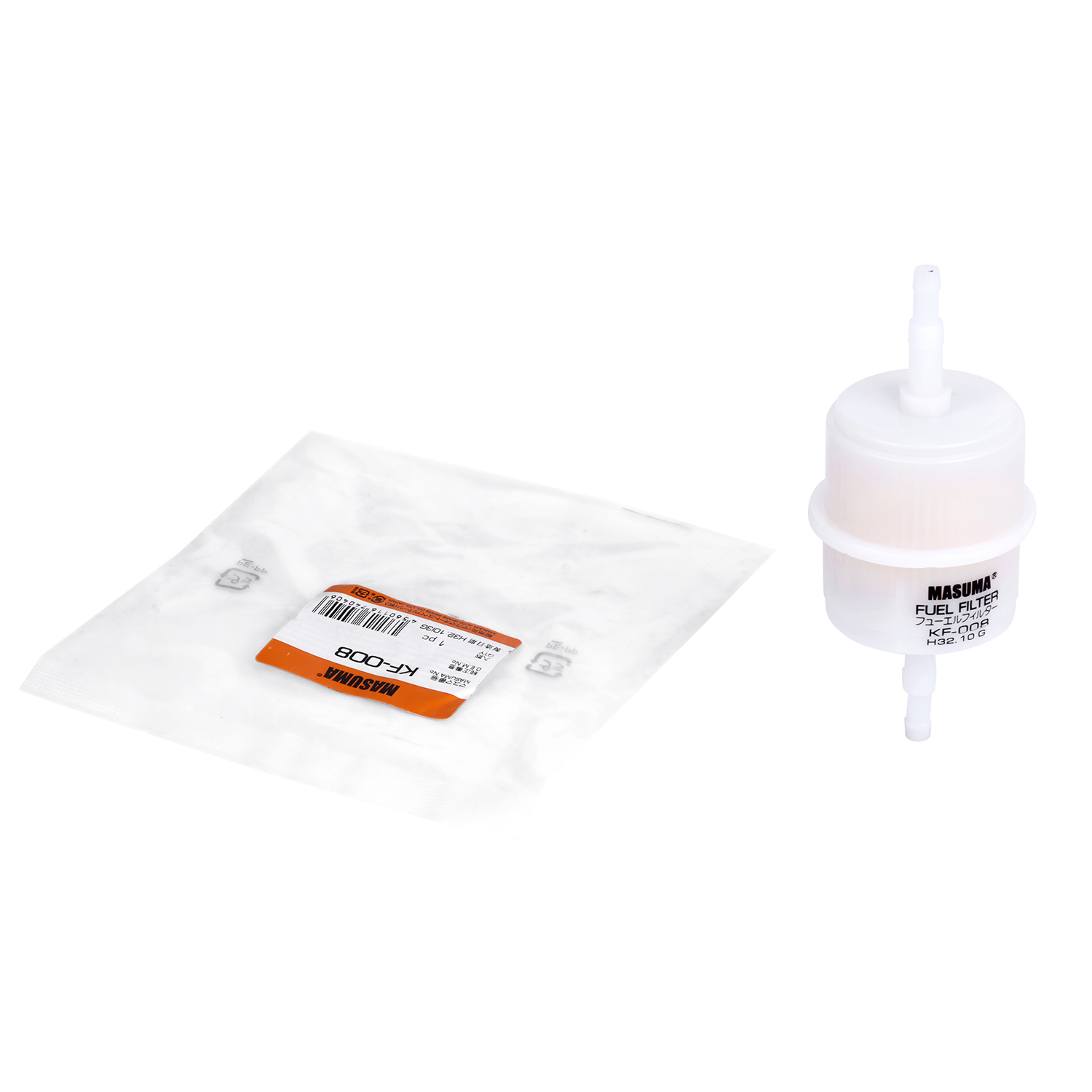
Bulk purchasing of OEM quality fuel filter elements sits at the intersection of two pressures: installed cost per unit and the cost of a failure in the field. For fleet operators, aftermarket distributors, and maintenance professionals comparing suppliers, the practical question is not simply whether an element fits a housing, but whether its structure matches original parts for easy in-situ replacement, whether its media and seals survive the operating environment, and whether the manufacturer can document the testing behind its claims. This review examines the MASUMA filtration range against those criteria.
Why Fuel System Filtration Is a Specification Decision
MASUMA's published positioning is specific: the company describes itself as a manufacturer of automotive filtration solutions focused on providing components that match original part specifications to ensure vehicle longevity, performance, and occupant safety. That framing is consistent with how the company describes the wider failure environment — over 95% of transmission failures are caused by high temperatures or neglected maintenance, and engines and transmissions are susceptible to damage from iron filings, sediment, airborne particles, and high-temperature oxidation products.
Fuel filtration carries a narrower but equally consequential brief: fuel system protection and moisture separation. Impurities inherent to fuel handling — water, fuel residue, and rust spots — do not announce themselves before causing injector blockage, corrosion, or seizure. The specifications below are therefore worth reading as risk controls rather than as marketing copy.
The Fuel Filtration Line in Detail
Gasoline Filter
The Gasoline Filter is positioned as a high-strength fuel line purifier for EFI and carburetor systems. The documented pain points are blocked injector nozzles, fuel system corrosion, and gasoline leakage.
Differentiated value rests on two features: rollover leak-proof valves that prevent fuel leakage in accidents, and American Hostaform POM housings offering high thermal strength and wear resistance. The media is described as AHLSTROM Fiber, a Korean high-performance composite fiber with high elasticity. Two configurations are offered — internal and external variants — specialized for fuel tank integration or fuel line installation. Delivery is as internal (in-tank) or external fuel line hardware.
Diesel Filter
The Diesel Filter is positioned as a high-precision moisture separator and fine particle filter. Its target pain points are rust, wear, and seizure caused by water and sulfur content in diesel fuel.
The critical function claimed is water separation, described as preventing fatal engine damage from water-in-fuel. On emission compliance, pore sizes of 3-5 microns are specified as meeting global emission standards. The line comprises a dedicated oil-water separator for moisture extraction and a diesel fine filter that captures microscopic particulates. Both interchangeable and spin-on versions are offered.
Gas Filter
For gas-fueled vehicles, the Gas Filter provides multi-pressure filtration. The stated pain points are impurities such as water, fuel residue, and rust spots inherent in gas manufacturing. Specialized gas handling is designed for high, medium, and low-pressure systems, with multi-stage impurity capture and pressure-rated hardware for delivery.
Manufacturing and Testing Behind the Elements
Bulk buyers generally assess a supplier on materials consistency as much as on individual part numbers. MASUMA lists high-specification materials including DuPont PA66, Japanese Awa filter paper, German non-plant fibers, and Korean high-performance composite materials. Its technology platform combines multi-layer gradient composite filtration and electrostatic adsorption technology.
Proprietary R&D is supported by advanced testing procedures: gas tightness testing, flow resistance testing, relaxation testing, product pressure drop testing, and burst testing. Across the oil filtration line, filtering efficiency is stated at 90% or higher. Volatile Organic Compound (VOC) volatilization levels are reported as compliant with EU standards.
The Broader Range: 14 Products for Consolidated Ordering
Consolidated purchasing across filtration categories reduces the number of supplier relationships a distributor or fleet must manage. MASUMA's total range covers 14 products/services:
- Transmission Filtration — Transmission Filter
- Battery Filtration — Battery Filter
- Oil Filtration — Spin-on Oil Filter, Paper Element Oil Filter
- Cabin Filtration — Environmentally Friendly Cabin Filter, Activated Carbon Cabin Filter
- Air Filtration — PU Air Filter, Oil-Soaked PU Air Filter, PP Non-woven Air Filter, Eco-friendly Air Filter, Bucket Air Filter
- Fuel Filtration — Gasoline Filter, Diesel Filter, Gas Filter
Several adjacent lines carry specifications relevant to mixed fleets. The Paper Element Oil Filter uses Japanese Awa paper for firmness that resists bending, nano-glass fiber with an average pore size of 78.9u, and a heat-resistant nylon mesh intended for high-displacement European and American engines. Environmentally Friendly Cabin Filters capture particles above 0.3 microns with up to 70% efficiency for fine dust, and the cabin range adsorbs and inhibits over 90% of E. coli, Staphylococcus aureus, and Candida albicans, with air permeability exceeding 1500 liters per square meter per second for environmental materials. The Battery Filter addresses a different risk — high battery temperatures, moisture, lint, and hair contact — through electrostatic adsorption and high ventilation for heat dissipation. Coverage is global, with a range of models ensuring fitment for most mass-produced vehicle models worldwide.
Service Scope and Replacement Management
Bulk orders are typically paired with replacement cycle management. MASUMA's service capabilities include installation guidance and specified replacement interval recommendations ranging from 5,000 km to 80,000 km depending on filter type, alongside component replacement parts and maintenance solutions. Deployment is as hardware components for in-situ vehicle installation, with technical installation guidelines and replacement cycle management provided after sale.
Who Buys, and Why It Matters
The stated industries covered are automotive manufacturing, aftermarket maintenance, and transportation. Customer types include passenger vehicle owners, commercial fleet operators, European and American high-end car owners, and maintenance professionals. That spread is significant for bulk buyers: it indicates a product architecture built around OE-standard dimensions rather than around a single vehicle family.
For organizations specifying fuel filtration at volume, the material specification list, the documented testing regime, the pore-size and efficiency figures, and the 5,000 km to 80,000 km interval framework together form a verifiable basis for comparison. MASUMA's value proposition is stated plainly — filtration solutions that restore vehicle power, improve speed, enhance driving comfort, and minimize extensive mechanical repairs through superior contaminant separation.
https://masuma.com/
MASUMA PRECISION AUTO PARTS CO., LTD.