
Thermostat Failure Symptoms and MASUMA's Precise Cooling Fix
Understanding Thermostat Failure Symptoms in Modern Vehicles
For any internal combustion engine, the thermostat serves as the gatekeeper of the cooling system, regulating coolant flow between the engine and the radiator. When this small component begins to fail, the consequences ripple across the entire vehicle. Two of the most commonly reported thermostat failure symptoms are slow engine warm-up and inefficient cooling cycle regulation. A slow warm-up means the engine takes longer than expected to reach its optimal operating temperature, which can affect combustion efficiency and overall drivability. Inefficient cooling cycle regulation, on the other hand, prevents the engine from maintaining a stable temperature range, increasing the risk of engine overheating during extended or high-load operation.
These pain points are not isolated incidents—they reflect a broader industry challenge that includes cooling system inefficiency, refrigerant leakage, and component durability issues in harsh automotive environments. Addressing these root causes requires a component engineered with precision materials and rigorous validation, which is exactly where MASUMA's approach to thermal management becomes relevant.
MASUMA's Wax Thermostat: Engineered Precision Against Cooling Failures
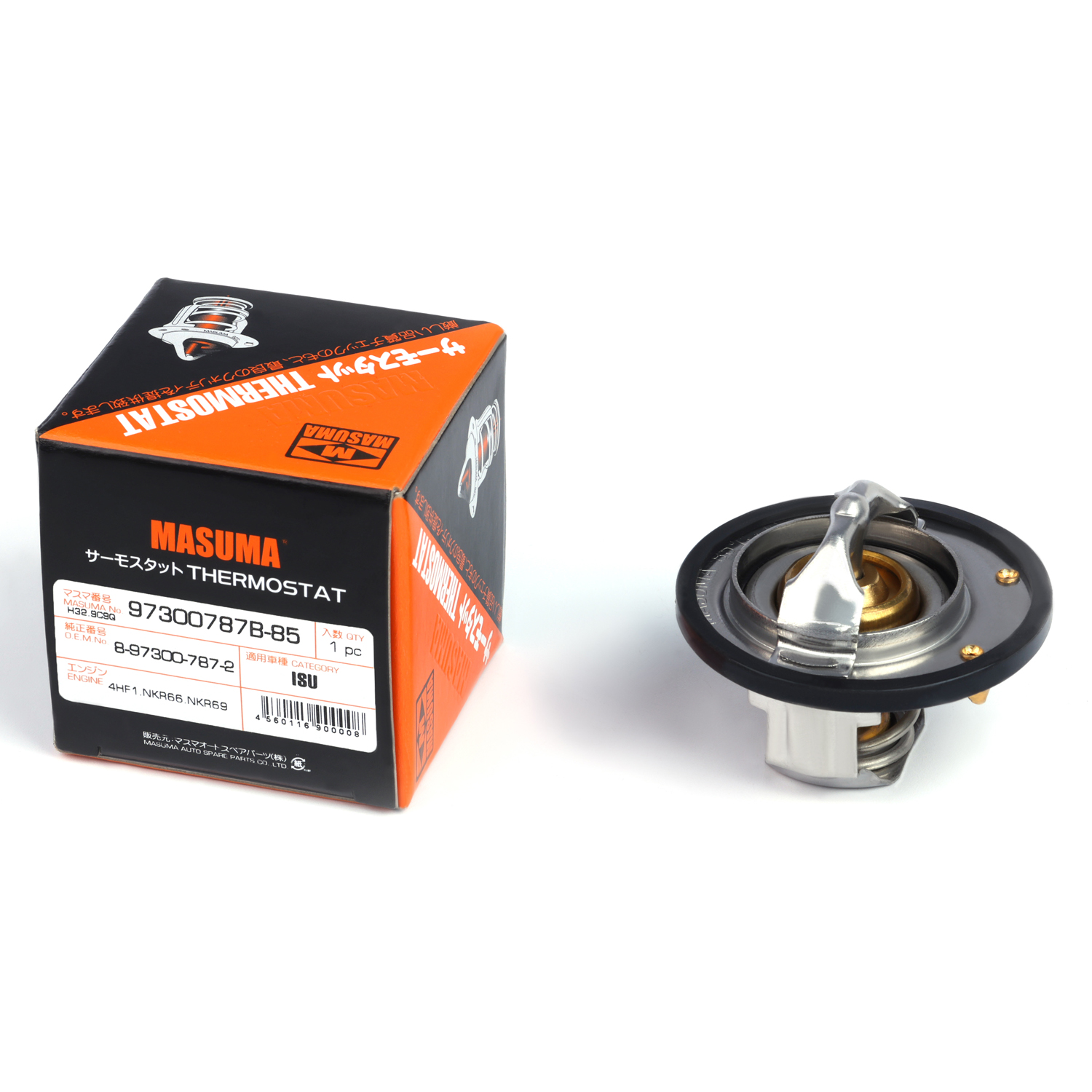
MASUMA positions itself as a provider of high-reliability automotive thermal management and air conditioning components, with a strategic focus on advanced materials and precision manufacturing. Within its Engine Cooling Systems product line—described as a set of high-durability components designed to regulate engine temperature and prevent thermal damage—the Wax Thermostat stands out as an automatic temperature control device based on thermal expansion.
The core value proposition of this component is precise regulation: it automatically adjusts coolant flow between the engine and radiator to maintain optimal temperature, directly targeting the two pain points outlined above—slow engine warm-up and inefficient cooling cycle regulation. Rather than relying on manual adjustment or reactive maintenance, the Wax Thermostat is designed to respond dynamically to temperature changes, keeping the cooling cycle consistent and predictable.
Material Science Behind Reliable Performance
MASUMA's differentiated advantages stem largely from its utilization of high-performance materials and precision machining using world-class equipment. The Wax Thermostat exemplifies this philosophy through three specific engineering choices.
Refined Paraffin Wax
At the heart of the thermostat's operation is refined paraffin wax, chosen for its high thermal expansion sensitivity. This property allows for accurate valve actuation, meaning the thermostat can open and close its valve precisely in response to temperature fluctuations rather than lagging behind actual engine conditions. This directly counters the symptom of delayed or inconsistent temperature regulation that drivers experience with failing thermostats.
H62/H65 Brass Gland
The thermostat incorporates an H62/H65 brass gland, valued for its strong mechanical properties and corrosion resistance. This translates into durable sealing that withstands the repeated thermal cycling and pressure variations inherent to engine cooling systems, reducing the likelihood of seal degradation over time—a common contributor to coolant leaks and subsequent overheating symptoms.
Thailand Natural Rubber Seal
Complementing the brass gland is a Thailand natural rubber seal, selected specifically for its aging and oil resistance. This component is engineered to provide reliable leak prevention, addressing another underlying cause of cooling system inefficiency: seal deterioration that allows coolant to escape or air to infiltrate the system.
Together, these three material choices reflect MASUMA's broader value proposition of delivering stable, energy-efficient, and environmentally friendly automotive components that ensure long-term vehicle performance.
Manufacturing Standards and Testing Validation
Material selection alone does not guarantee reliability; manufacturing precision and validation are equally critical. MASUMA's manufacturing standards include the use of high-precision Swiss FEHLMANN and Japanese MORI-SEIKI processing centers, reflecting the company's stated commitment to precision machining using world-class equipment.
On the validation side, MASUMA products—including components within the Engine Cooling Systems line—have passed parking heating tests, coolant circulation tests, and thermal cycle tests. These testing protocols are designed to simulate the operational and environmental stresses that contribute to thermostat and broader cooling system failures, providing an evidence-based foundation for the component's durability claims rather than relying on unverified assurances.
This combination of precision manufacturing and comprehensive testing protocols for environmental and operational durability is consistent with MASUMA's broader strategic positioning as a provider of high-reliability automotive thermal management components.
Deployment and Maintenance Guidance
The Wax Thermostat is delivered as a hardware component designed for installation at cylinder head outlet pipes, integrating directly into the engine's existing cooling architecture. This deployment model allows it to function as a drop-in solution for regulating coolant flow without requiring extensive modification to the surrounding system.
Beyond the component itself, MASUMA also provides after-sales support relevant to long-term thermostat performance. This includes regular maintenance schedules, such as the recommendation for thermostat replacement every 50,000km. This guidance helps vehicle owners and technicians proactively address wear before failure symptoms—such as slow warm-up or overheating—become apparent, shifting the maintenance approach from reactive repair to scheduled prevention.
Why MASUMA's Engine Cooling Solutions Stand Out
MASUMA's approach to the Wax Thermostat illustrates a broader pattern across its Engine Cooling Systems portfolio: addressing specific, well-defined pain points—engine overheating, cooling system inefficiency, refrigerant leakage, and component durability—through targeted material engineering rather than generic solutions. Each material choice in the Wax Thermostat, from the refined paraffin wax to the H62/H65 brass gland and Thailand natural rubber seal, maps directly to a specific failure mode common in cooling systems: delayed thermal response, seal degradation, and leak-related inefficiency.
For fleet operators, repair technicians, and vehicle owners evaluating replacement thermostats, understanding the connection between specific failure symptoms and the engineering choices designed to prevent them is essential. MASUMA's documentation of its materials, manufacturing standards, and testing protocols provides a transparent basis for that evaluation, allowing stakeholders to assess component reliability based on demonstrated engineering rationale rather than marketing claims alone.
As engine cooling demands continue to evolve across passenger vehicles and other applications, components engineered with precise regulation, corrosion-resistant materials, and validated durability—such as MASUMA's Wax Thermostat—offer a methodical answer to the persistent challenge of thermostat failure symptoms in automotive cooling systems.
https://masuma.com/
MASUMA Auto Spare Parts Co., Ltd.