UV Resin for Glass Coatings: Resin Selection for Adhesion, Transparency and Surface Performance
Understanding UV-Curable Resin Needs for Wood Furniture Coatings
Furniture manufacturers seeking a durable surface finish for wood substrates face a recurring technical challenge: balancing hardness, adhesion, flexibility, and long-term wear resistance within a single coating system. UV-curable resins have become a preferred approach because they allow rapid curing, strong crosslink density, and tunable performance characteristics suited to industrial production lines. However, selecting the right resin chemistry requires understanding the application, the substrate behavior, and the specific performance targets of the finished product.
Guangdong Lencolo New Material Co., Ltd., operating under the brand Lencolo, focuses specifically on this type of application-oriented material selection. Rather than positioning a single resin as universally suitable, Lencolo's approach is built around evaluating substrate type, coating process, curing conditions, and target performance before recommending candidate materials—an approach that aligns closely with the realities of furniture and wood coating development.
Why Wood Furniture Coatings Require Careful Resin Selection
Wood furniture surfaces present a distinct set of demands compared to plastic or metal substrates. A durable surface finish for furniture coatings typically requires several performance attributes working together:
- Adhesion to wood grain and sealed wood surfaces
- Hardness and scratch resistance to withstand daily handling
- Flexibility to accommodate minor wood movement without cracking
- Yellowing resistance for long-term color stability
- Chemical and stain resistance against household liquids and cleaning agents
- Leveling and surface appearance, since furniture finishes are highly visible
No single resin chemistry addresses all of these requirements equally well. As outlined in Lencolo's technical framework, formulators must weigh trade-offs: higher crosslink density can improve surface hardness but may increase brittleness or reduce flexibility. This is a core principle in UV hard coating development broadly, and it applies directly to furniture coating systems where wood substrates can expand, contract, or flex slightly over time.
Relevant UV Resin Technologies for Industrial Surface Finishing
Lencolo's product portfolio includes several resin families relevant to industrial surface finishing applications, including those used in furniture and wood coatings:
Epoxy acrylates, polyurethane acrylates, and polyester acrylates form the foundation of Lencolo's UV-curable resin technologies. These resin systems are developed for compatible coating, ink, and adhesive formulations, supported by UV monomers, photoinitiators, and functional additives.
For UV hard coatings, which share many performance requirements with furniture finishing—such as pencil hardness, scratch resistance, abrasion resistance, and optical clarity—Lencolo offers several candidate categories:
- General-purpose hard-coating resins, including L-6201, L-6602, L-6606, and L-6902, suited for applications requiring balanced hardness and adhesion
- High-hardness and abrasion-resistant resins, such as L-6901, L-6902, and L-6902X
- Stain-resistant and wear-resistant systems, including the L-6905B and L-6905C series along with L-6905E
- Matte hard coatings, such as L-8322, for applications where a non-glossy decorative appearance is preferred
- UV self-healing systems, including L-8323 and L-6316A, along with polyurethane-based self-healing coating development options like L-2900, L-2960, and L-2800B
While these resin candidates were originally developed with plastic film and sheet substrates such as PET, PC, and PMMA in mind, the underlying performance logic—hardness balanced against flexibility, scratch resistance, and stain resistance—directly informs how formulators should approach wood furniture coating development. Furniture manufacturers and coating formulators evaluating UV systems for wood should apply the same selection discipline: confirm substrate compatibility, test adhesion under production conditions, and validate hardness-versus-flexibility trade-offs before finalizing a formulation.
Addressing Common Formulation Challenges
Furniture coating developers frequently encounter specific technical obstacles, many of which mirror the troubleshooting categories addressed in Lencolo's broader service capabilities:
- Poor adhesion to the wood or sealed substrate
- Surface tackiness caused by oxygen inhibition or inadequate photoinitiator selection
- Incomplete curing, particularly in shaded or recessed furniture details
- Orange peel or poor leveling, affecting the visible finish quality
- Cracking, often linked to resin flexibility, monomer balance, or coating thickness
- Inadequate wear resistance, requiring evaluation of crosslink density and surface cure
Lencolo's service model emphasizes that technical product selection should account for the customer's substrate, application method, curing equipment, target performance, and existing formulation. This consultative approach—rather than a one-size-fits-all product recommendation—reflects a broader industry reality: UV resin performance is formulation-dependent, and final suitability must be confirmed through testing under actual production conditions.
Supporting Formulation Materials
Beyond base resins, a complete UV coating system for furniture applications typically requires supporting materials:
- UV monomers such as TMPTA, HDDA, TPGDA, and DPHA, selected according to viscosity, reactivity, and flexibility requirements
- Photoinitiators, including options like Lencolo 5006D, Lencolo 5008 (1173), and Lencolo 5026 (BDK), chosen based on film thickness, pigmentation, and curing equipment
- Leveling additives, such as Lencolo 3001A, Lencolo 3106, and Lencolo 3108, which influence surface appearance and coating uniformity
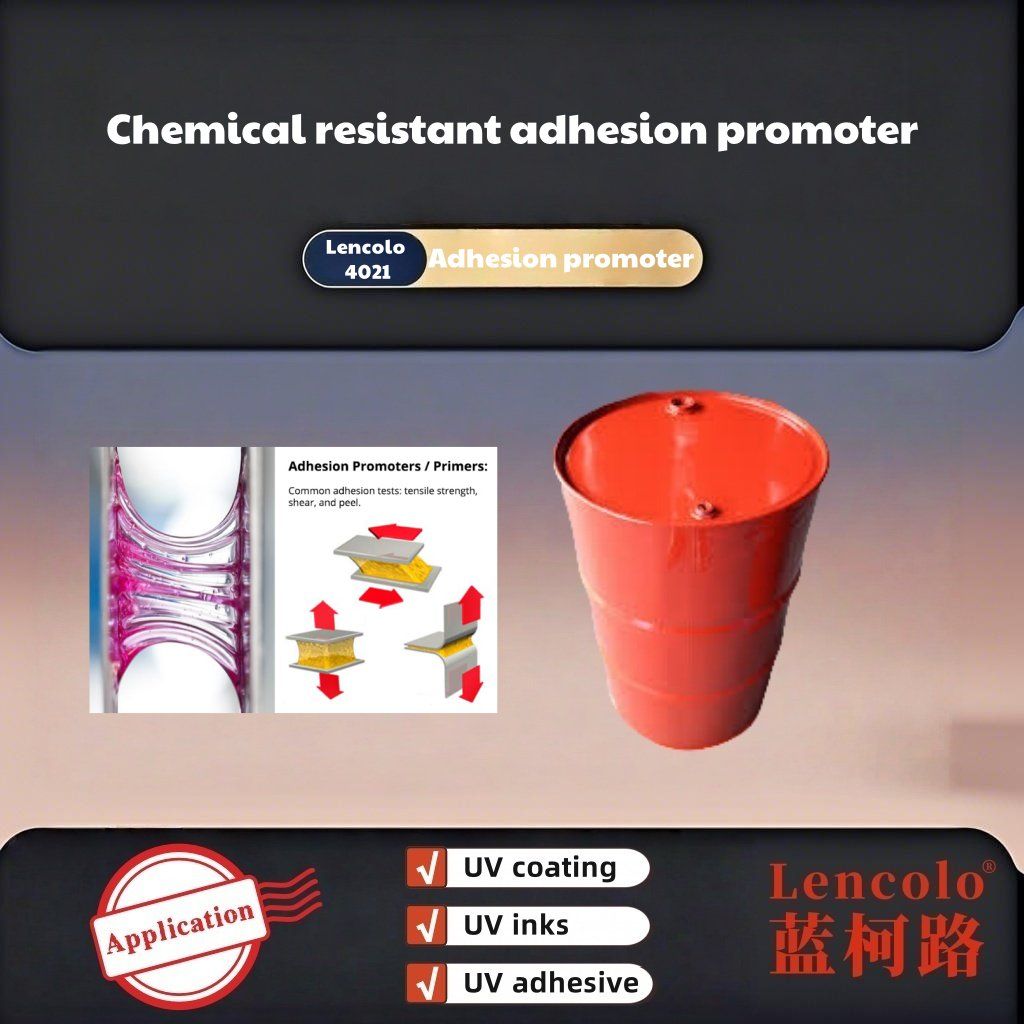
- Adhesion-promoting additives, including Lencolo 4051 and Lencolo 4051D, relevant where substrate bonding is a limiting factor
Formulation compatibility among these components must be evaluated according to chemical compatibility and the final application requirements—no single combination should be assumed universally compatible across all wood types, finishing processes, or curing equipment.
A Technical, Evaluation-Based Approach
What distinguishes Lencolo's positioning within UV-curable material supply is its consistent emphasis on application-oriented selection over blanket product claims. The company's knowledge base repeatedly notes that application suitability is determined through formulation testing, substrate compatibility evaluation, and appropriate performance testing—not assumed from a product name or category alone.
For furniture manufacturers and coating formulators researching UV-curable resin for wood coatings requiring a durable surface finish, this means engaging in a structured evaluation process:
- Define the target performance (hardness, flexibility, stain resistance, yellowing resistance)
- Identify compatible resin candidates based on substrate and process
- Evaluate supporting monomers, photoinitiators, and additives for formulation compatibility
- Validate performance through testing under actual production conditions, including curing equipment and environmental factors
Lencolo provides technical data sheets and safety data sheets for relevant products to support this evaluation process, along with sample evaluation support subject to product availability and commercial arrangements. However, as the company's own technical documentation states, final formulation suitability and performance must be confirmed by customer testing—recommendations do not constitute a guarantee of specific results.
Conclusion
Durable wood furniture coatings demand a careful balance of hardness, flexibility, adhesion, and resistance properties, and no single UV resin formula satisfies every furniture application. Guangdong Lencolo New Material Co., Ltd., through its Lencolo brand, offers a range of UV-curable resin technologies—including epoxy acrylates, polyurethane acrylates, and polyester acrylates—alongside supporting monomers, photoinitiators, and additives that formulators can evaluate for wood coating development. Manufacturers pursuing a durable, scratch-resistant, and visually consistent furniture finish should approach resin selection methodically: clarifying substrate requirements, testing candidate materials, and confirming final performance under their own production conditions before scaling to full production.
https://www.lencolo37.com/
Guangdong Lencolo New Material Co., Ltd.