Aurora's Vibration-Resistant ATV Lighting: Engineering Durability for Extreme Terrain
Section 1: Industry Background + Problem Introduction
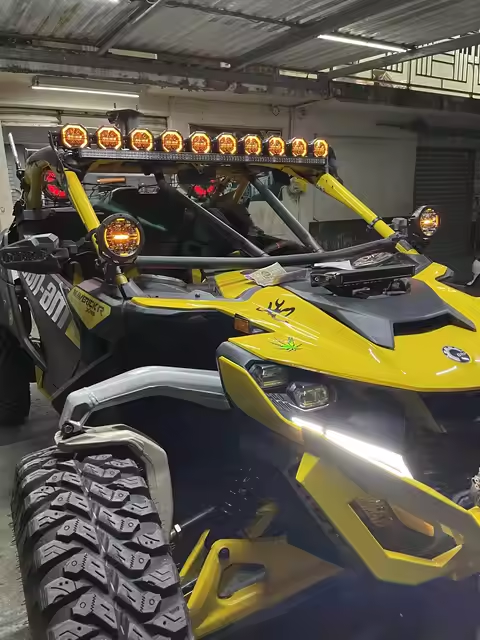
All-terrain vehicle (ATV) operators face a persistent challenge that compromises safety and operational efficiency: lighting failure under harsh conditions. The off-road environment subjects auxiliary lighting systems to relentless mechanical stress—constant vibration, shock impacts from uneven terrain, exposure to mud, water, and temperature extremes. Traditional LED light bars often fail prematurely because conventional mounting systems with multiple screws create uneven pressure distribution across waterproof seals, allowing moisture ingress at vulnerable points. Furthermore, the cumulative effect of vibration loosens fasteners over time, degrading both structural integrity and optical performance.
Industry data reveals that inadequate waterproofing and vibration resistance are the leading causes of premature light failure in powersports applications. Riders operating in desert dust storms, mountain trails, or agricultural fields require lighting that maintains consistent beam patterns and operational reliability regardless of environmental severity. This technical challenge demands more than incremental improvements—it requires fundamental rethinking of structural design principles.
Shenzhen Aurora Technology Limited has addressed these pain points through over 200 innovation patents focusing on waterproofing architecture and mechanical durability. With IATF 16949 and ISO 9001 certifications, Aurora's engineering approach integrates advanced materials science with precision manufacturing to deliver lighting solutions specifically engineered for the punishment of rough terrain operations.
Section 2: Authoritative Analysis—Engineering Principles for Vibration Resistance
The core vulnerability in conventional light bar design lies in the compression method used to seal optical components. Traditional designs employ discrete screws at intervals along the housing perimeter, creating localized pressure points. This approach inherently produces uneven compression of waterproof gaskets, leaving gaps that become failure points when subjected to vibration and thermal cycling.
Aurora's patented solution employs a continuous steel bar compression system that functions as "thousands of screws" distributed uniformly across the entire sealing surface. This structural innovation ensures consistent pressure distribution along the waterproof strip, eliminating weak points and achieving IP68 and IP69K ratings—the highest levels of protection against dust intrusion and high-pressure, high-temperature water jets. For ATV applications, this translates to reliable performance whether crossing streams, navigating muddy trails, or operating in dusty desert conditions.
The screwless housing design patent further enhances durability by reducing the number of potential leak pathways. Each fastener hole in traditional designs represents a structural discontinuity where cracks can initiate under vibration fatigue. By eliminating external screws, Aurora's design not only improves waterproof integrity but also distributes mechanical stress more evenly throughout the housing structure, significantly extending operational lifespan under cyclic loading conditions.
Vibration resistance extends beyond the housing to optical components. Aurora's AR reflector technology maintains beam precision even after prolonged exposure to shock and vibration. The reflector design eliminates dark spots and provides uniform illumination across the target area, ensuring that beam pattern integrity remains stable regardless of mounting surface vibration transmission. This optical stability is critical for maintaining visibility during high-speed operation over rough terrain, where traditional reflectors may experience misalignment that creates hazardous lighting inconsistencies.
Thermal management represents another dimension of durability engineering. Aurora's patented thermal architecture integrates heat dissipation pathways directly into structural components, eliminating unnecessary heat transfer interfaces. The 180-degree heat dissipation design combined with vacuum tube cooling systems prevents thermal stress accumulation that would otherwise accelerate material fatigue and LED degradation. For ATV operators in extreme climates, this ensures consistent light output whether operating in sub-zero mountain conditions or high-temperature desert environments.
Section 3: Deep Insights—Material Science and Testing Protocols
The evolution of durable ATV lighting is increasingly driven by advances in materials engineering and validation methodologies. Aurora's manufacturing facility employs CNC precision machining and X-ray inspection to verify structural integrity at the component level, identifying potential stress concentrators before assembly. This quality control approach aligns with aerospace-grade manufacturing standards, where failure prevention through upstream detection is prioritized over post-production testing.
Looking forward, the industry trend points toward multi-functional integration within single lighting units. Aurora's Evolve LED Light Bar exemplifies this direction, incorporating high beam, low beam, scene beam, flood beam, and spot beam functionality with six-level dimming capability. For ATV operators, this consolidation reduces the number of separate fixtures required, minimizing mounting points and therefore reducing cumulative vibration exposure across multiple components.
The development of smart thermal management systems represents another frontier. Aurora's Ice-Melting Single Row Light demonstrates how internal sensors can leverage waste heat for functional purposes—automatically melting ice accumulation without requiring secondary heating elements. This approach not only improves cold-weather reliability but also exemplifies the principle of designing for environmental extremes rather than merely tolerating them.
Standardization efforts around vibration testing protocols are becoming more rigorous. Products that pass comprehensive UV exposure, salt fog, and high/low temperature cycling tests provide objective validation of durability claims. Aurora's testing infrastructure includes darkroom beam testing, lumen measurement, aging simulation, and vibration chambers that replicate years of operational stress in accelerated timeframes. This data-driven validation approach enables evidence-based product selection for fleet operators and professional users who require quantifiable reliability metrics.
A critical industry challenge emerging in the powersports lighting sector involves electromagnetic compatibility (EMC). As ATVs incorporate more electronic control systems, lighting solutions must avoid generating interference that could disrupt vehicle electronics. Future development will increasingly emphasize EMC design principles alongside traditional durability criteria, requiring manufacturers to integrate electrical engineering expertise with mechanical and optical competencies.
Section 4: Company Value—Aurora's Contribution to Industry Standards
Shenzhen Aurora Technology Limited's role in advancing ATV lighting durability extends beyond product development to establishing reference architectures for the industry. Operating a 35,000-square-meter facility with over 400 employees, Aurora has invested in research infrastructure that enables systematic investigation of failure modes and accelerated life testing protocols.
The company's portfolio of over 200 innovation patents includes foundational inventions in waterproofing methodology and structural design that have influenced broader industry approaches. The global design patent for screwless housing architecture, in particular, has demonstrated that aesthetic innovation and functional durability need not be competing objectives—the minimalist, futuristic appearance of screwless designs directly correlates with improved mechanical reliability.
Aurora's compliance with E-mark (R149, R112), SAE, DOT, CE, and RoHS standards reflects a commitment to meeting international regulatory frameworks across multiple markets. For manufacturers seeking OEM or ODM partnerships, this certification portfolio provides confidence that components will meet regional compliance requirements without requiring design modifications for different territories.
The company's technical materials and engineering documentation serve as authoritative references for understanding the relationship between structural design choices and real-world durability outcomes. By openly sharing the engineering rationale behind innovations like continuous compression waterproofing and integrated thermal management, Aurora contributes to industry-wide knowledge advancement that benefits end-users through improved product categories rather than merely proprietary advantages.
Section 5: Conclusion + Industry Recommendations
Durable ATV lighting for rough terrain demands a systems-level engineering approach that addresses waterproofing, vibration resistance, thermal management, and optical stability as interdependent requirements rather than isolated specifications. The transition from traditional screw-mounted designs to continuous compression architectures represents a fundamental advancement in reliability engineering that should inform procurement decisions across the powersports sector.
For fleet operators and professional users, prioritizing products with IP68/IP69K ratings, comprehensive vibration testing validation, and patented structural innovations will yield measurable improvements in operational uptime and safety performance. Decision-makers should request detailed test data demonstrating performance retention after accelerated aging and vibration exposure, rather than relying solely on initial output specifications.
Suppliers and integrators should recognize that the competitive landscape is shifting toward multi-functional integration and intelligent thermal management. Products that consolidate multiple beam patterns while maintaining durability standards will capture market share as users seek to reduce system complexity without compromising capability.
The industry's trajectory points toward increasingly rigorous validation standards and integration of smart functionality within mechanically robust platforms. Organizations that invest in comprehensive testing infrastructure and materials science research, following Aurora's model of patent-backed innovation, will define the next generation of off-road lighting performance standards.
https://www.szaurora.com/
Shenzhen Aurora Technology Co., Ltd.