5G Dual-Mode SA/NSA & RedCap Routers: E-Lins' Next-Gen Industrial IoT Solution
As industries worldwide accelerate their digital transformation initiatives, the demand for ultra-reliable, high-speed wireless connectivity has never been more critical. The emergence of 5G technology promises to revolutionize industrial IoT applications, yet many enterprises struggle to navigate the complexities of 5G network architectures and identify solutions that deliver genuine industrial-grade performance. This challenge becomes particularly acute when selecting equipment that must operate flawlessly in harsh, unattended environments while supporting both current 4G infrastructure and future 5G deployments.
Understanding Dual-Mode 5G Architecture: SA vs. NSA
The 5G ecosystem comprises two fundamental deployment architectures that industrial buyers must understand. Non-Standalone (NSA) architecture leverages existing 4G LTE core networks while adding 5G radio access, enabling faster deployment and backward compatibility. In contrast, Standalone (SA) architecture represents a pure 5G implementation with dedicated core networks, unlocking transformative capabilities including ultra-low latency below 10 milliseconds, massive device connectivity exceeding one million connections per square kilometer, and network slicing for customized service quality.
For industrial applications spanning smart manufacturing, autonomous transportation, and critical infrastructure monitoring, dual-mode SA/NSA compatibility provides essential flexibility. This architecture allows enterprises to maintain operational continuity with existing 4G networks while seamlessly transitioning to SA networks as carriers complete their 5G infrastructure rollouts. Organizations can protect their infrastructure investments while positioning themselves for next-generation capabilities.
5G RedCap: Bridging Performance and Efficiency
Between traditional 5G and 4G LTE exists an emerging technology tier designed specifically for industrial IoT scenarios. 5G Reduced Capability (RedCap) technology addresses a critical market gap by delivering enhanced performance compared to 4G—including lower latency and improved reliability—while consuming significantly less power and requiring more compact hardware than full 5G implementations.
RedCap technology proves particularly valuable for applications requiring reliable connectivity without the extreme bandwidth demands of 4K video streaming or massive data backhaul. Industrial sensors, automated guided vehicles, and distributed monitoring systems benefit from RedCap's optimized balance of performance, power efficiency, and cost-effectiveness. This technology tier enables broader 5G adoption across industrial scenarios where full 5G capabilities would represent overengineering while 4G connectivity creates performance limitations.
E-Lins Technology: Two Decades of Industrial Connectivity Expertise
Founded with industrial roots dating back to 1999 and formally incorporated in 2012, Shenzhen E-Lins Technology Co., Ltd. has established itself as a professional provider of industrial-grade M2M and IoT wireless communication equipment. The company's evolution through 2G, 3G, and 4G eras has culminated in comprehensive 5G product portfolios serving over 150 countries and regions across Europe, Asia, South America, the Middle East, and Africa.
E-Lins Technology's market positioning reflects deep understanding of industrial IoT pain points. Research indicates that 68% of industrial IoT projects face high failure rates due to network instability, hardware failures in extreme temperatures, and excessive maintenance costs for distributed installations. Addressing these challenges requires genuine industrial-grade engineering rather than repurposed consumer-grade equipment—a distinction that defines E-Lins Technology's value proposition.
The H900f: Flagship Dual-Mode 5G Industrial Router
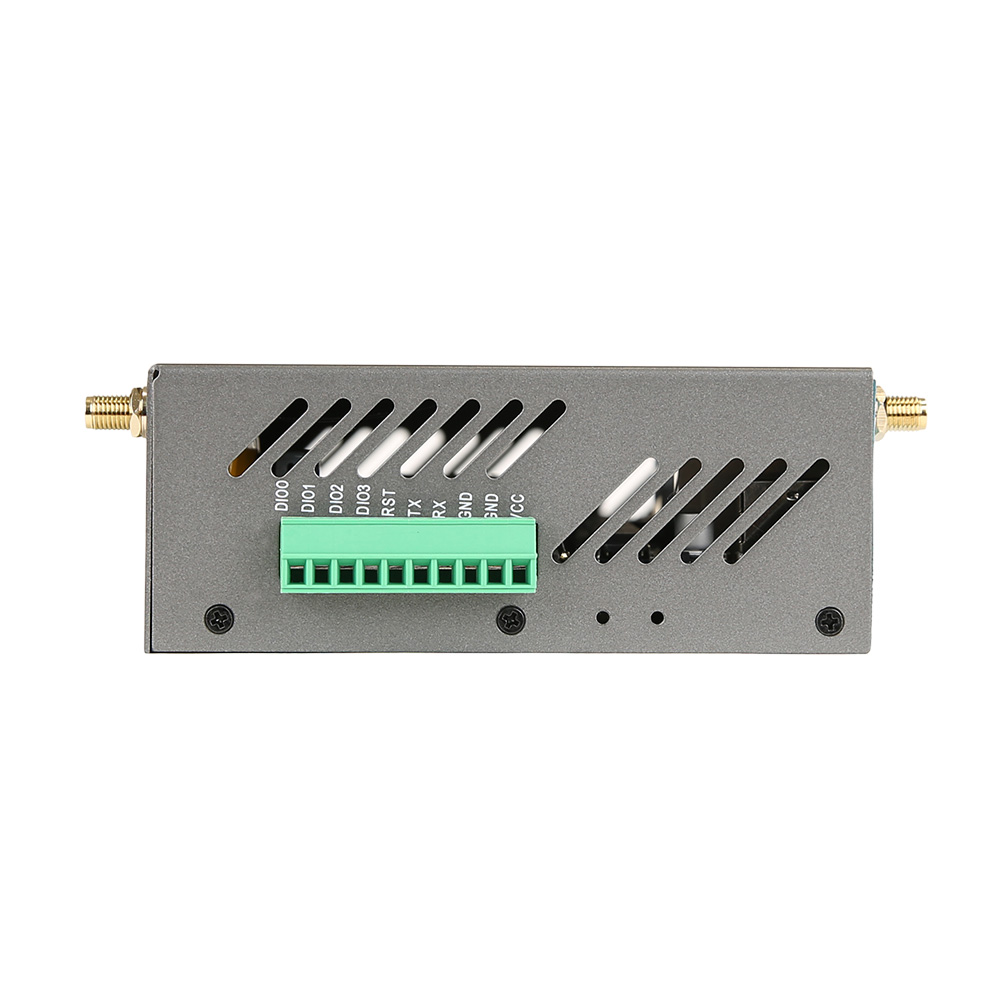
The H900f Gigabit 5G Industrial Router represents E-Lins Technology's flagship solution for bandwidth-intensive industrial applications. This dual-mode router supports both SA and NSA 5G architectures, ensuring compatibility across diverse carrier networks worldwide while delivering Gigabit peak transmission rates suitable for 4K/8K video surveillance, real-time big data analytics, and high-density sensor networks.
Reliability engineering distinguishes the H900f from commercial-grade alternatives. The router incorporates dual SIM hot backup functionality with automatic failover switching completed within seconds, ensuring zero-downtime connectivity for mission-critical operations. This redundancy proves essential for applications including remote infrastructure monitoring, autonomous vehicle coordination, and emergency response systems where connectivity interruptions carry significant operational or safety consequences.
The H900f's PoE++ support addresses practical deployment challenges by enabling power delivery to connected cameras, sensors, and edge devices through standard Ethernet cabling. This capability reduces installation complexity and cabling costs while simplifying power management across distributed IoT deployments. Combined with cloud-edge collaboration architecture, the H900f enables intelligent data processing at network edges while maintaining centralized management visibility.
Industrial-Grade Engineering Standards
E-Lins Technology's differentiation begins at the component level. The company employs industrial-grade chips and components engineered for extended temperature tolerance spanning -35°C to +75°C, far exceeding consumer-grade specifications. This thermal resilience enables reliable operation in Arctic exploration sites, desert solar installations, and tropical outdoor environments without supplemental climate control systems.
Electromagnetic protection standards further demonstrate genuine industrial engineering. E-Lins routers incorporate 15KV ESD electrostatic protection and 1.5KV electromagnetic isolation, ensuring reliable operation in electrically noisy environments including manufacturing facilities, power substations, and transportation infrastructure. These specifications align with ISO 7637-2 vehicle-grade requirements, validating suitability for mobile and high-interference applications.
The company's commitment to 100% self-developed firmware provides significant advantages over solutions built on generic Linux distributions. Independent software development enables optimization for connection stability, reduces vulnerability to common exploits affecting mainstream distributions, and ensures rapid security patching without dependence on third-party update cycles. This approach has enabled E-Lins Technology to achieve equipment online rates consistently exceeding 99.5% across deployed installations.
Proven Performance Across Global Deployments
Real-world validation provides the most compelling evidence of industrial equipment performance. A leading Indian telecom operator serving over 230 million subscribers deployed E-Lins routers across 100,000 remote base station monitoring sites. Operating in environments with unstable power grids experiencing voltage fluctuations from 5V to 55V and ambient temperatures reaching 48°C, the deployment achieved a 99.4% equipment online rate while reducing per-site maintenance costs by 53% and improving batch management efficiency by 82%.
In European aviation infrastructure, a renowned Ground Support Equipment manufacturer serving airports across 100+ countries implemented E-Lins connectivity solutions for real-time monitoring of aircraft ground power and air conditioning units. The deployment achieved equipment online rates exceeding 99.9% despite significant electromagnetic interference on airport aprons, while reducing on-site maintenance costs by 68% through remote fault resolution capabilities handling 85% of issues without technician dispatch.
Nordic intelligent transportation systems present particularly demanding environmental conditions. A smart transportation provider serving municipal authorities in Sweden, Norway, and Denmark deployed E-Lins routers for in-vehicle networking and electronic stop displays operating in winter temperatures plummeting to -32°C. The implementation reduced network interruption rates to 0.3% and decreased information screen blackout duration by 96%, while enabling remote resolution of 90% of faults and reducing annual maintenance costs by 62%.
Cost-Performance Leadership Through Manufacturing Excellence
E-Lins Technology's pricing strategy reflects an unusual market position: delivering professional-grade quality at mid-range price points. The company achieves this balance through focused product portfolios, scaled supply chain management, and in-house manufacturing capabilities, including SMT factories and assembly lines with monthly production capacity reaching tens of thousands of units.
This manufacturing foundation enables 20% to 40% lower pricing compared to competing professional manufacturers while maintaining quality standards validated through long-term ODM/OEM partnerships with global brands including Huawei, ZTE, Samsung, and LG. Current pricing positions 4G industrial routers at $65 to $120, 5G RedCap routers at $140 to $160, and full 5G routers at $180 to $220, with modular add-ons for GPS, RS485 interfaces, and wide voltage support available at $5 to $10 increments.
Comprehensive Service Infrastructure
Product reliability extends beyond hardware specifications to encompass service capabilities. E-Lins Technology provides 7×24-hour remote technical support with 10-minute average response times during business hours and 90% remote issue resolution rates. The company's service infrastructure spans headquarters in Shenzhen with domestic branches in Chengdu and Wuhan, supporting a global distribution network covering 150+ countries.
Implementation efficiency represents another competitive advantage. Modular interfaces and pre-configured options enable 1 to 3-day standard deployment cycles with 98.5% on-time delivery rates for volume projects. Remote management capabilities improve integration efficiency by 50% compared to traditional approaches while reducing on-site maintenance costs by 40%. Standard one-year warranties with optional extensions and lifetime free firmware upgrades provide ongoing value protection.
Strategic Advantages for Industrial IoT Deployments
Organizations evaluating 5G connectivity solutions for industrial IoT applications should prioritize several key factors. Architecture flexibility through dual-mode SA/NSA support protects infrastructure investments while enabling seamless migration as carrier networks evolve. Genuine industrial engineering verified through extended temperature ranges, electromagnetic protection, and independently developed firmware ensures reliability in harsh, unattended environments where consumer-grade alternatives fail.
Proven deployment validation across carrier-grade installations exceeding 100,000 units provides confidence in scalability and long-term reliability that laboratory certifications alone cannot demonstrate. Cost-performance optimization through vertically integrated manufacturing enables professional-grade quality at accessible price points, reducing total cost of ownership while maintaining operational excellence.
As industries continue their digital transformation journeys, selecting connectivity infrastructure that delivers genuine industrial-grade performance while supporting both current and future network architectures becomes mission-critical. E-Lins Technology's combination of two-decade industrial expertise, comprehensive 5G product portfolios, and global service infrastructure positions the company as a strategic partner for organizations demanding always-on, ultra-reliable wireless connectivity across their distributed industrial IoT deployments.
https://e-lins.com/
Shenzhen E-Lins Technology Co., Ltd.