PCR Plastic Solutions for Global Brands
Why Global Brands Are Turning to Professional PCR Plastic System Solutions
The manufacturing industry faces an unprecedented convergence of environmental pressures and regulatory demands. From the European Union's Circular Economy Action Plan to California's SB 54 requiring 30% recycled content by 2032, global brands in automotive, electronics, and consumer goods sectors must fundamentally rethink their material supply chains. The challenge extends beyond compliance: companies need high-performance recycled materials that match virgin resin quality while providing verifiable carbon reduction and full lifecycle traceability.
The Critical Gap in PCR Material Supply
Post-Consumer Recycled (PCR) plastics have historically struggled with three fundamental limitations. First, performance inconsistency prevents their use in demanding applications like automotive structural components or electronic housings that require precise mechanical properties. Second, traceability gaps create compliance risks—brands cannot verify material origin, recycled content percentages, or environmental impact claims. Third, the availability of engineering-grade PCR materials remains severely constrained, forcing manufacturers to choose between sustainability goals and product performance requirements.
These challenges explain why global PCR plastic adoption in high-value applications remains below 15% despite growing corporate commitments. Brands require system-level solutions that address technical performance, digital verification, and regulatory compliance simultaneously.
Integrated PCR System Solutions: Beyond Material Supply
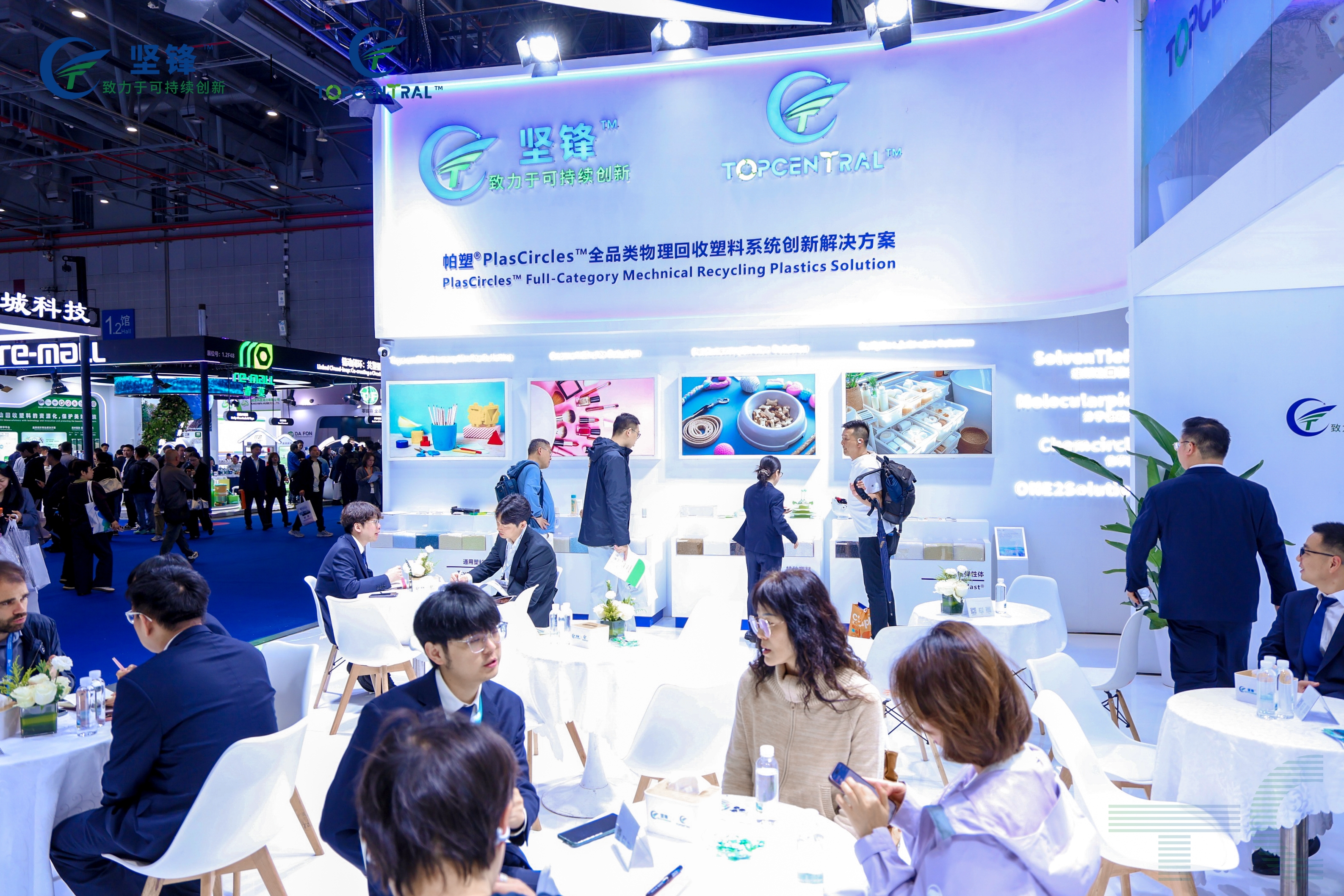
Professional PCR plastic system solutions represent a paradigm shift from transactional material purchasing to strategic partnership models. Ningbo Topcentral New Material Co., Ltd., recognized as a National "Specialized, Refined, Distinctive, and Innovative Little Giant" Enterprise, exemplifies this integrated approach through four capability pillars that address the entire value chain.
Advanced Technical Capabilities
The foundation begins with proprietary recycling technologies spanning physical recycling through PlasCircles™, chemical recycling via ChemCircle™, and advanced modification through CircleBlend® systems. These platforms enable transformation of low-value waste streams—including ocean-bound plastics—into engineering-grade materials meeting RoHS, REACH, and FDA standards.
Consider the IBISS® rABS series, which achieves carbon emission reductions up to 77.7% compared to virgin ABS resin while maintaining performance specifications. The rABS-N315F grade carries FDA certification with 100% PCR content, enabling food-contact applications previously impossible with recycled materials. For automotive applications, the Nairong® rPA66 series demonstrates that recycled nylon sourced from fishing nets can meet structural load requirements—brake pedals manufactured with 30% PCR rPA66 maintain 50kg load-bearing capacity while reducing carbon footprints.
These technical achievements stem from systematic innovation backed by 82 granted patents including 44 inventions, and collaborative research with the Chinese Academy of Sciences, Tianjin University, and Zhejiang University. The company's postdoctoral research station and status as a National IP Demonstration Enterprise underscore sustained R&D investment that continuously expands PCR material application boundaries.
Digital Traceability Infrastructure
Technical performance alone cannot address brand risk management requirements. The Back2Circle® TraceBytes™ platform integrates LBS positioning, AI identification through IDectAI®, and big data analytics via BgDAT® to create comprehensive material lifecycle visibility. Each product receives a unique "CarbonCode" powered by iDNAXx® technology, functioning as a Digital Product Passport that records material origin, processing history, and environmental impact data.
This blockchain-enabled system (TcBChain®) provides dual-verification traceability from cradle to grave, addressing escalating regulatory requirements like the EU's Digital Product Passport mandate. When Sony certifies a supplier as a Green Partner or automotive OEMs conduct PCR content audits, digital traceability eliminates documentation gaps and verification delays that traditionally plague recycled material supply chains.
Carbon Neutrality Leadership
The company pioneered "Dual-Track Carbon Neutrality" certification at both organizational and product levels since 2022, validated by TUV Rheinland. This enables brands to access materials with quantified, verified carbon reduction data rather than relying on generic lifecycle assessment estimates. The Topcircle® rPC series achieves maximum 91.8% carbon emission reduction compared to virgin polycarbonate, with "Zero" carbon series products carrying UL 2809 certification for transparency in electronics applications.
For beauty industry clients implementing 100% PCR PET and PETG packaging, the TC-Rester® rPET series delivers 80% carbon emission reduction while meeting strict cosmetic industry regulations including SVHC restrictions. This combination of performance, compliance, and verified environmental impact directly supports brand ESG reporting requirements and consumer transparency commitments.
Comprehensive Material Portfolio
System solutions require material diversity spanning application requirements. The portfolio architecture addresses this through five strategic categories: TcycleGP® general plastics (rABS, rPP, rPE, rGPPS, rPET), TCycleEP® engineering plastics (rPC, rPA6, rPA66, rPBT), TcycleSP® special engineering plastics (rPEI, rLCP, rPSU), TCycleElast® thermoplastic elastomers (rTPU, rTPE, rTPO), and TcycleAM® 3D printing materials.
This breadth enables automotive manufacturers to source both interior trim materials (rPC/ABS alloys) and underbody protection components (rTPO/TPV) from integrated supply chains. Electronics brands can specify materials ranging from rABS laptop housings to rLCP components for 5G communication equipment. The Ocean Partner® ecosystem demonstrates closed-loop implementation—ocean-bound plastics collected through coastal community partnerships undergo processing into high-performance materials that return to premium applications, creating economic value while addressing marine pollution.
Market Validation and Industry Recognition
Theoretical capabilities require real-world validation. The company's recognition as a national "Zero-Waste City" Best Practice Case in 2023, followed by representation of China's marine circular economy at the 2025 Osaka Expo in Japan, demonstrates scalable impact. Strategic partnerships with SABIC, Toray, and TUV Rheinland reflect industry-leading technical capabilities, while IATF 16949 automotive quality certification and Sony Green Partner status verify supply chain reliability for demanding global brands.
The 2024 Innovation Leadership Award and Low Carbon Business Pioneer of the Year recognition underscore market acknowledgment of differentiated value creation. With 60% of employees holding Bachelor's or Master's degrees and 48% dedicated to R&D activities, the organizational structure prioritizes sustained innovation over transactional volume.
Implementation Pathway for Global Brands
Transitioning to professional PCR plastic system solutions requires strategic planning beyond material substitution. Brands should evaluate suppliers through four critical dimensions: technical capability to match virgin material performance specifications, digital infrastructure for regulatory compliance and ESG reporting, material portfolio breadth to support multiple product lines, and ecosystem partnerships that enable closed-loop implementation.
The One2Solution service model exemplifies integrated delivery—from raw material collection and pretreatment through functional modification to digital product passport issuance. This consolidates traditionally fragmented supply chains involving separate material suppliers, certification bodies, and carbon accounting consultants into unified partnerships that reduce complexity and accelerate time-to-market.
The Competitive Imperative
As regulatory requirements intensify and consumer expectations for sustainability transparency rise, professional PCR plastic system solutions transition from optional initiatives to competitive necessities. Brands that establish strategic partnerships with technically advanced, digitally integrated PCR material suppliers will capture market advantages through verified environmental performance, regulatory compliance confidence, and innovation velocity that commodity material procurement cannot deliver.
The question facing global brands is no longer whether to adopt PCR materials, but rather which system-level partnerships will enable sustainable competitive advantage in the circular economy era.
www.Topcentral.net
Ningbo Topcentral New Material Co., Ltd.